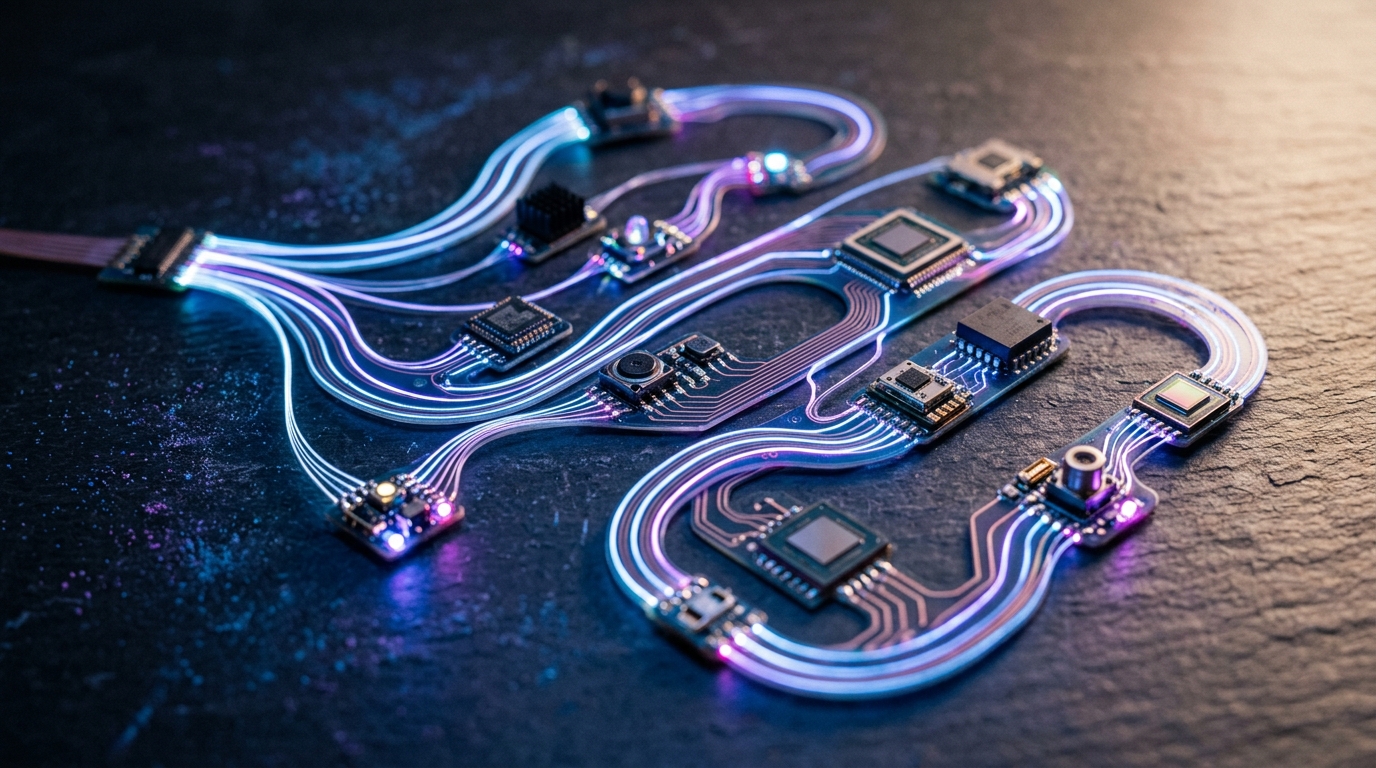
By 2026, the traditional Product Lifecycle Management (PLM) market has undergone a radical transformation. Research indicates that organizations utilizing AI-native PLM software have reduced their time-to-market by up to 50% while slashing engineering change order (ECO) cycle times by nearly 70%. We are no longer in the era of 'AI-assisted' tools where a chatbot simply searches a PDF; we have entered the age of Autonomous PLM Systems that predict supply chain failures, generate Bill of Materials (BOM) from natural language prompts, and execute complex workflows without human 'babysitting.'
If your engineering team is still manually tracking revisions in spreadsheets or fighting with legacy UI that looks like it was designed in 1998, you aren't just losing time—you're losing your competitive edge. This comprehensive guide explores the top 10 platforms leading the charge in 2026, focusing on Generative Product Design Platforms and AI-Driven Supply Chain Orchestration.
- The Evolution of AI-Native PLM Software in 2026
- Evaluation Criteria: What Makes a PLM Truly AI-Native?
- 1. Siemens Teamcenter: The Enterprise Intelligence King
- 2. PTC Windchill: The Digital Thread Authority
- 3. Duro PLM: Best PLM for Hardware Startups
- 4. Arena Solutions: Cloud-Native Supply Chain Orchestration
- 5. Propel PLM: The Salesforce-Native Disruptor
- 6. Aras Innovator: The Open Architecture Powerhouse
- 7. Autodesk Fusion Lifecycle: The Multi-CAD Specialist
- 8. SAP PLM: Deep ERP and Sustainability Integration
- 9. Bild: Lightweight Cloud PDM for Rapid Iteration
- 10. Sibe.io: The Multi-CAD Value Leader
- The Implementation Gap: Moving from Legacy to AI-Native
- Future Trends: The Rise of the Autonomous Product Operator
- Key Takeaways
- Frequently Asked Questions
The Evolution of AI-Native PLM Software in 2026
In 2026, the definition of "AI-native" has shifted. As noted in recent industry discussions, the differentiator is no longer whether a tool has AI, but whether AI is the operating system of the platform. Legacy PLM systems often feel like "closed SaaS that charges per contact or per profile," as one Reddit user pointed out regarding the marketing lifecycle space—a sentiment that echoes loudly in the engineering world.
AI-Native PLM Software in 2026 is characterized by its ability to act as an "AI Operator." Instead of an engineer manually checking in a CAD file and then manually updating a BOM, these systems use computer vision and LLMs to identify parts, suggest alternative components based on real-time supply chain data, and automatically flag compliance risks before they reach the factory floor.
"The real differentiator is: does AI improve segmentation, timing, and revenue, not just write emails?"
In the context of PLM, this translates to: Does the AI improve part reuse, predict lead times, and optimize margins, or does it just summarize meeting notes? The platforms listed below have moved beyond the "chatbot wrapper" phase into deep, structural AI integration.
Evaluation Criteria: What Makes a PLM Truly AI-Native?
When selecting the Best PLM for Hardware Startups or global enterprises, we used the following 2026-specific benchmarks:
- Generative Design Integration: Can the platform suggest structural optimizations or component alternatives directly within the workflow?
- Autonomous Orchestration: Does the system proactively manage ECOs and supply chain shifts without constant human intervention?
- Digital Thread Continuity: Does it connect CAD, ERP, MES, and IoT data into a single, cohesive "source of truth"?
- Multi-CAD Support: In a world of "Mixed CAD tools" (SolidWorks, Creo, AutoCAD, etc.), can the platform manage metadata and version control across disparate systems?
- Implementation Speed: Can the system be deployed in days rather than months? (A major pain point for legacy systems like Windchill).
| Feature | Legacy PLM | AI-Native PLM (2026) |
|---|---|---|
| Data Entry | Manual / Spreadsheet-heavy | Automated via AI Extraction |
| Change Orders | Human-routed / Slow | AI-Predicted / Auto-routed |
| Supply Chain | Static / Reactive | AI-Driven Orchestration |
| Search | Keyword-based | Semantic / Visual Search |
| User Interface | Complex / Requires Admin | Intuitive / Role-based |
1. Siemens Teamcenter: The Enterprise Intelligence King
Siemens Teamcenter remains the gold standard for large-scale manufacturers, but its 2026 iteration is a far cry from its predecessors. It has successfully integrated AI-powered analytics to manage the most complex product configurations on earth.
Key AI Capabilities
Teamcenter now features a built-in AI agent that performs "Requirements-Driven Development." By analyzing thousands of pages of regulatory documents and customer requirements, it automatically maps design decisions to compliance needs. Its AI-driven supply chain orchestration layer identifies patterns in global logistics to suggest "design-to-margin" adjustments in real-time.
- Pros: Highly scalable; industry-leading CAD integration; robust digital twin capabilities.
- Cons: Steep learning curve; high implementation cost; often requires a dedicated admin team.
- Best For: Global enterprises in aerospace, automotive, and heavy machinery.
2. PTC Windchill: The Digital Thread Authority
While Reddit users historically complained that "Windchill is powerful but extremely un-user friendly," the 2026 "Windchill+" version has addressed these UI hurdles through an AI-first interface. It focuses on the "Digital Thread," connecting every piece of data from concept to field service.
Key AI Capabilities
Windchill's AI excels at predictive maintenance and quality. By connecting to IoT data from products in the field, the PLM suggests engineering changes to the next version of the product based on how the current version is actually performing. This is the epitome of a Digital Thread strategy.
- Pros: Exceptional IoT and AR integration; powerful version control; enterprise-grade security.
- Cons: Can still feel "heavy" for smaller teams; complex setup for multi-system integration.
- Best For: Manufacturers requiring deep integration between design and field performance.
3. Duro PLM: Best PLM for Hardware Startups
Duro has emerged as the definitive Best PLM for Hardware Startups in 2026. Following its strategic evolution, it has focused on removing the friction that typically kills small engineering teams. It is often cited as the "unicorn" that provides enterprise power without the IT overhead.
Key AI Capabilities
Duro is truly AI-native in its approach to BOM management. It uses AI to automatically scrub and validate supplier data, ensuring that "garbage in" never happens. Its "Quick Start" AI can ingest legacy spreadsheets and organize them into a structured PLM environment in hours, not weeks.
- Pros: Fastest implementation in the industry; intuitive UI; built-in supply chain intelligence.
- Cons: Less focus on heavy simulation compared to Siemens.
- Best For: Fast-moving hardware startups and mid-sized electronics companies.
4. Arena Solutions: Cloud-Native Supply Chain Orchestration
Arena, a PTC company, has doubled down on its cloud-native roots to become a leader in AI-driven supply chain orchestration. It is designed specifically for teams that rely heavily on a global network of contract manufacturers.
Key AI Capabilities
Arena’s AI focuses on "Design for Manufacturability" (DFM). As engineers design in CAD, Arena’s AI scans the BOM and suggests changes based on the real-time availability of components at specific factories in Asia or the US. It automates the ECO review process by identifying which stakeholders actually need to see a change, reducing approval bloat.
- Pros: Excellent supplier collaboration; strong environmental compliance (RoHS, REACH) tracking.
- Cons: Pricing is not transparent; requires coordination with supply chain partners to see full value.
- Best For: Consumer electronics and medical device companies with complex supply chains.
5. Propel PLM: The Salesforce-Native Disruptor
Propel is unique because it is built entirely on the Salesforce platform. In 2026, this has allowed it to bridge the gap between product development and the "commercial" side of the business (Sales, Marketing, and Support) better than any other tool.
Key AI Capabilities
Propel leverages Salesforce’s "Einstein" AI to provide a 360-degree view of the product. It can predict which products are likely to have high returns or warranty claims by analyzing customer support tickets and linking them back to specific engineering revisions. This creates a closed-loop system where the "Voice of the Customer" directly influences the Product Lifecycle Management AI 2026 roadmap.
- Pros: Seamless CRM integration; highly flexible; great for companies that prioritize customer feedback.
- Cons: Dependency on the Salesforce ecosystem; can be expensive for very small teams.
- Best For: Companies where sales and support data are critical to product iteration.
6. Aras Innovator: The Open Architecture Powerhouse
Aras continues to be the favorite for companies that need a "bespoke" PLM experience. Its open architecture allows for extreme customization, which is now supercharged by AI-assisted coding tools.
Key AI Capabilities
Aras has integrated AI that allows non-technical users to build custom workflows and data models using natural language. Instead of hiring a consultant to write custom scripts, an engineer can simply say, "Create a workflow that triggers a quality audit whenever a part from Supplier X is used in a medical assembly," and the AI builds the logic.
- Pros: Highly customizable; free "unlimited" version for small teams (though support costs extra); scalable.
- Cons: Requires technical expertise to maintain; UI can be complex without customization.
- Best For: Companies with highly unique processes that don't fit into "out-of-the-box" solutions.
7. Autodesk Fusion Lifecycle: The Multi-CAD Specialist
For teams already using the Autodesk ecosystem (Fusion 360, Revit, etc.), Fusion Lifecycle is the natural choice. In 2026, it has expanded its capabilities to handle "Mixed CAD" environments with surprising ease.
Key AI Capabilities
Its standout feature is Generative Product Design. It doesn't just store files; it suggests design alternatives based on weight, strength, and cost constraints. Its AI-native PDM (Product Data Management) layer automatically handles file locking and versioning across different CAD formats, solving a major headache for multi-disciplinary teams.
- Pros: Affordable for SMBs; excellent integration with Autodesk tools; user-friendly.
- Cons: Advanced analytics are not as deep as Teamcenter.
- Best For: Small to mid-sized design firms and engineering teams using Fusion 360.
8. SAP PLM: Deep ERP and Sustainability Integration
SAP PLM is the choice for organizations where the product and the "bottom line" are inseparable. In 2026, SAP has focused heavily on "Extended Producer Responsibility" and sustainability.
Key AI Capabilities
SAP’s AI-enabled innovation layer tracks the carbon footprint of every component in real-time. It uses AI-driven supply chain orchestration to suggest more sustainable sourcing options that don't compromise the product's margin. It effectively turns the PLM into a sustainability dashboard.
- Pros: Unmatched ERP integration; strong focus on financial and environmental metrics.
- Cons: Very expensive; requires the SAP ecosystem; high implementation complexity.
- Best For: Large-scale manufacturers with strict sustainability and financial reporting requirements.
9. Bild: Lightweight Cloud PDM for Rapid Iteration
Bild has taken the hardware world by storm in 2026 by focusing on the "PDM-first" approach. It targets the pain point of engineers who hate checking files in and out of slow, legacy vaults.
Key AI Capabilities
Bild uses AI to provide visual version control. Instead of just seeing a list of file names, the AI generates visual "diffs" between CAD versions, highlighting exactly what changed in a 3D model. This makes design reviews significantly faster and reduces the risk of human error during the check-in process.
- Pros: Extremely lightweight; easy to roll out; great for multi-CAD teams.
- Cons: Lacks the heavy "lifecycle" features (like ERP integration) of larger platforms.
- Best For: Small, agile design teams (2–15 people) who need fast version control.
10. Sibe.io: The Multi-CAD Value Leader
Sibe.io is often recommended in engineering circles as the best "middle ground" between cost and performance. It is a cloud-native PDM/PLM that avoids the "vendor lock-in" of the big three (Siemens, PTC, Dassault).
Key AI Capabilities
Sibe uses AI to automate metadata extraction. When you upload a CAD file, the AI identifies the material, weight, and part number, and automatically populates the PLM database. It also features an AI assistant that helps "technical-averse people" navigate the system via a simple chat interface.
- Pros: Cost-effective; no vendor lock-in; easy to adopt for small teams.
- Cons: Smaller feature set than enterprise giants; fewer third-party integrations.
- Best For: Small to mid-sized companies looking for a modern, passably inexpensive solution.
The Implementation Gap: Moving from Legacy to AI-Native
A common thread in Reddit's engineering communities is the warning: "At the root of every successful development process lies process. You can spend thousands on software, but at the end it is garbage in, garbage out."
Transitioning to AI-Native PLM Software in 2026 requires more than just a credit card; it requires a data-first mindset. Legacy systems like Windchill or ENOVIA often fail not because of the software, but because they require a "full-time admin" to manage complex workflows.
Best Practices for 2026 Implementation: * Clean the Data First: Use AI-based data cleansing tools to standardize your legacy BOMs before migration. * Choose Role-Based Access: Don't overwhelm the shop floor with engineering data. Use a PLM that offers simplified views for manufacturing and procurement. * Focus on the Digital Thread: Ensure your PLM talks to your CAD and ERP systems. A siloed PLM is just an expensive Dropbox. * Iterate, Don't Big-Bang: Start with a single product line or department to prove the AI's value before a global rollout.
Future Trends: The Rise of the Autonomous Product Operator
Looking beyond 2026, the concept of the "AI Operator" will evolve into the "Autonomous Product Operator." We are already seeing the early stages of this with platforms like ScaleRep for marketing, where AI agents run CRM and lifecycle marketing on autopilot.
In the PLM space, this means: * Self-Healing BOMs: If a part goes end-of-life, the AI identifies the replacement, updates the CAD model, runs a basic simulation, and drafts the ECO for human approval. * Generative Supply Chains: The PLM will automatically re-route production to a different factory if it predicts a geopolitical or environmental disruption. * Visual Search as Standard: Engineers will search for parts by taking a photo of a prototype or sketching a shape, with the AI finding the closest existing part in the library to maximize reuse.
Key Takeaways
- AI-Native vs. AI-Assisted: In 2026, the best tools are built around AI, not just with a chatbot on top.
- Startups vs. Enterprises: Duro PLM and Bild are leading for startups, while Siemens Teamcenter and PTC Windchill remain the enterprise heavyweights.
- The Digital Thread: Success depends on connecting CAD, ERP, and supply chain data into a single source of truth.
- Generative Design: Platforms that suggest optimizations (like Autodesk Fusion Lifecycle) are significantly reducing time-to-market.
- Process Over Software: No tool can fix a broken engineering process. Focus on clean data and clear workflows first.
Frequently Asked Questions
What is the difference between PDM and PLM in 2026?
Historically, PDM (Product Data Management) lived in the design office to manage CAD files, while PLM (Product Lifecycle Management) took that data to the whole company. In 2026, this distinction has blurred. AI-native platforms now integrate both, ensuring that the "Design Office" data is automatically synchronized with manufacturing, procurement, and service departments.
Can a small hardware startup afford AI-native PLM?
Yes. Platforms like Duro, Sibe.io, and eQuorum PLM Lite offer cost-effective, cloud-native solutions that don't require a full-time admin. Some even offer free tiers for very small teams to get started.
How does AI improve supply chain orchestration in PLM?
AI-native PLM systems connect to real-time global logistics and component databases. They can predict lead-time delays, suggest alternative parts during the design phase, and automatically flag if a supplier's part violates environmental or ethical compliance standards.
Is it worth switching from a legacy system like Windchill?
It depends on your scale. If your team is struggling with a "stupidly capable but un-user-friendly" system that requires 40-80 hours a week of maintenance, switching to a more modern, AI-native platform can save thousands in administrative costs and significantly speed up your development cycles.
What is a 'Digital Thread' in PLM?
A Digital Thread is a communication framework that connects data across the entire product lifecycle—from initial requirements and CAD designs to manufacturing instructions and real-time performance data from the field. AI-native PLM software uses this thread to provide a single, authoritative source of truth.
Conclusion
The landscape of AI-Native PLM Software in 2026 is no longer about just storing data—it's about making that data work for you. Whether you are a solo founder looking for the Best PLM for Hardware Startups or a global director overseeing AI-Driven Supply Chain Orchestration, the goal remains the same: remove friction, reduce errors, and innovate faster.
As you evaluate these platforms, remember that the most effective AI stack is one that automates specific, repetitive tasks while providing a clear "Digital Thread" across your organization. Don't settle for a legacy system with a new coat of paint. Choose a platform that operates at the speed of 2026.
Ready to modernize your product lifecycle? Start by auditing your current "garbage in" points and look for a platform that offers a free trial or a lightweight pilot program. The future of hardware is autonomous—make sure your PLM is too.