By 2026, over 80% of large enterprises will have integrated AI app modernization tools into their core engineering workflows. The era of the 24-month manual migration is dead. We are currently witnessing the "Great Refactor," a massive industry-wide shift where aging monolithic systems—once considered too risky to touch—are being systematically dismantled and reborn as agentic, cloud-native ecosystems. If your organization is still running on Java 8 or legacy .NET frameworks, you aren't just dealing with technical debt; you are operating "zombie APIs" that are invisible to the autonomous agents defining the future of commerce.
In this comprehensive guide, we analyze the top platforms driving this legacy to agentic transformation, providing the benchmarks, strategies, and tools you need to modernize monolithic apps for AI without breaking your production environment.
The Rise of the Agentic Era: Why 2026 is the Year of the Great Refactor
Legacy systems are no longer just an operational bottleneck; they are an existential threat. In 2024, we talked about "AI-assisted coding." In 2026, we are talking about AI-native application refactoring. The difference is autonomy. Modern AI agents require strict, machine-readable contracts, semantic discoverability, and high-velocity API responses—none of which are provided by a 15-year-old COBOL or Java monolith.
According to research data, organizations are seeing a 45% increase in migration speed when utilizing agentic AI platforms compared to traditional manual methods. The shift is driven by the need for Agent Experience (AX). We are no longer designing software just for human end-users; we are building infrastructure for tokens, LLMs, and autonomous agents that "think" in context windows.
"The Great Refactor isn't just about cleaning up old code; it’s about survival. In a world where AI agents are the primary consumers of software, APIs are the only way your business logic stays relevant." — Industry Insight, 2026
Top 10 AI App Modernization Tools and Platforms
The following tools represent the gold standard in AI software modernization platforms for 2026. These have been selected based on their ability to handle complex codebases, maintain security compliance, and deliver production-ready agentic architectures.
1. Sanciti AI: The Agentic Transformation Powerhouse
Sanciti AI has emerged as a leader by offering a full-stack SDLC platform that goes beyond simple code generation. It specializes in automated legacy code rewrite 2026 scenarios by using agentic AI to autonomously analyze, refactor, and test enterprise codebases.
- Core Strength: 60-70% lower cost than traditional Big 4 consulting firms.
- Key Feature: Reverse specification. It analyzes legacy code to generate modern requirements and use cases where original documentation is missing.
- Best For: Mid-to-large enterprises requiring outcome-based SLAs and continuous modernization.
2. StackRewrite.AI (by Opteamix): Multi-Agent Precision
StackRewrite.AI utilizes a proprietary "LegacyLift" and "CodeBuilder" component system. It doesn't just translate code; it reimagines it. By leveraging multi-agent AI, it extracts business logic from legacy stacks (like Delphi, ColdFusion, or FoxPro) and generates modern, production-ready C# or Java.
- Core Strength: Human-in-the-loop precision. While AI handles the heavy lifting, expert engineers provide validation gates.
- Key Feature: AI-driven compliance analysis embedded into the refactoring pipeline.
3. Wavemaker: Low-Code Meets Agentic Code Generation
Wavemaker has successfully bridged the gap between rapid application development and professional-grade engineering. Their platform is specifically designed for modernizing monolithic apps for AI by wrapping legacy functionality in modern API headers.
- Core Strength: Rapid extraction and "strangling" of legacy logic.
- Key Feature: Automated generation of Model Context Protocol (MCP) servers to make legacy data accessible to AI agents.
4. IBM Watsonx Code Assistant: The Mainframe Specialist
IBM remains the undisputed king of mainframe modernization. Watsonx uses generative AI to refactor COBOL and PL/I into Java, specifically optimized for hybrid cloud environments.
- Core Strength: Deep integration with z/OS environments.
- Key Feature: AI-assisted refactoring that maintains transactional integrity for high-value financial systems.
5. AWS Mainframe Modernization: Managed Cloud Transition
AWS provides a highly automated pipeline for moving legacy workloads to the cloud. Their toolset focuses on code translation engines that turn legacy languages into cloud-native microservices with minimal manual intervention.
- Core Strength: Seamless integration with AWS CodePipeline and CloudWatch for immediate observability.
- Key Feature: Managed runtime environments that reduce the operational overhead of post-migration systems.
6. Corsac Technologies: The Tech Debt Specialist
Corsac focuses heavily on removing "delivery inertia" created by outdated software. They are particularly strong in regulated sectors like healthcare, ensuring that modernized apps meet HIPAA, HL7/FHIR, and SOC2 standards from day one.
- Core Strength: Working directly inside your Git and CI/CD tools to make modernization visible and traceable.
- Key Feature: Focus on breaking "tech stagnation" by redesigning rigid architectures for AI integration.
7. Microsoft Azure Accelerate: Ecosystem Integration
For organizations already deep in the Microsoft ecosystem, Azure Accelerate offers the most frictionless path. It specializes in moving legacy .NET Framework apps to .NET 8/9 and Azure-native microservices.
- Core Strength: Unified cloud approach with Power Platform and Microsoft 365.
- Key Feature: AI-driven dependency mapping to identify the safest components for initial migration.
8. OpenLegacy: API-First Modernization
OpenLegacy is the tool of choice for organizations that want to modernize without a total system rebuild. It automatically generates REST or GraphQL APIs from legacy routines, effectively "API-fying" the mainframe.
- Core Strength: Speed to market. It creates microservices in minutes, not months.
- Key Feature: Hybrid-cloud support that allows legacy on-prem systems to talk to modern cloud AI agents.
9. Google Cloud Dual Run: Zero-Downtime Migration
Google Cloud Dual Run is a specialized tool for mission-critical systems where downtime is not an option. It allows you to run legacy and modern environments in parallel, comparing outputs in real-time to ensure 100% parity.
- Core Strength: Risk mitigation for high-stakes financial or governmental systems.
- Key Feature: Real-time testing of refactored logic against live production data streams.
10. TSRI (The Software Revolution, Inc.): Automated Language Translation
TSRI is a heavy hitter for massive codebases (1M+ lines). They specialize in high-fidelity automated translation from obscure legacy languages (Ada, Fortran) to modern architectures.
- Core Strength: 99.9% automation levels for code translation.
- Key Feature: Database migration tools that refactor legacy schemas into modern relational or NoSQL structures.
Agentic Coding vs. Vibe Coding: A New Engineering Standard
In 2026, the industry has moved past "vibe coding"—the practice of asking an AI to build a feature and hoping it works. Instead, the gold standard is Agentic Coding. This involves building systems that verify their own output.
| Feature | Vibe Coding | Agentic Coding (Modern Standard) |
|---|---|---|
| Verification | Human manual review | Automated test/linting loops |
| Architecture | Flat, single-file focus | Multi-agent hierarchical planning |
| Context | Limited to current chat | Full codebase graph awareness |
| Output | "Hopefully" correct | Structurally guaranteed via constraints |
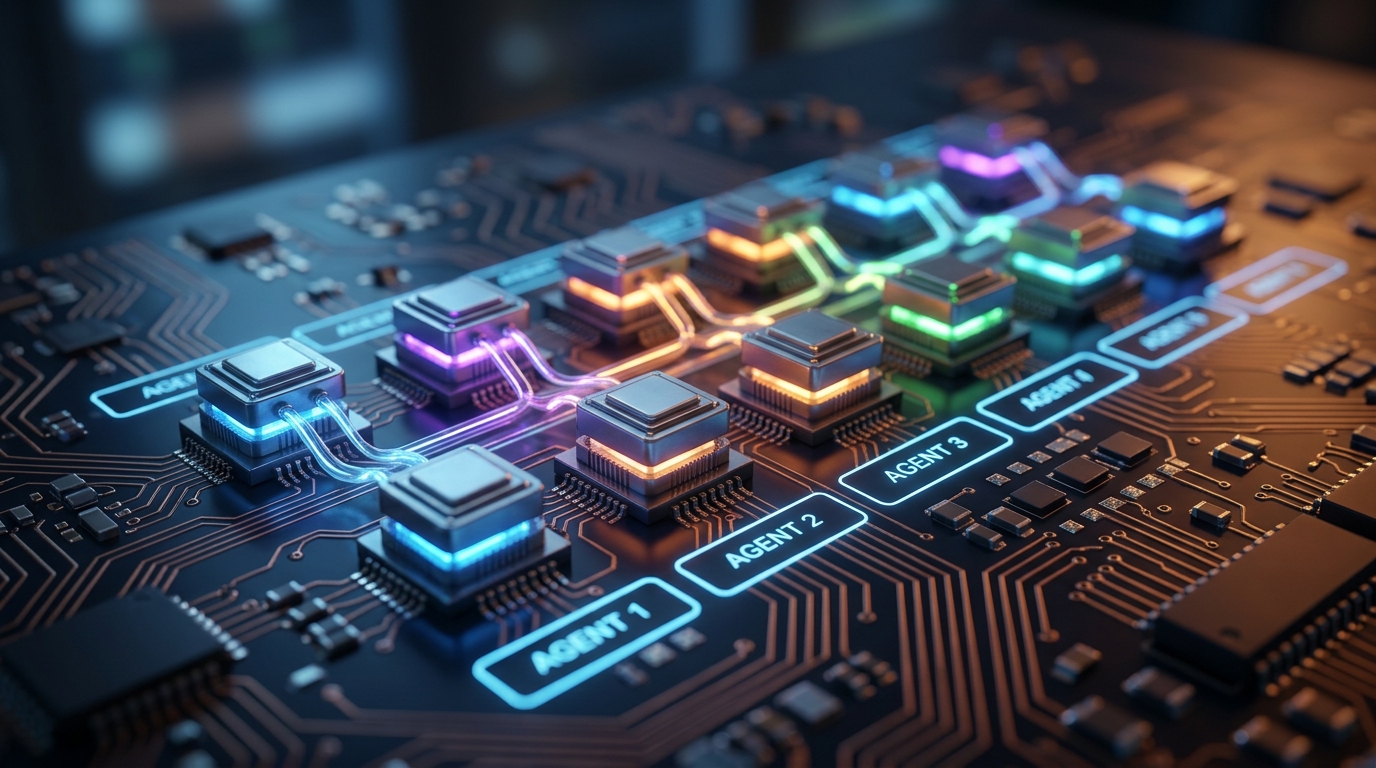
Modern AI app modernization tools use agentic workflows where one AI agent defines the architecture, another implements the code, and a third (the "QA Agent") runs regression suites to ensure no legacy business logic was lost in translation. This "sequential + parallel" agent setup is what allows for 10x faster delivery speeds.
The Strangler Strategy 2.0: AI-Native Application Refactoring
The most successful modernization projects in 2026 utilize the Strangler Pattern, but enhanced by AI. Instead of manually carving out microservices, AI agents scan "spaghetti code" to identify bounded contexts automatically.
- Automated Extraction: The AI analyzes database queries to reverse-engineer business rules.
- Proxy Layer Generation: The AI creates a "proxy" that talks to the legacy system while presenting a modern interface to the outside world.
- Incremental Replacement: One by one, legacy functions are replaced by AI-generated microservices until the old monolith is "strangled" and can be decommissioned.
This approach ensures business continuity. As one Reddit contributor noted, "Shipping fast with AI agents works until something breaks at 2 am. The Strangler Pattern provides the safety net needed for enterprise-grade deployments."
Designing for the Non-Human Consumer: Agent Experience (AX)
A critical component of AI-native application refactoring is optimizing for Agent Experience (AX). We are no longer just building for humans; we are building for agents that consume tokens.
- Token Optimization: AI-generated APIs are refactored to be "chatty" in a way that provides maximum context in minimum tokens, reducing LLM costs.
- Semantic Metadata: Endpoints are tagged with metadata so an AI agent can "understand" the purpose of an API without reading a 50-page Swagger document.
- Model Context Protocol (MCP): Modern tools now automatically generate MCP servers, allowing AI models like Claude or GPT-5 to securely access your legacy data as if it were a local file.
ROI Benchmarks: Measuring the Success of AI Modernization
Modernizing legacy systems is a strategic necessity, but it must be backed by data. In 2026, AI-augmented squads are reporting the following benchmarks:
- 45% Faster Migration Timelines: Projects that took 12 months in 2024 now take less than 7 months.
- 90% Reduction in Post-Migration Defects: AI-generated regression suites catch edge cases that human testers often miss.
- 60% Cost Savings on Technical Debt: By clearing old code, maintenance costs drop significantly, allowing budget to be reallocated to innovation.
- 2-5x Engineering Velocity: Once the monolith is broken, developers can ship features faster without fearing "spaghetti code" side effects.
Key Takeaways
- Modernization is Mandatory: By 2026, legacy systems are "invisible" to the agentic AI workflows that drive modern business.
- Agentic > Vibe: Move away from simple AI chat and toward agentic systems that use planning, implementation, and QA loops.
- The Strangler Pattern is King: Use AI to incrementally replace legacy logic rather than attempting a high-risk "big bang" migration.
- Focus on AX: Design your modernized APIs for the agents that will consume them, focusing on token efficiency and semantic clarity.
- Choose the Right Partner: Whether it's the specialized precision of Sanciti AI or the mainframe expertise of IBM, your tool choice determines your architectural control.
Frequently Asked Questions
What are AI app modernization tools?
AI app modernization tools are platforms that leverage generative and agentic artificial intelligence to automate the analysis, refactoring, and migration of legacy software (monoliths) into modern, cloud-native architectures like microservices.
How does AI help in modernizing monolithic apps for AI?
AI helps by performing "digital archaeology"—scanning millions of lines of undocumented code to extract business logic, generating modern code equivalents, and creating automated test suites to ensure the new system matches the old system's behavior.
What is the difference between legacy to agentic transformation and standard cloud migration?
Standard cloud migration (rehosting) simply moves old code to a new server. Legacy to agentic transformation re-architects the code to be discoverable and usable by autonomous AI agents, often involving the creation of MCP servers and semantic API layers.
Are AI-native application refactoring tools safe for regulated industries?
Yes, leading tools like Corsac Technologies and Sanciti AI embed compliance (HIPAA, GDPR, SOC2) directly into the refactoring process, ensuring that the generated code is more secure and audit-ready than the legacy system it replaces.
What is "Agentic Coding" in the context of legacy systems?
Agentic coding refers to using a multi-agent AI system to handle the modernization lifecycle. One agent might plan the migration, another writes the code, and a third verifies it against the legacy system's logs, creating a self-healing and self-verifying workflow.
Conclusion
The transition from legacy to agentic transformation is the defining engineering challenge of the late 2020s. Organizations that leverage AI app modernization tools today are not just cleaning up their technical debt; they are building the foundations for an autonomous future. By choosing the right AI software modernization platforms and adopting an agentic-first mindset, you can turn your aging monoliths into high-performance assets that drive real business value.
Ready to start your refactor? Begin with a bounded proof-of-concept on a single legacy module and witness how agentic AI can compress years of manual work into weeks of automated progress.