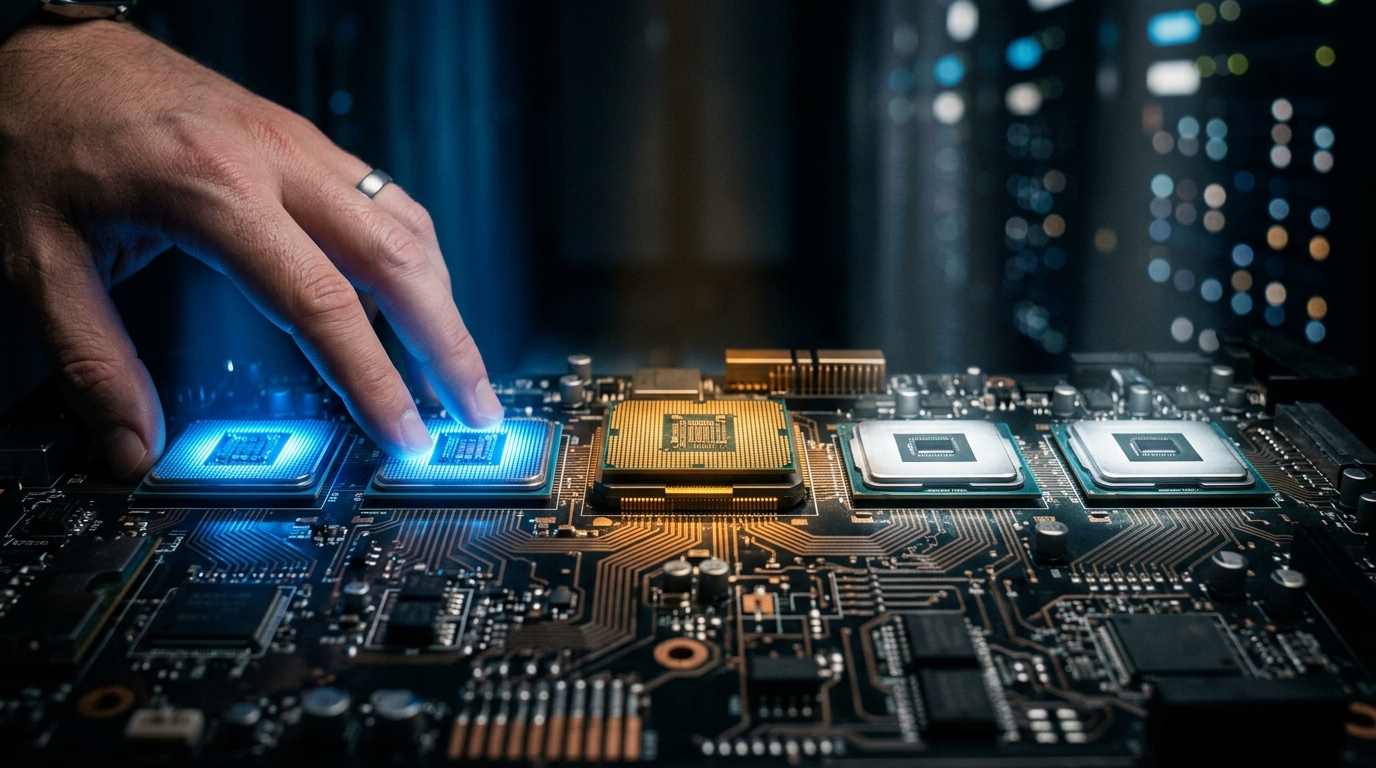
By 2026, the average cost of a data breach has surged past $5.2 million, and the primary target has shifted from software layers to the very silicon powering our intelligence: the Neural Processing Unit (NPU). With the mass adoption of AI PCs and edge devices like the Raspberry Pi 6 and ROG Ally X, AI-native firmware security is no longer a luxury—it is the foundation of a trusted enterprise. Traditional BIOS protections are failing against adversarial machine learning (AML) attacks that target NPU microcode to leak sensitive weights or poison local LLM outputs. If you aren't auditing your hardware-level AI security, you are leaving the keys to your most sensitive data under the digital doormat.
The Rise of the NPU Attack Surface in 2026
In 2026, the shift toward secure AI PC infrastructure has reached a tipping point. As highlighted in recent industry reports, 100% of modern enterprises now utilize AI-generated code, yet over 80% lack visibility into the firmware-level risks associated with the hardware running that code. The NPU, specifically designed to accelerate matrix multiplications for LLMs, operates on a proprietary microcode layer that often sits outside the reach of standard EDR (Endpoint Detection and Response) tools.
Hardware enthusiasts on platforms like Reddit have already noted the gaps in early NPU implementations. For instance, the Ryzen AI Z2 Extreme found in handhelds like the ROG Ally X offers massive shared memory (24GB), but Linux-based systems often struggle with native NPU support, leading users to "blacklist" NPU drivers to save power. This lack of driver maturity creates a "shadow hardware" environment where NPU microcode protection is non-existent, leaving the device vulnerable to persistent firmware-level malware that survives OS re-installs.
"I had to blacklist the amdxdna driver because SteamOS 3.8 doesn't use the NPU yet, and it just draws power. But that means I have no visibility into what that silicon is doing in the background," notes one high-level Linux developer on Reddit. This is the exact scenario attackers exploit: unmonitored, high-privilege silicon.
10 Best AI-Native Firmware Security Platforms 2026
Selecting the best NPU security tools 2026 requires a move toward platforms that integrate directly with the hardware abstraction layer (HAL) and provide real-time telemetry from the NPU. Here are the top 10 platforms leading the charge.
1. AccuKnox AI Security & Governance
AccuKnox has emerged as the gold standard for AI-native firmware security by utilizing eBPF (Extended Berkeley Packet Filter) and LSM (Linux Security Modules) at the kernel level. It provides a unified control plane that monitors NPU-to-memory traffic, ensuring that local model weights aren't being exfiltrated via side-channel attacks.
- Best For: Enterprise-grade runtime protection and zero-trust hardware isolation.
- Key Feature: Agentic Network Isolation that restricts which APIs the NPU can invoke.
2. HiddenLayer AI Hardware Shield
HiddenLayer focuses specifically on the integrity of the model artifacts and the silicon they run on. Their platform acts as an AI hardware vulnerability scanner, identifying poisoned logic in NPU microcode updates before they are flashed to the chip.
- Best For: Detecting backdoors in pre-trained models and hardware firmware.
- Key Feature: Model artifact scanning that preserves the IP of proprietary NPU architectures.
3. Kaspersky Antivirus for UEFI (KUEFI)
While traditional, Kaspersky’s KUEFI has evolved into a sophisticated firmware security tool that supports 2026-era AI PCs. It is one of the few platforms that can scan the EFI BIOS level for persistent threats that target the early boot sequence of AI accelerators.
- Best For: Preventing bootsector viruses and firmware-level persistence.
- Key Feature: Common Criteria certified endpoint security at the BIOS level.
4. Cycode AI Maestro
Cycode’s platform is essential for secure AI PC infrastructure because it tracks the entire lifecycle of AI components. Their "Context Intelligence Graph" maps the relationship between the NPU firmware, the drivers, and the high-level application code.
- Best For: Supply chain security and visibility into "Shadow AI" hardware usage.
- Key Feature: AI-BOM (AI Bill of Materials) that includes firmware versioning and NPU microcode hashes.
5. Microsoft Pluton Security Processor
Integrated directly into modern CPUs, Microsoft Pluton acts as a hardware-native security platform. In 2026, it provides the root of trust for NPU operations, ensuring that the hardware-level AI security cannot be bypassed even if the OS kernel is compromised.
- Best For: Windows-based AI PCs and Surface Pro enterprise fleets.
- Key Feature: Direct integration with Windows Hello and BitLocker for NPU-encrypted keys.
6. Robust Intelligence (RI Platform)
Robust Intelligence focuses on "Stress Testing" the NPU. It simulates adversarial inputs that attempt to cause an NPU "buffer overflow" at the firmware level—a common technique used to gain execution privileges in hardware.
- Best For: Red-teaming AI hardware and validating NPU robustness.
- Key Feature: Automated exploit generation for NPU-specific instruction sets.
7. Intel Hardware Shield (with AI Telemetry)
Intel’s 2026 updates to Hardware Shield include dedicated telemetry for their AI Boost NPUs. It uses machine learning to detect anomalies in hardware behavior, such as unexpected power spikes that indicate a cryptojacking attempt on the NPU.
- Best For: IT departments managing large-scale Intel Core Ultra deployments.
- Key Feature: Below-the-OS threat detection that alerts on NPU microcode tampering.
8. Snyk DeepCode AI (Hardware Layer)
Snyk has expanded its symbolic AI engine to analyze the interaction between C++ firmware code and NPU drivers. This helps developers identify "reachability" issues where a vulnerability in a high-level Python script could lead to a firmware exploit.
- Best For: Developers building local LLM applications for edge devices.
- Key Feature: Real-time remediation suggestions for insecure NPU driver calls.
9. Lakera Guard
Lakera provides a specialized firewall that sits between the user and the NPU-accelerated model. By filtering inputs before they reach the hardware, it prevents "jailbreak" attempts that target the NPU’s low-level memory management.
- Best For: SaaS companies deploying private instances of DeepSeek or Llama 4 on-premise.
- Key Feature: Heuristic analysis of indirect instructions that bypass standard filters.
10. Checkmarx One (Agentic Security)
Checkmarx uses agentic AI to autonomously audit the firmware supply chain. In 2026, their agents can verify the digital signatures of NPU microcode updates across a global fleet of devices, ensuring no "man-in-the-middle" attacks occurred during the update process.
- Best For: Compliance-heavy industries like Finance and Defense.
- Key Feature: Automated firmware integrity verification for distributed AI clusters.
| Platform | Primary Focus | AI-Native? | Best For |
|---|---|---|---|
| AccuKnox | Runtime/Kernel | Yes | Zero Trust Enforcement |
| HiddenLayer | Model Integrity | Yes | AML Protection |
| Kaspersky | UEFI/BIOS | Partial | Boot Persistence |
| Cycode | Supply Chain | Yes | AI-BOM & Governance |
| Microsoft Pluton | Hardware Root | Yes | Chip-to-Cloud Trust |
NPU Microcode Protection: Why Traditional UEFI Isn't Enough
Traditional hardware-level AI security relied on Secure Boot to verify that the OS loader hadn't been tampered with. However, the NPU introduces a new layer: the microcode scheduler. This is the low-level software that tells the NPU how to distribute workloads across its neural cores.
In 2026, we are seeing "Microcode Poisoning" attacks. An attacker doesn't need to break Secure Boot; they only need to deliver a malicious update to the NPU's specialized instruction set. Because the NPU has direct access to the system's RAM (to handle large model weights), a compromised NPU can read any data on the system, bypassing the CPU's memory protections.
The Vulnerability of Local LLMs
Users deploying DeepSeek or Llama 4 locally on a Raspberry Pi 6 (rumored to feature a 5-10 TOPS NPU) or an ROG Ally X must be aware of memory "scraping." If the NPU firmware is not isolated, a malicious prompt can cause the NPU to dump its current cache—which often contains the last 4,000 tokens of your private conversation—into a publicly accessible memory buffer.
How to Use an AI Hardware Vulnerability Scanner
To properly implement AI-native firmware security, you must move beyond static scanning. Follow these steps to audit your AI PC infrastructure:
- Baseline the Microcode: Use a tool like HiddenLayer to capture a hash of your current NPU microcode. Any deviation during a reboot should trigger an immediate hardware lock.
- Monitor NPU Power Signatures: Malicious firmware often runs "hotter" than standard microcode. Use Intel Hardware Shield or AccuKnox to monitor the NPU’s power consumption. A 5% increase in idle power could indicate a background training task or data exfiltration.
- Audit the Driver Stack: In Linux environments, ensure that drivers like
amdxdnaor Broadcom’s proprietary Pi drivers are signed. Reddit users often recommend kernel tweaks to disable unneeded hardware features; this reduces your attack surface. - Run Adversarial Simulations: Use Robust Intelligence to send "malformed weights" to the NPU. If the firmware crashes or allows a memory leak, your hardware-level protections are insufficient.
bash
Example of a 2026-era security check on an AI PC
Checking for unsigned NPU microcode modules
sudo ai-sec-tool --scan-npu --verify-signatures
Output:
[WARNING] Unsigned microcode detected in NPU Core 4
[ACTION] Isolating NPU from System RAM...
Securing AI PC Infrastructure: From ROG Ally X to Enterprise Desktops
The gaming handheld market has inadvertently become the testing ground for secure AI PC infrastructure. Devices like the ROG Ally X, with its Z2 Extreme chip, are essentially high-density AI nodes. Owners are currently using advanced persistence optimizations—such as custom core scheduling and memory tuning—to wring out performance.
However, these same "tweaks" can open security holes. For example, disabling "split_lock_mitigate" or forcing "pcie_aspm=force" can sometimes bypass hardware-level timing checks that prevent side-channel attacks.
The Raspberry Pi 6 Factor
As we look toward the 2026-2027 release of the Raspberry Pi 6, the community is demanding a built-in neural engine. For hobbyists, this means local AI without the cloud. For security professionals, this means thousands of unmanaged NPU nodes entering the network. Enterprise security platforms must be able to scale down to these ARM-based NPUs, providing the same best NPU security tools 2026 features as they do for x86 systems.
The Role of AI-BOM in Firmware Integrity
A critical component of AI-native firmware security is the AI Bill of Materials (AI-BOM). Much like a standard SBOM, the AI-BOM tracks the provenance of the AI stack. However, it adds a hardware-specific layer:
- NPU Model & Stepping: Identifies if the silicon has known hardware errata.
- Microcode Version: Ensures the NPU is patched against the latest "Matrix-Jailbreak" exploits.
- Weight Checksums: Verifies that the local LLM weights haven't been tampered with at rest.
- Quantization Metadata: Tracks how the model was compressed, as certain quantization methods (like 4-bit GGUF) can introduce unique security artifacts.
Platforms like Cycode are leading the way in automating the generation of these AI-BOMs, allowing CISOs to see exactly which version of an NPU driver is running on every laptop in the company.
Key Takeaways
- NPU is the New Frontier: In 2026, attackers have moved from the OS to the NPU microcode to bypass traditional security.
- Firmware-Level Persistence: Malicious AI firmware can survive a clean OS re-install; AI-native firmware security is required to detect these "ghost" threats.
- AccuKnox & Cycode Lead: For runtime and supply chain security, these platforms offer the most comprehensive protection for AI hardware.
- Local AI Requires Local Security: If you are running DeepSeek or Llama 4 locally, you must use an AI hardware vulnerability scanner to prevent memory scraping.
- AI-BOM is Mandatory: You cannot secure what you cannot see. Automated AI-BOMs are essential for hardware integrity.
Frequently Asked Questions
What is AI-native firmware security?
AI-native firmware security refers to security platforms specifically designed to monitor and protect the Neural Processing Unit (NPU) and the low-level microcode that governs AI hardware operations. Unlike traditional security, it understands the unique data flows of machine learning workloads.
Why do I need a specific NPU security tool in 2026?
Standard antivirus and EDR tools cannot "see" inside the NPU's proprietary instruction set. As more processing moves to the NPU to save battery and increase privacy, attackers are targeting this unmonitored space to leak data or gain persistent control over the device.
Can a firmware virus survive a Windows re-install on an AI PC?
Yes. If a virus infects the NPU microcode or the UEFI BIOS, it can persist even if the hard drive is wiped and the operating system is re-installed. Only specialized best NPU security tools 2026 can detect and remediate these threats.
Is the Raspberry Pi 6 secure for local AI?
The Raspberry Pi 6 is expected to be a highly flexible platform, but like all SBCs, its security depends on the user. Implementing hardware-level AI security and keeping NPU drivers updated will be critical for anyone using the Pi for sensitive edge AI tasks.
How does an AI hardware vulnerability scanner work?
These scanners analyze the firmware and microcode of AI accelerators (like NPUs and TPUs). They look for known vulnerabilities, unsigned code, and "logic bombs" that could allow an attacker to manipulate model outputs or access system memory.
Conclusion
The era of the AI PC has arrived, bringing with it a paradigm shift in how we think about hardware integrity. Securing the NPU is no longer an academic exercise—it is a frontline necessity. By 2026, the organizations that thrive will be those that treat their silicon with the same zero-trust rigor as their cloud networks. Whether you are managing a fleet of enterprise workstations or building a custom cluster of Raspberry Pi 6 nodes, the message is clear: secure your NPU at the firmware level today, or face the consequences of an invisible breach tomorrow.
Ready to audit your AI hardware? Start by implementing an AI-BOM with Cycode or deploying kernel-level runtime protection with AccuKnox to ensure your intelligence stays private.