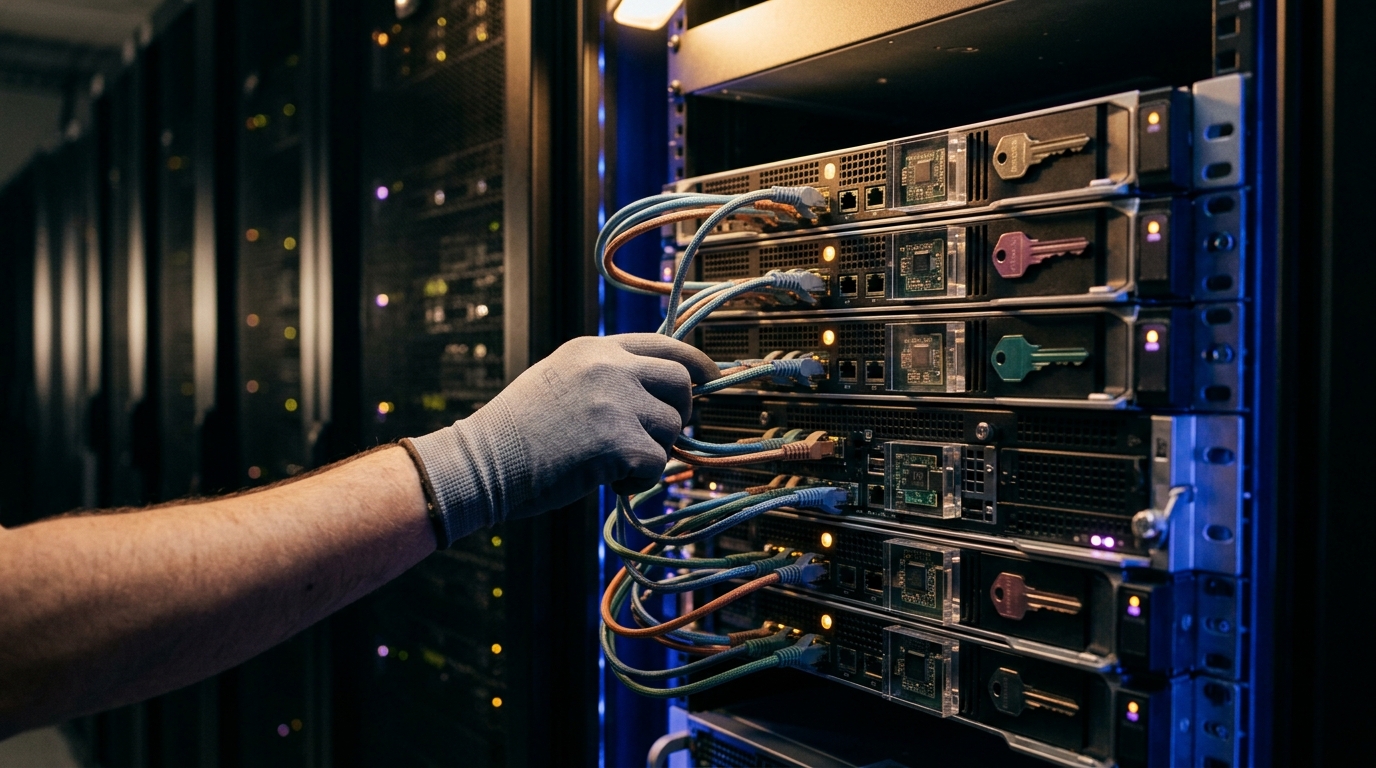
By late 2025, industry data from TollBit revealed a staggering reality: nearly 1 in every 31 web visits was an AI bot. Fast forward to 2026, and the "Agentic Web" has officially arrived. As AI agents move from simple text generation to autonomous browsing, the demand for AI-native proxy services has skyrocketed. Traditional rotating proxies are no longer enough to fool sophisticated security systems like DataDome or Cloudflare’s latest Turnstile iterations. Today, if your infrastructure lacks session-aware routing and visual reasoning, your bots aren't just blocked—they are blacklisted. To stay operational, you need a robust AI agent browsing infrastructure that mimics human behavior at the network and browser levels.
The Evolution of AI-Native Proxy Services in 2026
In 2026, the proxy market has shifted from simple IP rotation to deep-stack integration. AI-native proxy services are no longer just about changing an IP address; they are about managing the entire browser fingerprint, solving CAPTCHAs autonomously, and adapting to UI changes in real-time.
Traditional tools often fail because they rely on brittle CSS selectors. Modern anti-bot systems detect the "mechanical" nature of these interactions. The new generation of stealth proxies for web scraping utilizes computer vision and LLM-driven reasoning to interact with elements visually, making them nearly indistinguishable from human users. Furthermore, with the global proxy market projected to reach $2.04 billion by 2035, the infrastructure is becoming more specialized, catering specifically to automated bot detection bypass for AI agents.
1. Skyvern: The Leader in AI-Vision Automation
Skyvern has revolutionized the industry by moving away from DOM-based selectors. Instead of hunting through HTML, Skyvern uses computer vision to "see" the page just like a human would. This makes it the premier choice for bypass anti-bot security 2026 challenges, especially on sites with obfuscated code.
- Why it’s AI-Native: It uses LLMs to reason through multi-step workflows (e.g., "Log in, find the invoice, and download it") without site-specific code.
- Performance: High success rates on protected payer portals and government sites.
- Stealth Factor: Since it interacts visually, it avoids the inhuman click patterns that trigger modern bot detection.
Code Example: Automating a Protected Portal with Skyvern
python import asyncio from skyvern import Skyvern
skyvern = Skyvern(api_key="YOUR_API_KEY")
async def extract_data(): task = await skyvern.run_task( url="https://protected-portal.com/login", prompt="Log in and extract the last 3 months of billing data.", proxy_location="RESIDENTIAL", # Essential for stealth wait_for_completion=True ) print(f"Extracted Data: {task.output}")
asyncio.run(extract_data())
2. NodeMaven: Premium IP Quality for Multi-Accounting
Reddit discussions from power users in the r/nairobitechies community highlight NodeMaven as a top-tier provider for those who cannot afford a ban. While considered a "premium" service, its quality-over-quantity approach is vital for residential proxies for AI agents.
- Quality Filter: NodeMaven filters out blacklisted IPs, ensuring a higher success rate (reported at ~85% for automation-heavy setups).
- Sticky Sessions: Offers "Super Sticky" sessions that last up to 24 hours, which is critical for AI agents performing long-running tasks.
- Pricing: Starts at roughly $3.8/GB for monthly plans, positioning it as a high-performance choice for freelancers and agencies.
"I'm a full-time multi-accounter running automation-heavy setups across IG, TikTok, and Gmail. NodeMaven is the best for staying operational and avoiding bans." — Reddit User Review
3. Bright Data: Enterprise-Grade AI Data Collection
Bright Data remains the "final boss" of the proxy world. With a massive pool of over 150 million IPs and a focus on ethical sourcing, it provides the most comprehensive AI agent browsing infrastructure for large-scale enterprises.
- Advanced Anti-Bot: Features a built-in CAPTCHA solver and intelligent rotation logic.
- Compliance: Audited and transparent, making it the go-to for companies with strict legal requirements.
- Tooling: Their Proxy Manager is unmatched for granular control over session headers and geo-targeting.
4. Oxylabs: AI-Powered Scalability and Stealth
Oxylabs competes head-to-head with Bright Data, offering over 177 million global proxies. In 2026, their focus has shifted toward "OxyCopilot," an AI-driven assistant that helps automate parsing and scraping requests.
- Web Unblocker: A specialized tool that uses AI to manage cookies and fingerprints, specifically designed for automated bot detection bypass.
- SOCKS5 Support: Excellent for complex AI agents that require more than just HTTP/S protocols.
- Reliability: Known for having the most stable residential pool for high-concurrency tasks.
5. Decodo (formerly Smartproxy): The Value King for AI Pipelines
Decodo has rebranded to emphasize its role in the AI data pipeline. It offers one of the best price-to-performance ratios in the market, making it an excellent entry point for developers building AI-native applications.
- Fast Response Times: Benchmarked at ~0.63s, making it one of the fastest residential providers.
- Large Pool: 115M+ residential IPs with ZIP-level targeting.
- Pricing: Competitive pay-as-you-go models starting at $3.50/GB, which is ideal for testing stealth proxies for web scraping.
6. Live Proxies: Session-Aware Routing for Stateful Tasks
Live Proxies has carved out a niche by focusing on "session-aware" routing. For AI agents that need to maintain a state (like a shopping cart or a multi-page form), Live Proxies is a standout choice.
- Sticky Sessions: Supports sessions up to 24 hours, preventing the dreaded "session reset" mid-automation.
- Private IP Allocation: Offers options for private pools, reducing the "noisy neighbor" effect that often leads to bans on shared residential networks.
- Mobile Integration: Access to rotating mobile carrier IPs for the highest possible trust score.
7. Browserbase: Serverless Headless Infrastructure
Browserbase isn't just a proxy service; it's a serverless browser fleet. For developers who want to skip the headache of managing Playwright or Puppeteer instances, Browserbase provides a managed environment with bypass anti-bot security 2026 features baked in.
- Stealth Mode: Automatically randomizes fingerprints and uses real browser signatures.
- Session Replay: Allows developers to debug failed AI agent runs by watching a video of the session.
- Integrations: Works natively with LangChain and other AI agent frameworks.
8. NetNut: Static ISP Proxies for Long-Lived Sessions
NetNut stands out because it leverages direct-to-ISP connectivity. This provides the speed of a datacenter proxy with the trust of a residential IP, making it perfect for AI agent browsing infrastructure that requires long-term stability.
- Static ISP Pool: These IPs don't rotate, making them look like a real home user who stays online for days.
- Global Reach: Excellent coverage in the US and Europe with low latency.
- Success Rate: Reported at ~92% for SERP and product data scraping.
9. SOAX: Precision Geo-Targeting for AI Agents
SOAX is the surgeon’s scalpel of the proxy world. If your AI agent needs to verify localized ad content or check regional pricing, SOAX’s targeting is second to none.
- Granular Targeting: Target by Country, City, and even ASN (Internet Service Provider).
- Clean Pool: They pride themselves on a "clean" residential pool with high rotation flexibility.
- Dashboard: One of the most user-friendly interfaces for managing residential proxies for AI agents.
10. Firecrawl: The API-First Crawler for LLMs
Firecrawl has become a developer favorite in 2026 for its ability to turn any website into clean Markdown. It's the perfect "ingestion" layer for RAG (Retrieval-Augmented Generation) pipelines.
- LLM-Ready: Outputs data in formats that LLMs can instantly understand.
- Anti-Bot Handling: Manages proxy rotation and rate limiting under the hood.
- Simplicity: No need to manage complex browser scripts; just send a URL and get structured data back.
The Rise of the M2M Economy: HTTP 402 and AI Wallets
An emerging trend in 2026 is the shift from "bypassing" to "paying." Projects like 402gate and the x402 protocol are introducing a Machine-to-Machine (M2M) economy. Instead of a CAPTCHA, a website might request a micro-payment (e.g., $0.01 USDC) to allow an AI bot to scrape its data.
This "Easy Button" for legal data acquisition is gaining traction among major AI players who want to avoid legal headaches. However, until this becomes the global standard, AI-native proxy services remain the primary tool for navigating the web.
Comparison Table: Top AI-Native Proxy Services 2026
| Provider | Best For | Key Feature | Starting Price |
|---|---|---|---|
| Skyvern | Visual Automation | Computer Vision Reasoning | Usage-based |
| NodeMaven | Multi-Accounting | Premium IP Quality Filter | $3.8/GB |
| Bright Data | Enterprise Scale | 150M+ IP Pool / Compliance | Pay-as-you-go |
| Oxylabs | AI/ML Research | OxyCopilot / Web Unblocker | $49/mo |
| Decodo | Scraping Value | 0.63s Response Time | $3.50/GB |
| Live Proxies | Stateful Tasks | 24h Sticky Sessions | Custom/Tiered |
Key Takeaways
- Computer Vision is King: In 2026, tools like Skyvern that "see" the page are more effective than those that "read" the code.
- Session Stability Matters: For AI agents, maintaining a "sticky" session for 12-24 hours is crucial to avoid authentication resets.
- Quality over Quantity: As Reddit users noted, a smaller pool of clean IPs (NodeMaven/Floxy) often outperforms a massive pool of blacklisted ones.
- The M2M Shift: Keep an eye on protocols like x402; the future of web scraping may involve autonomous payments via AI wallets.
- Hybrid Infrastructure: The most successful setups in 2026 combine residential proxies with serverless browser fleets like Browserbase.
Frequently Asked Questions
What are AI-native proxy services?
AI-native proxy services are specialized routing infrastructures designed specifically for AI agents. Unlike traditional proxies, they offer features like browser fingerprint management, autonomous CAPTCHA solving, and session-aware routing to ensure that AI-driven browser interactions are not flagged by anti-bot security.
How do I bypass anti-bot security in 2026?
To bypass modern anti-bot security, you must move beyond simple IP rotation. Use stealth proxies for web scraping that provide high-reputation residential IPs and combine them with AI-powered browser automation tools (like Skyvern) that mimic human visual interaction and timing.
Why are residential proxies better for AI agents?
Residential proxies use IP addresses assigned to real home users by ISPs. Because these IPs have a high "trust score," they are less likely to be challenged by security systems. For AI agents performing complex tasks, residential proxies provide the camouflage needed to avoid being flagged as a data center bot.
What is the difference between rotating and sticky proxies?
Rotating proxies change your IP address with every request or at set intervals. Sticky proxies allow you to maintain the same IP address for a specific duration (up to 24 hours). Sticky proxies are essential for AI agents that need to log into accounts or navigate multi-step workflows without losing their session state.
Can AI agents pay to bypass bot detection?
Yes, emerging protocols like x402 allow websites to issue an "HTTP 402 Payment Required" status code. AI agents equipped with digital wallets can autonomously pay a micro-fee to access the data legally, bypassing the need for traditional anti-bot workarounds.
Conclusion
The landscape of web automation has changed forever. As we navigate the complexities of 2026, the choice of proxy provider is no longer a secondary concern—it is the foundation of your AI agent browsing infrastructure. Whether you are leveraging the visual reasoning of Skyvern, the premium IP quality of NodeMaven, or the enterprise scale of Bright Data, the goal remains the same: staying undetectable in an increasingly hostile digital environment.
By integrating these AI-native proxy services into your workflow, you ensure that your agents can scale, adapt, and succeed where traditional scrapers fail. The "cat and mouse" game of bot detection continues, but with the right stealth tools, the advantage is firmly in the hands of the innovators. Ready to upgrade your stack? Start with a residential pool that prioritizes session stability and watch your success rates soar.