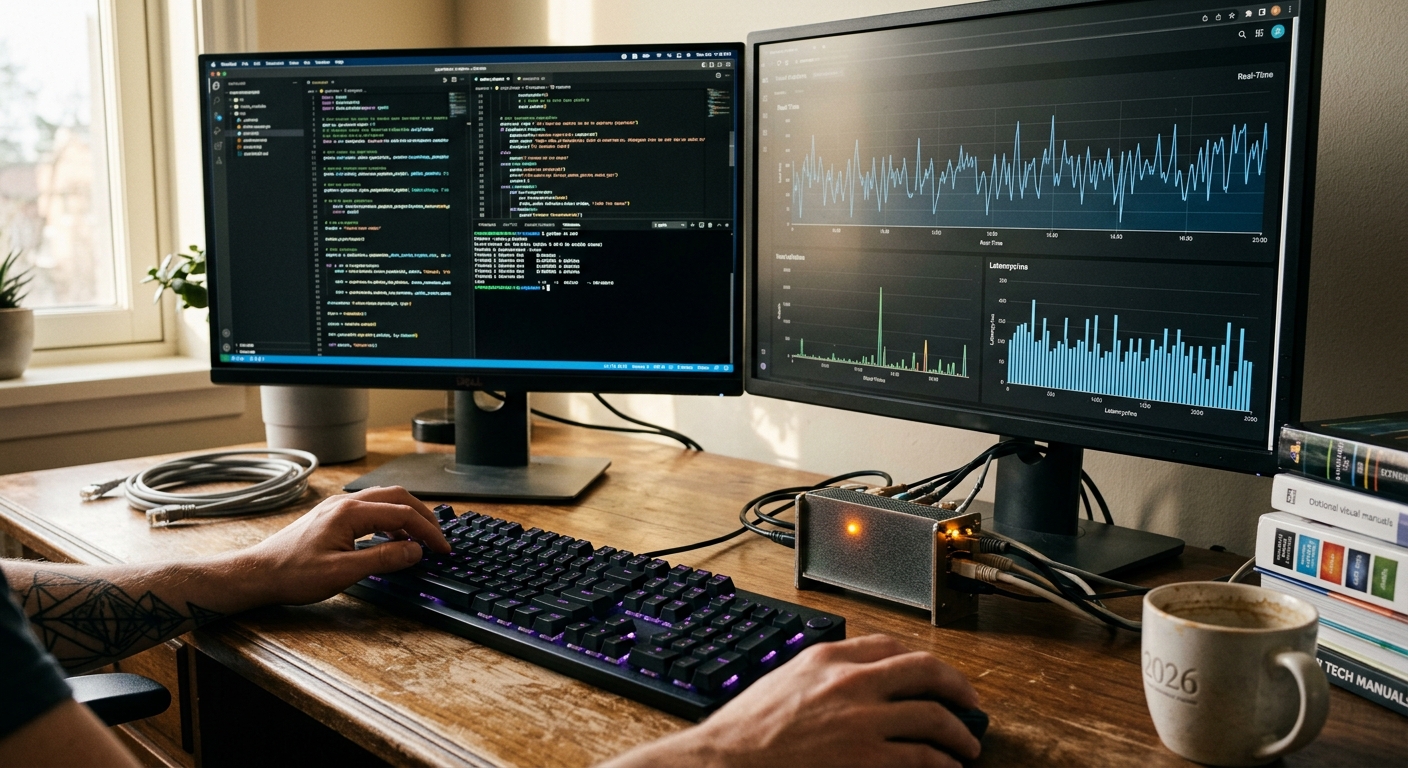
By 2026, the average enterprise AI agent generates 10x more telemetry than the application it manages. Storing 15 billion rows of historical data isn't just a scaling challenge; it's a survival metric for modern engineering teams. To thrive in an era of autonomous agents and high-frequency inference, you need an ai-native time-series database that bridges the gap between high-frequency ingestion and complex relational intelligence.
Traditional databases are choking on the sheer volume of "modelCall" logs, prompts, and vector embeddings. Whether you are building a real-time trading bot, monitoring a fleet of IoT sensors, or managing real-time agent observability, the database you choose today will dictate your infrastructure costs and query latency for the next decade. This guide breaks down the elite contenders in the time-series space, optimized for the AI-driven workloads of 2026.
The Shift to AI-Native Time-Series Architecture
In 2026, the definition of a "database" has changed. We are no longer just storing timestamps and floats. Modern workloads require a time-series vector database—a system capable of storing high-frequency telemetry alongside high-dimensional vector embeddings for RAG (Retrieval-Augmented Generation) and anomaly detection.
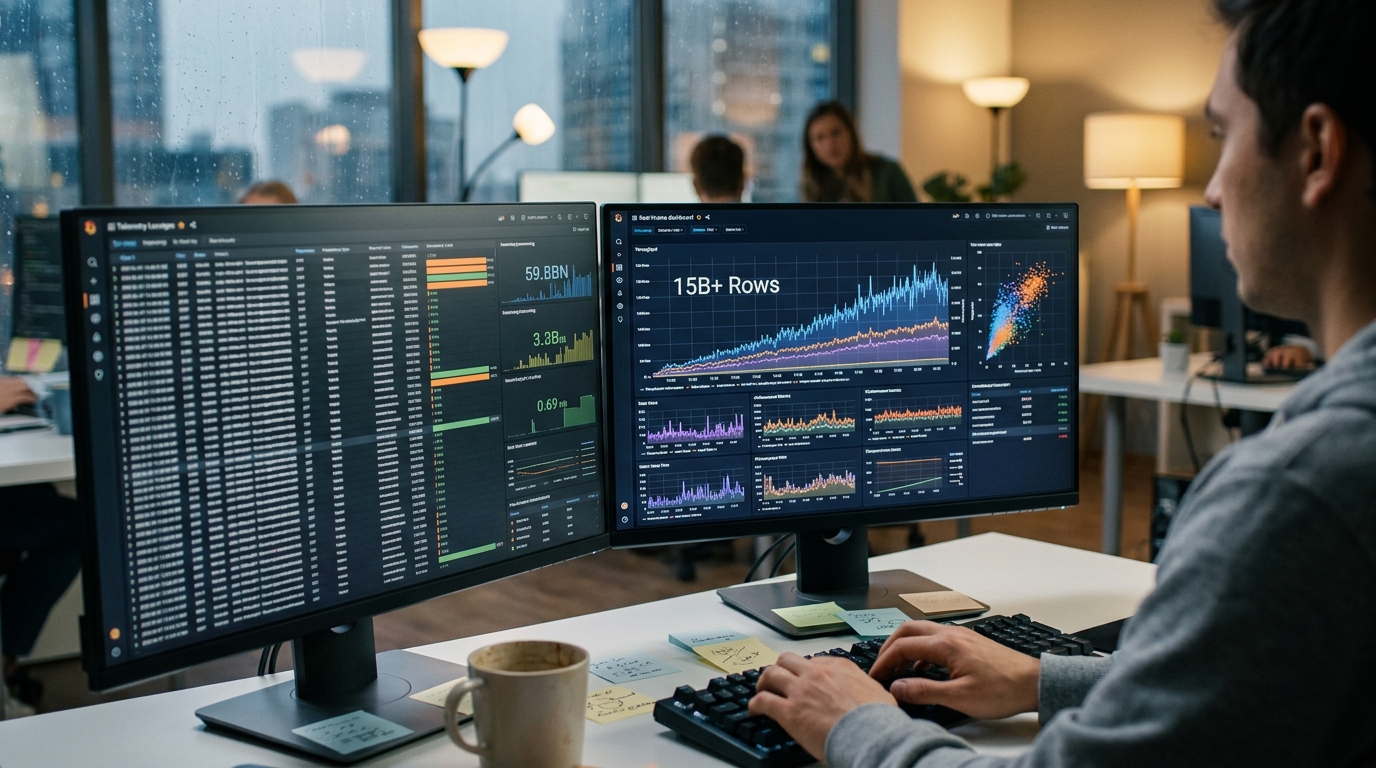
As discussed in recent engineering forums, a common setup involves storing metadata for ~10,000 entities with a high-ingestion rate of one new row per minute per entity. That results in: - 14.4 million rows per day - 5.2 billion rows per year - 15B+ rows over a 3-year retention period.
For high-frequency AI data storage, a general-purpose database like vanilla MongoDB or PostgreSQL often hits a wall. You need built-in compression, automatic downsampling, and the ability to perform complex JOINs between time-series data and relational metadata.
1. TimescaleDB: The SQL Powerhouse for AI Metadata
Best For: Teams that need full SQL power and relational JOINs.
TimescaleDB (now often deployed via the Tiger Data cloud platform) remains the gold standard for teams that refuse to leave the PostgreSQL ecosystem. It transforms Postgres into a high-performance time-series engine using "hypertables."
Why it's AI-Native in 2026:
Timescale has integrated pgvector support, allowing you to store AI model embeddings directly alongside your time-series metrics. This makes it the premier choice for real-time agent observability, where you might want to search for "similar failed prompts" over the last 30 days using semantic search.
Key Features: - 90%+ Compression: Uses columnar storage to shrink massive datasets. - Continuous Aggregates: Pre-computes rollups (like hourly averages) in the background. - Full SQL: No proprietary languages (like Flux) to learn.
"Timescale will move older data to compressed tables for you automatically... 15B rows is nothing for a well-tuned TS hypertable." — Senior Database Engineer, Reddit.
2. InfluxDB 3.0: The Observability Giant Reborn
Best For: Massive-scale monitoring and DevOps telemetry.
InfluxDB 3.0 is a complete ground-up rewrite in Rust, moving away from the controversial Flux language in favor of SQL and InfluxQL. It is built on the Apache Arrow stack, making it natively compatible with the modern AI data ecosystem.
The 2026 Edge:
By using Apache Parquet for persistence, InfluxDB 3.0 offers incredible storage efficiency. It is designed for high-cardinality data—perfect for tracking millions of individual AI agent instances across a global cluster.
Comparison Note: In the InfluxDB vs Timescale 2026 debate, InfluxDB usually wins on raw ingestion throughput, while Timescale wins on query flexibility and relational complexity.
3. ClickHouse: The Unrivaled OLAP Speed Demon
Best For: Sub-second analytics on petabyte-scale datasets.
While technically an OLAP (Online Analytical Processing) database, ClickHouse has become a favorite for time-series workloads due to its "MergeTree" engine. It is arguably the fastest database on this list for reading billions of rows.
AI Capabilities:
ClickHouse is frequently used to power real-time AI dashboards. If you need to calculate the "top 10 most expensive AI calls" across 2 years of data in under 200ms, ClickHouse is your best bet.
Pro Tip: For the best results, denormalize your metadata into your main time-series table at ingestion time to avoid expensive JOINs during hot queries.
4. QuestDB: Ultra-Low Latency for High-Frequency AI
Best For: Financial AI, high-frequency trading, and real-time sensor fusion.
QuestDB is engineered for performance. It uses a column-oriented approach and a zero-copy model to achieve ingestion rates that make other databases look sluggish.
Why Engineers Love It:
It supports nanosecond timestamps, which is a requirement for high-frequency AI data storage in the financial sector. It also offers an extremely clean SQL implementation with time-series extensions like ASOF JOIN, which is essential for aligning disparate data streams (e.g., matching a trade price to the nearest sensor reading).
5. VictoriaMetrics: Scaling Prometheus to the Limit
Best For: Cost-conscious teams running Kubernetes-heavy AI workloads.
If your AI stack is built on Prometheus, VictoriaMetrics is the logical upgrade. It acts as a drop-in replacement but offers much better compression and horizontal scalability.
Key Advantage: It is famously efficient with RAM and disk IO. Many teams report a 10x reduction in infrastructure costs after migrating from a standard Prometheus/Thanos setup to VictoriaMetrics.
6. Kdb+: The Financial Legend in the AI Era
Best For: Quantitative research and institutional-grade AI trading.
Kdb+ by KX has been the "secret sauce" of Wall Street for decades. In 2026, it remains the most powerful (and expensive) tool for processing tick data. Its vector-based programming language, q, is designed for high-performance math on time-series arrays.
The Catch: The learning curve is vertical, and the licensing fees are significant. However, for a best database for real-time ai 2026 list, kdb+ cannot be ignored for its sheer raw power.
7. Apache Druid: Real-Time Stream Analytics
Best For: Interactive analytics on streaming event data (Kafka/Pulsar).
Druid is designed for sub-second queries on event streams. It is the backbone of many real-time AI observability platforms that need to provide "slice-and-dice" capabilities to end-users.
Architecture Tip: Druid shines when paired with a streaming layer like Kafka. It pre-aggregates data during ingestion, ensuring that your dashboards stay fast even as your data grows into the trillions of rows.
8. TDengine: IoT Edge-to-Cloud Specialist
Best For: Industrial AI (IIoT) and smart city telemetry.
TDengine uses a unique "one table per device" architecture. This significantly reduces locking contention and allows for massive parallel ingestion.
2026 Feature Set:
It includes built-in caching, stream processing, and data subscription features. For AI models running at the "edge" (on-device), TDengine’s lightweight footprint is a major differentiator.
9. GreptimeDB: Distributed Cloud-Native Time-Series
Best For: Cloud-native applications requiring elastic scaling.
GreptimeDB is a rising star in the ai-native time-series database category. Built in Rust, it is designed to run on top of cost-effective object storage like AWS S3 while maintaining high performance.
Why it matters: It supports the PromQL, InfluxQL, and SQL dialects, making it a versatile choice for teams that want to migrate away from legacy systems without rewriting every query.
10. CrateDB: The Multi-Model Scalability King
Best For: Complex AI platforms managing logs, metrics, and JSON metadata.
CrateDB combines the familiarity of SQL with the search capabilities of Lucene. It is a distributed database that handles semi-structured data (JSON) as a first-class citizen.
AI Use Case: If your AI model interactions return complex, nested JSON objects that change frequently, CrateDB’s dynamic schema and full-text search capabilities make it highly effective for deep forensic analysis of AI behavior.
InfluxDB vs Timescale 2026: Which Should You Choose?
This is the most frequent question in the database community. The answer depends on your primary bottleneck.
| Feature | InfluxDB 3.0 | TimescaleDB (Tiger Data) |
|---|---|---|
| Core Engine | Rust / Arrow / Parquet | PostgreSQL / Hypertables |
| Query Language | SQL & InfluxQL | Full PostgreSQL SQL |
| Metadata Handling | Tags (Limited relational) | Full Relational (JOINs) |
| Best Use Case | Infrastructure Monitoring | Business Intelligence + IoT |
| Compression | High (Columnar Parquet) | High (Columnar Chunking) |
| AI Readiness | Vector-compatible (via Arrow) | Integrated Vector Search (pgvector) |
Choose InfluxDB if: You are dealing with trillions of small, independent metrics (e.g., CPU stats from 100k servers) and want a managed, observability-first experience.
Choose Timescale if: You need to correlate time-series data with a complex business domain (e.g., "Show me the average latency for users in the 'Gold' subscription tier who used the 'GPT-4o' model").
Architecting for 15B+ Rows: Lessons from the Trenches
When scaling a high-frequency AI data storage system, the database is only half the battle. Based on real-world research from data engineering experts, here is the recommended architecture for 2026:
1. Don't Do Dual Writes
Many developers try to write to an OLTP database (like MongoDB) and an OLAP database (like ClickHouse) simultaneously. This leads to data inconsistency. Instead, use Change Data Capture (CDC). - Pattern: Write to your primary database -> Stream changes via Kafka -> Sink to your ai-native time-series database.
2. Batch Your Inserts
Writing 15 billion rows one by one will kill any database. Batch your inserts into groups of 1,000 to 10,000 rows. This reduces the overhead of transaction commits and index updates.
3. Embrace the Outbox Pattern
To ensure that your AI model calls are never lost, use the Outbox Pattern. Write the "call event" to a local table in your transactional database first, then have a background process move it to your time-series engine. This protects you against network hiccups and database downtime.
4. Define Your SLAs Early
Does your dashboard really need to be real-time? - True Real-Time (<1s): Expensive. Requires streaming engines like Druid or QuestDB. - Near Real-Time (1-minute latency): Much cheaper. Allows for micro-batching into Timescale or ClickHouse.
Key Takeaways
- TimescaleDB is the best all-rounder for teams that need SQL and relational JOINs.
- ClickHouse is the king of query speed for massive analytical workloads.
- InfluxDB 3.0 has solved its previous cardinality issues and is a top-tier observability choice.
- QuestDB is the go-to for ultra-high-frequency ingestion (financial/trading AI).
- Vector Integration is the new frontier; ensure your TSDB can handle embeddings for modern AI observability.
- PostgreSQL is surprisingly capable of handling billions of rows when tuned with the right extensions.
Frequently Asked Questions
What is the best database for real-time AI 2026?
The "best" database depends on your specific needs. For high-frequency ingestion with low latency, QuestDB or ClickHouse are top choices. For complex queries involving metadata, TimescaleDB is superior.
Can MongoDB handle time-series data at scale?
While MongoDB has a time-series collection type, it is generally considered suboptimal for high-ingestion analytics compared to dedicated engines like ClickHouse or Timescale. It is better to use MongoDB for transactional data and sync it to a TSDB for analytics.
What is a time-series vector database?
It is a database that combines traditional time-series storage (timestamps and metrics) with vector storage (mathematical representations of data). This allows for semantic search and AI-driven pattern recognition over time-based data.
Is InfluxDB still the leader in 2026?
InfluxDB remains the market leader by adoption, but competitors like Timescale and ClickHouse have gained significant ground by offering better SQL support and more flexible data models.
How do I handle 15 billion rows of data?
You must implement a strategy involving partitioning (breaking data into time-based chunks), compression (columnar storage), and retention policies (moving old data to cold storage or S3).
Conclusion
Choosing an ai-native time-series database in 2026 is no longer just about choosing a place to dump metrics. It is about building a foundation for real-time agent observability and high-frequency intelligence. If you are starting a new project, start with TimescaleDB for its flexibility or ClickHouse for its raw speed.
Remember, the most expensive database is the one that forces you to re-architect your entire stack two years from now. Choose a system that scales with your AI ambitions.
Ready to scale? Start by benchmarking your top three choices with a week's worth of production-simulated data. Your future self (and your infrastructure budget) will thank you.