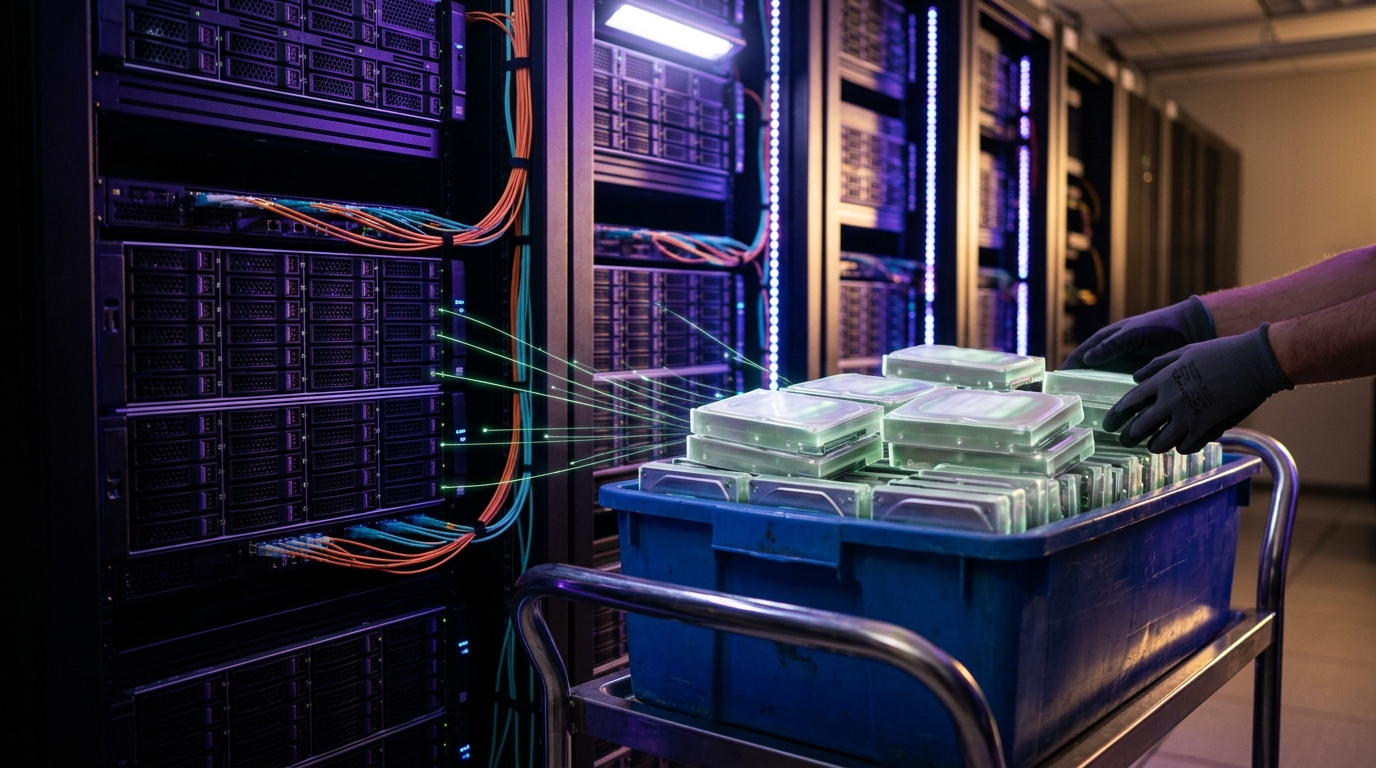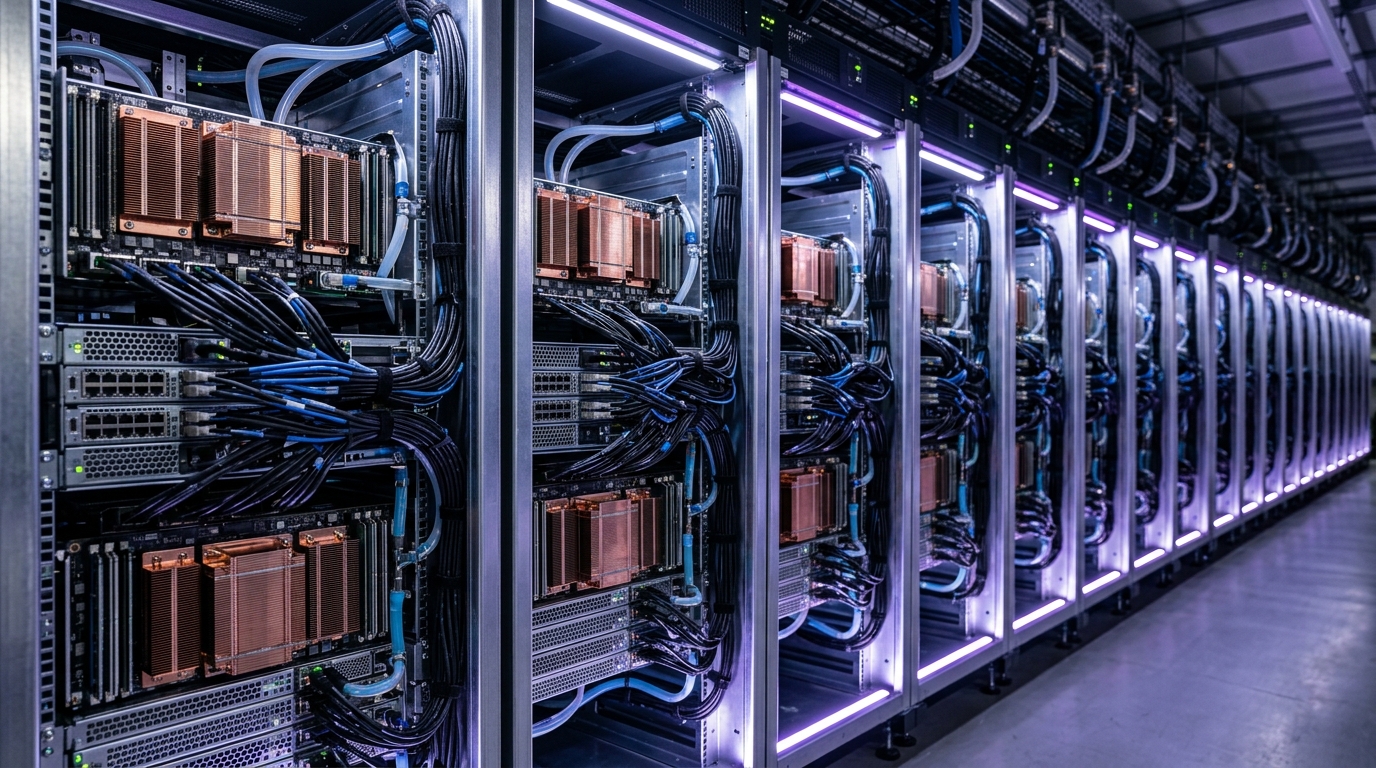
By 2026, the era of the 'generalized VM' for high-end machine learning has officially ended. As Llama 4 clusters push the boundaries of model FLOPS utilization (MFU), the performance tax of virtualization—once a mere 5% annoyance—has become a multi-million dollar liability. If you are architecting a bare metal cloud for AI today, you aren't just looking for a server; you are looking for an 'AI Factory' that eliminates the 'noisy neighbor' effect and provides direct access to the silicon. In this guide, we analyze the top providers delivering the raw compute, RDMA networking, and high-performance storage required to host the next generation of frontier models.
The Great Repatriation: Why AI is Killing the VM
In early 2026, a significant shift occurred in how enterprises view high-performance AI infrastructure. For years, the convenience of the public cloud led teams to accept over-provisioned memory and inconsistent CPU performance. However, Reddit's r/hetzner community recently highlighted a growing sentiment: "Renting a virtualized instance is a gamble. You may receive a CPU that scores 1,500 points on Passmark... or one that scores 3,000."
When training a model like Llama 4, these inconsistencies aren't just technical quirks; they are cluster-killers. If one node in a 1,024-GPU cluster lags due to a hypervisor update or a noisy neighbor on the same EPYC Rome host, the entire training job stalls. This has led to the 'Great Repatriation,' where AI engineers are moving away from traditional hyperscalers toward Llama 4 hosting providers that offer dedicated, single-tenant hardware.
As one cloud architect noted, "The Internet seemed more stable before everyone migrated to Cloudflare and AWS. On a 10-year timeline, a bare metal box with software RAID10 almost always comes out on top." For AI, this stability translates to predictable training times and lower egress costs, which have climbed by 10-15% annually in the virtualized public cloud.
Bare Metal vs. Virtualized AI Hosting: The 2026 Benchmarks
The performance gap between bare metal and virtualized hosting has widened due to the sheer complexity of modern AI workloads. Virtual Machines (VMs) introduce a layer of abstraction that interferes with direct memory access (DMA) and instruction-per-clock (IPC) efficiency.
Performance Comparison Table: Bare Metal vs. VM
| Metric | Bare Metal (e.g., 7950X3D / B200) | Virtualized Instance (vCPU) |
|---|---|---|
| Single-Thread IPC | 100% (Native) | 70% - 85% (Shared Boost Clocks) |
| Storage Latency | Consistent < 10μs | Inconsistent 50μs - 200μs |
| GPU Access | Direct PCIe / NVLink | Pass-through Hypervisor Overhead |
| Network | RDMA / InfiniBand Native | Virtualized NIC (Higher Jitter) |
| Cost Predictability | Trivial (Fixed Monthly) | Complex (Egress + API + Usage) |
As research data indicates, renting a 16-core EPYC VM often results in half the performance of a 7950X3D bare metal box for single-threaded workloads. In the context of AI inference, where low latency is the primary KPI, the 'shared boost clock' problem of VMs means your tokens-per-second will fluctuate based on what other tenants are doing. Bare metal cloud for AI ensures that 100% of the hardware’s capability is dedicated to your weights and biases.
Top 10 AI-Native Bare Metal Clouds for Llama 4
Choosing the right partner for dedicated GPU servers 2026 requires looking beyond just the GPU count. You must evaluate the provider's backplane, their power density, and their proximity to high-speed fiber backbones.
1. CoreWeave: The Neocloud Titan
CoreWeave has moved from a niche crypto-miner to the dominant force in AI infrastructure. With a contracted revenue backlog of over $66 billion, they are the first port of call for frontier model training. They offer massive clusters of NVIDIA H100 and B200 GPUs connected via InfiniBand. Their advantage is 'bare metal speed'—provisioning thousands of GPUs in minutes, not weeks.
2. Lambda Labs: The Developer's Choice
Lambda specializes in the full stack. Their 1-click clusters are optimized for PyTorch and TensorFlow. In late 2025, Lambda partnered with Microsoft to deploy GB300 NVL72 GPUs, making them a top-tier choice for NVIDIA B200 bare metal rental. They are known for providing the 'cleanest' bare metal experience with pre-installed AI drivers.
3. Nebius: The European Powerhouse
Nebius has emerged as a leader in the EMEA market, signing multi-billion dollar deals with Microsoft and Meta. Their data centers are designed as 'AI Factories' with a focus on power density. SemiAnalysis recently rated Nebius in the 'Gold Tier' for GPU cloud quality, citing their superior MFU (Model FLOPS Utilization) metrics.
4. Hetzner: The Price/Performance Champion
Hetzner remains the 'value' king. While they aren't a GPU-first cloud, their AX-line (Ryzen/EPYC) bare metal servers are unrivaled for AI inference on iGPUs and CPU-based preprocessing. For teams running 'small' LLMs (7B - 14B parameters) or video encoding via Intel QuickSync, Hetzner offers a 3x performance-per-dollar lead over any VM provider.
5. Oracle Cloud (OCI): The Enterprise Supercluster
Oracle has reinvented itself through the 'Stargate' initiative. They can scale to 131,072 GPUs in a single cluster. For Llama 4 training, OCI’s Zettascale architecture provides the necessary bandwidth to prevent the 'all-reduce' bottleneck that plagues smaller providers.
6. Equinix Metal: Global Edge Bare Metal
Equinix provides the physical layer for the internet. Their 'Metal' offering allows you to deploy dedicated hardware in 50+ global locations. This is ideal for high-performance AI infrastructure that needs to live at the edge, reducing latency for real-time agentic workflows.
7. Vultr: The Global Agile Cloud
Vultr has aggressively expanded its GPU fleet, offering B200 and MI300X instances across 32 regions. They bridge the gap between the simplicity of DigitalOcean and the power of CoreWeave, offering transparent billing and instant deployment.
8. Crusoe: The Sustainable Compute Leader
As AI power consumption becomes a PR nightmare, Crusoe offers bare metal powered by stranded energy (flare gas and renewables). They provide high-end NVIDIA clusters with a carbon-neutral footprint, making them the preferred choice for ESG-conscious enterprises.
9. Scaleway: The ARM and Specialized Metal Expert
This European provider offers a mix of NVIDIA GPUs and ARM-based bare metal. ARM is increasingly relevant for inference-optimized workloads. Scaleway’s UI and developer experience are highly rated, providing a more 'modern' feel than traditional hosting providers.
10. Latitude.sh: The Bare Metal API Specialist
Latitude.sh focuses on the 'Cloudification' of bare metal. Their API allows for programmatic deployment of dedicated GPU servers. They are a favorite for teams building their own 'internal' AI clouds who need a reliable, automated hardware layer.
Hardware Deep Dive: NVIDIA B200 Bare Metal Rental and Blackwell Architecture
In 2026, the NVIDIA B200 bare metal rental is the most sought-after resource in the tech world. The Blackwell architecture represents a 2.5x increase in training performance over the H100. However, this performance is only accessible if the cooling and power delivery are native.
Blackwell GPUs require liquid cooling in most high-density configurations (NVL72). Virtualized clouds often struggle to pass through the telemetry data required to monitor these cooling systems effectively. On bare metal, engineers have direct access to the thermal throttling metrics and can optimize their training loops accordingly.
"The AX102 is a beast for video transcoding and AI inference," says one infra lead on Reddit. "We get 530fps on AX102 vs 400fps on virtualized setups. When you scale that to a Llama 4 cluster, the difference is the difference between finishing a training run in 3 months or 5 months."
The Economics of Scale: vCPU Pricing vs. Dedicated Metal
Cloud costs are climbing. In 2025/2026, vCPU prices hit an average of $11.40/month, a 10% increase year-over-year. RAM and egress fees followed suit. For a small dev team, these 'creeping' bills are manageable. For an AI startup, they are a death sentence.
Why Bare Metal is 40% Cheaper for AI
- No Hypervisor Tax: You don't pay for the software layer that manages the VM.
- Predictable Egress: Many bare metal providers (like Hetzner or Gcore) offer bundled bandwidth or lower egress rates ($0.01/GB vs $0.07/GB on AWS).
- Higher Density: You can run more containers per physical host on bare metal than on VMs due to lower memory overhead.
- Fixed Billing: As one former managed hosting specialist put it, "Our simulations showed AWS is a niche service... for everyone else, bare metal is simpler, more robust, and impossible to accidentally rack up a crazy bill."
Networking: The Invisible Bottleneck in Llama 4 Clusters
You can have the fastest GPUs in the world, but if your networking is virtualized, your Llama 4 hosting providers are failing you. Training a model with 1T+ parameters requires frequent 'weight syncing' across nodes.
RDMA (Remote Direct Memory Access) and InfiniBand are the standards here. They allow one GPU to access the memory of another GPU on a different server without involving the CPU or the OS kernel. This 'kernel bypass' reduces latency from milliseconds to microseconds. Most virtualized clouds use 'Software Defined Networking' (SDN), which adds too much jitter for stable large-scale training. Bare metal gives you the 'raw' wire, ensuring your cluster stays synchronous.
Key Takeaways
- Performance is Native: Bare metal offers up to 2x the single-threaded performance and significantly lower storage latency compared to virtualized AI instances.
- Llama 4 Needs Blackwell: NVIDIA B200 GPUs are the 2026 standard, and bare metal is the only way to maximize their 2.5x performance gains.
- Cost Predictability: Bare metal eliminates 'billing surprises' from egress fees and variable compute pricing, often saving 30-50% on large-scale workloads.
- Networking is King: RDMA and InfiniBand are essential for cluster synchronization; SDN in traditional clouds is a bottleneck.
- Repatriation is Real: High-growth AI companies are moving back to dedicated hardware to maintain control over security, compliance, and MFU.
Frequently Asked Questions
What is the best bare metal cloud for AI training in 2026?
For large-scale frontier model training like Llama 4, CoreWeave and Nebius are the industry leaders due to their massive NVIDIA B200 fleets and InfiniBand networking. For smaller-scale fine-tuning, Lambda Labs offers the best developer experience.
Why is bare metal better than AWS or Azure for GPUs?
While hyperscalers offer convenience, they charge a premium for virtualization and egress. Bare metal provides high-performance AI infrastructure with direct hardware access, eliminating hypervisor overhead and providing more consistent performance for long-running training jobs.
How much does NVIDIA B200 bare metal rental cost?
Prices vary based on commitment length, but expect to pay between $4.50 and $6.50 per GPU hour for on-demand B200 access in 2026. Reserved instances (1-3 years) can drop these costs by 40% or more.
Can I run Llama 4 on Hetzner bare metal?
Yes, but with caveats. Hetzner is excellent for AI inference and CPU-heavy tasks. However, for training Llama 4, you would need their specialized GPU nodes or a provider with a faster inter-node backplane (like InfiniBand) which Hetzner traditionally lacks in their standard consumer line.
What is MFU and why does bare metal improve it?
Model FLOPS Utilization (MFU) measures how much of a GPU's theoretical peak performance is actually being used for training. Bare metal improves MFU by reducing system latency and 'jitter' from the hypervisor, ensuring the GPUs aren't idling while waiting for data from the network or disk.
Conclusion
In the high-stakes race of AI development, infrastructure is destiny. Choosing a bare metal cloud for AI isn't just about saving money; it's about ensuring your engineering team isn't fighting the hypervisor while trying to solve the next great challenge in machine learning. Whether you are building a massive Llama 4 cluster on CoreWeave or optimizing inference on Hetzner, the move to dedicated metal is a move toward professional-grade reliability. As we move further into 2026, the 'managed metal' model will continue to eclipse traditional virtualization for any team serious about their AI tokens-per-second and their bottom line.
Ready to optimize your stack? Explore our developer productivity tools to streamline your bare metal deployments.