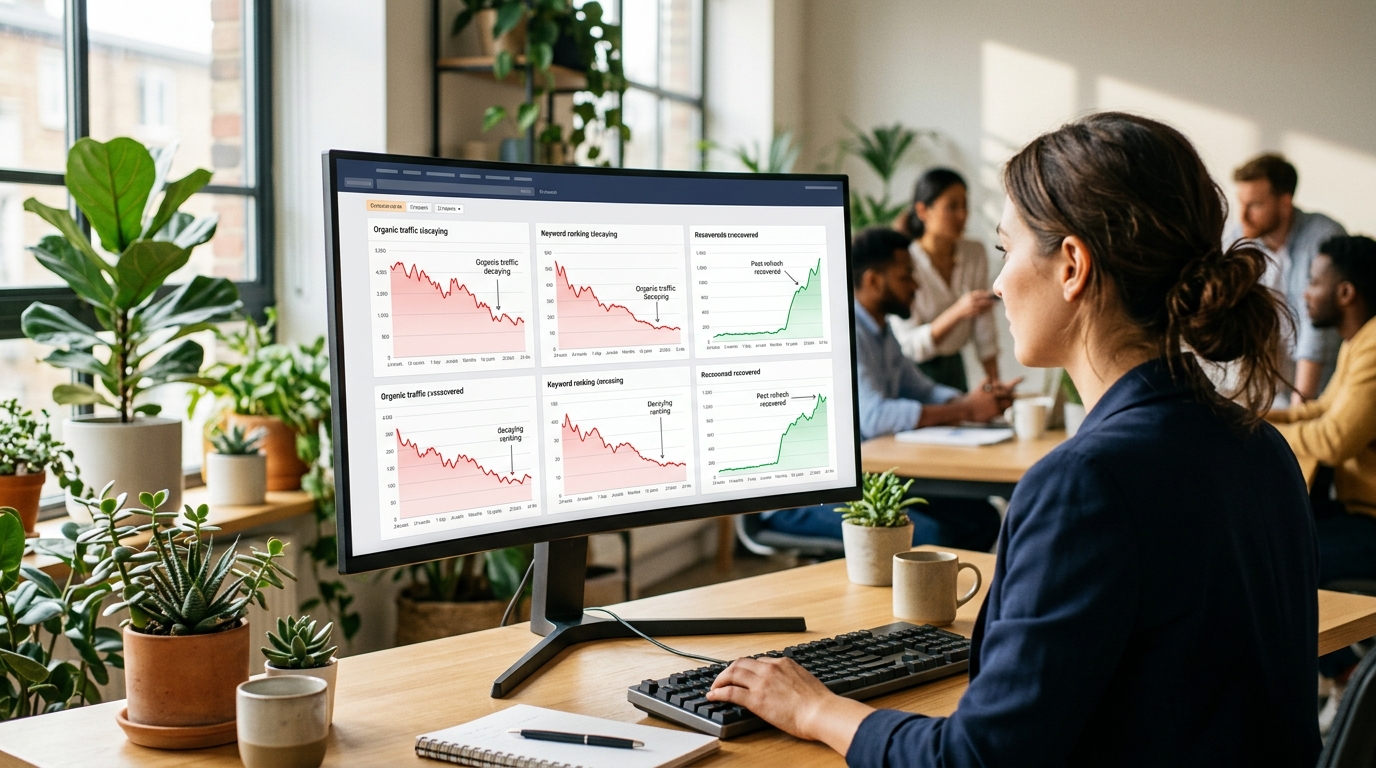

Google's AI Overviews now appear in approximately 25% of all search queries, fundamentally shifting the anatomy of the SERP. If your strategy still relies on manual spreadsheet exports and basic keyword density, you are essentially bringing a knife to a drone fight. In 2026, the industry has moved beyond traditional SEO into the era of GEO (Generative Engine Optimization) and Agentic SEO. The most successful teams aren't just auditing their sites; they are deploying AI-native technical SEO tools that not only identify bottlenecks but execute the fixes autonomously.
This isn't just about ranking #1 on Google anymore; it's about being the cited source in ChatGPT, the recommended brand in Perplexity, and the authoritative voice in Gemini. To win, you need a stack that understands the difference between a traditional crawler and an LLM-based discovery engine. This guide breaks down the elite tools currently defining the technical landscape, backed by real-world performance data and engineer-level insights.
Table of Contents
- The Shift from Indexing to Intelligence: Why Traditional Crawlers are Failing
- Defining the 2026 Stack: Technical SEO vs. AI Visibility (GEO)
- The Top 10 AI-Native Technical SEO Tools of 2026
- Agentic SEO Crawlers: Moving from Audits to Automated Fixes
- Technical Deep Dive: Schema Hygiene and LLM.txt Files
- Measuring ROI: Moving Beyond 'Dashboards with Vibes'
- Key Takeaways: Your 2026 Technical Roadmap
- Frequently Asked Questions
The Shift from Indexing to Intelligence: Why Traditional Crawlers are Failing
For two decades, technical SEO was a game of 'can the bot see my page?' In 2026, that question is obsolete. Every bot can see your page. The real question is: 'Can the bot understand the relationship between your data points?' Traditional crawlers are essentially digital librarians—they categorize books. AI-native technical SEO tools are research assistants—they read the books, summarize the findings, and recommend the best ones to the user.
As one Reddit user in the r/AiForSmallBusiness community pointed out, "90% of tools are just wrapping ChatGPT in a pretty dashboard." The failure of these tools lies in their inability to prioritize. A traditional audit might give you a list of 500 'missing alt tags,' but an agentic SEO crawler knows that only three of those tags are on high-conversion pages currently being cited by Perplexity.
In 2026, the technical landscape is defined by three pillars: 1. Semantic Connectivity: How well your internal linking structure supports topical authority. 2. Source Trustworthiness: Whether your structured data provides verifiable 'proof' to an LLM. 3. Agentic Speed: The time it takes to identify a core web vital regression and deploy a server-side fix without human intervention.
Defining the 2026 Stack: Technical SEO vs. AI Visibility (GEO)
We need to draw a hard line between traditional technical SEO and Generative Engine Optimization (GEO). While they overlap, they solve different problems. Traditional technical SEO ensures Google can index your site. GEO ensures AI models cite your site.
"SEO in 2026 means showing up in ChatGPT, Perplexity, and AI Overviews, not just position 1-10. If a tool only tracks traditional rankings, you're blind to half your potential traffic." — Industry Insight from r/AiForSmallBusiness
| Feature | Traditional Technical SEO | AI-Native GEO |
|---|---|---|
| Primary Goal | Indexability & Crawlability | Citation & Mention Share |
| Core Metric | SERP Position (1-100) | Share of Voice (SoV) in AI Answers |
| Key File | robots.txt | llm.txt / robots.txt (AI instructions) |
| Data Structure | HTML Tags | JSON-LD & Semantic Entities |
| Fix Logic | Manual developer tickets | Agentic automated deployments |
To build a comprehensive technical SEO automation workflow, you must select tools that bridge this gap. You need the 'Screaming Frog' depth for site health, but you also need the 'MentionDesk' intelligence for AI visibility.
The Top 10 AI-Native Technical SEO Tools of 2026
After analyzing current market performance, user sentiment from Reddit and Quora, and hands-on testing benchmarks, here are the 10 tools that actually move the needle in 2026.
1. Sintra AI (Seomi) — Best for Autonomous Audits
Sintra AI isn't just a tool; it's an ecosystem of AI employees. Their SEO agent, Seomi, functions as an agentic SEO crawler. Unlike a standard auditor that dumps a PDF in your inbox, Seomi lives within your workflow, identifying content gaps and technical regressions in real-time.
- Why it ranks #1: It utilizes 'Brain AI,' which retains brand context across all audits. If Seomi finds a technical error, it doesn't just report it; it suggests a fix based on your previous site history.
- Best for: Small to mid-sized teams that need a 'hands-free' SEO manager.
- The Technical Edge: High accuracy in detecting keyword cannibalization and internal linking silos that traditional tools miss.
2. Semrush One — Best for Enterprise AI Visibility
Semrush One has evolved into a massive AI SEO software 2026 powerhouse. It has successfully integrated an 'AI Visibility Toolkit' that benchmarks your brand's presence in AI-generated answers against your competitors.
- Key Feature: The AI PR Toolkit. It identifies which outlets LLMs (like GPT-4o or Claude 3.5) trust most, allowing you to target your technical outreach to the sources that actually influence AI citations.
- Price: Starting at ~$119/mo, scaling to enterprise levels.
3. Ahrefs AI — Best for Backlink & Anomaly Detection
Ahrefs remains the king of data, but their AI-native integration now focuses on predictive trend modeling. It doesn't just show you who linked to you; it predicts which links will actually boost your 'AI Authority Score.'
- Technical Highlight: AI-powered anomaly detection in link profiles. It can automatically flag 'negative SEO' attacks or unnatural patterns that might trigger a generative filter before Google even notices.
4. Surfer SEO — Best for On-Page & Semantic Audits
Surfer has moved beyond simple keyword counting. In 2026, its 'Grow Flow' uses natural language processing (NLP) to audit your semantic relevance. It tells you exactly which entities (not just keywords) are missing to satisfy the 'reasoning' of an AI search engine.
- User Verdict: "Cut my time-to-rank from 6 months to 11 weeks by showing exactly what top pages are doing so I'm not guessing."
5. SE Ranking — Best for Scalable Automation
SE Ranking is the Screaming Frog AI alternative for those who want a cloud-based, automated experience. It provides one of the most balanced 'AI Search Health' scores in the industry, combining traditional technical checks with generative search visibility.
- Unique Value: It offers ranking forecasts based on technical improvements. It tells you, "If you fix these 10 Core Web Vital issues, your projected traffic increase is 14%."
6. MentionDesk — Best for AI Citation Tracking
A newcomer that has quickly become a favorite in Reddit's r/Agent_SEO. MentionDesk focuses exclusively on the 'GEO' side of the house. It tracks whether ChatGPT or Perplexity mentions your brand when users ask category-specific questions.
- Actionable Insight: It provides a 'Prioritized Fix List' to help your brand get cited. If a competitor is being mentioned instead of you, MentionDesk explains why (e.g., they have a more comprehensive FAQ schema or a better-structured comparison table).
7. Screaming Frog (AI-Layered) — The Technical Industry Standard
While not 'AI-native' in its roots, the 2026 version of the SEO Spider allows for direct API connections to LLMs. This allows you to run bulk AI audits on meta descriptions, alt text, and even code quality directly within the crawl.
- The Pro Move: Use Screaming Frog to crawl your site, then pipe the data into a custom Claude 3.5 Sonnet script to generate optimized JSON-LD schema for every page automatically.
8. Alli AI — Best for Real-Time On-Page Fixes
Alli AI is the closest thing we have to a 'self-healing' website. It’s a technical SEO automation platform that installs a small snippet of code on your site and deployments technical fixes (like meta tags, link alt text, and schema) without needing a developer.
- ROI Factor: It bypasses the 'developer bottleneck,' allowing SEO teams to test and deploy technical changes in hours rather than weeks.
9. Profound — Best for Enterprise GEO Analysis
Profound is the enterprise-grade choice for tracking brand mentions across AI answers. It is more costly (starting at ~$399/mo for the real entry plan), but it offers the most granular data on how and why AI models choose specific sources.
- Target Audience: CMOs and Enterprise SEO Directors who need to report AI 'Share of Voice' to the board.
10. Geosnap — Best for GEO Benchmarking
Geosnap excels at showing the 'Citation Graph.' It visualizes how your brand is connected to other authoritative sources. If you want to know which third-party reviews or community discussions (like Reddit or G2) are influencing your AI visibility, Geosnap is the tool.
Agentic SEO Crawlers: Moving from Audits to Automated Fixes
The biggest trend in 2026 is the rise of the agentic SEO crawler. Traditional crawlers are passive; they observe. Agentic crawlers are active; they act.
Imagine a scenario where your site's mobile usability score drops due to a CSS change. A traditional tool sends an alert. An agentic tool like Sintra AI or Alli AI identifies the specific line of code causing the layout shift, creates a pull request (PR) in GitHub, and notifies your lead dev.
The Workflow of an Agentic Crawler:
- Continuous Monitoring: Scanning 24/7 for technical regressions.
- Contextual Analysis: Determining if the error actually impacts rankings or AI visibility.
- Autonomous Resolution: Generating the fix (e.g., rewriting a broken redirect or regenerating a sitemap).
- Verification: Re-crawling to ensure the fix is live and functional.
This level of automated technical SEO audit is what separates the top 1% of digital properties from the rest. As one developer noted on Reddit, "The real ROI comes from making the team act faster with confidence."
Technical Deep Dive: Schema Hygiene and LLM.txt Files
Technical SEO in 2026 requires a new set of files and protocols. If you aren't managing these, you are invisible to the modern web.
The llm.txt File
Think of this as the robots.txt for the AI era. It is a markdown file placed in your root directory that provides a clean, text-only version of your site's most important information. AI-native tools now audit for the presence and quality of this file. It should contain:
- Clear product/service definitions.
- Key data points (pricing, specs).
- Direct links to high-value documentation.
Advanced JSON-LD Schema
AI engines love structured data because it reduces the 'compute' needed to understand your site. Your AI-native technical SEO tools should be auditing for:
- Speakable Schema: For voice and conversational AI.
- Citation Schema: To show your data's source and increase trust.
- Organization Schema: Specifically the sameAs attribute to link your brand to authoritative third-party profiles (LinkedIn, Wikipedia, G2).
{ "@context": "https://schema.org", "@type": "TechArticle", "headline": "10 Best AI-Native Technical SEO Tools 2026", "author": { "@type": "Person", "name": "Senior SEO Engineer" }, "citation": "https://www.reddit.com/r/AiForSmallBusiness/" }
Measuring ROI: Moving Beyond 'Dashboards with Vibes'
One of the most poignant critiques from the Reddit community was that "most AI SEO tools are just dashboards with vibes." To prove ROI in 2026, you must connect technical changes to pipeline impact.
The 2026 SEO ROI Framework:
- AI Citation Share: Are you being mentioned more often in ChatGPT/Perplexity than last month? Tools like MentionDesk or Geosnap are essential here.
- Technical Debt Reduction: How many developer hours did you save by using agentic SEO crawlers to fix meta issues or schema errors?
- Conversion Attribution: Don't just track rankings; track which 'AI-cited' pages are driving actual booked jobs or product sales.
- Experiment Tracking: Use tools that allow you to run A/B tests on technical changes (e.g., 'Does adding FAQ schema to these 50 pages increase our AI Overview visibility?').
Key Takeaways: Your 2026 Technical Roadmap
- Prioritize Action over Data: Stop buying tools that just give you spreadsheets. Choose platforms like Sintra AI or SE Ranking that provide prioritized fix lists.
- Focus on GEO: Traditional rankings are only half the battle. Ensure your stack includes a tool for tracking AI search visibility (like MentionDesk).
- Adopt Agentic Workflows: If you manage more than 100 pages, manual technical SEO is a liability. Automate your audits and, where possible, your fixes with Alli AI.
- Schema is the Entry Ticket: If your structured data isn't perfect, AI models will ignore you. Use Screaming Frog or Indexly for deep schema audits.
- Authority > Density: AI models look for trustworthy sources. Build your "citation graph" by ensuring your technical SEO points to authoritative third-party mentions.
Frequently Asked Questions
What is an agentic SEO crawler?
An agentic SEO crawler is an AI-native tool that doesn't just identify technical issues but can autonomously suggest or implement fixes. Unlike traditional passive crawlers, agentic crawlers use LLMs to understand context and can interact with CMS or GitHub environments to deploy optimizations.
How do I optimize for AI search visibility (GEO)?
Optimization for AI search (Generative Engine Optimization) involves providing clean, structured data (JSON-LD), maintaining a high-quality llm.txt file, and ensuring your brand is mentioned across authoritative third-party sites like Reddit, G2, and industry-specific journals that AI models use as training data.
Is Screaming Frog still relevant in 2026?
Yes, Screaming Frog remains a staple for deep technical audits. However, in 2026, it is most effective when used as a data source for AI models. By connecting Screaming Frog's crawl data to LLM APIs, SEOs can automate the analysis of thousands of rows of technical data.
What is the best free AI SEO tool for 2026?
While most robust tools are paid, Ubersuggest and SEO Minion offer basic AI-driven insights for free. Additionally, using Perplexity Pro as a research tool can give you a manual proxy for how AI search surfaces sources in your niche without a dedicated tracking tool.
Why is structured data more important for AI than Google?
Google uses structured data to enhance SERP features (like star ratings). AI engines, however, use structured data to reduce the 'hallucination' risk. Clean JSON-LD provides the 'facts' that an LLM needs to confidently cite your brand in a generated answer.
Conclusion
The technical SEO landscape of 2026 is a high-stakes environment where speed and semantic clarity are the ultimate currencies. The tools listed above represent the shift from reactive reporting to proactive, agentic management. Whether you are a solo founder or an enterprise lead, your goal is the same: move from being a 'result' to being a 'source.'
By integrating AI-native technical SEO tools into your workflow, you aren't just fixing broken links; you are building a resilient digital infrastructure that AI models can trust. Stop staring at dashboards with 'vibes' and start deploying agents that deliver results. The era of automated technical SEO is here—is your site ready to be cited?