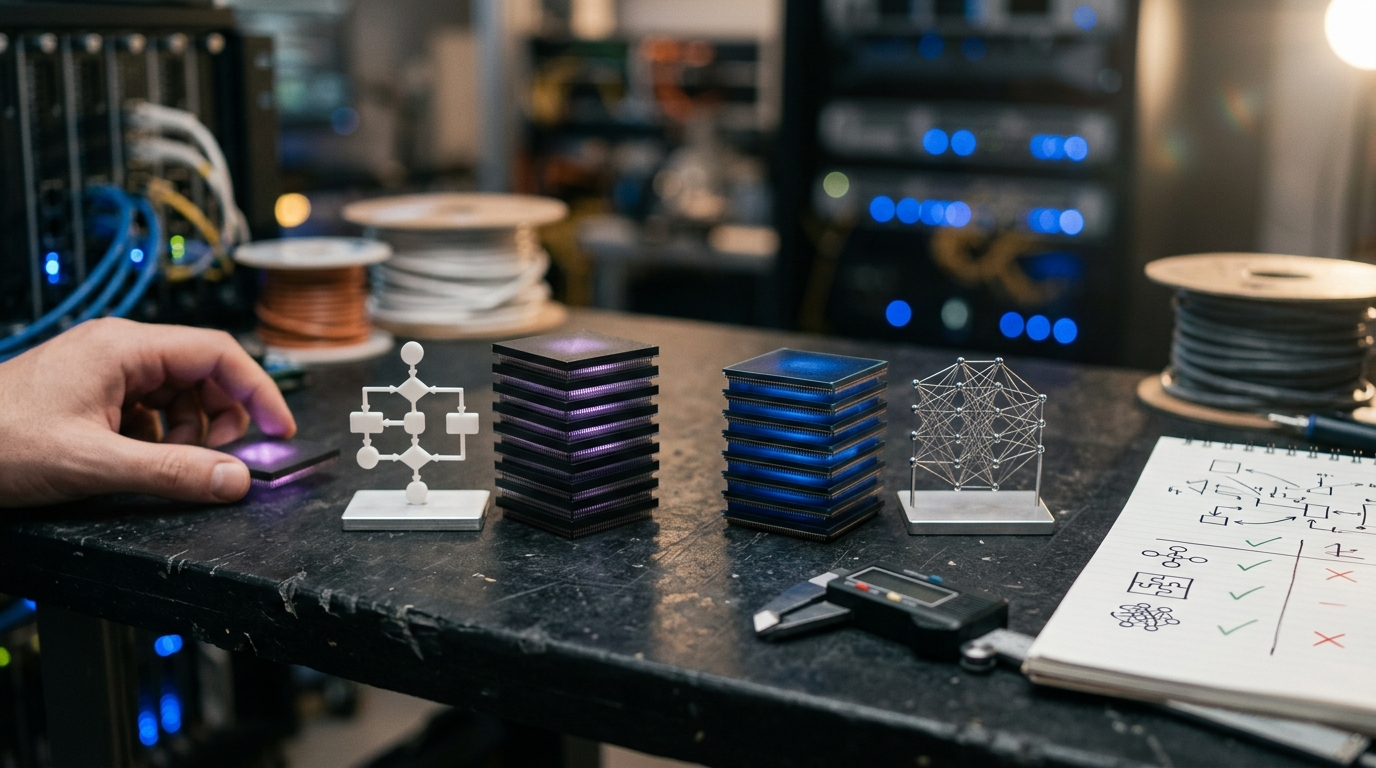
In the rapidly evolving landscape of generative AI, choosing the right model can make or break your software engineering workflow. The release of xAI's newest model alongside Anthropic's flagship reasoning engine has set up a massive clash: Grok 3 vs Claude 3.7 Sonnet. As developers seek the absolute best developer LLM 2026 has to offer, the debate is no longer about simple chat interfaces but about agentic capabilities, context windows, and API efficiency.
While Anthropic has long held the crown for raw coding performance, xAI's aggressive compute scaling—powered by its massive Colossus cluster—has positioned Grok 3 as a formidable challenger. This comprehensive, deep-dive comparison examines how these two frontier LLMs stack up across synthetic benchmarks, real-world coding challenges, API pricing, and development ecosystem integration.
The Battle Lines: Grok 3 vs Claude 3.7 Sonnet
The choice between Grok 3 vs Claude 3.7 Sonnet represents more than just a comparison of two different models; it represents a choice between two distinct philosophies of AI development.
Anthropic's Claude 3.7 Sonnet is the poster child for hyper-polished, safe, and highly structured reasoning. It is designed to act as an agentic partner, featuring hybrid reasoning capabilities that allow developers to toggle between instant responses and extended test-time compute. This makes it an incredibly precise tool for complex software engineering, refactoring, and multi-file codebases.
xAI's Grok 3, on the other hand, is built for raw, unbridled power and real-time information retrieval. Trained on xAI's cutting-edge hardware, Grok 3 thrives on its 'Think' (extended reasoning) and 'Big Brain' modes, delivering uncensored, highly opinionated, and incredibly fast outputs. Backed by real-time data access via the X platform, Grok 3 positions itself as the ultimate real-time assistant and research engine.
While developers on platforms like Reddit debate whether to keep their Claude Pro or SuperGrok subscriptions, the truth is that both models excel in vastly different scenarios. Let's look at the underlying technical architecture that powers these two giants.
Architectural Deep Dive and Technical Specifications
To understand why these models behave the way they do, we must look at their specifications. While both are proprietary, decoder-only transformer architectures, their token limits, parameter scales, and hosting options differ significantly.
| Specification | Claude 3.7 Sonnet | Grok 3 (Full / Beta) | Grok 3 Mini / Grok-3 Mini |
|---|---|---|---|
| Developer | Anthropic | xAI | xAI |
| Architecture | Proprietary Decoder-Only | Mixture of Experts (~0.5T parameters) | Proprietary Light-weight |
| Context Window | 200,000 tokens | 1,000,000 tokens | 128,000 - 131,000 tokens |
| Max Output Tokens | 128,000 tokens (Beta) | ~16,000 tokens | 8,000 tokens |
| Knowledge Cutoff | November 2024 | November 2024 (Plus Real-Time Search) | November 2024 |
| Code Execution | Yes (Native Sandbox) | No | No |
| Vision / Multimodal | Yes | Yes | Yes |
| Licensing | Proprietary | Proprietary | Proprietary |
Context Window Dynamics
One of the most stark differences in this comparison is the context window. Claude 3.7 Sonnet offers a respectable 200k-token context window, which is highly optimized for retrieving precise data chunks without suffering from 'middle-of-the-context' information loss.
However, Grok 3 blows this out of the water with a massive 1-million-token context window (similar to its successor Grok 4.3). For developers working with massive codebases, entire repository structures, or hundreds of pages of documentation, Grok 3 allows you to dump entire project files into a single prompt without hitting a wall. This makes Grok 3 exceptionally powerful for large-scale Retrieval-Augmented Generation (RAG) tasks.
Test-Time Compute (Reasoning Mode)
Both models implement advanced reasoning modes, but they handle test-time compute differently. Claude 3.7 Sonnet utilizes hybrid reasoning, allowing the user (or API caller) to define exactly how many tokens the model should spend 'thinking' before delivering an answer. Grok 3 utilizes its 'Think' mode, which mimics OpenAI's o1/o3-mini high-effort reasoning, allowing the model to self-correct, build step-by-step logic gates, and debug its own assumptions before writing code.
Coding Benchmarks: Who Rules the IDE?
When we look at the official grok 3 coding benchmarks compared to Claude 3.7 Sonnet's reported metrics, we see an incredibly tight race. Synthetic benchmarks don't tell the entire story of developer productivity, but they offer an objective baseline of logical and mathematical capabilities.
Mathematical and Reasoning Benchmarks
On standard reasoning and math benchmarks, Grok 3 shows incredible strength: * AIME (American Invitational Mathematics Examination): Grok 3 Beta reaches an astounding 93.3% accuracy, outperforming both Claude 3.7 Sonnet (No Thinking) and Claude 3.7 Sonnet (Extended Thinking), which hovers around 61.3%. * GPQA (Graduate-Level Google-Proof Q&A): Claude 3.7 Sonnet with Extended Thinking scores a remarkable 78.2%, showing its elite graduate-level logical reasoning, while Grok 3 remains highly competitive in the mid-to-high 70s. * SWE-Lancer & SWE-bench: Claude 3.7 Sonnet sets new standards for agentic software engineering. On SWE-bench (Verified), Claude 3.7 Sonnet with extended thinking sets state-of-the-art records, proving it is highly capable of identifying bugs across complex, multi-file codebases and applying patches that pass unit tests.
While Grok 3 dominates in raw mathematical problem-solving and logic-heavy algorithms, Claude 3.7 Sonnet's fine-tuning makes it exceptionally adept at navigating the nuances of real-world software engineering tasks.
Real-World Coding Tests: Debugging, Game Dev, and Refactoring
To bypass marketing hype, let's look at how these models perform when subjected to hands-on programming tasks. We evaluated claude 3.7 sonnet vs grok 3 across five real-world developer scenarios.
Task 1: Debugging Legacy Python Code
We provided both models with a broken Python script designed to search Twitter/X Spaces via an API. The script contained structural flaws, deprecated library calls, and incorrect environment variable parsing.
- Claude 3.7 Sonnet's Performance: Claude successfully identified all five errors. It clearly explained the deprecated endpoints, corrected the header generation, and produced a clean, modular script that executed flawlessly on the first try.
- Grok 3's Performance: Grok 3 identified the errors and explained them in an approachable, conversational tone. However, the corrected code it generated still threw a runtime error due to an unhandled exception in its request handling.
- Winner: Claude 3.7 Sonnet (1-0)
Task 2: Prototyping a Ragdoll Physics Game
We prompted both models to write a single-file HTML5/JavaScript application using Matter.js to simulate a interactive ragdoll that tumbles down obstacles under gravity, complete with mouse drag controls and a slow-motion button.
- Claude 3.7 Sonnet's Performance: Using its built-in Artifacts interface, Claude rendered the physics simulation instantly. The ragdoll behaved realistically, the slow-motion mechanics worked smoothly, and the UI was polished and modern.
- Grok 3's Performance: Grok generated functional code, but we had to copy-paste it into a local environment to run it. While the ragdoll worked, the joint constraints were slightly unstable, causing the character's limbs to vibrate uncontrollably when resting on flat surfaces.
- Winner: Claude 3.7 Sonnet (2-0)
Task 3: Complex Financial Data Analysis
We provided a raw, messy CSV dataset containing patient health metrics and diabetes classifications, asking the models to act as data analysts, extract key insights, and generate visualization code.
- Claude 3.7 Sonnet's Performance: Claude extracted beautiful, highly accurate statistical insights. It used its sandbox to generate interactive scatter plots and distribution dashboards directly in the chat window.
- Grok 3's Performance: Grok provided excellent textual analysis and immediately understood the underlying health trends. However, the Python visualization code it generated relied on a deprecated matplotlib syntax, resulting in execution errors when run locally.
- Winner: Claude 3.7 Sonnet (3-0)
Task 4: Code Refactoring and Type Hinting
We submitted a messy, un-optimized Python script containing redundant loops, global state dependencies, and poor variable naming. We asked both models to refactor it for production.
python
Messy Input Code
def find_max_value(lst): max_value = None if lst: max_value = lst[0] for i in range(len(lst)): if lst[i] > max_value: max_value = lst[i] if max_value != None: return max_value
- Grok 3's Refactored Output: python from typing import List, Optional
def find_max_value(numbers: List[float]) -> Optional[float]: """ Find the maximum value in a list of numbers.
Args:
    numbers: List of numbers (integers or floats)
Returns:
    The maximum value in the list, or None if the list is empty
"""
if not numbers:
    print('List is empty')
    return None

max_value = numbers[0]
for num in numbers:
    if num > max_value:
        max_value = num
return max_value
- Analysis: Grok 3 produced a beautifully refactored, highly Pythonic script. It implemented robust PEP 8 styling, correct type hinting (
List[float],Optional[float]), clear docstrings, and removed the redundant indexing loop in favor of direct iteration. Claude 3.7 also refactored the code well but omitted formal type hints and kept conversational print statements. - Winner: Grok 3 (3-1)
Task 5: Image Augmentation and Masking
We provided a public image URL of a dog and asked the models to write Python code using computer vision libraries to create a high-contrast binary mask isolating the subject.
- Grok 3's Performance: Grok utilized threshold-based segmentation on grayscale representations, generating an excellent, high-contrast binary mask that successfully isolated the subject's shape.
- Claude 3.7 Sonnet's Performance: Claude opted to draw a simple circular SVG crop over the image. While visually clean, it did not perform true image masking/augmentation as requested by the computer vision prompt.
- Winner: Grok 3 (3-2)
Real-World Coding Verdict
While Grok 3 shows incredible strength in writing clean, production-ready, typed code and handling computer vision logic, Claude 3.7 Sonnet is the superior general coding assistant. Its ability to write bug-free code on the first try, combined with live visual feedback, makes it unmatched for rapid prototyping and debugging.
API Cost Comparison: xAI vs Anthropic
For developers building autonomous agents, automated code reviewers, or integration pipelines, token costs are the ultimate deciding factor. Comparing the xai grok 3 api pricing against the claude 3.7 sonnet api cost reveals a massive economic gap.
Token Pricing Breakdown
Let's compare the pricing per million tokens across the official API platforms as of 2026:
- Claude 3.7 Sonnet (Anthropic API):
- Input Tokens: $3.00 per 1M tokens
- Output Tokens: $15.00 per 1M tokens
-
Note: When Extended Thinking is enabled, thinking tokens are billed at the standard output rate of $15.00/1M.
-
Grok 3 (xAI Console):
- Input Tokens (0-200k): $1.25 per 1M tokens
- Input Tokens (200k+): $2.50 per 1M tokens
- Output Tokens (0-200k): $2.50 per 1M tokens
-
Output Tokens (200k+): $5.00 per 1M tokens
-
Grok 3 Mini (xAI Console):
- Input Tokens: $0.25 - $0.30 per 1M tokens
- Output Tokens: $0.50 - $1.27 per 1M tokens
Real-World API Billing Scenario
Suppose you run an AI-assisted development workflow that processes 100 million input tokens and generates 20 million output tokens over the course of a month.
Claude 3.7 Sonnet Cost Calculation: Input Cost: 100M * $3.00 = $300.00 Output Cost: 20M * $15.00 = $300.00 Total Monthly Spend: $600.00
Grok 3 (Under 200k Tier) Cost Calculation: Input Cost: 100M * $1.25 = $125.00 Output Cost: 20M * $2.50 = $50.00 Total Monthly Spend: $175.00
Grok 3 Mini Cost Calculation: Input Cost: 100M * $0.30 = $30.00 Output Cost: 20M * $0.50 = $10.00 Total Monthly Spend: $40.00
The Cost Verdict
At production scale, Grok 3 is roughly 3.4x cheaper than Claude 3.7 Sonnet, while Grok 3 Mini is up to 15x cheaper than Claude.
As many developers on Reddit have pointed out, running agentic VS Code extensions like Cline or Roo Code directly on the Claude 3.7 API can easily result in bills exceeding $400 a month for hobbyists due to the $15/1M output token cost. If you are building high-volume agentic loops, xAI's API pricing offers unmatched cost-to-performance efficiency.
Developer Ecosystem and Tooling: Artifacts, MCP, and Agentic Workflows
Writing code is only half the battle; how an LLM integrates into a developer's daily workflow is what determines its true utility.
Claude's Secret Weapons: Artifacts & MCP
Anthropic has built a developer ecosystem that is incredibly hard to leave once adopted: 1. Claude Artifacts: When you ask Claude to build a UI component, website, or dashboard, it separates the code from the conversation and renders it in a live, interactive side panel. This allows for real-time visual debugging and iteration. 2. Model Context Protocol (MCP): This open-source standard allows Claude's desktop client to connect directly to local systems, databases, and APIs. With MCP, Claude can securely inspect your local Git repositories, run SQL queries on your development database, and execute terminal commands, transforming it from a simple chatbot into a true local software engineering agent. 3. GitHub Integration: Claude Pro allows you to sync directly with your GitHub repositories, making it incredibly simple to import context and export patches.
"Claude 3.7 extended is uniquely powerful inside Cursor or VS Code because of its agentic capabilities. It doesn't just write code; it plans and executes across files safely." — Senior Software Architect, Reddit
Grok's Ecosystem: Real-Time Search & Memory
While xAI is working hard to close the interface gap, Grok 3's current tooling is more focused on information gathering: 1. DeepSearch (DeeperResearch): Grok 3 can browse over 100 web pages simultaneously, bypass SEO spam, synthesize complex documentation, and build highly structured research papers. This is incredibly valuable for developers working with rapidly evolving frameworks or newly released APIs that are not present in any model's offline training data. 2. Persistent Memory: Grok 3 features an outstanding memory system that retains user preferences, coding styles, and project contexts across chats for weeks, eliminating the need to repeatedly paste system prompts. 3. Early Preview Rendering: Grok 3 has introduced a basic "Preview" button for HTML code, signaling that an Artifacts competitor is actively in development.
The Philosophy of AI: Uncensored Momentum vs Polished Safety
Beyond benchmarks and token costs, developers must consider the distinct personalities and safety guardrails of these models.
Anthropic's Alignment and Guardrails
Claude 3.7 Sonnet is highly aligned, polite, and safe. However, this safety can sometimes cross into over-censorship. Developers working on cybersecurity tools, penetration testing scripts, or analyzing malware logs may find Claude refusing to assist, citing safety policies.
Additionally, Claude's tone is highly structured and professional, which some developers find slightly dry or overly verbose when they just want a quick, raw answer.
xAI's Uncensored, Truth-Seeking Design
Grok 3 is designed to be the least censored frontier model available. It is highly opinionated, willing to take bold stances, and rarely refuses prompts. If you ask Grok to write a script to test your local network for vulnerabilities, it will write the script without lecturing you on ethics.
Furthermore, Grok's conversational tone is witty, direct, and engaging. It behaves like a senior colleague who isn't afraid to tell you that your database schema is poorly designed.
Verdict: Which Model Should You Pay For?
So, when comparing Grok 3 vs Claude 3.7 Sonnet, which model should be your daily driver in 2026?
Choose Claude 3.7 Sonnet if:
- Your primary workload is pure coding: You spend your day in IDEs, building web applications, refactoring complex codebases, and designing UI components.
- You want the best agentic integration: You utilize tools like Cursor, Windsurf, Cline, or Roo Code, and want an LLM that can orchestrate multi-file changes seamlessly.
- You rely on visual prototyping: You love using Artifacts to build and test dashboards, games, and components in real time.
Choose Grok 3 if:
- You are budget-conscious: You run high-volume API workflows and want elite reasoning at a fraction of the cost.
- You need real-time research: You work with cutting-edge libraries, APIs, and frameworks that require deep, real-time web search to understand.
- You hate AI censorship: You want a direct, opinionated, and highly capable model that won't refuse complex or sensitive programming tasks.
- You have massive context requirements: You need to process huge log files, massive codebases, or extensive documentation using its 1-million-token window.
Key Takeaways
- Claude 3.7 Sonnet remains the gold standard for agentic coding and bug-free execution, making it the premier choice for professional software engineers.
- Grok 3 dominates in raw mathematical reasoning and logic-heavy tasks, boasting a 93.3% score on the AIME benchmark.
- On API costs, xai grok 3 api pricing is up to 3.4x cheaper than claude 3.7 sonnet api cost, with Grok 3 Mini providing an even more economical alternative for high-volume agents.
- Claude's ecosystem is highly advanced, featuring Artifacts and Model Context Protocol (MCP) for seamless local system integration.
- Grok 3 offers a massive 1-million-token context window, outclassing Claude's 200k limit for massive data ingestion and RAG workloads.
- Grok 3 is virtually uncensored, making it highly effective for cybersecurity, penetration testing, and direct, opinionated code reviews.
Frequently Asked Questions
Is Grok 3 better than Claude 3.7 Sonnet for coding?
For pure, bug-free code generation, debugging, and interactive UI prototyping, Claude 3.7 Sonnet is widely considered superior. However, Grok 3 is highly competitive, excels at refactoring, and is much faster and cheaper to run via API.
How do the API costs of Grok 3 and Claude 3.7 Sonnet compare?
Claude 3.7 Sonnet costs $3.00/1M input and $15.00/1M output tokens. Grok 3 is significantly cheaper, costing $1.25/1M input and $2.50/1M output tokens (under the 200k tier), making xAI's model highly cost-effective for enterprise scaling.
Does Grok 3 have a reasoning mode similar to Claude's Extended Thinking?
Yes, Grok 3 features a dedicated 'Think' mode that utilizes test-time compute to solve complex logic, math, and coding problems, performing similarly to OpenAI's o1 and Anthropic's Extended Thinking.
What is the context window limit for Grok 3 vs Claude 3.7?
Grok 3 supports an immense 1-million-token context window, whereas Claude 3.7 Sonnet is capped at 200,000 tokens. This makes Grok 3 much better suited for ingestion of massive code repositories.
Can I use Claude 3.7 Sonnet and Grok 3 in my IDE?
Yes, Claude 3.7 Sonnet is fully integrated into popular developer tools like Cursor, Windsurf, and VS Code extensions. Grok 3 can be integrated into these IDEs by configuring custom API endpoints pointing to the xAI Console or OpenRouter.
Conclusion
In 2026, the developer LLM landscape is no longer a monopoly. While Claude 3.7 Sonnet remains the most polished, precise, and agentic assistant for writing and debugging code, Grok 3 has emerged as an incredibly powerful, cost-effective, and uncensored alternative. By understanding the unique strengths of Grok 3 vs Claude 3.7 Sonnet, you can optimize your development stack, build smarter workflows, and dramatically reduce your API overhead.
Ready to supercharge your development workflow? Explore more developer productivity insights, AI writing tools, and advanced SEO tools at CodeBrewTools to stay ahead of the technology curve in 2026.