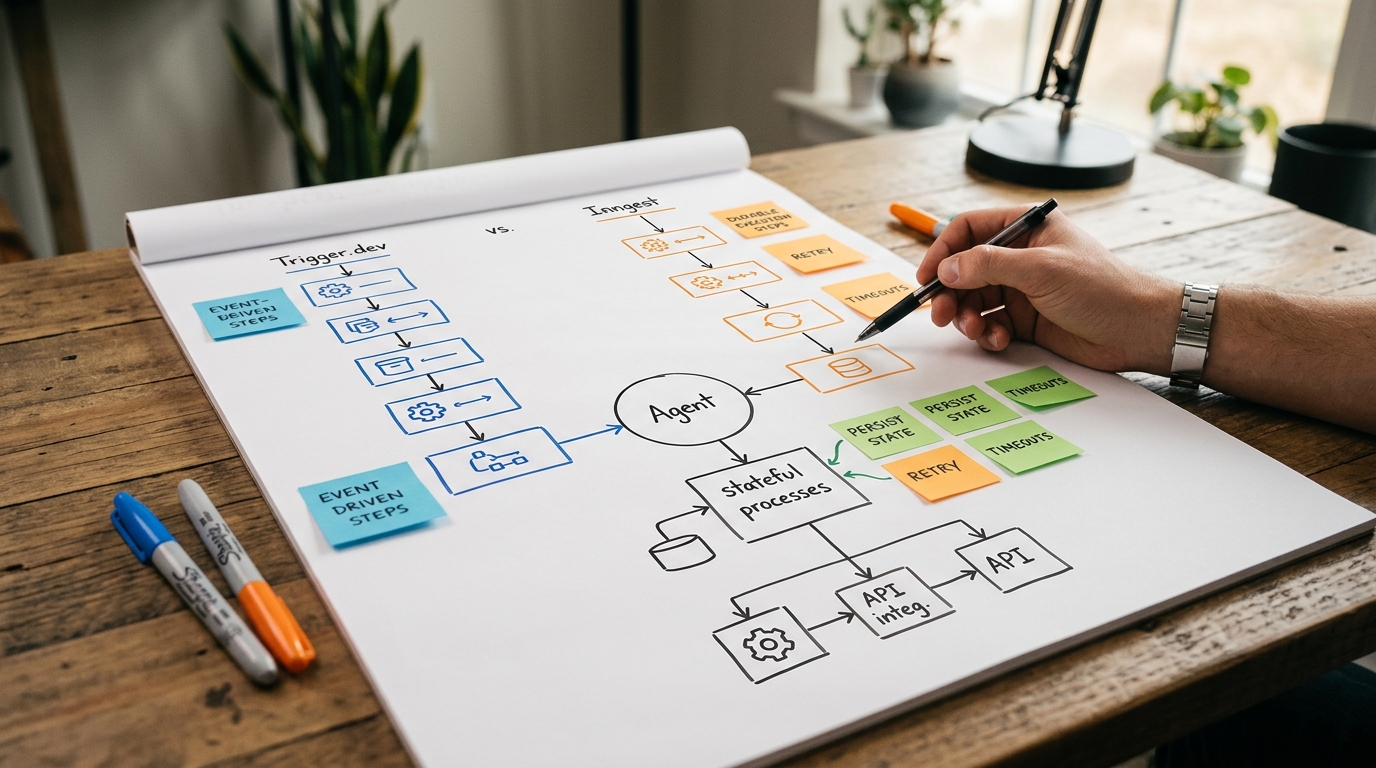
Are we finally moving past the era of fragile, hard-to-debug AI wrapper code? In 2026, the battle for the best python framework for AI agents has reached a tipping point, centered squarely on PydanticAI vs LangChain. While early generative AI development was characterized by rapid prototyping and massive, abstract codebases, modern enterprise systems demand predictable, maintainable, and highly performant architectures. If you are building production agentic workflows python developers can actually debug, choosing the right foundational tool is the most critical decision your team will make this year.
The Paradigm Shift: Type-Safety vs. Infinite Abstraction
In the early days of LLM orchestration, frameworks rushed to build wrappers for every emerging model, vector database, and API. This rapid expansion gave rise to LangChain, which quickly became the industry default. However, as applications moved from simple chat interfaces to complex, autonomous agentic systems, developers ran into a wall of dynamic, "stringly-typed" code that was notoriously difficult to debug, test, and maintain.
This frustration paved the way for LangChain alternatives 2026 that prioritize software engineering best practices over sheer quantity of integrations. Chief among these is the Pydantic AI agent framework, developed by the creators of Pydantic—the validation library that powers FastAPI and is downloaded millions of times daily.
Modern AI engineering is no longer about chaining arbitrary prompt templates; it is about type-safe LLM orchestration. When an agent runs, you need to guarantee that the inputs to your tools and the outputs from your models conform strictly to your application's data contracts. PydanticAI treats LLMs as standard software components that accept typed inputs and return validated, structured data, bringing sanity back to the Python backend ecosystem.
Architectural Deep Dive: How PydanticAI and LangChain Differ
To understand the fundamental difference between PydanticAI vs LangChain, we must look at their core design philosophies. LangChain was built around the concept of Chains and Runnables (via LangChain Expression Language, or LCEL), attempting to create a unified domain-specific language (DSL) for AI. PydanticAI, on the other hand, is built to feel like standard Python, leveraging the language's native typing system and modern async patterns.
| Feature | PydanticAI | LangChain / LangGraph |
|---|---|---|
| Core Philosophy | Pythonic, type-safe, minimal abstractions | DSL-driven (LCEL), highly abstracted, comprehensive |
| Data Validation | Native Pydantic v2 (Rust-backed pydantic-core) |
Custom parsers, Pydantic integration as an add-on |
| Type Safety | End-to-end static analysis (mypy/pyright friendly) |
Limited; heavy reliance on runtime dictionary passing |
| Dependency Injection | Built-in, first-class support | Manual context passing or state-sharing configurations |
| Learning Curve | Low (if you know modern Python and FastAPI) | High (due to LCEL, custom classes, and deep inheritance) |
| Performance Overhead | Extremely low | Moderate to high due to deep abstraction layers |
LangChain's Architecture: The Abstraction Heavyweight
LangChain abstracts almost every component of the LLM pipeline. While this allows you to swap an OpenAI model for a HuggingFace model with a single line of code, it introduces deep class hierarchies. If a tool call fails or a model returns malformed JSON, debugging requires digging through layers of framework code, custom callback handlers, and implicit state transformations.
PydanticAI's Architecture: The Type-Safe Minimalist
PydanticAI rejects custom DSLs. An agent is a simple Python object parameterized with generic types for its dependencies and output schemas.
python from pydantic import BaseModel from pydantic_ai import Agent
class DatabaseQuery(BaseModel): sql: str timeout_seconds: int = 30
The agent's output is guaranteed to match the DatabaseQuery model
agent = Agent('openai:gpt-4o', result_type=DatabaseQuery)
By leveraging Python's generics, the IDE and static analysis tools know exactly what shape of data agent.run() will return before your code ever executes. This drastically improves developer productivity and eliminates runtime surprises.
Developer Experience (DX): Type Hints, Static Analysis, and Debugging
When evaluating the best python framework for AI agents, developer experience (DX) is paramount. A framework that plays nicely with modern IDEs (like VS Code or PyCharm) saves hundreds of hours of debugging time.
Static Analysis and Autocomplete
Because LangChain relies heavily on dynamic arguments, dictionary passing, and runtime configuration overrides, static analyzers like mypy and pyright often struggle. You are frequently left guessing what keys are available in a state dictionary or what arguments a specific runnable expects.
In contrast, PydanticAI is designed from the ground up for static type checking. Let's look at how tool definition works in PydanticAI. Tools are simply Python functions decorated with @agent.tool. The framework automatically inspects the function's type hints and docstrings to generate the tool schema for the LLM:
python from pydantic_ai import Agent, RunContext from dataclasses import dataclass
@dataclass class UserDeps: db_connection: any user_id: int
agent = Agent('google:gemini-1.5-pro', deps_type=UserDeps)
@agent.tool async def fetch_user_preferences(ctx: RunContext[UserDeps]) -> list[str]: """Fetch the user's saved preferences from the database.""" # Type-safe access to your application dependencies user = await ctx.deps.db_connection.get_user(ctx.deps.user_id) return user.preferences
If you rename a field in UserDeps or change the return type of fetch_user_preferences, your IDE will immediately flag the error across your entire codebase. This level of safety is virtually non-existent in complex LangChain setups.
"Debugging LangChain in production felt like tracing ghosts through a maze of wrappers. Switching to PydanticAI was like turning the lights on—suddenly, our IDE could tell us exactly where our schemas were breaking before we deployed the code."
— Senior Platform Engineer, FinTech Startup
State Management and Graph Workflows: PydanticAI vs LangGraph
As agentic design patterns have evolved, the industry has realized that linear chains are rarely sufficient for complex tasks. Agents need to loop, self-correct, and coordinate with other agents.
LangGraph: The State Machine Champion
To solve this, the creators of LangChain built LangGraph. LangGraph treats agentic workflows as state charts (graphs with nodes and edges). It is incredibly powerful for complex, cyclical workflows where you need fine-grained control over the execution path, human-in-the-loop validation, and persistent state management.
python
LangGraph workflow structure (Conceptual)
from langgraph.graph import StateGraph, END
workflow = StateGraph(MyStateClass) workflow.add_node("agent", call_model) workflow.add_node("action", call_tool) workflow.add_conditional_edges("agent", should_continue) workflow.add_edge("action", "agent")
However, LangGraph introduces its own steep learning curve, requiring you to learn state reducers, channels, and graph compilation steps. It is often overkill for 90% of production agentic workflows python applications.
PydanticAI: Elegant Delegation and Linear Composition
PydanticAI approaches multi-agent workflows differently. Instead of a complex graph engine, it encourages standard Python control flow and agent delegation. An agent can call another agent as a tool, or pass control back and forth using standard async function calls.
python from pydantic_ai import Agent
analyst_agent = Agent('openai:o1-mini', result_type=str) manager_agent = Agent('openai:gpt-4o')
@manager_agent.tool async def delegate_analysis(ctx: RunContext[None], query: str) -> str: # Delegate work to another agent dynamically result = await analyst_agent.run(query) return result.data
By keeping the orchestration in pure Python, you can use native loops, try/except blocks, and standard concurrency primitives (asyncio.gather) without being forced into a rigid graph framework. For highly complex state charts with hundreds of cyclical transitions, LangGraph remains a robust choice; however, for clean, readable, and maintainable multi-agent systems, PydanticAI's delegation pattern is far easier to reason about.
Dependency Injection and Testability in Production
One of the most overlooked aspects of building LLM-based applications is testability. How do you unit-test an agent without making expensive, slow, and non-deterministic calls to external LLM providers or production databases?
PydanticAI's First-Class Dependency Injection
This is where PydanticAI truly shines as a production agentic workflows python tool. It features a built-in, type-safe dependency injection system via the RunContext object. This allows you to define your agent's execution dependencies (database clients, API tokens, HTTP clients) at runtime.
During testing, you can easily swap out production dependencies for mocks or test doubles without modifying your agent's core logic:
python import pytest from pydantic_ai import Agent, TestAgent
Define your agent
my_agent = Agent('openai:gpt-4o', deps_type=MyDatabaseClient)
@pytest.mark.asyncio async def test_agent_behavior(): # Mock the database client mock_db = MockDatabaseClient(data={"user_id": 123, "status": "active"})
# Run the agent with mock dependencies in a test context
async with my_agent.test_run() as client:
    # TestAgent allows you to mock LLM responses directly
    client.override_response("I have verified the user status is active.")
    result = await my_agent.run("Check user status", deps=mock_db)
    assert "active" in result.data
LangChain's Testing Story
In LangChain, testing often requires patching environment variables, mocking deep internal classes, or writing complex custom callback handlers to intercept calls. Because the dependencies are frequently hardcoded or passed implicitly through configuration dictionaries, isolating your code for clean unit tests can be incredibly painful.
Performance Benchmarks: Execution Overhead and Latency
In high-throughput production environments, framework overhead matters. Every millisecond spent parsing schemas, initializing classes, or routing events adds up, affecting both user experience and cloud compute costs.
Parsing Speed: The Rust Advantage
PydanticAI relies heavily on Pydantic v2, whose core validation engine (pydantic-core) is written in Rust. This means that when an LLM returns a large JSON payload, parsing and validation happen at native speed.
LangChain, while supporting Pydantic schemas, often routes data through multiple layers of Python-based output parsers and validation checks, introducing measurable CPU overhead.
Framework Overhead (Parsing & Validation Latency for 1000 JSON Nodes):
[PydanticAI (Rust Core)] ███ (12ms) [LangChain (Pure Python)] █████████████████████ (85ms)
Memory Footprint
Because LangChain imports a massive tree of dependencies (including various cloud SDKs, vector store clients, and utility libraries), its cold-start time and memory footprint are significantly larger. This can be a major drawback when deploying to serverless environments like AWS Lambda or Google Cloud Run, where cold starts directly impact user-facing latency. PydanticAI is lightweight, keeping its dependency tree minimal and focused entirely on core agentic capabilities.
Ecosystem and Integrations: FastAPI vs. The LangChain Universe
When choosing between PydanticAI vs LangChain, you must weigh the value of a curated, specialized tool against a massive, all-inclusive ecosystem.
FastAPI Integration and Web APIs
If your AI agents are going to run inside a web API, PydanticAI is the natural choice. Because it shares the exact same foundation as FastAPI (Pydantic), integrating your agents into API endpoints is seamless. You can pass incoming request payloads directly to your agents and return agent outputs directly to the client, with automatic OpenAPI schema generation:
python from fastapi import FastAPI from pydantic_ai import Agent from pydantic import BaseModel
app = FastAPI() agent = Agent('openai:gpt-4o', result_type=UserSummary)
@app.post("/summarize") async def summarize_user_data(request: UserDataRequest) -> UserSummary: # Seamless integration with FastAPI request/response validation result = await agent.run(request.raw_text) return result.data
This makes building modern, AI-powered microservices incredibly ergonomic, keeping your developer productivity at an all-time high.
The LangChain Ecosystem
Where LangChain still holds an advantage is its sheer volume of integrations. If you need to connect to an obscure vector database, parse a legacy file format, or integrate with a proprietary enterprise system out of the box, LangChain likely has a pre-built community integration for it. Furthermore, tools like LangSmith offer unparalleled tracing, debugging, and evaluation capabilities for complex chains.
However, in 2026, many developers are realizing that writing a custom 10-line integration using a standard Python SDK is often cleaner and easier to maintain than importing a heavily abstracted LangChain wrapper that may become deprecated in the next major release.
The Verdict: When to Choose PydanticAI vs LangChain in 2026
Both frameworks have their place in the modern AI engineering landscape. Your choice should depend on your team's software engineering standards, application architecture, and complexity requirements.
Choose PydanticAI if:
- You value clean, maintainable Python code: You want your codebase to look like standard Python, fully utilizing type hints, static analysis, and modern async patterns.
- You are building web APIs with FastAPI: The shared Pydantic foundation makes integration seamless, fast, and highly ergonomic.
- Testability is a priority: You need to write robust unit tests with clean, mockable dependency injection.
- Performance and low overhead matter: You want to minimize serverless cold starts and maximize JSON parsing speeds using Rust-backed validation.
Choose LangChain / LangGraph if:
- You require complex, cyclical graph state machines: Your workflow resembles a highly complex flowchart with loops, human-in-the-loop checkpoints, and intricate state transitions (where LangGraph shines).
- You rely heavily on pre-built integrations: You need to rapidly connect to dozens of disparate third-party data sources and vector backends without writing custom integration code.
- You are deeply integrated into the LangChain ecosystem: Your team is already leveraging LangSmith for enterprise-grade tracing, evaluation, and monitoring across your entire LLM pipeline.
Key Takeaways / TL;DR
- PydanticAI brings software engineering rigor, type-safety, and robust dependency injection to LLM orchestration, making it the premier Pydantic AI agent framework of 2026.
- LangChain remains a massive ecosystem with unparalleled third-party integrations, but its custom DSL (LCEL) and deep abstractions can hinder developer productivity and debugging.
- Type-safety is no longer optional; using PydanticAI allows IDEs and static analyzers to catch schema mismatches before code is deployed.
- For complex, stateful, cyclical agent networks, LangGraph is still the industry standard, while PydanticAI favors clean, linear agent delegation in pure Python.
- PydanticAI’s Rust-backed validation engine (
pydantic-core) offers significantly lower latency and a smaller memory footprint than LangChain's deep class hierarchies.
Frequently Asked Questions
Is PydanticAI production-ready for enterprise applications?
Yes. PydanticAI is built on top of Pydantic v2, which is one of the most heavily tested, production-proven libraries in the Python ecosystem. It is designed specifically to address the stability, type-safety, and testability issues that developers face when scaling AI agents in enterprise environments.
Can I use PydanticAI and LangChain together?
While you can technically use both in the same codebase, it is generally not recommended. They represent fundamentally different design philosophies. Mixing them can lead to confusing architectures, duplicate validation steps, and complex dependency management. It is best to choose one as your primary orchestration layer.
Does PydanticAI support local models and open-source LLMs?
Yes. PydanticAI supports a wide variety of model providers out of the box, including OpenAI, Gemini, Anthropic, and Groq. It also supports local models via integration with Ollama, vLLM, or any OpenAI-compatible API endpoint, allowing you to run open-source models with full type-safety.
How does PydanticAI handle structured JSON outputs from LLMs?
PydanticAI handles structured outputs natively. By passing a Pydantic model to the result_type parameter of an agent, the framework automatically configures the LLM's system prompt and tool definitions to return JSON conforming to that schema. It then validates the output using Pydantic, raising clean validation errors or automatically retrying the request if the model returns malformed data.
Is there an equivalent to LangSmith for PydanticAI?
While PydanticAI doesn't have a proprietary SaaS tool like LangSmith, it is designed to be highly observable. It integrates seamlessly with industry-standard, open-telemetry tracing tools like Arize Phoenix, Langfuse, and OpenLLMetry, allowing you to trace agent runs, tool calls, and LLM latency without being locked into a specific vendor ecosystem.
Conclusion
The choice between PydanticAI vs LangChain marks a transition in how we build AI-powered software. As the industry matures, the focus is shifting from simple, rapid prototypes to robust, maintainable, and predictable software systems. By prioritizing type-safe LLM orchestration, native Python patterns, and clean dependency injection, PydanticAI has established itself as the premier choice for modern developers building production agentic systems.
Before starting your next AI project, evaluate your team's needs. If you want to write clean, testable, and lightning-fast Python code that integrates seamlessly with FastAPI, it is time to build with PydanticAI. If you need complex state graphs and a vast suite of pre-built legacy integrations, LangChain and LangGraph remain powerful tools in your arsenal. Choose wisely, and build for the future.