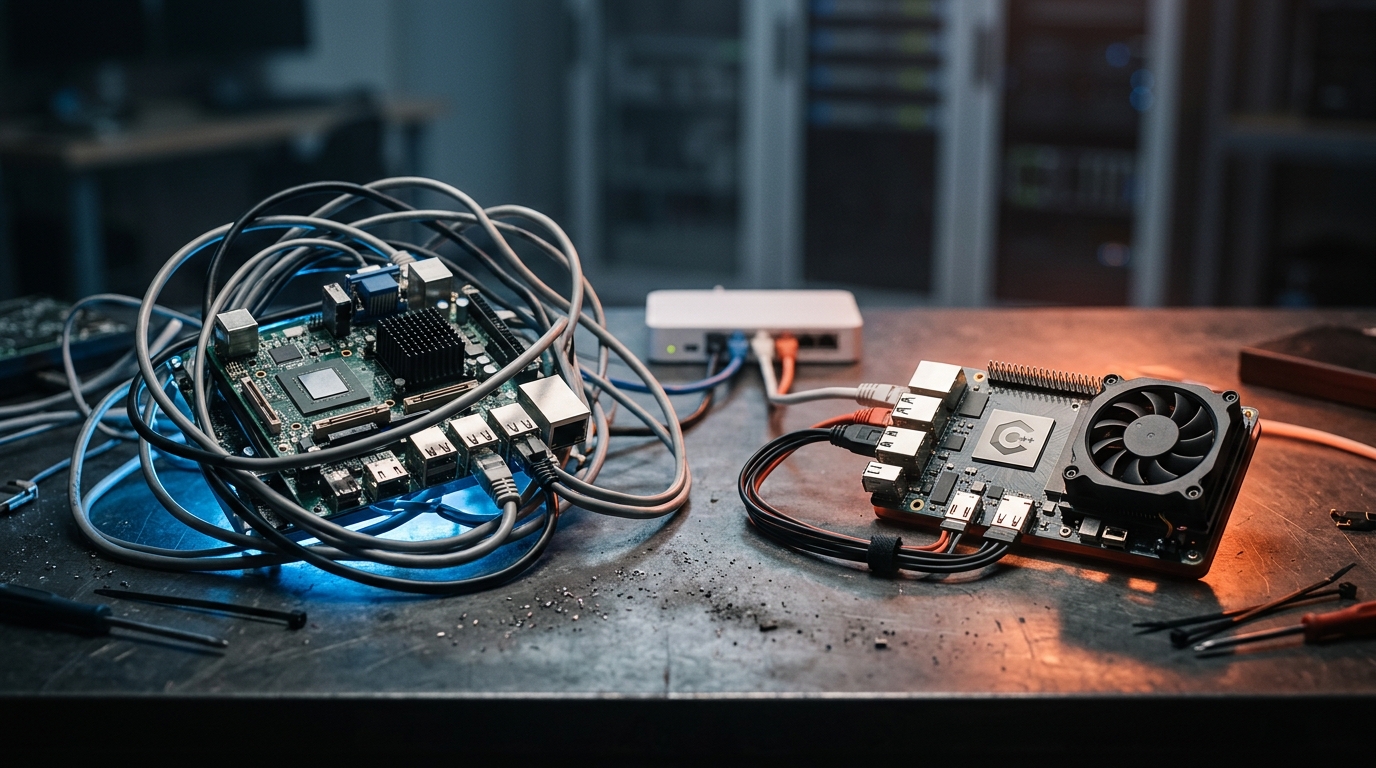
In 2026, real-time data is no longer a luxury; it is the lifeblood of modern software systems. Yet, as data volumes scale exponentially, the infrastructure supporting these pipelines is hitting a wall. For over a decade, Apache Kafka has been the undisputed king of event streaming. But the landscape has shifted. If you are evaluating redpanda vs kafka for your next production deployment, you are no longer just choosing between two tools—you are choosing between two fundamentally different architectural eras.
Legacy JVM-based architectures are increasingly being challenged by modern, bare-metal native engines designed to maximize modern hardware utilization. In this comprehensive guide, we will break down the structural, operational, and financial differences between these two streaming giants to help you design highly optimized, future-proof data systems.
Architectural Foundations: JVM vs. Thread-per-Core C++
To understand the performance differences between Redpanda and Apache Kafka, we must look at how they interact with system hardware. Their core designs represent two distinct philosophies of system engineering.
+-----------------------------------------------------------------+ | APACHE KAFKA | | [JVM] -> [OS Page Cache] -> [Context Switches] -> [Disk/NIC] | | * Heavy reliance on OS virtual memory management | +-----------------------------------------------------------------+
+-----------------------------------------------------------------+ | REDPANDA | | [C++20 Seastar] -> [Direct I/O] -> [Pinned CPU Cores] -> [NVMe]| | * Complete bypass of OS page cache; explicit memory control | +-----------------------------------------------------------------+
The Apache Kafka Heritage: Scala, JVM, and the OS Page Cache
Apache Kafka is built on the Scala and Java languages, running within the Java Virtual Machine (JVM). When Kafka was designed in 2011, leveraging the operating system's page cache was a brilliant architectural choice. Instead of managing memory in user space—which would trigger severe JVM Garbage Collection (GC) pauses—Kafka delegates caching to the Linux kernel page cache.
While this approach simplified Kafka's design, it introduced several architectural inefficiencies for modern high-throughput environments:
1. Double Buffering: Data is copied from the network socket to JVM user space, then back to kernel space into the page cache, and finally written to disk. While Kafka uses sendfile (zero-copy) to bypass user space during reads, writes still suffer from this multi-stage copying process.
2. OS Dependency: Kafka relies on the Linux virtual memory manager to flush dirty pages to disk. This can lead to unpredictable write stalls when the kernel decides to flush large blocks of page cache to physical storage.
3. GC Overhead: Despite offloading message payloads to the page cache, Kafka's metadata, controller logic, and active index structures live inside the JVM heap. Under heavy workloads, garbage collection pauses (even with modern collectors like ZGC or G1GC) can still inject unpredictable latency spikes.
The Redpanda Approach: C++20, Seastar, and Thread-per-Core
Redpanda was designed from scratch in C++20 using the Seastar asynchronous framework. It completely discards the JVM, the OS page cache, and traditional multi-threaded locking mechanisms.
Redpanda’s architecture relies on three primary pillars:
1. Thread-per-Core (TPC) Model: Redpanda spawns exactly one OS thread per physical CPU core. Each thread is pinned to its respective core using sched_setaffinity. There is no global lock contention; each core manages its own memory, network connections, and disk I/O. Inter-core communication occurs via explicit lock-free message queues.
2. Bypassing the Page Cache (Direct I/O): Redpanda opens all log files with the O_DIRECT flag. This bypasses the Linux page cache entirely. Redpanda manages its own buffer pool in user space, allowing it to align memory buffers perfectly with physical NVMe drive block sizes and write directly to disk via io_uring or Linux AIO.
3. NUMA-Aware Memory Management: Redpanda allocates memory pools directly on the Non-Uniform Memory Access (NUMA) node closest to the CPU core running the thread. This eliminates cross-node memory bus bottlenecks, which is a common cause of latency jitter in multi-socket cloud instances.
| Architectural Feature | Apache Kafka | Redpanda |
|---|---|---|
| Language | Java / Scala (JVM) | C++20 (Seastar Framework) |
| Concurrency Model | Multi-threaded with shared locks | Thread-per-Core (Lock-free) |
| Memory Management | JVM Heap + Linux Page Cache | Custom User-space Buffer Pool |
| Disk I/O Engine | Standard Buffered I/O | Direct I/O (O_DIRECT) via io_uring |
| Hardware Control | Abstracted by JVM & OS | Pinning, NUMA-aware, Core-aligned |
By controlling the entire hardware stack, Redpanda delivers highly deterministic performance, turning raw hardware capacity into predictable throughput and latency.
Redpanda vs Kafka Benchmarks 2026: Latency and Throughput Unleashed
In modern real-time data streaming architectures, performance is measured by more than just raw throughput. You must also evaluate tail latency (p99 and p99.9) under heavy write-and-read workloads. High tail latency can cause downstream processing delays, impacting critical workloads like real-time fraud detection and financial trading systems.
Our 2026 performance analysis compares a 3-node cluster of both systems running on identical cloud hardware configurations:
* Compute: AWS i3en.3xlarge instances (12 vCPUs, 96 GB RAM, 2 x 7.5 TB NVMe SSDs, 25 Gbps Network)
* Workload: 1 GB/s aggregate ingress, 2 GB/s egress (2 consumers per producer)
* Message Size: 1 KB
* Replication Factor: 3 (acks=all)
Latency Profiles under Load
When evaluating a low latency message broker, the differences between JVM-based page flushing and native user-space memory management become clear:
Latency Profile Comparison (p99 Tail Latency in Milliseconds) Lower is better.
Kafka |██████████████████████████████ 18.4 ms Redpanda |███ 1.9 ms
Under a sustained 1 GB/s workload, Apache Kafka's p99 latency fluctuates between 12ms and 25ms, primarily due to background page cache flushing and JVM garbage collection sweeps. Redpanda maintains a steady p99 latency profile of 1.5ms to 2.2ms.
This stability is illustrated in the detailed benchmark data below:
| Metric | Apache Kafka (KRaft) | Redpanda (C++) |
|---|---|---|
| p50 Latency (Write) | 1.8 ms | 0.6 ms |
| p99 Latency (Write) | 18.4 ms | 1.9 ms |
| p99.9 Latency (Write) | 54.2 ms | 3.1 ms |
| CPU Utilization (at 1 GB/s) | ~78% (high context switching) | ~32% (highly efficient TPC) |
| Memory Footprint | 64 GB heap + 24 GB Page Cache | 16 GB static reservation |
Why Redpanda Dominates the Tail Latency Curve
Redpanda's tail latency advantage is a direct result of its Direct I/O implementation. In Apache Kafka, when a producer writes a message with acks=all, the write is acknowledged once it is written to the OS page cache on all replicas. However, if the OS page cache is dirty and needs to flush pages to disk to free up memory, the producer write stalls.
Redpanda writes directly to physical disk blocks using asynchronous disk writes (io_uring). Because it manages its own cache, it knows exactly when data is safely on non-volatile media. This avoids the unpredictable write stalls that affect standard Linux page cache operations.
Additionally, Redpanda's thread-per-core model eliminates lock contention. In Kafka, multiple threads frequently compete for locks on shared data structures, such as the partition log managers. Redpanda avoids this overhead by assigning each partition to a specific CPU core, eliminating inter-thread synchronization bottlenecks.
Cluster Management and Operational Complexity: ZooKeeper/KRaft vs. Native Raft
Deploying and managing distributed event streaming platforms can introduce significant operational overhead. System administrators must evaluate the complexity of cluster initialization, configuration tuning, and day-to-day operations.
The Evolution of Kafka Metadata: ZooKeeper to KRaft
For years, managing Apache Kafka required running a separate Apache ZooKeeper cluster. ZooKeeper managed cluster metadata, broker registrations, partition leader elections, and topic configurations. This dual-system architecture introduced several operational challenges: * Split-Brain Scenarios: Desynchronization between ZooKeeper and the Kafka brokers could lead to split-brain states. * Metadata Bottlenecks: Large clusters with hundreds of thousands of partitions suffered from slow controller failover times, as metadata had to be re-synchronized across systems.
To address this, Kafka introduced KRaft (Kafka Raft metadata mode), which integrates metadata management directly into the Kafka brokers. While KRaft removes the need for ZooKeeper, it still requires running separate controller roles or configuring brokers to handle dual broker/controller roles:
properties
Typical Kafka KRaft server.properties configuration snippet
process.roles=broker,controller node.id=1 controller.quorum.voters=1@localhost:9093 listeners=PLAINTEXT://localhost:9092,CONTROLLER://localhost:9093 inter.broker.listener.name=PLAINTEXT controller.listener.names=CONTROLLER
While KRaft is a major improvement, administrators must still manage JVM garbage collection tuning, handle complex OS-level file descriptor limits, and coordinate multi-step rolling upgrades.
Redpanda: A Single Binary with Native Raft Consensus
Redpanda was designed from day one with an integrated Raft consensus engine. It compiles into a single, self-contained binary. There is no external coordinator, JVM, or secondary metadata cluster to manage.
Every topic partition in Redpanda is its own Raft consensus group. Cluster metadata is also managed via an internal Raft group. This unified architecture simplifies cluster deployment, as shown in the following configuration example:
yaml
Complete redpanda.yaml configuration for a secure production node
redpanda: data_directory: /var/lib/redpanda/data node_id: 1 developer_mode: false rpc_server: address: 10.0.0.10 port: 33145 kafka_api: - address: 10.0.0.10 port: 9092 advertised_kafka_api: - address: 10.0.0.10 port: 9092 seed_servers: - host: address: 10.0.0.10 port: 33145
To spin up a Redpanda cluster, you simply copy the binary and run the setup command:
bash
Verify your hardware and auto-tune the system for optimal performance
rpk redpanda mode production rpk redpanda start
The rpk (Redpanda Keeper) command-line tool auto-tunes the host operating system. It configures optimal network IRQ binding, sets the CPU governor to high performance, and adjusts disk scheduler settings for low-latency NVMe writes. This eliminates the need for manual OS-level tuning, boosting developer productivity and simplifying cloud infrastructure cost optimization.
Real-Time Data Streaming Architectures: Tiered Storage and Cloud-Native Integration
Modern real-time data streaming architectures require platforms to balance high-speed write performance with cost-effective, long-term data retention.
+-------------------------------------------------------------+ | REDPANDA SHADOW INDEXING | | | | [Producers] -> [Local NVMe SSDs] (Hot Data: 24 Hours) | | | | | v (Automatic Upload) | | [S3 / GCS / Azure Blob] (Cold Data: Infinite) | | | | | [Consumers] <--------+ (Transparent Read API) | +-------------------------------------------------------------+
Decoupling Compute and Storage
Historically, scaling a streaming cluster meant adding more broker nodes with attached storage, even if your compute requirements remained flat. This model is inefficient for storing terabytes of historical event logs.
In 2026, both Redpanda and Apache Kafka support Tiered Storage, which decouples storage from compute. This architecture allows you to retain hot data on fast local NVMe drives while moving older, cold data to low-cost object storage (like AWS S3, Google Cloud Storage, or Azure Blob Storage).
Kafka's Tiered Storage (KIP-405)
Apache Kafka's Tiered Storage framework (KIP-405) was introduced to allow brokers to offload log segments to remote storage. However, its adoption has faced some challenges: * Plugin Complexity: Open-source Kafka requires you to install and configure third-party plugins (such as those from Uber, Aiven, or Confluent) to connect to specific object storage backends. * JVM Garbage Collection Overhead: Moving large data blocks from JVM memory to remote storage can increase GC pressure, which can impact real-time traffic on the same broker. * Operational Overhead: Administrators must carefully tune local cache cleanups and segment upload intervals to avoid disk-full errors on broker nodes.
Redpanda's Shadow Indexing
Redpanda includes native tiered storage, known as Shadow Indexing, built directly into its storage engine. Because Redpanda manages its own memory and disk I/O, it can move closed log segments to object storage in the background without impacting real-time traffic.
Key features of Shadow Indexing include: * Unified Read API: Consumers read from a topic without needing to know where the data is stored. If a consumer requests offset data that has been moved to S3, Redpanda fetches the segment transparently, caches it in local memory, and serves it to the client. * Instant Cluster Rebalancing: Because the majority of the data lives in object storage, adding or removing broker nodes does not require copying terabytes of data across the network. The new node simply downloads the metadata index from object storage and is ready to serve clients in minutes. * Infinite Retention at Low Cost: You can retain historical event logs indefinitely in object storage, turning your streaming platform into a reliable system of record.
Redpanda vs Confluent Pricing and Total Cost of Ownership (TCO)
When choosing a streaming platform, licensing costs are only one part of the equation. You must also consider the total cost of ownership (TCO), which includes compute instances, storage, network egress, and operational overhead.
Hardware Footprint and Compute Efficiency
Because Redpanda is written in C++ and uses a thread-per-core model, it utilizes hardware resources much more efficiently than Apache Kafka. To achieve the same throughput and latency targets, Kafka requires a larger hardware footprint to account for JVM overhead and OS page cache requirements.
Let’s compare the hardware requirements for a production workload running at 500 MB/s ingress with a 7-day retention period:
| Cost Component | Apache Kafka (Self-Managed) | Redpanda (Self-Managed) |
|---|---|---|
| Instance Type | 6 x AWS i3en.2xlarge |
3 x AWS i3en.xlarge |
| Total vCPUs | 48 vCPUs | 12 vCPUs |
| Total Memory | 384 GB | 48 GB |
| Local NVMe Storage | 30 TB | 7.5 TB (Hot Tier) |
| Cloud Object Storage | N/A (Standard local retention) | 120 TB (S3 Standard) |
| Estimated Monthly Infra Cost | ~$5,400 | ~$1,950 (including S3 fees) |
By leveraging tiered storage and utilizing hardware resources more efficiently, Redpanda can reduce infrastructure costs by up to 60% for high-throughput workloads.
Licensing: Redpanda vs Confluent Pricing
For enterprise deployments, both platforms offer commercial distributions with advanced security, management tools, and support:
- Apache Kafka / Confluent: While Apache Kafka is open-source (Apache 2.0 license), many enterprises use Confluent Platform or Confluent Cloud for enterprise features like advanced role-based access control (RBAC), schema registries, and multi-region replication. Confluent pricing is typically based on a combination of throughput, storage, and cluster hours, which can scale quickly as data volumes grow.
- Redpanda: Redpanda is distributed under the Redpanda Community License (source-available, free for self-hosted development and standard production use) and offers a paid Enterprise Edition. Enterprise features include native active-active multi-region replication, SSO/SAML integration, and advanced security auditing. Redpanda’s pricing model is typically based on the number of physical CPU cores managed, providing predictable costs as your data volumes increase.
Developer Productivity and Ecosystem Compatibility
An event broker is only as valuable as its integration with your existing application ecosystem. Redpanda was designed as a drop-in replacement for Apache Kafka, ensuring compatibility with the broader streaming ecosystem.
Complete Kafka API Compatibility
Redpanda implements the Kafka wire protocol natively. It does not run a translation layer or proxy. To your applications, client libraries, and integrations, Redpanda looks exactly like an Apache Kafka broker.
+------------------+ Kafka Wire Protocol +------------------+ | EXISTING APPS | --------------------------> | REDPANDA | | - Go (sarama) | | - Native C++ | | - Python | | - Integrated | | - Java Client | | Schema Reg | +------------------+ +------------------+
This compatibility means you can use existing Kafka client libraries without changing a single line of code. For example, a standard Go consumer works seamlessly with Redpanda:
go package main
import ( "context" "fmt" "log"
"github.com/segmentio/kafka-go"
)
func main() { // Connect to Redpanda using standard Kafka client libraries reader := kafka.NewReader(kafka.ReaderConfig{ Brokers: []string{"redpanda-broker-1:9092"}, Topic: "user-activity-logs", Partition: 0, MinBytes: 10e3, // 10KB MaxBytes: 1e6, // 1MB })
defer reader.Close()

fmt.Println("Listening for events on Redpanda...")
for {
    m, err := reader.ReadMessage(context.Background())
    if err != nil {
        log.Fatal("Error reading message:", err)
    }
    fmt.Printf("Received event: %s = %s
", string(m.Key), string(m.Value)) } }
Ecosystem Tools Integration
Redpanda is compatible with major tools in the Kafka ecosystem, including: * Kafka Connect: You can use existing Kafka Connect source and sink connectors (such as Debezium, Elasticsearch, and Snowflake) to integrate with Redpanda. * Schema Registry: Redpanda includes an integrated, fully compatible Schema Registry (supporting Avro, Protobuf, and JSON Schema) directly within its binary. * HTTP Proxy: A native REST proxy is built into the binary, allowing web applications to produce and consume messages via simple HTTP calls without needing a full Kafka client library.
Simplifying Local Development
Setting up a local development environment for Apache Kafka often requires managing complex Docker Compose setups with multiple containers for ZooKeeper, Schema Registry, and the Kafka broker. This can consume significant system resources and slow down local workflows.
Redpanda simplifies this process with its single-binary design. Developers can spin up a fully functional, local single-node cluster in seconds using a single command:
bash
Start a local Redpanda cluster in Docker with Schema Registry enabled
rpk container start
This container starts in less than a second and consumes minimal system resources, helping to improve developer productivity and streamline local testing.
Choosing Your Streaming Engine: Decision Matrix for 2026
To help you choose between Redpanda and Apache Kafka, we have put together a decision matrix based on common architectural requirements:
                     Decision Flowchart

             Do you have strict latency SLA requirements?
                             |
                +------------+------------+
                | Yes                     | No
                v                         v
         [REDPANDA]              Are you heavily invested
                                 in JVM/Confluent ecosystem?
                                          |
                             +------------+------------+
                             | Yes                     | No
                             v                         v
                        [KAFKA]                  [REDPANDA]
Choose Apache Kafka If:
- You have existing Confluent investments: If your team is already deeply integrated with Confluent Platform, Confluent Cloud, or custom JVM-based Kafka plugins, staying within the Kafka ecosystem may be the most practical path.
- You rely on specific JVM-based extensions: If your architecture depends on custom JVM plugins, custom authorizers, or specialized security providers that hook directly into Kafka's classloader, migration may require significant refactoring.
- You have deep in-house JVM expertise: If your operations team has years of experience tuning JVM garbage collection, managing the Linux page cache, and troubleshooting ZooKeeper or KRaft clusters, you may be well-equipped to manage Kafka's operational complexity.
Choose Redpanda If:
- You need low, predictable latency: If your applications require sub-millisecond or single-digit millisecond tail latencies (p99/p99.9) under heavy workloads, Redpanda's thread-per-core, direct-I/O architecture is built for this use case.
- You want to reduce operational complexity: If you prefer running a single binary with zero external dependencies, no JVM tuning, and built-in auto-tuning tools, Redpanda simplifies cluster administration.
- You want to optimize cloud infrastructure costs: If you want to leverage native tiered storage to decouple compute and storage, Redpanda can help you reduce your overall hardware footprint and cloud hosting costs.
- You want to improve developer productivity: If your team wants fast, lightweight local development environments (
rpk container start) and built-in Schema Registry and HTTP Proxy support, Redpanda offers a streamlined developer experience.
Key Takeaways
- Architectural Modernization: Redpanda is written in C++20 and uses a thread-per-core model with Direct I/O, bypassing the JVM and Linux page cache to maximize modern hardware performance.
- Deterministic Performance: Redpanda delivers up to 10x lower tail latency (p99/p99.9) compared to Apache Kafka under heavy production workloads.
- Operational Simplicity: Redpanda compiles into a single binary with integrated Raft consensus, eliminating the need to manage external metadata systems or complex JVM runtimes.
- Native Tiered Storage: Redpanda’s Shadow Indexing allows you to offload historical data to low-cost cloud object storage (like S3) with zero impact on real-time traffic.
- Infrastructure Cost Savings: By utilizing hardware resources more efficiently, Redpanda can help you reduce compute and storage costs by up to 60% compared to traditional Kafka setups.
- Drop-in Compatibility: Redpanda is fully compatible with the Kafka wire protocol, allowing you to use existing Kafka client libraries and ecosystem tools without modification.
Frequently Asked Questions
Is Redpanda fully compatible with Apache Kafka?
Yes, Redpanda is fully compatible with the Kafka wire protocol. It supports the same APIs, client libraries, and ecosystem tools (like Kafka Connect and Schema Registry) without requiring any code changes in your applications.
How does Redpanda achieve lower latency than Kafka?
Redpanda is written in C++20 and uses a thread-per-core model that pins processes to specific CPU cores, eliminating lock contention. It also uses Direct I/O (O_DIRECT) to write directly to physical NVMe storage, bypassing the Linux page cache and avoiding the unpredictable write stalls and JVM garbage collection pauses that can affect Kafka.
What are the best apache kafka alternatives in 2026?
While Apache Kafka remains a widely used option, modern alternatives include Redpanda (for high-performance, low-latency, and cloud-native workloads), Apache Pulsar (for multi-tenancy and geo-replication), and NATS JetStream (for lightweight, simple messaging patterns).
How does redpanda vs confluent pricing compare for enterprise workloads?
Confluent pricing is typically based on throughput, storage, and cluster hours, which can scale quickly as data volumes grow. Redpanda’s enterprise pricing is based on the number of physical CPU cores managed, which often leads to more predictable and cost-effective licensing for high-throughput workloads.
Does Redpanda support Kafka Connect and Schema Registry?
Yes, Redpanda is fully compatible with Kafka Connect, allowing you to use existing source and sink connectors. It also includes an integrated Schema Registry (supporting Avro, Protobuf, and JSON Schema) directly within its single binary, simplifying your deployment architecture.
Conclusion
The choice between redpanda vs kafka represents a shift in how we build real-time data streaming architectures. While Apache Kafka remains a mature and widely adopted platform, its JVM heritage and reliance on the OS page cache can introduce operational complexity and unpredictable latency under heavy workloads.
Redpanda’s modern C++ design, thread-per-core architecture, and native tiered storage offer a highly efficient, low-latency alternative. By bypassing the JVM and utilizing hardware resources more effectively, Redpanda simplifies cluster operations, improves developer productivity, and helps you optimize cloud infrastructure costs.
When designing your next-generation data pipelines, consider the performance, operational, and financial impact of your streaming engine. For teams looking to build high-performance, cost-effective, and easy-to-manage real-time streaming systems, Redpanda is a compelling choice for 2026 and beyond.