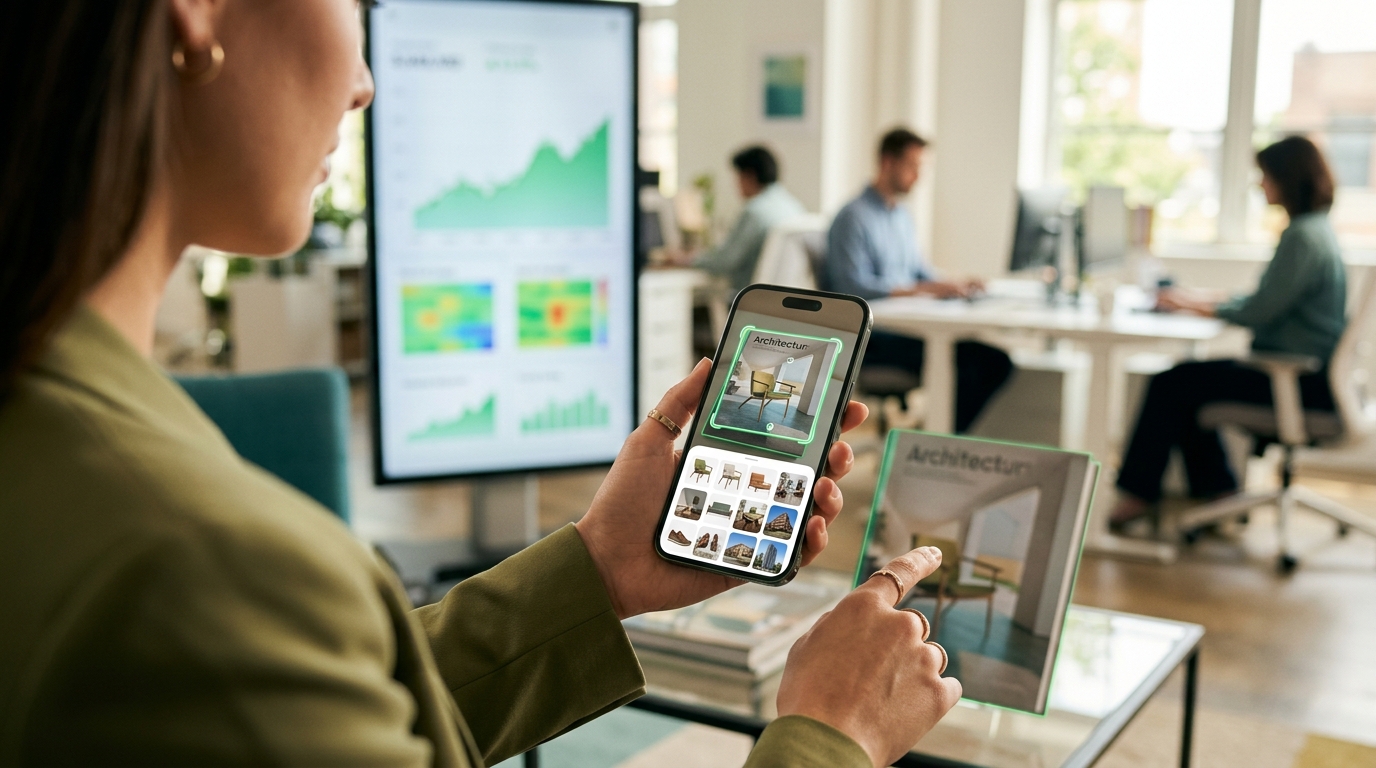
By 2026, the traditional search bar is no longer the primary gateway to the internet. With the rollout of Apple Visual Intelligence on the iPhone 16 and 17 series and the deep integration of Gemini into Google Lens, over 40% of mobile search queries are now visual or spatial. If your brand isn't visible when a user points their camera at a product, storefront, or screen, you are effectively invisible to the largest segment of modern consumers. Navigating this shift requires a new breed of Visual Search SEO Tools that understand pixels as well as they understand keywords.
Text-based search is being superseded by multimodal AI. In this environment, ranking isn't just about backlinks; it's about Generative Visual Search Ranking and ensuring your assets are indexed by OCR (Optical Character Recognition) engines that now read screenshot captions and in-image text with 99% accuracy. This guide explores the elite platforms and strategies needed to secure your spot in the spatial search era.
- The Multimodal Shift: Why Visual Search Dominates 2026
- 1. Google Lens & Search Console: The First-Party Foundation
- 2. Apple Intelligence & ASO: Optimizing for the Siri-Gemini Layer
- 3. Profound: Tracking AI Search Visibility and Citations
- 4. Rankpilot: Automating GEO and Spatial Content Workflows
- 5. Pikes AI: Consistent Visual Asset Generation for AI Indexing
- 6. Surfer SEO: Semantic Context for Visual Entities
- 7. Pinterest Trends: The Visual Intent Engine
- 8. Gemini AI Studio: Building Custom Visual Classifiers
- 9. Claude & NotebookLM: Synthesizing Visual Research
- 10. Ahrefs: Mapping Visual Entities and Knowledge Graphs
- Technical Visual SEO: OCR, Metadata, and Screenshot Indexing
- Key Takeaways: TL;DR
- Frequently Asked Questions
The Multimodal Shift: Why Visual Search Dominates 2026
Visual search has evolved from a novelty feature into a core utility. In 2026, Spatial Search Marketing is the discipline of optimizing for the physical world. Apple's "Visual Intelligence" button and Google's "Circle to Search" have removed the friction of typing. Users now "search what they see."
According to research from Sensor Tower, consumer spend driven by visual discovery platforms crossed $150 billion in 2025. This is driven by multimodal AI models like Gemini 3 Pro and GPT-5, which can interpret video, images, and text simultaneously. For SEOs, this means the "Knowledge Graph" is now a "Vision Graph." If your product images don't have the right semantic markers, they won't appear in the Generative Visual Search Ranking carousels that sit at the top of AI Overviews.
1. Google Lens & Search Console: The First-Party Foundation
Google Lens remains the most powerful visual engine in the world, processing billions of queries monthly. In 2026, Google Search Console (GSC) remains your most important tool for baseline data.
How to Leverage GSC for Visual Search
Google has integrated "Lens Visibility" directly into the Performance report. You can now filter by "Search Appearance: Google Lens" to see which images are driving traffic.
- Actionable Step: Identify images with high impressions but low click-through rates (CTR). This usually indicates that while Google recognizes the object, the metadata (price, availability, or brand name) isn't compelling enough for a user to click.
- The 2026 Edge: Use the Product Snippets report to ensure your Merchant Center feed is perfectly synced. Google Lens now prioritizes "shoppable" results with real-time stock data over static images.
2. Apple Intelligence & ASO: Optimizing for the Siri-Gemini Layer
Apple's 2026 ecosystem is built on Apple Intelligence. With Siri now powered by a Gemini-integrated backend, the way Apple "sees" the world is deeply semantic. Apple Visual Intelligence SEO is essentially a hybrid of Local SEO and App Store Optimization (ASO).
The Screenshot Indexing Revolution
In late 2025, Apple began indexing visible text from screenshot captions and UI elements within apps. This means that if a user takes a screenshot of your product, the text inside that image is now searchable in their Photos app and via Siri.
"The words you put on your screenshots now compete and complement your keyword field. You can effectively expand your indexed keywords beyond the 100-character limit by adding strategic captions." — Jhonty Barreto, SEO Engico (Research Data)
Visual Search SEO Tools like AppTweak or Sensor Tower are now essential for tracking how these visual assets contribute to organic discovery within the Apple ecosystem.
3. Profound: Tracking AI Search Visibility and Citations
Profound has emerged as the industry leader for Generative Visual Search Ranking tracking. Unlike traditional rank trackers that only look at blue links, Profound analyzes how AI systems (Gemini, Perplexity, ChatGPT) cite and recommend brands across high-intent visual prompts.
Why Profound is Essential in 2026
- Prompt Tracking: It allows you to group prompts into topics and see how your visual assets are surfacing in AI responses.
- Competitive Analysis: You can see which competitors are getting the "Visual Citation" in a Perplexity answer and analyze their image metadata to see why.
- Share of Voice: It provides a structured dashboard for visibility in AI search, which is often significantly different from conventional SEO metrics.
4. Rankpilot: Automating GEO and Spatial Content Workflows
For agencies and solo builders, Rankpilot is the premier tool for Generative Visual Search Ranking at scale. It doesn't just write text; it chains the entire visual content pipeline together.
| Feature | Rankpilot Capability in 2026 |
|---|---|
| GEO Layer | Stores Perplexity sub-questions and turns them into H2s with direct visual answers. |
| Silo Planning | Automates the creation of pillar and support articles to build topical authority. |
| Visual Generation | Automatically generates schema-ready images that match the semantic intent of the text. |
| Auto-Rewrite | Refreshes content automatically when visual search patterns for a topic change. |
5. Pikes AI: Consistent Visual Asset Generation for AI Indexing
In the world of AI Image SEO Platforms, consistency is king. If your brand's visual identity is fragmented, AI models struggle to form a cohesive "Entity" for your business. Pikes AI specializes in creating consistent visual assets that are optimized for AI training and indexing.
By using Pikes AI, you can ensure that every product photo, infographic, and social tile shares a common "Visual Signature." This helps Google and Apple’s visual models recognize your brand across different platforms, strengthening your Entity Strength and increasing the likelihood of being the primary recommendation in a visual search.
6. Surfer SEO: Semantic Context for Visual Entities
While Surfer SEO is known for text, its 2026 update includes Visual Context Scoring. It analyzes the top-ranking images for a keyword and tells you which visual elements (objects, colors, text overlays) are correlated with top positions.
Content Optimization for Visual Intent
Surfer’s NLP engine now guides you on how to write the descriptive text surrounding your images. Since AI models use the surrounding text to understand an image's context, Surfer ensures that your "Image-Text" relationship is optimized for Generative Visual Search Ranking.
7. Pinterest Trends: The Visual Intent Engine
Pinterest is no longer a social network; it is a visual search engine. In 2026, Pinterest Trends is the best tool for discovering "Visual Intent" before it hits Google.
- Early Trend Discovery: Pinterest users search for visual inspiration months before they buy. By tracking these trends, you can create visual assets that are ready for Google Lens and Apple Intelligence when the mass market follows.
- Entity Mapping: Pinterest's "Visual Graph" is highly sophisticated. Using their API data can help you understand which visual entities are commonly associated with your niche.
8. Gemini AI Studio: Building Custom Visual Classifiers
If you are a developer or a technical SEO, Google AI Studio is your playground for Spatial Search Marketing. You can use Gemini 3 Flash to build custom visual classifiers to test how Google might "see" your images.
The Developer's Workflow
- Upload your product images to AI Studio.
- Prompt Gemini: "Identify the key entities, text, and brand markers in this image as a search engine would."
- Analyze the output: If Gemini misses your brand name or misidentifies the product category, your image is failing the visual search test.
- Iterate: Adjust the lighting, contrast, or text overlay and re-test until the AI identifies the image perfectly.
9. Claude & NotebookLM: Synthesizing Visual Research
Claude (Anthropic) and NotebookLM (Google) are indispensable for the research phase of Visual Search SEO Tools.
- Claude for Briefs: Claude's reasoning capabilities are superior for creating "Visual Content Briefs." You can feed it a competitor's visual strategy and ask it to find gaps in their entity coverage.
- NotebookLM for Grounding: Upload all your visual research, brand guidelines, and competitor screenshots. NotebookLM will create an "Audio Overview" or a structured knowledge base, ensuring your visual strategy is grounded in data and free from AI hallucinations.
10. Ahrefs: Mapping Visual Entities and Knowledge Graphs
Ahrefs remains the gold standard for mapping the Knowledge Graph that underpins all visual search. In 2026, their "AI Search Monitoring" features allow you to track when your brand appears in multimodal responses.
By using Ahrefs to identify which "Entities" your site is associated with, you can ensure your visual assets are tagged with the correct schema. If Ahrefs shows you have strong authority in "Sustainable Fashion," but your images are being categorized as "Fast Fashion" by Google Lens, you have an entity mismatch that needs fixing through structured data and better alt-text.
Technical Visual SEO: OCR, Metadata, and Screenshot Indexing
Technical SEO in 2026 is about making your site "machine-readable" for eyes, not just crawlers.
The New Rules of ALT Text
Alt text is no longer just for accessibility; it is a Generative Visual Search Ranking signal. * Old Way: "Red leather sneakers." * 2026 Way: "Red leather sneakers by [Brand Name], featuring [Specific Technology] and waterproof finish, as seen in [Context/Event]."
Optimizing for OCR
Since Apple and Google now index text within images (OCR), you must ensure that any text overlay on your images is high-contrast and uses legible fonts. Avoid "fancy" scripts that might confuse an OCR engine. If the AI can't read the text in your image, it can't index it.
Schema Markup for Spatial Search
Use ImageObject and Product schema extensively. In 2026, the significantLink and mainEntityOfPage properties are critical for telling visual search engines which image is the "Hero" and which are supplementary.
Key Takeaways: TL;DR
- Visual Search is Primary: By 2026, 40% of queries are visual. Optimize for the camera, not just the keyboard.
- Apple vs. Google: Apple Intelligence focuses on local/spatial discovery and screenshot indexing; Google Lens focuses on shoppable products and the Vision Graph.
- Tool Stack: Use Profound for AI visibility, Rankpilot for GEO automation, and Pikes AI for visual consistency.
- OCR Matters: Text inside images is now indexed. Use high-contrast, legible fonts for all visual overlays.
- Entity Strength: Visual search relies on the Knowledge Graph. Ensure your images are semantically linked to your brand's core entities.
Frequently Asked Questions
What are the best Visual Search SEO Tools for 2026?
The top tools include Profound (for AI tracking), Rankpilot (for content automation), Google Lens (via GSC), and Pikes AI (for asset generation). For technical audits, Screaming Frog remains essential for checking image metadata at scale.
How do I optimize for Apple Visual Intelligence?
Focus on Apple Visual Intelligence SEO by ensuring your local business data is accurate in Apple Maps, using high-quality product images with clear text overlays for OCR indexing, and optimizing your app's screenshots for the new 2025/2026 indexing rules.
Is Google Lens optimization different from traditional Image SEO?
Yes. While traditional Image SEO focused on file names and alt text, Google Lens Optimization 2026 focuses on object recognition, semantic context (the text surrounding the image), and real-time Merchant Center data for shoppable results.
Can AI search engines read text inside my images?
Yes, modern multimodal models use advanced OCR to read text within images, including screenshot captions and UI elements. This is a major factor in Generative Visual Search Ranking.
Does social media impact visual search rankings?
Absolutely. Platforms like Pinterest and TikTok act as visual discovery engines. Google and Apple use signals from these platforms to understand which images are trending, which influences their visibility in Lens and Siri.
Conclusion
The era of text-only SEO is over. As we move further into 2026, the brands that win will be those that treat their visual assets with the same strategic rigor as their written content. By leveraging the Visual Search SEO Tools outlined in this guide—from the technical precision of Google AI Studio to the strategic insights of Profound—you can ensure your brand is not just seen, but chosen in the spatial search landscape.
Don't wait for the next algorithm update to realize your images are invisible. Start auditing your visual entity strength today, optimize for the OCR engines of tomorrow, and claim your spot in the Apple and Google visual ecosystems. The camera is the new search bar—make sure you're ready for the close-up.