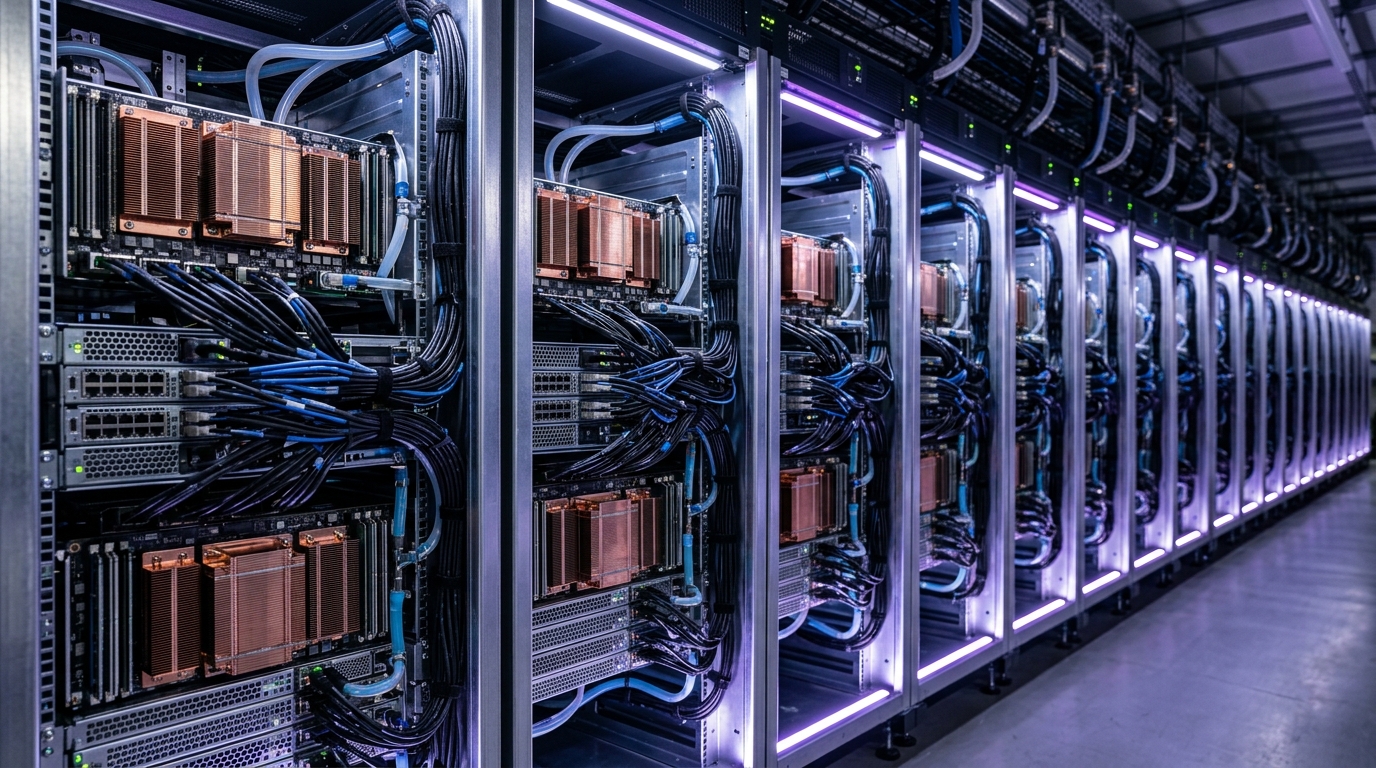
Is your AI infrastructure an asset or a liability? In 2026, the 'AI Tax' has become the single largest line item in the modern CTO’s budget, with vector embeddings and high-concurrency LLM queries driving cloud bills into the stratosphere. The era of passive monitoring is dead. To survive, enterprises are pivoting to AI database FinOps—a discipline that moves beyond static dashboards into the realm of autonomous remediation. If you aren't using automated agents to prune idle clusters and right-size your vector stores, you are likely overpaying for your cloud footprint by at least 32%.
The 2026 Shift: Why AI Database FinOps is No Longer Optional
Cloud infrastructure spending is projected to surpass $830 billion globally in 2026. Of that, a staggering portion is dedicated to AI-native data warehouse management and the specialized hardware required to run Retrieval-Augmented Generation (RAG) pipelines.
In previous years, FinOps was about 'showback'—telling a team they spent too much. In 2026, the bottleneck isn't the data; it's the action. As one Reddit user in the r/ChatGPTPro community noted, "The real advantage now comes from combining tools effectively... the speed of iteration is becoming more important than individual model quality." This applies directly to databases. If your FinOps tool can't automatically migrate your EBS volumes from gp2 to gp3 or spin down idle RDS instances, it’s just a digital paperweight.
Modern AI database FinOps platforms now utilize "FinOps Agents" that act as senior engineers. They don't just recommend; they execute. This shift is critical because AI workloads are inherently spiky. A vector database might be idle for 20 hours and then hit with 10,000 concurrent requests during a model retraining cycle. Manual governance cannot keep pace with this volatility.
1. Vantage: The Leader in Autonomous AI FinOps
Vantage has emerged as the definitive platform for 2026, particularly for organizations grappling with AI-native data warehouse management. It stands out by moving past the "reporting gap" through its Automated FinOps Agent.
Unlike legacy tools, Vantage provides a unified view across AWS, Azure, GCP, Snowflake, and Databricks. Its support for the Model Context Protocol (MCP) allows engineers to query cloud costs directly through AI assistants like Claude or Cursor.
Key Features:
- Automated FinOps Agent: Automatically implements changes like cleaning up unattached EBS volumes or obsolete snapshots.
- Autopilot for Savings Plans: Intelligently handles commitment purchases to maximize coverage without manual oversight.
- Per-Provider Deep Dives: Specific connectors for OpenAI, Anthropic, and MongoDB Atlas ensure that your AI API costs are tracked alongside your infrastructure.
"Vantage delivers comprehensive cloud cost optimization through continuous recommendations... The Agent continuously scans infrastructure and removes waste automatically." — Industry Analysis, 2026
2. SquareOps (SpendZero): The Managed Service Hybrid
For many mid-market firms, the problem isn't just a lack of tools—it's a lack of personnel. SquareOps bridges this gap by combining its SpendZero platform with certified cloud engineers who act as an extension of your team.
This "Managed FinOps" approach is highly effective for Snowflake cost reduction strategies 2026. While the tool identifies that a specific warehouse is over-provisioned, the SquareOps engineers actually redesign the query logic to ensure long-term efficiency.
Why it Ranks:
- 37+ Automated Checks: Covers everything from NAT Gateway waste to orphaned S3 buckets.
- Human-in-the-Loop: Certified engineers implement the fixes, ensuring that automated remediation doesn't break production environments.
- ISO 27001 Certified: Essential for enterprises in regulated sectors like FinTech or Healthcare.
3. CloudFix: Automated AWS Quick Wins
If you want the "easy button" for AWS, CloudFix is it. It focuses on low-risk, high-return optimizations that require zero architectural changes. This is the perfect entry point for teams just starting their AI database FinOps journey.
Optimization Examples:
- GP2 to GP3 Migration: Automatically upgrades block storage for better performance and 20% lower costs.
- Graviton Upgrades: Identifies instances that can be moved to ARM-based Graviton processors for better price-performance.
- S3 Intelligent Tiering: Automatically moves data between access tiers based on usage patterns.
4. ProsperOps: Autonomous Commitment Management
ProsperOps is a specialist platform that focuses entirely on the "Commit" phase of FinOps. In 2026, managing Reserved Instances (RIs) and Savings Plans for AI clusters is a full-time job. ProsperOps uses algorithms to buy and sell convertible RIs in real-time, ensuring you always have the highest possible discount coverage.
| Feature | ProsperOps | Manual Management |
|---|---|---|
| Coverage Target | 95%+ | 60-70% |
| Effort | Autonomous | 10-20 hours/week |
| Risk | Algorithmic hedging | High (Human error) |
| Pricing | % of Savings | Fixed Salary/License |
5. CAST AI: Kubernetes-Native Database Optimization
As more vector databases (like Milvus or Weaviate) move to Kubernetes, database cost optimization tools 2026 must be K8s-aware. CAST AI is the gold standard for this. It performs "bin-packing"—moving containers to the smallest number of nodes possible—and automatically switches worker nodes to Spot instances when available.
Technical Highlight:
CAST AI can reduce Kubernetes compute costs by up to 70% by using automated rightsizing. It adjusts the CPU and memory requests of your database pods in real-time based on actual telemetry, preventing the "over-provisioning creep" common in AI dev environments.
6. Apptio Cloudability: Enterprise Cost Allocation
Now owned by IBM, Cloudability is the heavy hitter for AI-native data warehouse management in Fortune 500 companies. Its strength lies in "True Cost" allocation—mapping every dollar of Snowflake or Databricks spend back to a specific business unit, project, or even an individual AI model.
Business Value:
- Showback/Chargeback: Essential for large organizations where the AI department needs to bill back the Marketing department for model usage.
- FinOps Maturity Mapping: Helps organizations move from "Crawl" to "Run" stages of the FinOps Foundation framework.
7. Spot.io: Compute-Heavy AI Workload Scaling
Spot.io (by NetApp) is built for the massive compute requirements of AI training. If your database strategy involves periodic massive ingestion of data into a data lake, Spot.io’s Elastigroup can save you 80% on compute by leveraging Spot instances with a 100% availability SLA (guaranteed by failing back to On-Demand instances if Spot capacity is pulled).
8. Anodot: AI-Powered Anomaly Detection
AI spend is notoriously unpredictable. A bug in a recursive LLM agent could trigger millions of database calls in an hour. Anodot uses machine learning to detect these anomalies in real-time. Unlike static budget alerts, Anodot learns your "normal" spiky behavior and only alerts you when a cost spike is truly an outlier.
9. Kubecost: Granular Container Economics
For startups and scale-ups running open-source AI stacks, Kubecost provides the most granular view of what each microservice costs. It is particularly useful for teams trying to reduce vector database costs at the pod level. It integrates directly with Prometheus and Grafana, making it a favorite for DevOps-heavy cultures.
10. CloudHealth by Broadcom: Multi-Cloud Governance
Despite the Broadcom acquisition, CloudHealth remains a powerhouse for multi-cloud governance. It is best suited for the "Lazy Boss" persona mentioned on Reddit—someone who needs a high-level executive dashboard that covers AWS, Azure, and Google Cloud with strict policy enforcement (e.g., "Delete any unencrypted S3 bucket immediately").
Strategies to Reduce Vector Database Costs
Vector databases are the engine of RAG, but they are incredibly memory-intensive. In 2026, reducing vector database costs requires a multi-pronged technical approach:
- Quantization: Use platforms that support scalar or product quantization to reduce the memory footprint of your embeddings. This can often cut RAM requirements by 4x with minimal loss in retrieval accuracy.
- Tiered Storage: Move older, less-frequently accessed vectors to disk-based storage (like S3) while keeping "hot" vectors in memory. Tools like Vantage can help identify these access patterns.
- Collection Pruning: AI agents often create temporary collections for research tasks. Use AI database FinOps agents to set TTL (Time-to-Live) policies on these collections so they are deleted automatically after 48 hours.
- Spot Instance Clusters: If your vector DB is distributed (e.g., Milvus), run your query nodes on Spot instances and your index nodes on On-Demand instances to balance cost and stability.
Snowflake and Databricks AI Cost Management in 2026
Managing Snowflake cost reduction strategies 2026 is no longer just about choosing the right warehouse size. It’s about managing the AI Services layer (Cortex) and the serverless features that AI apps rely on.
Snowflake Optimization Checklist:
- Warehouse Auto-Suspend: Set AI-specific warehouses to suspend after 60 seconds of inactivity.
- Query Acceleration Service: Enable this for massive vector-heavy scans to reduce total execution time.
- Resource Monitors: Set hard limits at the service-account level to prevent an experimental agent from burning through 1,000 credits in a weekend.
Databricks AI Cost Management:
For Databricks AI cost management, focus on Photon. While Photon-enabled clusters are more expensive per hour, they are significantly faster for complex AI joins. A FinOps platform like Vantage can show you the "Unit Cost" per query, proving that Photon might actually be cheaper for your specific AI workload than a standard cluster.
Key Takeaways
- Remediation > Reporting: In 2026, the best tools (Vantage, SquareOps, CloudFix) don't just show you waste; they fix it automatically.
- AI Native is Different: Traditional FinOps doesn't account for vector memory or token-to-compute ratios. You need AI database FinOps specialists.
- Hybrid Models Win: Combining a tool like SpendZero with managed services ensures that complex architectural waste is handled by humans, while simple waste is handled by bots.
- Vector Costs are Manageable: Through quantization and tiered storage, you can slash RAG expenses by up to 60%.
- Governance is Cultural: As noted in the Reddit research, the real advantage is "how tools connect into a pipeline." FinOps must be integrated into the CI/CD flow via Terraform or MCP.
Frequently Asked Questions
What is the difference between AIOps and FinOps in 2026?
AIOps uses AI to manage IT operations and performance, while FinOps uses AI to manage and optimize cloud spending. In 2026, these are merging into "Autonomous FinOps," where AI agents monitor performance telemetry to make real-time cost-saving decisions (like rightsizing a database based on CPU load).
How can I reduce vector database costs without losing accuracy?
The most effective way is through Product Quantization (PQ) and HNSW index tuning. Additionally, implement a tiered storage strategy where only the most recent embeddings are kept in high-cost RAM, while the rest are stored on NVMe or object storage. FinOps platforms can help you identify which vectors are "cold" and can be moved.
Is Snowflake more expensive than Databricks for AI workloads?
It depends on the workload. Snowflake is often more cost-effective for SQL-heavy AI retrieval, while Databricks offers better price-performance for large-scale model training and data engineering. Using a multi-cloud FinOps tool like Vantage allows you to compare the "Unit Cost" of an AI inference task across both platforms.
Do I really need a managed FinOps service like SquareOps?
If your monthly cloud spend exceeds $50,000 and you have a lean engineering team, yes. A managed service pays for itself by implementing complex architectural changes that automated tools might miss, such as migrating a legacy database to a serverless AI-native alternative.
What is the "AI Tax" in cloud computing?
The "AI Tax" refers to the hidden costs of running LLMs and RAG pipelines, including high data transfer fees between regions, the premium cost of GPU-backed instances, and the massive memory overhead of vector databases. AI Database FinOps is the primary method for auditing and reducing this tax.
Conclusion
The landscape of AI database FinOps in 2026 is defined by speed and autonomy. As infrastructure becomes more complex, the gap between a "well-architected" cloud and a "wasteful" one can mean millions of dollars in annual EBITDA. By leveraging top-tier platforms like Vantage for automation, SquareOps for expertise, and CAST AI for Kubernetes efficiency, your organization can stop viewing AI as a cost center and start seeing it as a scalable engine for growth.
Don't wait for your next billing cycle to realize your vector database is oversized. Start with a free audit from SpendZero or a trial of Vantage today, and take control of your AI-native data warehouse management before the scale outpaces your budget. The future of tech is AI, but the future of business is profitable AI.