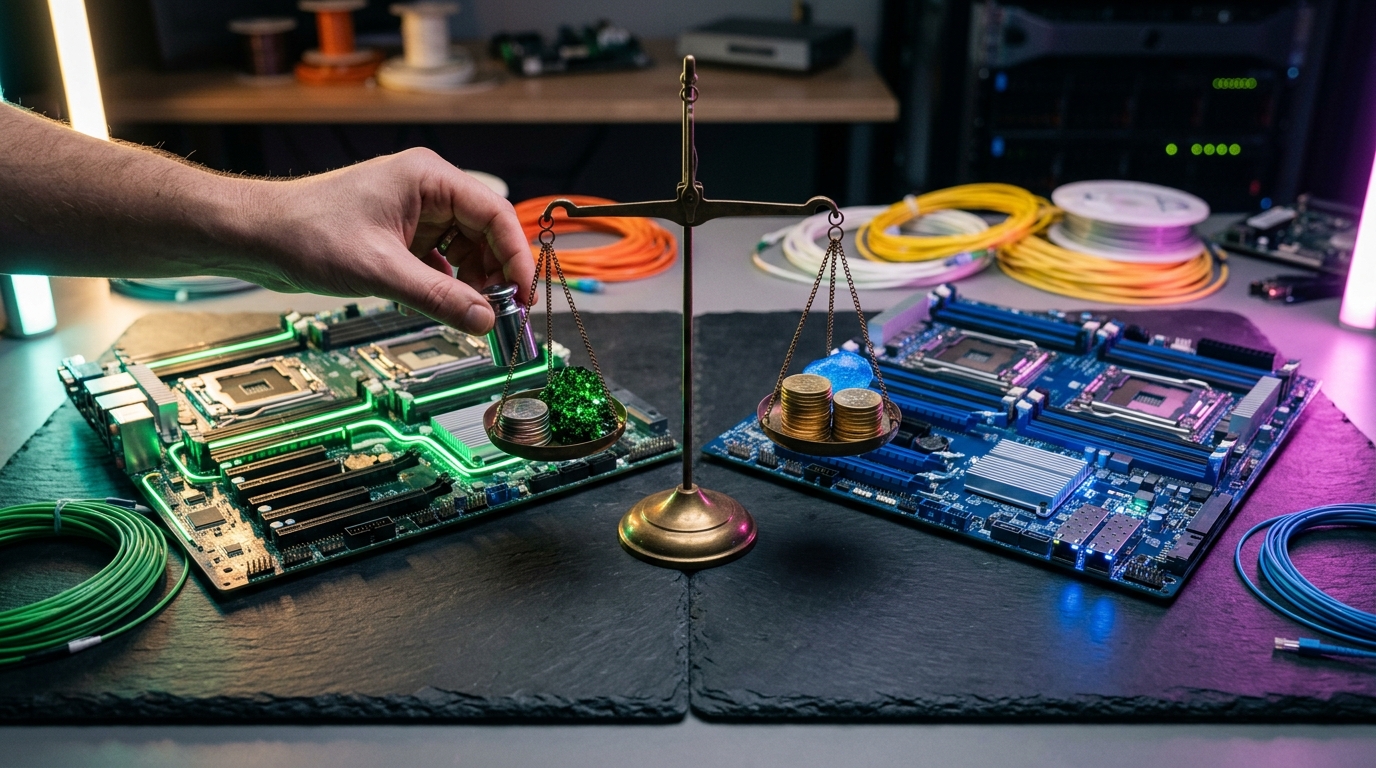
By the first quarter of 2026, the question is no longer whether your AI works, but whether the planet can afford it. With global data center energy costs rising by nearly 47% and a growing chorus of critics on platforms like Reddit labeling the generative AI boom an "environmental racket," the industry has reached a breaking point. Enter AI GreenOps Platforms: the essential software layer designed to optimize sustainable AI infrastructure 2026 by aligning high-performance compute with carbon accountability. If you are deploying LLMs today without a GreenOps strategy, you aren't just wasting money—you're ignoring a looming regulatory and ecological wall.
The Sustainability Crisis of 2026
In early 2025, the tech world was obsessed with "AGI at any cost." By 2026, that cost has become literal. Data centers are now projected to consume more electricity than entire G7 nations, and as one viral Reddit thread recently noted, "We are burning energy and resources for what is primarily used for Google searches and making memes." While the hyperbole is real, so is the data. AI carbon footprint optimization is no longer a niche concern for ESG departments; it is a survival requirement for CTOs.
Energy volatility and the massive resource intensity of models like "OpenClaw"—which reportedly dwarfs traditional video generation in compute needs—have forced a shift. Organizations are moving away from "omnibus" models that try to do everything and toward eco-friendly AI development through small language models (SLMs) and specialized hardware. The "paper straw" approach to corporate sustainability is being replaced by hard-coded energy limits in the CI/CD pipeline.
What are AI-Native GreenOps Platforms?
An AI-native GreenOps platform is a specialized cloud management layer built specifically to monitor, report, and remediate the environmental impact of machine learning workloads. Unlike traditional FinOps tools that focus solely on the bottom line, GreenOps platforms treat green AI computing tools as a trinity of energy efficiency, carbon intensity, and water usage.
These platforms provide: - Real-time Carbon Tracking: Measuring CO2e (carbon dioxide equivalent) per inference request. - Hardware-Aware Scheduling: Moving workloads to regions with the lowest carbon intensity at any given hour. - Model Efficiency Metrics: Comparing the accuracy-to-energy ratio of different LLMs. - Automated Remediation: Shutting down idle training clusters or downscaling inference nodes during peak grid stress.
10 Best AI GreenOps Platforms for 2026
The following platforms represent the gold standard for sustainable AI infrastructure 2026, evaluated on their ability to handle complex multicloud environments and provide actionable carbon insights.
1. UnityOne AI
UnityOne AI has emerged as the leader in AI carbon footprint optimization. It provides a 2026 sustainability roadmap that integrates DCIM (Data Center Infrastructure Management) with multicloud AIOps.
- Best For: Enterprises needing auditable proof of progress toward net-zero commitments.
- Key Feature: The "Carbon Reduction Recommendation Engine," which suggests specific workload migrations to greener grids.
- Pros: Deep integration with private and public cloud; CSRD-ready reporting.
2. SiliconFlow
SiliconFlow focuses on the developer experience of sustainable LLM hosting. By optimizing inference engines for throughput and latency, they reduce the total energy required per token generated.
- Best For: High-growth startups and developers running massive inference workloads.
- Key Feature: Proprietary inference engines that deliver up to 2.3x faster speeds, directly translating to lower energy consumption.
- Pros: Low latency; high performance-to-watt ratio.
3. Cast AI
Originally a FinOps powerhouse, Cast AI has pivoted heavily into GreenOps. Its autonomous Kubernetes optimization platform now includes "Green Scaling" features.
- Best For: Teams running containerized AI workloads at scale.
- Key Feature: Automated bin-packing and spot instance management that ensures no CPU cycle is wasted.
- Pros: Zero-agent architecture; massive cost and carbon savings (up to 70%).
4. IBM Watsonx (Governance & Sustainability Suite)
IBM has combined Cloudability, Turbonomic, and Kubecost into a unified suite that emphasizes responsible AI governance.
- Best For: Regulated industries (finance, healthcare) with strict compliance needs.
- Key Feature: AI-powered workload rebalancing that prevents "infrastructure sprawl."
- Pros: Unmatched focus on transparency and explainable AI energy use.
5. Google Cloud (Vertex AI + TPU v6)
Google Cloud continues to lead in hardware efficiency. Their Tensor Processing Units (TPUs) are specifically designed for green AI computing tools, offering better performance-per-watt than general-purpose GPUs.
- Best For: ML researchers and teams training massive foundational models.
- Key Feature: Carbon-aware scheduling that pauses non-urgent training during periods of high grid carbon intensity.
- Pros: Industry-leading TPU technology; deep ML expertise.
6. Microsoft Azure (MAIA 100 Integration)
Azure’s commitment to sustainable AI infrastructure 2026 is anchored in its custom MAIA 100 chips. These are optimized for sub-millisecond inference, reducing the energy overhead of OpenAI-powered applications.
- Best For: Organizations already locked into the Microsoft ecosystem.
- Key Feature: Direct integration with Microsoft’s planetary computer for environmental data.
- Pros: Seamless ecosystem connectivity; custom AI-optimized silicon.
7. AWS (Trainium2 & Amazon Bedrock)
AWS has doubled down on specialized hardware with Trainium2. Their Bedrock platform allows users to swap models based on energy efficiency profiles.
- Best For: Large enterprises requiring global scale and reliability.
- Key Feature: Sustainability Pillar in the Well-Architected Framework.
- Pros: Vast global infrastructure; extensive model choice.
8. Datadog Cloud Cost & Carbon Management
Datadog allows developers to see the carbon impact of their code in the same dashboard where they monitor latency and errors.
- Best For: DevOps and Platform Engineers who want cost and carbon data in their existing IDEs.
- Key Feature: Service-level carbon attribution mapping spend to specific microservices.
- Pros: Unified observability; anomaly detection for energy spikes.
9. CloudZero
CloudZero treats carbon as a unit economic metric. It connects AI spending and energy use to specific business outcomes, like "carbon cost per customer."
- Best For: SaaS companies looking to optimize their margins and their footprint simultaneously.
- Key Feature: Automated resource discovery that identifies "zombie" AI models.
- Pros: Engineering-centric metrics; low overhead.
10. Opencost (Open Source)
For teams wary of vendor lock-in, Opencost provides a community-driven standard for measuring Kubernetes energy and cost.
- Best For: Open-source advocates and self-hosted AI environments.
- Key Feature: Cloud Carbon Footprint integration.
- Pros: Fully transparent; free to use; highly customizable.
| Platform | Primary Strength | Best For | Hardware Focus |
|---|---|---|---|
| UnityOne AI | Governance & Compliance | Fortune 500 | Multicloud/Hybrid |
| SiliconFlow | Inference Speed | Developers | NVIDIA/AMD |
| Cast AI | K8s Automation | Scale-ups | Any K8s |
| IBM Watsonx | Responsible AI | Regulated Sectors | Multi-infra |
| Google Cloud | Hardware Efficiency | Researchers | TPU v5/v6 |
The 4Rs Framework for Sustainable AI
Adopting AI GreenOps Platforms requires a structural approach. Leading platform engineers in 2026 utilize the 4Rs framework to manage their AI carbon footprint optimization:
- Report: You cannot fix what you cannot measure. Platforms must provide pod-level and request-level carbon data. This includes Scope 2 (electricity) and Scope 3 (hardware manufacturing) emissions.
- Recommend: AI-driven insights should suggest moving a training job from a fossil-fuel-heavy region (like Northern Virginia) to a hydro-powered region (like Quebec).
- Remediate: Move from advice to action. The best tools, like Cast AI or Antimetal, autonomously right-size instances or kill idle nodes without human intervention.
- Retain: Foster a culture of "Green Coding." This involves surfacing carbon metrics in Jira or GitHub so developers see the impact of inefficient code before it hits production.
"The challenge extends beyond tracking spend. Platform engineers face container cost attribution across dynamic workloads... You need platforms that speak Kubernetes natively." — Ajay Chankramath, Platformetrics
Regulatory Landscape: CSRD, SEC, and Carbon Disclosures
By 2026, sustainability is no longer optional. The Corporate Sustainability Reporting Directive (CSRD) in Europe and new SEC climate disclosures in the US mandate that companies report their digital carbon footprint.
Failure to comply with these regulations can lead to massive fines and divestment from institutional investors. AI GreenOps Platforms like UnityOne AI and IBM Watsonx are specifically designed to generate the auditable reports required by these new laws. They transition carbon accounting from "best guess" spreadsheets to real-time, verifiable data streams.
Addressing the Water Crisis in AI Computing
One of the most heated topics on Reddit and tech forums is the "AI Water Crisis." Data centers require millions of gallons of water for cooling, often in water-stressed regions.
As one commenter noted, "AI Thirst Trap ❤️ AI Water Crisis... this is how you get a water war." In response, 2026-ready GreenOps platforms have started incorporating Water Usage Effectiveness (WUE) metrics. Companies are now being pressured to move their "thirstiest" models to data centers that use closed-loop cooling or are located in naturally cold climates where ambient air cooling is sufficient.
Technical Best Practices for Eco-Friendly AI Development
Beyond choosing the right platform, engineers must adopt eco-friendly AI development techniques to reduce the baseline load on sustainable AI infrastructure 2026.
1. Model Quantization
Reducing the precision of model weights (e.g., from FP32 to INT8) can slash energy consumption by 4x with minimal loss in accuracy.
python
Example: Quantizing a model using Hugging Face Optimum
from optimum.onnxruntime import ORTModelForSequenceClassification from transformers import AutoTokenizer
model_id = "distilbert-base-uncased-finetuned-sst-2-english" model = ORTModelForSequenceClassification.from_pretrained(model_id, export=True)
Quantization logic follows to reduce bit-width and energy footprint
2. Knowledge Distillation
Training a smaller "student" model to mimic a larger "teacher" model allows you to deploy highly efficient LLMs that require significantly less compute power for inference.
3. Serverless Inference
Using platforms like SiliconFlow or AWS Lambda for AI ensures that you only consume energy when a request is actually being processed, eliminating the carbon cost of "idle" servers.
Key Takeaways
- Sustainability is Mandatory: Regulatory shifts (CSRD/SEC) make GreenOps a 2026 requirement.
- Specialized Hardware Wins: TPUs and custom AI chips (MAIA, Trainium) offer significantly better carbon efficiency than general GPUs.
- Automation is Essential: "Remediation" must be autonomous. Tools that only provide reports without taking action are insufficient for modern scale.
- The Water Factor: WUE is becoming as important as PUE (Power Usage Effectiveness) in evaluating data center sustainability.
- Small is Beautiful: Shifting from giant omnibus models to specialized SLMs is the most effective way to reduce AI's environmental impact.
Frequently Asked Questions
What is the difference between FinOps and GreenOps for AI?
FinOps focuses on optimizing the financial cost of cloud computing. GreenOps focuses on the environmental impact, specifically carbon emissions and energy efficiency. In 2026, these two disciplines have largely merged, as energy efficiency directly correlates to cost savings.
Which AI GreenOps platform is best for small teams?
For small teams or startups, SiliconFlow and CloudZero are excellent choices. They offer low-overhead, developer-friendly interfaces that provide immediate visibility into energy use without requiring a dedicated sustainability team.
Can AI actually help the environment?
Yes. While AI training is energy-intensive, AI is being used in climate modeling, grid optimization, and material science to discover new carbon-capture technologies. The goal of GreenOps is to ensure that the "net impact" of AI remains positive.
How do I measure the carbon footprint of a single LLM query?
Platforms like Datadog and UnityOne AI use "Carbon Intensity" APIs to calculate the CO2e of a query based on the duration of the compute task and the energy mix of the data center's power grid at that specific moment.
Is local AI better for the environment than cloud AI?
It depends. Local AI (running on a MacBook or local server) avoids data center networking overhead but may use less efficient consumer hardware. For small, frequent tasks, local AI is often more sustainable. For massive training, highly optimized "green" data centers are usually better.
Conclusion
The era of "growth at any cost" in artificial intelligence has ended. As we navigate 2026, the adoption of AI GreenOps Platforms is the only way to reconcile the transformative power of AI with the urgent reality of our planetary limits. Whether you choose the autonomous optimization of Cast AI, the compliance-heavy governance of UnityOne AI, or the hardware-level efficiency of Google Cloud, the time to act is now.
Don't let your AI infrastructure become a liability. By integrating sustainable AI infrastructure 2026 principles today, you ensure that your organization remains compliant, profitable, and—most importantly—responsible. The future of AI isn't just intelligent; it's green.