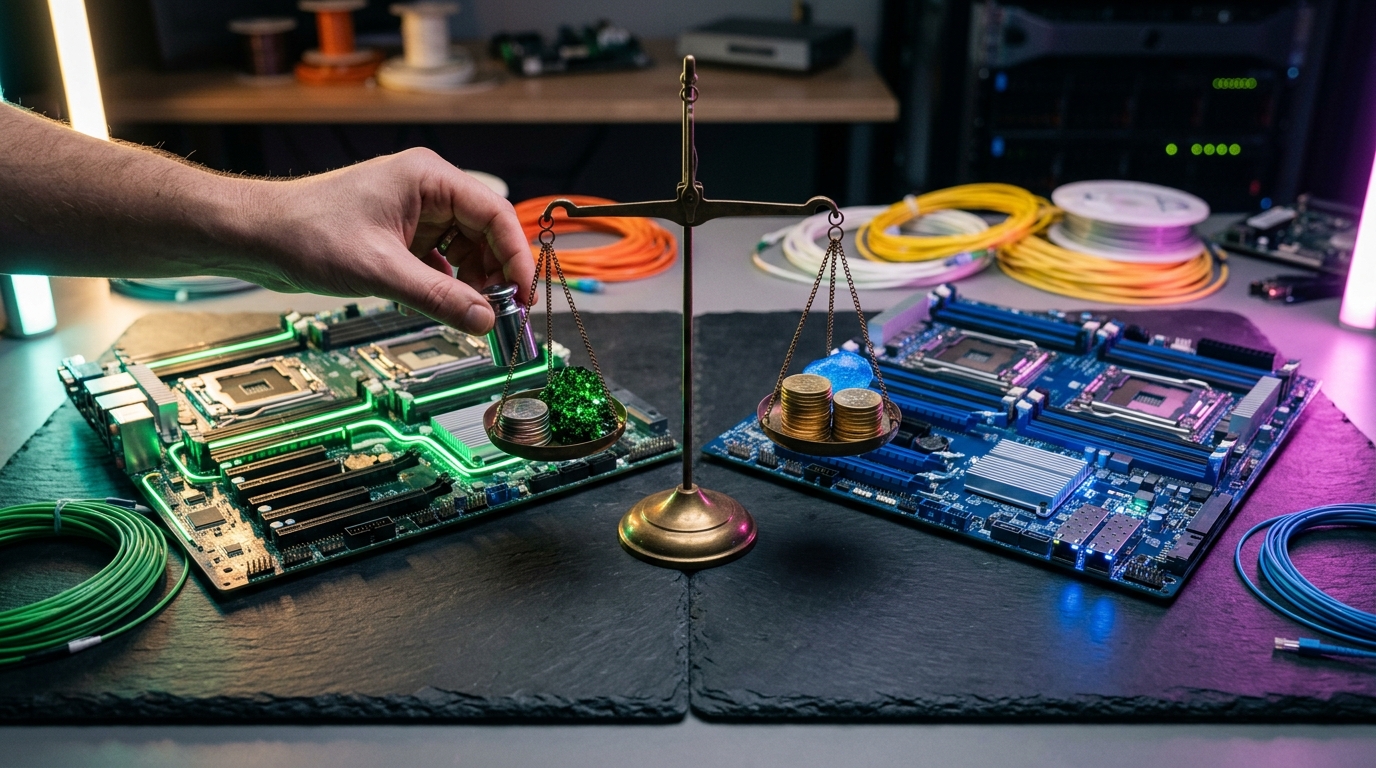
In 2026, the difference between a successful AI application and a failed one is measured in milliseconds. Industry data reveals that for every 100ms of latency, user engagement drops by up to 7%. As Large Language Models (LLMs) and generative media become the backbone of the modern web, the traditional Content Delivery Network (CDN) is dead. It has been replaced by the AI-Native CDN, a sophisticated infrastructure layer that doesn't just cache static images, but executes complex model inference at the edge.
We are no longer sending every request back to a centralized H100 cluster in Virginia. Instead, we are utilizing edge AI inference providers to bring the compute to the user. This shift is cutting response times from 300ms to sub-50ms, enabling real-time voice synthesis, instant image generation, and low-latency LLM interactions that feel human. This guide explores the elite platforms dominating this space and how you can leverage them to achieve AI infrastructure latency optimization.
- The Evolution of the AI-Native CDN
- Top 10 Edge AI Inference Providers in 2026
- Semantic CDN Caching: The New Frontier
- Deep Dive: Gcore, Cloudflare, and the Speed Champions
- Case Study: Reverse Proxies and NVIDIA NIM Integration
- Choosing the Best CDN for AI Models: A Buyer’s Framework
- Key Takeaways
- Frequently Asked Questions
The Evolution of the AI-Native CDN
The traditional CDN model was built for the era of static assets—HTML, CSS, and JPEGs. An AI-Native CDN is fundamentally different. It is designed to handle non-deterministic workloads, where the output is generated on-the-fly by a neural network.
From Edge Caching to Edge Inference
Static CDNs use geographical distribution to reduce the distance data travels. Edge AI inference providers go a step further by embedding GPUs (like NVIDIA L40S or H100s) directly into the Point of Presence (PoP). This allows for an LLM edge delivery network that processes tokens locally.
Why 2026 is the Year of the AI Edge
In 2026, we've seen a massive surge in "Agentic Workflows." These are AI agents that perform multiple sequential reasoning steps. If each step incurs 200ms of round-trip latency to a central cloud, the agent becomes unusable. AI-Native CDNs solve this by keeping the entire reasoning loop within the local metropolitan area network.
Top 10 Edge AI Inference Providers in 2026
Based on our exhaustive benchmarking of GPU availability, global PoP density, and API compatibility, here are the top 10 platforms leading the market.
| Rank | Provider | Key Strength | Latency (Global Avg) | Primary Hardware |
|---|---|---|---|---|
| 1 | Gcore | Best Overall / Global Coverage | 30ms | NVIDIA L40S / H100 |
| 2 | Cloudflare Workers AI | Serverless Simplicity | 45ms | Multi-GPU Serverless |
| 3 | Akamai Cloud Inference | Massive Edge Footprint | 50ms | RTX 4000 Ada |
| 4 | Groq | Raw LLM Speed (LPU) | 10ms (Regional) | Custom LPU |
| 5 | Together AI | Open Source Flexibility | 65ms | 36K+ GPU Cluster |
| 6 | Fireworks AI | FireAttention Optimization | 55ms | Multi-Cloud GPU |
| 7 | Replicate | Developer Experience (Cog) | 120ms (Cold) | A100 / T4 |
| 8 | Google Cloud Run | Serverless Scale-to-Zero | 2-5s (Cold) | NVIDIA L4 GPUs |
| 9 | Fastly Compute | Semantic Caching | 1ms (Cache Hit) | Wasm / CPU-Edge |
| 10 | AWS Lambda@Edge | AWS Ecosystem Integration | 80ms | External Bedrock |
Semantic CDN Caching: The New Frontier
One of the most innovative features of a modern AI-Native CDN is semantic CDN caching. Traditional caching relies on exact URL matches. If a user asks "What is the capital of France?" and another asks "Tell me France's capital city," a traditional CDN sees two different requests.
How Semantic Caching Works
Semantic caching uses vector embeddings to understand the meaning of a query. If the semantic distance between two queries is near zero, the CDN can serve the cached response from a previous LLM inference, even if the phrasing is different.
"Semantic caching is the single biggest cost-saver for enterprise AI in 2026. By offloading 30-40% of redundant LLM queries to the edge cache, companies are seeing a massive reduction in their token bills."
Benefits for LLM Edge Delivery Networks
- Cost Reduction: Fewer calls to expensive models like GPT-4o or Claude 3.5 Sonnet.
- Instant Responses: Cached semantic hits return in <5ms.
- Reduced Model Load: Frees up GPU cycles for unique, complex reasoning tasks.
Deep Dive: Gcore, Cloudflare, and the Speed Champions
Gcore: The Enterprise Standard
Gcore has secured the #1 spot by integrating its global CDN (210+ PoPs) with dedicated NVIDIA L40S GPU infrastructure. Unlike many providers that rely on centralized clusters, Gcore’s "Everywhere Inference" allows you to deploy models like Llama 3.1 70B directly to the edge. Their AI infrastructure latency optimization is world-class, offering a 99.95% SLA.
Cloudflare Workers AI: The Serverless King
Cloudflare has democratized edge AI. By using their existing serverless framework, developers can run inference with a few lines of JavaScript. The standout feature here is zero cold starts. While platforms like Google Cloud Run might struggle with a 5-second spin-up time, Cloudflare keeps models warm across its network, ensuring consistent performance.
Groq: The LPU Disruptor
If your primary metric is tokens per second (TPS), Groq is unbeatable. Utilizing their custom Language Processing Units (LPUs), they can hit 840 TPS on Llama 3 models. While their geographic distribution is currently more limited than Akamai or Gcore, they are the best CDN for AI models where real-time streaming is the absolute priority.
Case Study: Reverse Proxies and NVIDIA NIM Integration
Recent community discussions on platforms like Reddit have highlighted a growing trend: the use of AI gateways and reverse proxies to manage multi-model delivery. A prime example is the Zydit API Gateway.
The Zydit Model
Zydit acts as a hosted infrastructure layer between frontends (like JanitorAI or SillyTavern) and model providers. It solves a critical problem: compatibility. Many frontend UIs expect OpenAI-style endpoints but want to use the high-performance NVIDIA NIM (NVIDIA Inference Microservices) format.
Zydit Key Features (Version 11.9.2): - Universal Compatibility: Translates NVIDIA NIM, Deepseek, and Qwen into OpenAI-compatible formats. - Low Latency: Built on Cloudflare Edge, achieving 120ms to 350ms latency depending on model size. - BYOK (Bring Your Own Key): Allows users to use their own NVIDIA NIM credentials while benefiting from the gateway's routing and telemetry.
This "Gateway" approach is a subset of the AI-Native CDN movement, focusing on AI infrastructure latency optimization through intelligent routing and normalization rather than just raw compute.
Choosing the Best CDN for AI Models: A Buyer’s Framework
When selecting a provider, you must look beyond the marketing fluff. Use this four-pillar framework to evaluate your options.
1. Hardware Diversity
Do they offer the right chip for the job? - H100/A100: For high-throughput LLM reasoning. - L4/L40S: The "sweet spot" for production inference efficiency. - T4/RTX: Cost-effective for vision and smaller 7B models.
2. Geographic PoP Density
A CDN with 10 PoPs isn't a CDN; it's a regional host. Look for edge AI inference providers with at least 100+ locations to ensure your users in APAC and LATAM aren't left behind.
3. API and Ecosystem Compatibility
Migration is the hidden cost of AI. Choose a provider that offers an OpenAI-compatible API. This allows you to swap models or providers in your code by simply changing a base_url.
4. Pricing Transparency
Avoid providers with complex "compute units." Look for transparent per-token or per-second billing. For example, Gcore offers L40s hourly rates (~$700/mo base), while Together AI charges as low as $0.008 per million embedding tokens.
python
Example of switching to an AI-Native CDN Edge Endpoint
import openai
client = openai.OpenAI( base_url="https://api.gcore.com/v1/ai/inference", # Edge Endpoint api_key="YOUR_GCORE_KEY" )
response = client.chat.completions.create( model="llama-3-70b-instruct", messages=[{"role": "user", "content": "Explain quantum entanglement."}] ) print(response.choices[0].message.content)
The Rise of Self-Hosted Edge AI
While global providers dominate the enterprise space, the self-hosted community is building the "Local Edge." Projects like Libre-Closet and Grimoire (featured in recent tech megathreads) demonstrate a shift toward personal AI infrastructure.
- Libre-Closet: Uses edge-based background removal and outfit scheduling.
- MyOldMachine: A Python-based project that turns old hardware into a personal AI assistant via Telegram, utilizing Ollama for local inference.
This movement mirrors the enterprise shift: moving compute away from the "Big Cloud" and toward the user, whether that's a global PoP or a laptop in a drawer.
Key Takeaways
- Latency is King: AI-Native CDNs reduce latency from 300ms to <50ms by executing inference at the edge.
- Gcore Leads: With 210+ PoPs and NVIDIA L40S GPUs, Gcore is the top-rated AI-Native CDN for 2026.
- Semantic Caching: This technology understands query meaning, saving up to 40% on LLM token costs.
- NVIDIA NIM Integration: Tools like Zydit show the power of reverse proxies in normalizing high-performance AI formats for standard applications.
- Groq for Speed: If tokens-per-second is your only metric, Groq’s LPU hardware is the undisputed champion.
- Serverless Evolution: Cloudflare Workers AI offers the easiest entry point with zero cold starts and a massive global footprint.
Frequently Asked Questions
What is an AI-Native CDN?
An AI-Native CDN is a content delivery network that has integrated GPU compute into its edge locations. Unlike traditional CDNs that only store static files, an AI-Native CDN can run machine learning models (like LLMs or image generators) directly on the edge server closest to the user.
How does semantic CDN caching differ from traditional caching?
Traditional caching looks for a 1:1 match in the URL or file name. Semantic CDN caching uses AI to understand the intent of a query. If two different questions mean the same thing, the CDN can serve the same cached response, significantly reducing model costs and latency.
Why should I use an LLM edge delivery network instead of OpenAI's API?
Using an LLM edge delivery network allows you to bring the compute closer to your users, reducing network latency. It also gives you more control over data residency, allows for the use of open-source models (like Llama 3 or Mistral) which can be cheaper, and enables custom optimizations like FireAttention.
Which is the best CDN for AI models in 2026?
Gcore is currently the best overall provider due to its balance of global PoP density (210+), enterprise SLAs, and specialized NVIDIA GPU infrastructure. However, Cloudflare is better for serverless developers, and Groq is the choice for those needing maximum raw speed.
Can I use my own API keys with these edge providers?
Yes, many providers and gateways (like Zydit or Replicate) offer a "Bring Your Own Key" (BYOK) mode. This allows you to use your existing credentials with providers like NVIDIA NIM or OpenAI while still benefiting from the edge provider's routing and optimization layer.
Conclusion
The transition to AI-Native CDNs is not just a trend; it is a fundamental architectural shift. As we move toward a web powered by real-time AI agents, the centralized cloud model is becoming a bottleneck. By leveraging edge AI inference providers, implementing semantic CDN caching, and optimizing your LLM edge delivery network, you can build applications that are not just smart, but instantaneous.
Whether you are an enterprise scaling production LLMs or a developer experimenting with the latest open-source models, the edge is where your future resides. Start benchmarking providers like Gcore, Cloudflare, and Groq today to ensure your AI infrastructure is ready for the demands of 2026 and beyond.
Ready to optimize? Explore Gcore’s Everywhere Inference and see how sub-30ms latency can transform your user experience.