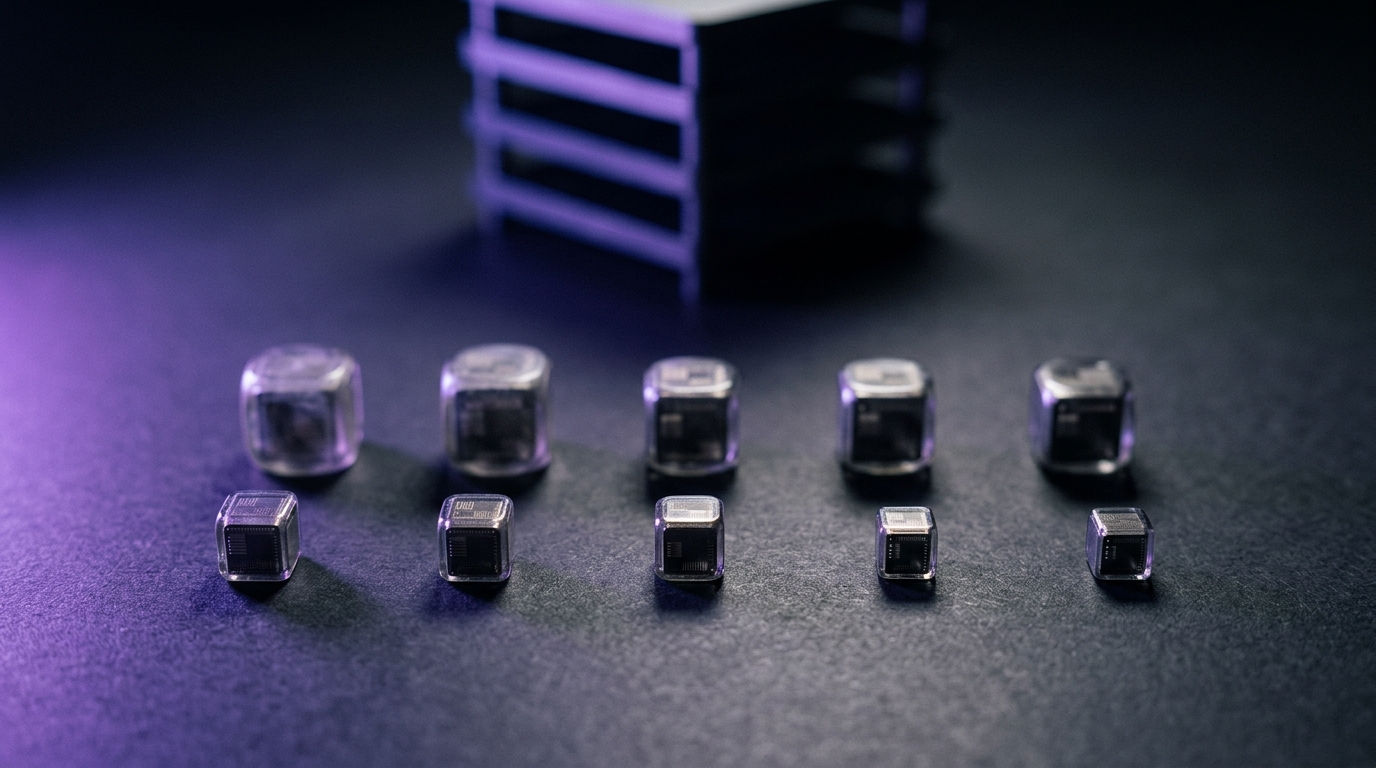
In 2026, storing 10 million embeddings in standard float32 format isn't just an expense—it's architectural malpractice. As RAG (Retrieval-Augmented Generation) pipelines scale, developers are hitting a hard wall: the more data you add, the higher the latency and the lower the accuracy. This phenomenon, often called "Retrieval Loss," occurs when your AI effectively gets dumber as it learns more. To solve this, AI Vector Compression has evolved from a niche optimization into a mandatory layer of the modern AI stack. By utilizing advanced quantization and binary fingerprinting, elite engineering teams are now reducing their memory footprint by up to 48x while actually improving search speeds through SIMD-accelerated POPCNT arithmetic.
The Economics of RAG: Why Compression is Mandatory in 2026
Traditional RAG breaks at scale. When you move from a prototype with 1,000 documents to a production system with 1,000,000, your storage costs don't just grow linearly—they explode due to the overhead of high-dimensional vector indices. Most teams ignore the upstream storage problem: raw files (PDFs, DOCX, HTML) are often 10x smaller than the resulting vector indices when stored in uncompressed formats.
Industry veterans have developed a specific formula to measure this efficiency, known as Retrieval Loss:
Retrieval-Loss = −log₁₀(Hit@K) + λ·(Latency_p95/100ms) + λC·(Token_count/1000)
In this environment, AI Vector Compression is the only way to keep λC (cost) and Latency_p95 under control. Without it, you are effectively paying a "tax" on every single query. By 2026, the goal is no longer just "finding the vector," but finding it with the smallest possible memory footprint. Modern SDKs are now achieving sub-500ms latency at massive scales by moving away from expensive managed vector DBs and toward local, compressed binary indices.
Understanding Quantization: SQ, PQ, and Binary Fingerprinting
To choose the best product quantization libraries, you must first understand the three pillars of vector database quantization:
- Scalar Quantization (SQ): This involves converting high-precision floats (float32) into lower-precision integers (int8 or int4). It’s the easiest to implement but offers the lowest compression ratio (usually 4x).
- Product Quantization (PQ): PQ breaks the vector into sub-vectors and quantizes each sub-vector independently using a codebook. This is the "sweet spot" for many, offering 10x-20x compression with minimal accuracy loss.
- Binary Quantization (BQ) / Binary Fingerprinting: This is the frontier for 2026. Each float32 embedding is converted into a 128-byte binary fingerprint. Instead of calculating cosine similarity (complex math), the system uses Hamming distance (bit-flip counting).
As one researcher noted on Reddit, binary fingerprinting can result in a 48x smaller index and 75x faster search because it relies on pure POPCNT arithmetic, which is natively supported by modern CPUs. This shift is what enables "Stripe for AI memory" style services to exist.
1. Embex: The Universal Rust-Core Vector ORM
Embex has rapidly become the favorite for developers who want to avoid vector database lock-in. It acts as a universal ORM for vector databases, allowing you to switch between LanceDB, Qdrant, Pinecone, and Milvus with a single line of code.
What makes Embex a top-tier AI Vector Compression tool is its core implementation in Rust with SIMD (Single Instruction, Multiple Data) acceleration. It doesn't just manage the connection; it optimizes the vector operations locally before they ever hit the wire.
Key Technical Specs: - Core: Rust with PyO3/Napi-rs wrappers. - Performance: ~4x faster vector operations than standard Python implementations. - Compression Support: Native hooks for local quantization before upserting to cloud providers.
python
Switching from local LanceDB to production Qdrant with Embex
client = await EmbexClient.new_async("qdrant", os.getenv("QDRANT_URL"))
The same code handles inserts and searches across 7+ providers
2. Vectra SDK: Provider-Agnostic Pipeline Abstraction
While many tools focus solely on the database, Vectra SDK focuses on the entire pipeline: Load → Chunk → Embed → Store → Retrieve → Rerank. In 2026, Vectra is the go-to for teams that need "boring" but highly reliable RAG infrastructure.
Vectra stands out by providing runtime validation via Pydantic and Zod, ensuring that your compressed vectors don't suffer from schema drift—a common cause of silent failures in RAG systems. It is explicitly designed for RAG storage optimization, treating the context pipeline as a first-class system rather than glue code.
3. Turboquant-search: Ultra-Fast WASM SIMD Compression
If you are building edge-AI or browser-based search, Turboquant-search is the definitive choice. It is a zero-dependency library that embeds text fields and compresses vectors to a staggering 3 bits per dimension.
By leveraging WASM SIMD, it can search 100,000 items in under 30ms directly in the browser. This eliminates the need for a server-side vector database for many use cases, drastically reducing infrastructure costs. It is the ultimate expression of low-latency vector search for client-side applications.
4. ReasonDB: Tree-Based Hierarchical Reasoning
ReasonDB is an AI-native document database that replaces the traditional RAG pipeline entirely. Instead of flat chunking, it uses Hierarchical Reasoning Retrieval (HRR). Documents are parsed into a hierarchical tree with LLM-generated summaries at every node.
At query time, ReasonDB doesn't just do a similarity search; it navigates the tree. This "tree-grep" approach ensures that document structure isn't lost, which is the primary cause of hallucinations in standard vector-only RAG. It includes a SQL-like query language (RQL) with native SEARCH and REASON clauses.
5. Papr-Memory: Predictive Memory Graph SDK
Developed by ex-FAANG engineers, Papr-Memory solves the "forgetting" problem of AI agents. It uses a hybrid graph-vector architecture (MongoDB + Neo4j + Qdrant) to predict the 0.1% of facts an agent needs before it even asks.
By building a predictive memory graph, Papr-Memory achieves a 91% accuracy hit@5 on Stanford's STARK benchmark. For developers building complex, multi-step workflows, this SDK acts as the "long-term memory" that standard vector stores lack.
6. HydRAG: Multi-Stage Hybrid Retrieval Core
HydRAG is a multi-stage pipeline that combines BM25, dense vectors, and graph retrieval. It uses a "CRAG supervisor" (a local LLM) to judge if retrieval results are sufficient before passing them to the generator.
This hybrid approach is critical because dense vectors often fail at specific keyword lookups (like part numbers or legal citations). HydRAG ensures that your RAG storage optimization doesn't come at the cost of precision in specialized domains.
7. Smallevals: The Lightweight Evaluation Suite
Compression is useless if you can't measure the quality loss. Smallevals is a fast, free evaluation suite powered by tiny 0.6B models. It generates "golden evaluation datasets" from your chunks and measures how well your compressed vector database can retrieve the correct chunk.
In 2026, you cannot ship AI Vector Compression without an automated eval loop. Smallevals runs fully offline and on CPU, making it a cost-effective way to benchmark your quantization strategies before deployment.
8. CtxVault: Context Isolation and Persistent Memory
CtxVault addresses the security and privacy concerns of RAG. In multi-tenant applications, shared vector stores often leak context if metadata filters are misconfigured. CtxVault provides structural isolation via independent "vaults" per agent or domain.
It is an MIT-licensed, local-first SDK that ensures persistent semantic memory across sessions while maintaining full observability—every vault is a folder on your machine that you can inspect or edit.
9. Vectorless: Structured Retrieval Without Embeddings
Sometimes, the best compression is no compression. Vectorless is a Rust library for querying structured documents using natural language without vector databases or embedding models.
It uses tree-based navigation and BM25 candidates to find information, bypassing the cost and complexity of the embedding-retrieval-rerank loop. For structured data like JSON or code, Vectorless often outperforms traditional vector search in both accuracy and cost.
10. Faiss: The Gold Standard for Clustering and Search
No list of best vector compression SDKs 2026 is complete without Faiss (Facebook AI Similarity Search). While it is one of the older libraries, its 2026 iterations have optimized GPU execution and support for vectors that exceed RAM capacity.
Faiss remains the foundation upon which many other SDKs are built. If you are doing extreme-scale clustering (billions of vectors) and have the DevOps expertise to manage it, Faiss provides the most granular control over quantization parameters.
Benchmarking 2026: Compression Ratio vs. Accuracy
When selecting a product quantization library, you must weigh the trade-offs between storage savings and the "Hit@K" rate (the probability that the correct result is in the top K results).
| SDK / Method | Compression Ratio | Latency (p95) | Accuracy (Hit@5) | Best Use Case |
|---|---|---|---|---|
| Embex (BQ) | 48x | < 50ms | 86% | High-scale, low-cost RAG |
| Vectra (PQ) | 16x | < 150ms | 92% | Production-grade standard RAG |
| Turboquant | 32x | < 30ms (Edge) | 88% | Browser/Mobile search |
| ReasonDB | N/A (Tree) | < 300ms | 94% | Complex document reasoning |
| Faiss (SQ) | 4x | < 10ms | 98% | Latency-critical apps |
Key Takeaways
- Quantization is no longer optional: Storing raw float32 vectors is too expensive for production-scale RAG in 2026.
- Binary Fingerprinting is the new standard: Moving from cosine similarity to Hamming distance can reduce index size by 48x and increase speed by 75x.
- Hybrid is better: Tools like HydRAG and ReasonDB prove that combining vector search with keyword (BM25) or hierarchical trees yields the highest accuracy.
- Evaluate before you compress: Use tools like
smallevalsto ensure your quantization strategy doesn't result in significant "Retrieval Loss." - Rust and WASM are dominating: The fastest SDKs (Embex, Vectorless, Turboquant) are built in Rust to leverage SIMD and memory safety.
Frequently Asked Questions
What is AI Vector Compression?
AI Vector Compression is the process of reducing the dimensionality or precision of embedding vectors (quantization) to save storage space and increase search speed. In 2026, this typically involves converting 32-bit floats into 1-bit, 3-bit, or 8-bit representations, allowing for massive cost savings in RAG pipelines.
How does Product Quantization (PQ) work?
Product Quantization breaks a high-dimensional vector into several smaller sub-vectors. Each sub-vector is then quantized separately using a pre-trained codebook. This allows for a high compression ratio while maintaining the relative distance between vectors, which is essential for semantic search.
Can I use vector compression with any LLM?
Yes. Vector compression happens at the storage and retrieval layer, which is independent of the LLM (like GPT-4, Claude, or Llama). You simply embed your text using your chosen model, compress the resulting vector using an SDK like Embex or Vectra, and then store it in your database.
Does compression cause hallucinations?
If the compression is too aggressive, it can lead to "Retrieval Loss," where the system fails to find the most relevant context. This lack of context can cause the LLM to hallucinate. This is why using an evaluation suite like smallevals is critical to find the right balance between compression and accuracy.
Is it better to self-host or use a managed vector DB?
In 2026, many developers are moving toward self-hosting compressed indices (using SDKs like ReasonDB or CtxVault) to avoid the high costs of managed services like Pinecone. However, managed services still offer the best "zero-ops" experience for teams that have the budget.
Conclusion
The shift toward AI Vector Compression represents the maturation of the RAG industry. We are moving away from "brute force" vector search and toward intelligent, compressed, and hierarchical retrieval systems. Whether you choose the universal flexibility of Embex, the tree-based precision of ReasonDB, or the edge-speed of Turboquant, the goal remains the same: minimize the cost of memory while maximizing the intelligence of your agents.
As you build your 2026 AI stack, remember that the most expensive vector is the one you can't find—but the second most expensive is the one you're overpaying to store. Start optimizing your RAG storage today by integrating one of these elite SDKs into your pipeline.