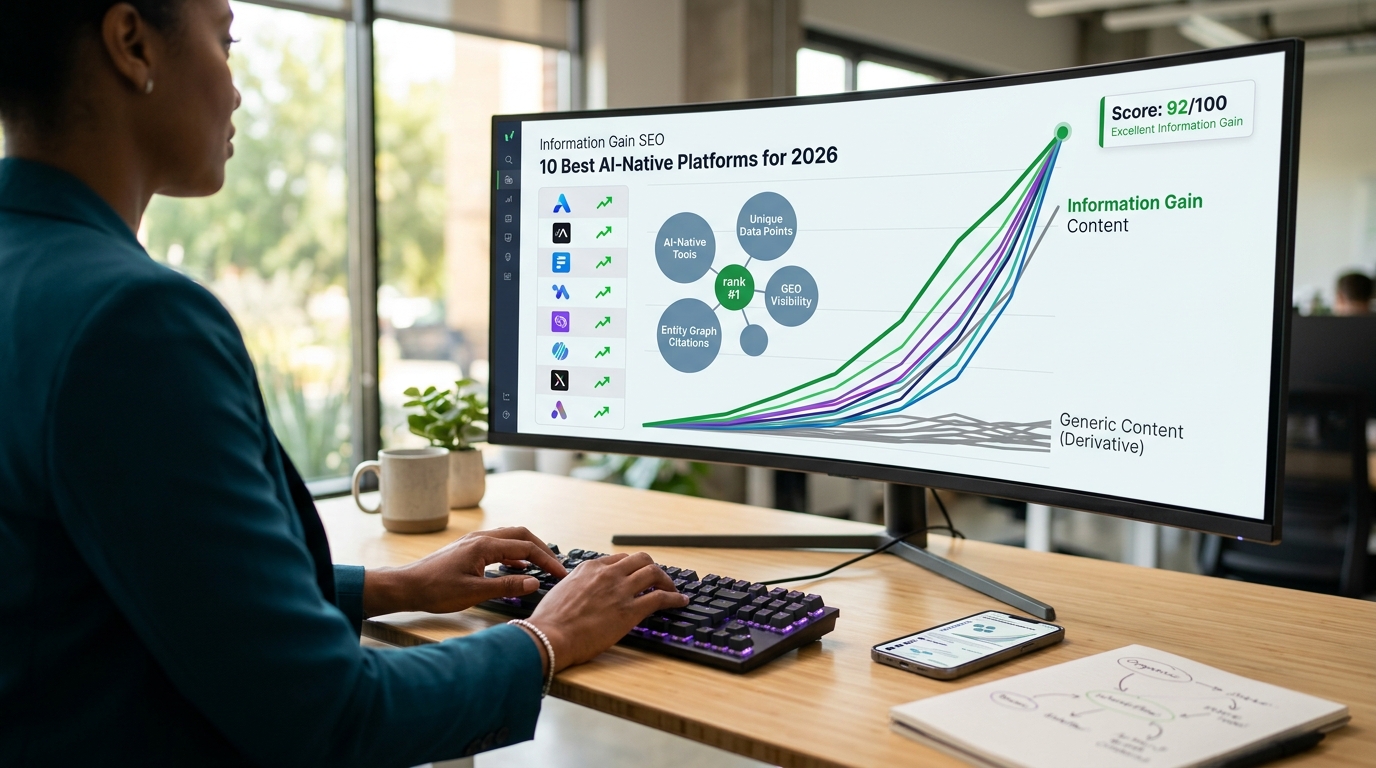
In 2026, the difference between a site that languishes on page two and one that dominates the SERPs often comes down to a single factor: topical authority built through a flawless internal structure. Google’s John Mueller has famously called internal linking "super critical for SEO," but as sites scale to thousands of pages, manual mapping becomes a mathematical impossibility. Enter AI internal linking tools. These aren't just plugins; they are semantic engines that understand context, distribute link juice, and ensure no high-value page remains an "orphan." Recent data shows that sites utilizing automated, AI-native internal linking see an average 47% increase in indexing speed and a significant boost in organic visibility by effectively signaling relevance to search engines.
The Evolution of Internal Linking: Why AI-Native is the Standard in 2026
Internal linking has moved far beyond simple keyword matching. In the early days of SEO, we used simple rules: "if word X appears, link to page Y." This led to over-optimized anchor text and a poor user experience. In 2026, semantic internal linking AI uses Natural Language Processing (NLP) to understand the intent behind a paragraph.
Modern search engines like Google and AI-powered answer engines (AEO) such as Perplexity analyze how pages are connected to determine authority. If your "pillar page" on Cloud Computing isn't supported by dozens of contextually linked "cluster posts," you will never achieve the topical depth required to rank for high-competition terms. AI tools now automate the distribution of SEO link juice, ensuring that high-authority pages pass their power down to newer, unindexed content. This creates a resilient "silo" structure that search bots can crawl with 100% efficiency.
1. Linkbot: The Multi-Platform Powerhouse for Rapid Indexing
Linkbot has emerged as a top-tier choice for those who don't want to be tied to a single CMS. Whether you are running a Webflow portfolio, a Shopify store, or a custom-built headless CMS, Linkbot integrates via a simple JavaScript snippet.
Best Feature: The Priority Indexer. Linkbot's unique selling proposition is its ability to communicate directly with your sitemap and Google Search Console. It identifies pages that haven't been indexed and automatically injects links from your highest-traffic pages to those "stuck" URLs.
- Automation Level: Fully Automated.
- Pricing: Starts at $19/month for 5 sites.
- Performance: Users report a 47% improvement in indexing speed.
"Linkbot is the only tool that works everywhere. The Priority Indexer feature alone justifies the investment—no other tool actively speeds up Google indexing by comparing sitemap data to live index status."
2. Link Whisper: Precision Control for WordPress and Shopify
For the millions of users on WordPress, Link Whisper remains the gold standard for best internal linking software 2026. It strikes a perfect balance between AI-powered suggestions and human oversight. Instead of blindly inserting links, it provides a sidebar of suggestions as you write, allowing you to select the most relevant anchor text.
Key Capabilities:
- Inbound Suggestions: It tells you which existing posts should link to the new post you just wrote.
- Orphan Page Detection: Instantly identifies pages with zero internal links.
- Bulk Linking: Allows you to scan your entire site for a specific keyword and add links to a target URL in seconds.
Biggest Limitation: It is primarily restricted to the WordPress and Shopify ecosystems. If you are a developer using a custom stack, you'll need to look elsewhere.
3. eesel AI: Proactive Silo Building at the Source
eesel AI represents a shift in philosophy: proactive internal linking. While most tools are "reactive" (fixing links after the content is published), eesel AI builds the links during the content generation phase.
When using the eesel AI blog writer, the tool crawls your existing site first. As it generates new content, it naturally weaves in links to your existing articles and product pages. This ensures that every new piece of content is perfectly integrated into your site's architecture from the moment it hits the CMS.
- Best For: Solo builders and agencies scaling content production.
- Pricing: Free to try; paid plans based on content volume.
4. LinkStorm: Data-Driven Linking via Google Search Console
LinkStorm is built for the technical SEO who demands data-backed decisions. It doesn't just look at text; it integrates with Google Search Console (GSC) to see which pages are actually getting impressions.
By identifying "low-hanging fruit"—pages with high impressions but low CTR or ranking on page two—LinkStorm suggests internal links from your "power pages" to give them the necessary boost. It is platform-agnostic, making it a favorite for agencies managing a diverse portfolio of client sites.
| Feature | LinkStorm | Link Whisper |
|---|---|---|
| Platform | Any (JS Snippet) | WordPress / Shopify |
| GSC Integration | Yes (Primary focus) | Limited |
| Automation | Semi-Automated | Semi-Automated |
| Pricing | $30/month | $97/year |
5. InLinks: Mastering Entity-Based Semantic SEO
InLinks is not for the faint of heart. It is a sophisticated tool that moves beyond keywords to entities. It creates a "knowledge graph" of your website, identifying the core concepts (entities) you cover.
When InLinks automates your internal links, it does so by connecting related concepts. For example, if you mention "Elon Musk," it might link to a page about "Tesla" or "SpaceX," even if the exact keyword isn't present, because it understands the semantic relationship. This is the highest form of semantic internal linking AI available in 2026.
- Best Feature: Automated Schema Markup. It generates "About" and "Mentions" schema for every page it links.
- Rating: 4.8/5 for technical depth.
6. SEOJuice: The All-in-One Automation Suite
SEOJuice is designed for the business owner who wants to "set and forget" their SEO. It handles more than just internal linking; it automates meta descriptions, image alt text, and schema markup.
For internal linking specifically, SEOJuice uses an API-based approach to scan your site and deploy links retroactively. It is particularly strong at building topic clusters, automatically identifying which posts should serve as "pillar" content and which should be "supporting" articles.
Pros: Saves massive amounts of time (estimated 10+ hours per week). Cons: Less granular control. You have to trust the algorithm's choices.
7. Rankpilot: Silo Planning and the Geo-Search Angle
Rankpilot is gaining traction in 2026 for its focus on SEO silos and geographic relevance. It doesn't just suggest links; it plans them. It helps you map out a pillar-and-support structure before you even start writing.
One unique feature mentioned by users is its "geo-angle." It stores Perplexity sub-questions used during research and turns them into H2s with direct internal links to localized content. This is essential for businesses trying to rank in both traditional Google search and the new AI-driven local search experiences.
8. Junia AI: Semantic Intent and Multi-CMS Support
Junia AI focuses on the quality of the link placement. Using advanced NLP, Junia ensures that the link feels natural to the reader. It avoids the "robotic" feel of early automation tools by analyzing the surrounding text to ensure the transition to the linked page is seamless.
Junia supports WordPress, Shopify, and Webflow, making it a versatile middle-ground between the WP-only plugins and the high-end agency tools. It also features a "feedback loop" where the AI learns from your manual edits to improve future suggestions.
9. AIOSEO Link Assistant: The Integrated WordPress Solution
If you are already using the All in One SEO (AIOSEO) plugin, their Link Assistant is a natural choice. It provides a "Link Report" that shows you at a glance which pages are orphaned and which have too many outbound links (diluting their power).
Best Feature: Cornerstone Content Prioritization. You can designate specific pages as "Cornerstone," and the AI will prioritize sending link juice to those pages above all others. This is a critical feature for protecting your most important revenue-driving pages.
10. Jottler.co: The Autopilot Content and Linking Engine
Jottler.co is the ultimate tool for solo builders and small teams. It automates the entire pipeline: keyword research, article generation, and internal linking. Unlike tools that just give you a list of links to add, Jottler handles the publishing directly to your CMS with the links already embedded.
- Time Saving: High. Replaces the need for a separate writer and SEO editor.
- Output Quality: Publishable (80-90% there), though it benefits from a final human touch for brand voice.
The Developer Workflow: Automating Technical SEO with Claude and Codex
For elite SEOs, the best tool is often a custom workflow. A popular strategy in 2026 involves a four-step loop to clean up site architecture and automate internal linking logic:
- The Crawl: Run a site audit using Screaming Frog or Ahrefs to export a CSV of all internal link errors and orphan pages.
- The Claude Analysis: Feed the CSV into Claude 3.5 Sonnet (or the latest version). Ask it to analyze the relationships between pages and write a punchy, actionable task brief for a developer.
- The Codex Execution: Use an AI coding assistant (like GitHub Copilot or Codex) to write a script that programmatically injects these links into the database or CMS API.
- The Loop: Repeat this every 30 days to ensure the site remains technically perfect as new content is added.
This "Human-in-the-loop" automation ensures that you aren't just blindly following a tool's suggestions but are applying a high-level strategy to your internal link building software.
Key Takeaways
- Indexing is the first win: Tools like Linkbot provide a 47% boost in indexing speed by using a Priority Indexer to connect unindexed pages to high-traffic sources.
- Semantic relevance > Keyword matching: In 2026, tools like InLinks and Junia AI use entity-based NLP to ensure links make sense contextually, not just based on exact-match text.
- Proactive vs. Reactive: Using a tool like eesel AI or Jottler.co to build links during content creation is more efficient than retrofitting links into old content.
- GSC Data is King: LinkStorm allows you to prioritize links based on real performance data, ensuring your "link juice" goes where it will move the needle most.
- Silos build Authority: Automating SEO silos with tools like Rankpilot ensures that your site structure signals deep topical expertise to both Google and AI answer engines.
Frequently Asked Questions
What is the best AI internal linking tool for WordPress in 2026?
Link Whisper remains the top choice for WordPress due to its seamless integration, accurate AI suggestions, and ease of use. However, for those looking for full automation across multiple sites, Linkbot is a strong competitor.
Can AI internal linking tools help with Google indexing?
Yes. Tools like Linkbot specifically feature a "Priority Indexer" that identifies unindexed pages and creates internal links from high-traffic pages to help Google discover and index them faster.
Is it safe to automate internal linking entirely?
While "set and forget" tools like SEOJuice are becoming more accurate, most elite SEOs recommend a "human-in-the-loop" approach. Reviewing suggestions in tools like Link Whisper or Junia AI ensures that the links provide real value to the user and don't appear spammy.
What are orphan pages, and why are they bad for SEO?
Orphan pages are pages on your website that have no internal links pointing to them. They are difficult for search engines to find and usually rank poorly because they don't receive any "link juice" or authority from the rest of the site.
How does semantic internal linking differ from traditional linking?
Traditional linking relies on exact keyword matches. Semantic internal linking uses AI to understand the meaning and topic of a page, allowing it to create relevant links even when the exact keywords aren't present.
Conclusion
In the competitive landscape of 2026, you cannot afford to leave your internal link structure to chance. Whether you choose the precision control of Link Whisper, the multi-platform automation of Linkbot, or the entity-based depth of InLinks, the goal remains the same: create a cohesive, authoritative web of content that search engines can't ignore.
Stop wasting hours in spreadsheets. Choose one of these AI internal linking tools today, automate your SEO silos, and watch your topical authority—and your rankings—climb. If you're a developer or a high-level strategist, consider building the "Claude-Codex Loop" into your monthly maintenance to ensure your technical SEO remains as sharp as your content. The future of SEO is automated; make sure your site is leading the charge.