In 2026, the average time for a cloud-based breach to escalate from initial access to full data exfiltration has dropped to under 12 minutes. Traditional security models, built on the slow ingestion of legacy logs, are no longer just insufficient—they are a liability. To survive this high-velocity landscape, enterprises are pivoting toward cloud detection and response (CDR) solutions that don't just alert but act. The emergence of the best AI native CDR platforms 2026 represents a fundamental shift: moving away from reactive dashboards and toward autonomous cloud security response systems that operate at the speed of the cloud.
The Shift from SIEM to AI-Native CDR
For years, the Security Information and Event Management (SIEM) system was the heart of the SOC. But as one Reddit user in the r/cybersecurity community recently noted, "Logs are mostly useless for security detection and prevention... SIEM is mostly work that should not exist." In a cloud-native world, logs are "dead wood"—they are historical records of things that have already gone wrong.
AI-native CDR platforms differ because they prioritize runtime visibility over log aggregation. Instead of waiting for a CloudTrail log to tell you an S3 bucket was made public, these platforms use eBPF (Extended Berkeley Packet Filter) and agentless snapshots to identify the intent behind the change in real-time. By 2026, the industry has realized that the "visibility-to-action gap" is the only metric that matters. If your security tool takes 15 minutes to correlate an alert while an attacker is using a stolen IAM role to dump a database, you've already lost.
Modern cloud workload protection platforms 2026 are designed to ingest massive streams of telemetry—identity, network, and compute—and use Large Language Models (LLMs) to provide "deterministic visibility." This means moving from "this looks suspicious" to "this is a lateral movement attempt using a compromised service account; I have isolated the container."
Why 2026 is the Year of Agentic Cloud Threat Hunting
The term "Agentic AI" has moved from research papers to production environments. In the context of CDR, agentic cloud threat hunting refers to security AI agents that don't just follow static rules but possess the "reasoning" capabilities to investigate threats autonomously.
Unlike traditional automation (if X happens, do Y), agentic security can: 1. Hypothesize: "I see an unusual spike in egress traffic from this Kubernetes pod." 2. Investigate: "I will check the associated IAM permissions and recent code commits in the CI/CD pipeline." 3. Pivot: "The pod has 'Secret Manager' access it shouldn't have. I am checking if other pods in this namespace share this vulnerability." 4. Remediate: "I have updated the Kubernetes Network Policy to block egress and alerted the DevOps lead with a suggested Terraform fix."
This level of autonomous cloud security response is what separates the leaders from the laggards in 2026. As infrastructure becomes more ephemeral, security must become more intelligent.
Top 10 AI-Native CDR Platforms of 2026
Based on market share, technical innovation, and real-world feedback from the DevOps and SecOps communities, here are the top 10 platforms leading the charge this year.
1. Wiz
Wiz remains the dominant force in the CDR space. Their "Security Graph" technology is the gold standard for visualizing risk. By 2026, Wiz has integrated deep AI-driven forensics that can trace a breach from a misconfigured shadow database back to a specific developer's commit. * Best For: Large enterprises requiring multi-cloud visibility (AWS, Azure, GCP). * Standout Feature: Agentless "SideScanning" that provides full-stack visibility without impacting performance. * Pros: Incredible ease of use; high signal-to-noise ratio. * Cons: Premium pricing that can be a barrier for mid-market firms.
2. Orca Security
Orca pioneered agentless scanning and has spent 2025-2026 perfecting their "Context-Aware" AI. Orca doesn't just find vulnerabilities; it understands the attack path. It knows that a CVE on an internet-facing web server is 10x more critical than the same CVE on an isolated test box. * Best For: Security teams that are "drowning in alerts" and need prioritization. * Standout Feature: Attack Path Analysis that visualizes exactly how an attacker could reach your crown jewels. * Pros: Rapid deployment; excellent Kubernetes security. * Cons: Can sometimes struggle with very complex legacy hybrid-cloud setups.
3. Microsoft Defender for Cloud
For organizations heavily invested in the Azure ecosystem, Microsoft Defender for Cloud is a natural choice. In 2026, its integration with Copilot for Security allows junior analysts to perform complex threat hunting using natural language queries. * Best For: Azure-centric or hybrid-cloud environments already using M365. * Standout Feature: Integrated XDR capabilities that bridge the gap between endpoints and cloud workloads. * Pros: Seamless integration; cost-effective for E5 license holders. * Cons: The UI can be overwhelming; third-party cloud support (AWS/GCP) isn't as deep as native Azure.
4. Sweet Security
Sweet Security has emerged as the darling of the "runtime-first" movement. While Wiz and Orca focus on the "posture" (how things are configured), Sweet focuses on the "traffic" (what is actually happening). Using eBPF, they provide a "sweet analysis" of cloud-native clusters in real-time. * Best For: High-growth startups and tech-heavy firms with heavy Kubernetes usage. * Standout Feature: Non-intrusive runtime sensor that identifies anomalous behavior in seconds. * Pros: Extremely low latency; catches threats that agentless snapshots miss. * Cons: Requires a small footprint on the host (though it's highly optimized).
5. Cortex Cloud (Palo Alto Networks)
Cortex Cloud is the enterprise powerhouse. It combines the legacy of Palo Alto’s firewall expertise with modern AI. Their agentic cloud threat hunting module is particularly strong, using a massive global telemetry database to identify zero-day exploits. * Best For: Global 2000 companies needing a unified security operations platform. * Standout Feature: Precision AI that automates 90% of incident triage. * Pros: Robust enterprise support; deep integration with Prisma Cloud. * Cons: High cost of ownership; steep learning curve.
6. Upwind
Upwind leverages eBPF to give security teams "the developer's perspective." By understanding how applications are supposed to run, Upwind can identify deviations with surgical precision. It’s a favorite among DevOps teams who want security to be "invisible." * Best For: Organizations where DevOps and Security are tightly integrated. * Standout Feature: Real-time topology mapping that updates as fast as your containers scale. * Pros: Minimal false positives; great for troubleshooting performance and security simultaneously. * Cons: Newer player in the market compared to Wiz/Orca.
7. Sysdig Secure
Built on the open-source Falco project, Sysdig is the king of container security. In 2026, their AI-native version automates the creation of Falco rules, which used to be a manual, tedious process. It provides the deep "forensics" needed for post-mortem analysis of container breaches. * Best For: Kubernetes-heavy environments and teams that love open-source foundations. * Standout Feature: Rapid response for container drift and unauthorized process execution. * Pros: Deepest container-level visibility; strong compliance mapping. * Cons: Can be resource-intensive if not tuned correctly.
8. Cyberhaven
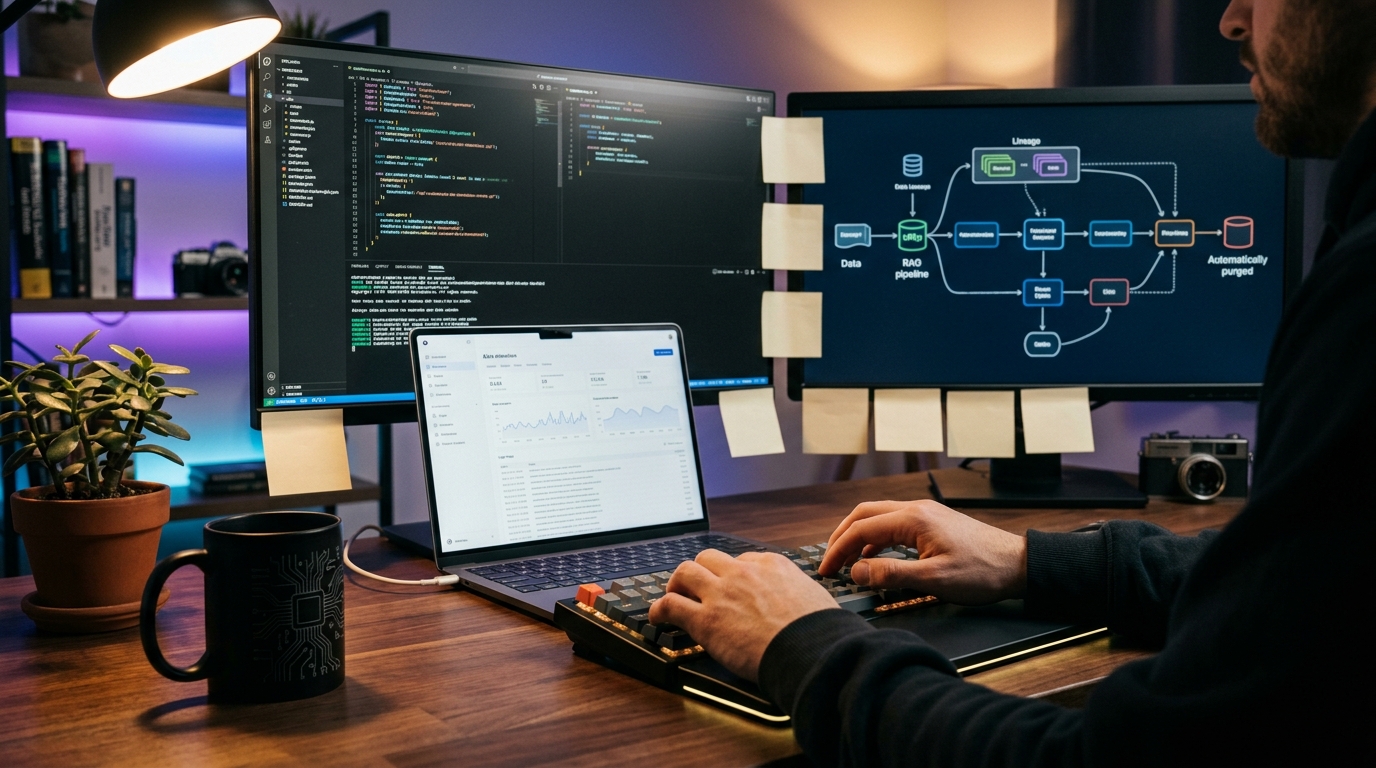
As AI agents become a core part of business workflows, Cyberhaven has pivoted to secure the data those agents use. Their "Data Lineage" technology tracks data as it moves into and out of LLMs, making it a critical part of the best AI native CDR platforms 2026 conversation. * Best For: Protecting sensitive data (IP, PII) in the age of Generative AI. * Standout Feature: Tracking "data-in-motion" into AI tools like ChatGPT or internal RAG pipelines. * Pros: Solves the "shadow AI" problem; high-fidelity data tracking. * Cons: More focused on data than on infrastructure vulnerabilities.
9. Cyera
Cyera is the leader in Data Security Posture Management (DSPM). While other CDRs look at the "how," Cyera looks at the "what." It automatically discovers where your regulated data lives—even in forgotten S3 buckets—and ensures it is protected. * Best For: Financial services and healthcare companies with strict regulatory requirements. * Standout Feature: Automated data classification at petabyte scale. * Pros: Finds "shadow data" that other tools miss; simplifies compliance audits. * Cons: Less focus on active network threat detection.
10. Obsidian Security
While most CDRs focus on IaaS (AWS/Azure), Obsidian focuses on SaaS (Salesforce, ServiceNow, M365). In 2026, SaaS is often the weakest link in the cloud chain. Obsidian uses AI to track identity-based attacks across the entire SaaS mesh. * Best For: Companies with a "SaaS-first" strategy. * Standout Feature: Cross-SaaS identity correlation to stop account takeover (ATO). * Pros: Unique visibility into SaaS configurations; catches privilege escalation. * Cons: Doesn't cover IaaS workloads (EC2, Lambda, etc.).
CDR vs EDR for AI Agents: Understanding the Gap
A common question among security architects is: "Why do I need CDR if I already have Endpoint Detection and Response (EDR)?"
The answer lies in the architecture of AI agents. In 2026, an AI agent isn't just a process running on a laptop; it’s a distributed entity that might live in a Lambda function, call an API, and store data in a vector database.
| Feature | EDR (Endpoint) | CDR (Cloud) |
|---|---|---|
| Focus | Laptops, Servers, Mobile | Containers, Serverless, IAM, APIs |
| Identity | Local User / AD | IAM Roles, Service Accounts, JWTs |
| Network | TCP/IP, Wi-Fi | VPC Flow, Service Mesh, API Calls |
| Visibility | Process execution | Resource configuration & Runtime drift |
| AI Agent Risk | Malicious binary | Unauthorized API prompt / RAG poisoning |
CDR vs EDR for AI agents is about the scope of the "blast radius." An EDR might stop a piece of ransomware on a server, but it won't stop an AI agent from being tricked into exfiltrating your entire database via an unsecured API endpoint. CDR provides the holistic view of the cloud fabric that EDR simply cannot see.
Key Features of Cloud Workload Protection Platforms 2026
If you are evaluating a platform this year, these are the non-negotiable features that define a modern cloud workload protection platform 2026:
- Identity-First Security: In the cloud, identity is the new perimeter. The platform must analyze IAM permissions to find "over-privileged" roles that an attacker could exploit.
- eBPF-Based Observability: You cannot rely on logs alone. Real-time runtime visibility via eBPF allows for detection without the performance overhead of traditional agents.
- Self-Healing Workflows: The platform should offer autonomous cloud security response. For example, if a container is detected running a crypto-miner, the CDR should automatically kill the container and roll back the deployment to a known-good state via GitOps.
- LLM Guardrails: As developers build RAG (Retrieval-Augmented Generation) systems, the CDR must be able to detect "prompt injection" attacks and ensure sensitive data isn't being fed into public LLMs.
- Unified Multi-Cloud Graph: A single pane of glass that correlates risks across AWS, Azure, GCP, and even your SaaS apps.
Implementation: Replacing Your SIEM Without the Headache
Migrating from a legacy SIEM to an AI-native CDR is often described as "security archeology." You have to uncover why certain rules were set up five years ago. However, the process in 2026 is much smoother thanks to AI-assisted migration tools.
Step 1: Inventory and "De-clutter"
Before you switch, use an agentless tool like Wiz or Orca to see what you actually have. You'll likely find that 30% of your logs are from "zombie" resources that shouldn't even exist. This reduces your data ingest costs immediately.
Step 2: Decouple Ingestion from Retention
Use a tool like Cribl or Vector to manage your data stream. Send high-fidelity security data to your new CDR for immediate action, and send the "compliance bulk" to a low-cost data lake (like S3 or Snowflake). This prevents the "Splunk Tax" from eating your budget.
Step 3: Map Use Cases, Not Rules
Don't try to recreate 500 legacy SIEM rules in your CDR. Instead, focus on use cases: "Detect unauthorized IAM role assumption," or "Stop data exfiltration from RDS." Modern CDRs use AI to cover these use cases out of the box without manual rule-writing.
Step 4: Automate the Response
Start with "Notification Only" for the first 30 days. Once you trust the AI's accuracy, enable autonomous actions for high-confidence alerts. For example, use a Terraform-based workflow to automatically revoke an IAM key if it’s leaked on GitHub.
hcl
Example of a triggered remediation via Terraform/OpenTofu
resource "aws_iam_access_key" "remediated_key" { user = var.compromised_user status = "Inactive" # CDR AI sets this to Inactive upon leak detection }
Comparison Table: Top CDR Vendors
| Vendor | Primary Strength | AI Maturity | Best For |
|---|---|---|---|
| Wiz | Security Graph / Visibility | High | Enterprise Multi-Cloud |
| Orca | Context-Aware Prioritization | High | Alert Fatigue Reduction |
| Sweet | eBPF Runtime Detection | Very High | Cloud-Native / K8s |
| Sysdig | Container Forensics | High | Deep DevSecOps |
| Cyera | Data Discovery (DSPM) | Medium | Compliance / Data Privacy |
| Obsidian | SaaS Security | Medium | M365 / Salesforce Security |
Key Takeaways
- Logs are no longer enough: In 2026, AI-native CDR platforms have replaced SIEMs for real-time threat detection because they focus on runtime visibility.
- Autonomous is the standard: The best platforms provide autonomous cloud security response, reducing the time-to-remediate from hours to seconds.
- Identity is the target: Most cloud breaches involve compromised identities, not just software vulnerabilities. CDRs must be identity-aware.
- eBPF is the tech driver: For runtime protection, eBPF is the preferred method for high-performance, non-intrusive monitoring.
- Prioritize context: A vulnerability is only a risk if it’s reachable. Use platforms that provide attack-path analysis to reduce noise.
Frequently Asked Questions
What is the difference between CSPM and CDR?
Cloud Security Posture Management (CSPM) is about "hygiene"—finding misconfigured buckets or weak passwords. Cloud Detection and Response (CDR) is about "activity"—finding an actual attacker who is currently moving through your environment. In 2026, most top platforms (like Wiz and Orca) combine both into a single CNAPP (Cloud-Native Application Protection Platform).
Why is CDR better than a traditional SIEM for cloud security?
A SIEM relies on logs, which are often delayed and lack context. A CDR uses direct API access and runtime sensors (like eBPF) to see what is happening as it happens. CDRs are also much better at understanding cloud-specific entities like IAM roles and Lambda functions, which SIEMs often struggle to parse.
Does CDR require an agent to be installed on every server?
Not necessarily. Many leaders like Wiz and Orca use "agentless" technology that takes snapshots of your block storage. However, for real-time, millisecond-level response (like stopping a process from running), "runtime-first" tools like Sweet Security or Sysdig use lightweight, non-intrusive agents or sensors.
Can AI-native CDR platforms stop zero-day attacks?
Yes. Because AI-native CDRs focus on behavioral anomalies rather than known signatures, they can detect when a process or user is acting in a way that deviates from the norm. For example, if a web server suddenly starts making outbound SSH connections, the AI will flag this as a potential zero-day exploit even if the specific malware hasn't been seen before.
How does CDR handle multi-cloud environments?
Top-tier CDR platforms are cloud-agnostic. They connect to AWS, Azure, and GCP via APIs and provide a unified "Security Graph" that allows you to see a single attack path that might start in an Azure AD account and end in an AWS S3 bucket.
Conclusion
The transition to AI-native cloud detection and response (CDR) is no longer optional for organizations operating in the cloud. As we've seen throughout 2026, the speed of automated attacks requires an automated defense. Whether you choose the massive visibility of Wiz, the runtime precision of Sweet Security, or the data-centric approach of Cyera, the goal remains the same: close the gap between detection and action.
Don't wait for your next quarterly audit to realize you have a visibility gap. Start with a cloud-native assessment, leverage agentic cloud threat hunting, and move your security operations into the autonomous era. The cloud moves fast—make sure your security moves faster.
Looking to optimize your cloud stack? Check out our latest guides on DevOps productivity tools and AI-driven infrastructure automation.