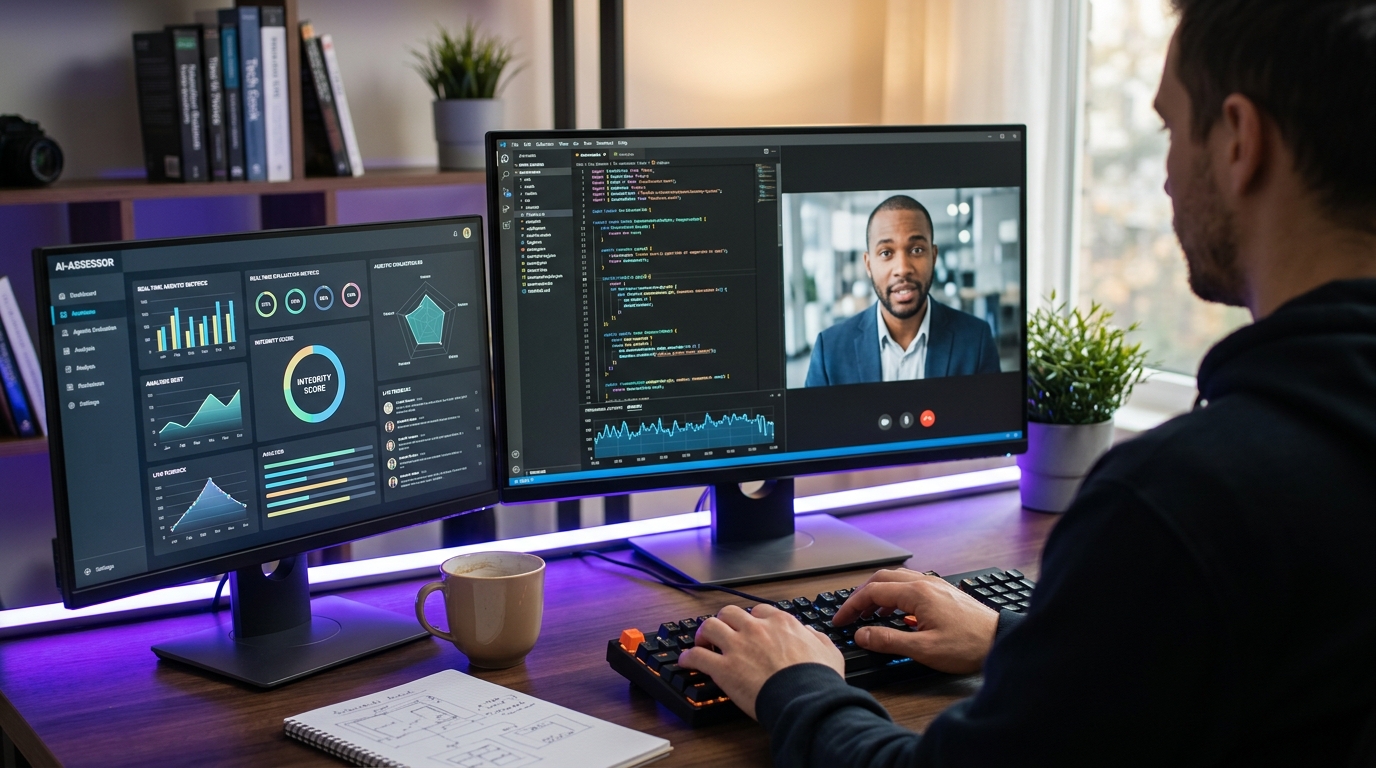
In 2026, a sales manager who doesn't use AI is like a pilot flying without radar. But a manager still using a basic 2024-era 'chatbot' is equally blind. We have officially moved past the phase of simple transcriptions and keyword spotting. If your coaching stack isn't actually executing work for you—scheduling follow-ups, updating the CRM, and running autonomous roleplay simulations—you are falling behind the curve of AI-native sales coaching.
According to recent industry audits, the shift to 'Agentic' workflows is the defining trend for 2026. Revenue teams are no longer satisfied with 'Conversation Intelligence' that just tells them a rep talked too much; they want autonomous sales enablement tools that identify a deal risk and immediately trigger a re-engagement sequence. This guide breaks down the top 10 platforms that have successfully transitioned from passive observers to active agents in the sales cycle.
The Evolution: From Conversation Intelligence to Agentic Coaching
For years, platforms like Gong and Chorus dominated the market by offering 'Conversation Intelligence.' They recorded calls, provided transcripts, and gave managers a dashboard of 'talk-to-listen' ratios. While revolutionary at the time, these tools were essentially passive logs.
In 2026, the market has bifurcated into best sales coaching platforms 2026 that are either 'Assistive' or 'Agentic.'
"The real shift feels less about intelligence and more about delegation and trust," noted one tech strategist on Reddit. "In 2025/2026, if your tools aren't doing the work (scheduling, automating, data fetching), they're just ChatGPT wrappers."
AI-powered sales training now involves 'Agentic' systems that possess their own logic. They don't just wait for a manager to review a call; they use a 'Chain-of-Verification' (CoVe) protocol to ensure the advice they give reps is logically sound and aligned with real-time CRM data. This is the foundation of autonomous sales enablement.
1. Gong Engage: The Revenue Intelligence Gold Standard
Gong remains the category-defining platform, but its 2026 'Engage' evolution is what keeps it at #1. It has moved beyond simple call recording into a full-scale revenue orchestration engine.
- Core Competency: Deepest conversation intelligence in the market.
- Agentic Twist: Gong Engage now autonomously surfaces deal risks and suggests multi-channel coordination (email, LinkedIn, phone) to save stalling pipeline.
- Integration: Seamless Salesforce and HubSpot sync.
Why it ranks: Gong’s ability to 'read' the last six months of internal pings and external calls to build a project brief is a massive time-saver for enterprise AEs. It’s no longer just about coaching the rep; it’s about coaching the deal.
2. Knowlee 4Sales: The Agentic Operating System
Knowlee 4Sales represents a structural shift in AI-native sales coaching. It doesn't just transcribe; it acts as an agentic operating system that sits above your existing tools.
- The Difference: While Gong identifies a 'stall signal,' Knowlee 4Sales can autonomously trigger a re-engagement sequence—including research enrichment and a signal-aware email—without the rep lifting a finger.
- Governance: It features an 'Automation Registry' that provides a full audit trail, essential for the EU AI Act compliance required by late 2026.
- Memory: Its Knowledge Graph + RAG (Retrieval-Augmented Generation) brain accumulates data on which re-engagement approaches work, compounding the team's intelligence over time.
| Feature | Traditional Coaching | Knowlee 4Sales (Agentic) |
|---|---|---|
| Signal Source | Manual Review | Autonomous Trigger |
| Action | Manager Feedback | Autonomous Execution |
| Memory | Per-Call | Cross-Session Knowledge Graph |
3. MindTickle: Best for Agentic Sales Roleplay Software
If your goal is rep readiness, MindTickle is the leader in agentic sales roleplay software. In 2026, their 'Mission' AI roleplay has become indistinguishable from a real prospect.
- The Simulation: Reps practice against AI prospects that have specific personas, objections, and 'moods.'
- Feedback Loop: The AI doesn't just score the rep; it provides a 'security audit' of their pitch, listing flaws and suggesting rewrites based on the latest battlecards.
- Readiness-First: It manages the entire loop from onboarding to live call intelligence.
4. Modjo: The EU-Native Compliance Leader
For teams operating in the DACH or Southern European markets, Modjo is the premier choice. With the EU AI Act fully in effect, Modjo’s GDPR-native architecture is a strategic advantage.
- Multi-Language: Exceptional transcription and sentiment analysis for French, German, Spanish, and Italian.
- Data Residency: First-class EU data residency, ensuring that automated performance assessments don't run afoul of local Works Council regulations.
- Simplicity: It avoids the 'feature bloat' of US enterprise tools, focusing on clean, actionable coaching signals.
5. Wingman (Clari): Real-Time AI Deal Coaching
Wingman, now part of the Clari ecosystem, specializes in real-time AI deal coaching. This is for the 'inside sales' team that needs help during the call, not 24 hours later.
- Live Guidance: As the prospect mentions a competitor, a battlecard automatically pops up on the rep's screen.
- Sentiment Search: You can search transcripts for "When did the client sound annoyed?" to find the exact timestamp for coaching.
- Forecasting: Because it's integrated with Clari, the coaching signals directly influence your 'Commit' or 'Best Case' forecast numbers.
6. Salesloft Conversations: Workflow-Integrated Coaching
Salesloft has integrated its 'Conversations' module directly into its cadence workflow. For teams already standardized on Salesloft, this is the path of least resistance.
- Coaching Playlists: Managers can curate 'best of' clips for new hires to listen to during onboarding.
- Drift Integration: It pulls in website conversation intelligence, giving a 360-degree view of how the buyer interacted with the brand before the call.
- Efficiency: It eliminates the need for a separate vendor, keeping all engagement data in one place.
7. Navattic: Autonomous Demo Coaching
Navattic has pioneered the 'Agentic Demo.' This isn't just a screen recording; it's an interactive, AI-guided product tour that coaches the prospect through the product.
- Agentic Demos: These agents guide prospects, answer technical questions, and showcase workflows in real-time without a rep present.
- Analytics: Managers can see where prospects 'drop off' in the demo, allowing them to coach the sales engineers on how to structure the product story more effectively.
- Scalability: Perfect for PLG (Product-Led Growth) motions where the first 'sales call' is actually a self-serve demo.
8. Clay & Claygent: The Research-First Agent
Clay isn't a traditional coaching platform, but its 'Claygent' is essential for autonomous sales enablement in the prospecting phase.
- The Logic: Claygent autonomously researches companies by scraping public data and interacting with sites like a human (clicking buttons, filling forms).
- Personalization: It takes the 'manual' out of research-based coaching. Instead of telling a rep to "research more," the agent does the research and drafts the personalized hook.
- ROI: It saves hours of manual LinkedIn and Google searching, which Reddit users claim is the "biggest time-leak in 2025/2026."
9. Unify: The Autonomous BDR Powerhouse
Unify is designed for high-volume outbound teams. It combines research, contact data, and email sequencing into one agentic workflow.
- Ease of Use: It stands out for its quick setup, enabling teams to see value almost immediately.
- Real-Time Reaction: Its AI agents react in real-time to customer activity (e.g., a prospect visiting the pricing page), triggering an immediate, context-aware follow-up.
- Calling Features: Built-in calling systems make the transition from automated email to human voice seamless.
10. YourGPT: Omnichannel Agentic Support
YourGPT is an AI-first platform that enables teams to build intelligent agents for both sales and support across every channel (WhatsApp, Email, Chat, Voice).
- No-Code Builder: It is incredibly easy to build advanced workflows with API actions without being an engineer.
- Unified Workspace: It handles conversations and actual tasks (like checking order status or updating CRM records) from one dashboard.
- Omnichannel: You deploy the agent once, and it works across every channel you care about, providing a consistent coaching and customer experience.
Key Takeaways: How to Choose Your 2026 Stack
- Move Beyond Chatbots: If a tool doesn't automate a workflow (scheduling, data fetching, or execution), it's already obsolete. Look for AI-native sales coaching that takes action.
- Signal vs. Action: Decide if you need a tool that reports (Gong, Chorus) or a tool that acts (Knowlee 4Sales, Unify).
- Compliance is Non-Negotiable: With the EU AI Act in full swing, ensure your platform offers GDPR-native architecture and 'Chain-of-Verification' for its AI outputs.
- Start Small: Don't try to implement all 10. Start with one 'Command Center' (like Gong or Salesloft) and one automation/agentic tool (like Knowlee or Clay).
- Focus on ROI: The best tools reduce 'coordination overhead.' If your reps are spending more time 'babysitting' the AI than selling, switch tools.
Frequently Asked Questions
What is the difference between conversation intelligence and agentic sales coaching?
Conversation intelligence is the data layer; it records and transcribes calls to provide insights. Agentic sales coaching uses those insights to autonomously execute tasks, such as triggering follow-up sequences or running realistic roleplay simulations without human intervention.
How does the EU AI Act affect AI-powered sales training in 2026?
The EU AI Act requires that AI systems used for performance assessment or employment decisions (like scoring a rep's sales call) be transparent, explainable, and subject to human oversight. Platforms like Modjo and Knowlee 4Sales are built with these compliance standards in mind.
Can agentic sales roleplay software really replace human managers?
No. These tools augment managers by handling repetitive tasks like basic pitch drills and initial onboarding. This allows managers to focus on high-level strategy and complex emotional intelligence coaching that AI cannot yet replicate.
What is 'Context Rot' in AI sales tools?
Context Rot occurs when an AI agent reads a long history of chats or emails and conflates outdated information with current constraints. To combat this, look for tools that use a 'Chain-of-Verification' (CoVe) protocol to double-check their logic before providing a coaching signal.
Is real-time AI deal coaching better than post-call review?
It depends on your team. Real-time coaching (like Wingman) is better for high-volume, transactional sales where in-the-moment adherence to a talk track is critical. Post-call review (like Gong) is better for complex, enterprise sales where deep strategic analysis of the deal journey is required.
Conclusion
The landscape of AI-native sales coaching in 2026 is no longer about who has the best transcript—it's about who has the most effective agents. By integrating agentic sales roleplay software and real-time AI deal coaching into your workflow, you aren't just automating work; you're scaling your top performers' DNA across the entire organization.
Whether you choose the enterprise depth of Gong, the agentic execution of Knowlee 4Sales, or the compliance-first approach of Modjo, the goal remains the same: reduce the busywork and empower your reps to do what they do best—build human relationships and close deals.
Ready to upgrade your revenue engine? Start by auditing your manual tasks today and find the agentic tool that can handle them by tomorrow.