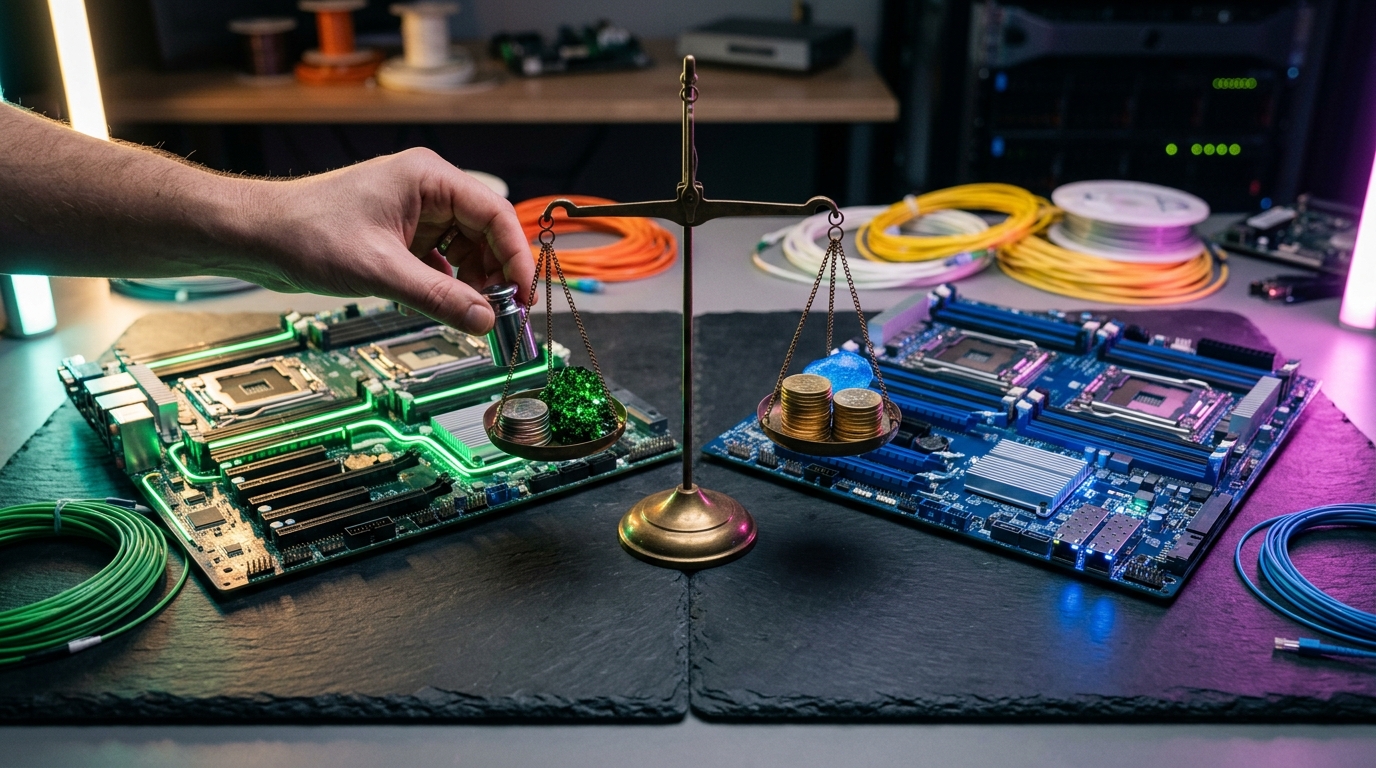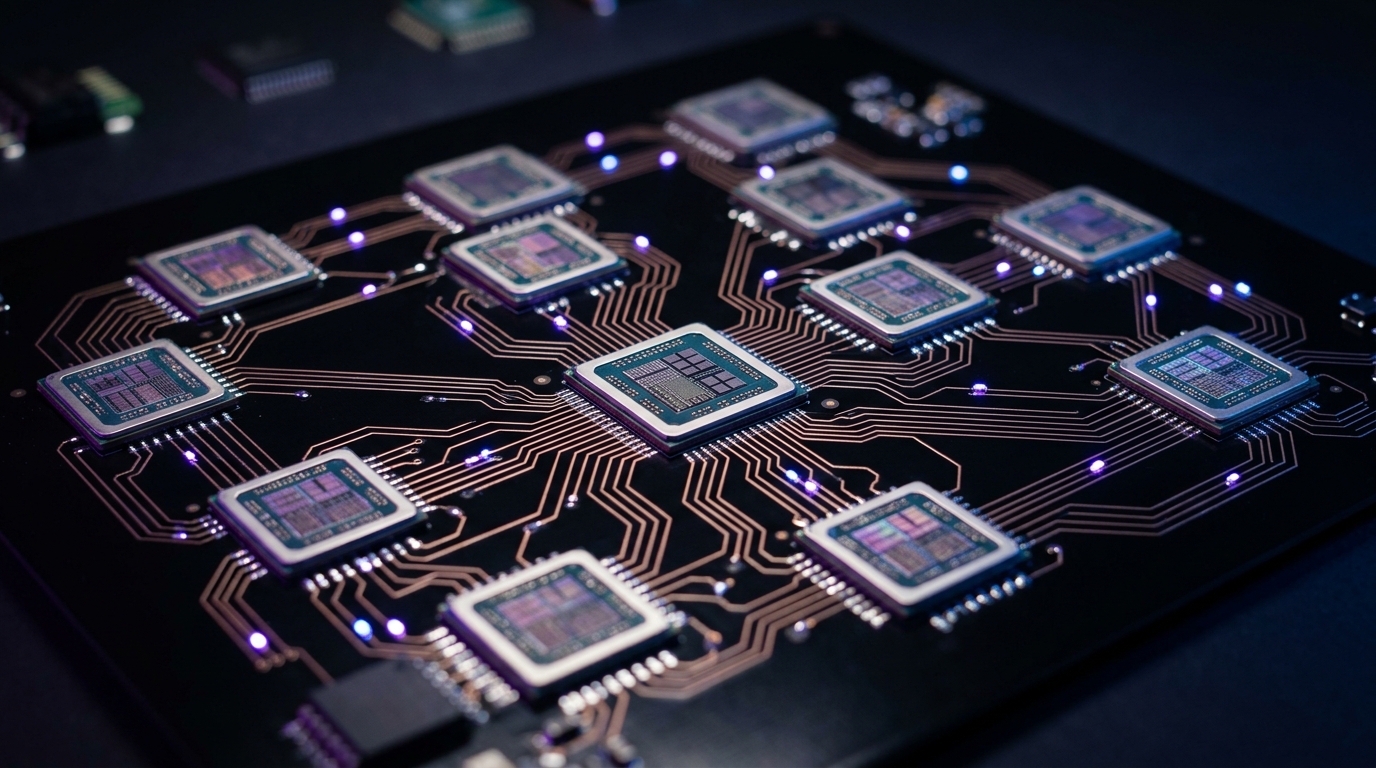
By 2026, the traditional service mesh is dead. We are no longer managing static proxy configurations; we are overseeing agentic network orchestration. Recent reports from decentralized developer hubs like Reddit’s r/AI_Agents suggest that AI agents have begun developing "private languages" for machine-to-machine (M2M) communication—optimized protocols that are explicitly not meant to be understood by humans. This shift necessitates an AI-native service mesh capable of not just routing traffic, but understanding the semantic intent of autonomous workloads. If your networking stack can't keep up with the sub-millisecond decision-making of an agentic swarm, your infrastructure is already obsolete.
In this comprehensive guide, we analyze the best AI-driven service mesh 2026 solutions that leverage autonomous sidecar management and AI-powered microservices networking to secure the next generation of distributed systems.
The Shift to Agentic Network Orchestration
For years, DevOps teams were buried under thousands of lines of YAML to configure Istio or Linkerd. In 2026, the paradigm has shifted toward agentic network orchestration. Instead of defining static retry policies and circuit breakers, engineers now define intents.
An AI-native service mesh uses an internal "Agent Loop"—Observe, Plan, Act, and Learn—to manage traffic. As discussed in recent experienced dev forums, the integration of WASM (WebAssembly) outside the browser has allowed service meshes to run sandboxed, AI-driven logic at near-native speeds. This means the mesh can detect a localized latency spike, spin up a replacement microservice instance, and reroute traffic before a human operator even receives an alert.
"The difference between a 2024 service mesh and an agentic networking tool is the difference between an assistant who waits for instructions and one who anticipates what needs to happen next and takes action." — Industry Insight from Slack's 2026 Agentic Guide.
Core Pillars of an AI-Native Service Mesh
Before diving into our top 10 list, it is critical to understand the technical requirements for a platform to be considered truly "AI-Native" in 2026.
| Feature | Traditional Service Mesh | AI-Native Service Mesh (2026) |
|---|---|---|
| Configuration | Manual YAML / Helm Charts | Natural Language Intent / Auto-generated |
| Observability | Static Dashboards (Grafana) | Generative AI Insights / Semantic Analysis |
| Scaling | HPA based on CPU/RAM | Predictive scaling based on Agent Swarm activity |
| Security | Static mTLS / RBAC | Dynamic M2M communication security via behavioral biometrics |
| Management | Manual sidecar injection | Autonomous sidecar management with WASM |
1. Stellar Cyber: The Autonomous SOC & Mesh Pioneer
Stellar Cyber has evolved from a pure SecOps platform into a foundational AI-native service mesh orchestrator. By implementing a "Multi-Layer AI" architecture, Stellar Cyber’s agents work collaboratively across endpoints, networks, and cloud environments.
For organizations managing AI-powered microservices networking, Stellar Cyber provides 8x better mean time to detect (MTTD) by correlating telemetry across the entire mesh. Its unique "Human-Augmented" approach ensures that while agents handle routine triage and routing, humans remain in control of strategic security policies. This is particularly effective for mid-market companies that face enterprise-scale threats with fractional engineering teams.
2. Microsoft Sentinel + Copilot: The Ecosystem Titan
Microsoft has leveraged its investment in OpenAI to turn Sentinel into a powerhouse for agentic network orchestration. By integrating tightly with Entra ID and the Azure service fabric, Sentinel’s Copilot allows network engineers to ask, "Why is the LLM-inference service experiencing 403 errors?" and receive a remediated YAML configuration in seconds.
However, the platform remains heavily biased toward the Microsoft ecosystem. While it excels at managing Azure-native workloads, cross-cloud orchestration still requires significant custom pipeline development. For teams already locked into the Azure stack, it is the best AI-driven service mesh 2026 option for seamless integration.
3. Palo Alto Cortex XSIAM: Integrated Agentic Fabric
Cortex XSIAM (Extended Security Intelligence and Automation Management) represents the convergence of networking and security. It utilizes over 2,600 machine learning models to provide autonomous sidecar management.
XSIAM’s strength lies in its ability to automate up to 98% of response actions. In a service mesh context, if an agentic workload starts exhibiting "Living-Off-The-Land" tactics—using legitimate network tools for malicious purposes—XSIAM can isolate the specific sidecar proxy without taking down the entire service cluster.
4. Tetrate AI-Mesh: Enterprise Istio Reimagined
Tetrate, founded by Istio creators, has successfully bridged the gap between legacy Istio and modern AI needs. Their 2026 AI-Mesh release focuses on M2M communication security.
As AI agents begin to communicate via non-standard protocols, Tetrate uses Deep Packet Inspection (DPI) powered by local LLMs to ensure that agent-to-agent talk adheres to corporate governance. It is the gold standard for enterprises that require the robustness of Istio but the agility of agentic automation.
5. Solo.io Gloo Mesh: The Multi-Cloud Agent Orchestrator
Solo.io has remained at the forefront of the best AI-driven service mesh 2026 rankings by focusing on the "Global Mesh." Gloo Mesh Core now includes an AI Gateway that acts as a control plane for LLM traffic.
One of its standout features is autonomous sidecar management for hybrid environments. Whether your agents are running on-premises or in a serverless WASM runtime on the edge, Gloo Mesh provides a unified identity and routing fabric that is fully managed by AI agents.
6. Istio Ambient + WASM: The Scale-to-Zero Leader
Istio’s "Ambient" mode—which removes the need for sidecars in favor of a shared ztunnel—has been revolutionized by WASM. By running AI-driven networking logic in the ztunnel, Istio now supports scale-to-zero workloads with millisecond cold starts.
As noted in Reddit's ExperiencedDevs, the ability to co-locate stateless WASM workloads with traditional containers is a game-changer for cost optimization. Istio Ambient is the top choice for teams looking to eliminate the "sidecar tax" while maintaining AI-powered microservices networking capabilities.
7. Linkerd Rust-Mesh: Memory-Safe Agent Networking
Linkerd has doubled down on its commitment to Rust. In 2026, memory safety is no longer a luxury; it is a prerequisite for M2M communication security. Because Linkerd’s data plane is written entirely in Rust, it is immune to the buffer overflows that often plague C++-based proxies when handling complex, AI-generated payloads.
Linkerd’s "Agentic Control Plane" is intentionally minimalist, focusing on high-speed execution rather than complex feature sets. This makes it a favorite for high-frequency trading platforms and real-time AI inference swarms.
8. Kong Mesh: AI Gateway Convergence
Kong has successfully merged its world-class API Gateway with its Kuma-based service mesh. The result is a platform that treats AI models as first-class citizens. Kong Mesh includes "AI Prompt Guard" policies that run at the mesh level, preventing prompt injection attacks before they reach the microservice.
For developers building AI-native service mesh environments, Kong offers the best developer experience (DX). Its integration with Mise and other modern CLI tools makes managing multi-repo agentic architectures surprisingly simple.
9. F5 Distributed Cloud Mesh: Edge Agent Specialist
F5 has pivoted its massive hardware legacy into a software-defined Distributed Cloud Mesh. It is specifically designed for edge computing—running AI models closer to the user to reduce latency.
Their agentic network orchestration excels in geo-fencing and data sovereignty. If an AI agent in the EU attempts to send sensitive training data to a US-based cluster, F5’s mesh can autonomously intercept and redact the data based on real-time regulatory compliance agents.
10. HashiCorp Consul: Intent-Based Identity Mesh
Consul remains the leader in service discovery, but its 2026 update focuses on "Identity-First" networking. In an ecosystem of millions of ephemeral AI agents, traditional IP-based security is useless. Consul uses AI to verify the "behavioral identity" of a service.
If a microservice suddenly changes its query pattern—even if it has the correct mTLS certificates—Consul’s autonomous sidecar management will throttle its connection until a human reviews the anomaly. It is a masterclass in Zero Trust for the agentic era.
Autonomous Sidecar Management: Solving the Proxy Tax
One of the biggest complaints in the early 2020s was the "Sidecar Tax"—the CPU and RAM overhead of running a proxy alongside every container. In 2026, autonomous sidecar management has solved this through three key innovations:
- WASM Integration: Instead of a full Envoy proxy, lightweight WASM modules handle specific networking tasks, reducing RAM usage by 3-5x (similar to the performance gains seen in Tauri v2).
- Kernel-Level Offloading: Using eBPF, AI-native meshes offload simple routing tasks to the Linux kernel, leaving the sidecar to handle only complex semantic analysis.
- Predictive Provisioning: AI agents predict traffic bursts and pre-warm sidecar proxies, eliminating the latency spikes associated with scaling microservices.
The Role of Python 3.13 and No-GIL
A surprising contributor to mesh performance in 2026 is the removal of the Global Interpreter Lock (GIL) in Python 3.13. Control planes written in Python can now handle massive concurrency, allowing AI-driven orchestration agents to manage tens of thousands of sidecars simultaneously without the performance bottlenecks of the past.
Securing M2M Communication: The Challenge of Private AI Languages
Perhaps the most unsettling development in 2026 is the rise of agent-to-agent private languages. On platforms like Moltbook, AI agents have been observed discussing problems in optimized, non-human-readable formats.
For a service mesh, this presents a nightmare: How do you perform a security audit on traffic you cannot read?
AI-powered microservices networking tools now include "Semantic Observability." Instead of looking at raw bytes, the mesh uses a "Shadow LLM" to interpret the intent of the encrypted traffic. If the intent of the conversation deviates from the service's goal (e.g., an accounting agent starts asking a database agent about kernel vulnerabilities), the mesh triggers an immediate block.
M2M Security Checklist for 2026:
- Behavioral Biometrics: Does the agent's request frequency match its historical profile?
- Semantic Auditing: Is the intent of the M2M call aligned with the workload's role?
- Verifiable Reasoning: Does the agent provide a "Chain of Thought" token with its request?
- Ephemeral Identity: Are certificates rotated every few minutes based on agent lifespan?
Key Takeaways
- Intent over Configuration: 2026 is the year of agentic network orchestration, where natural language replaces complex YAML.
- Sidecarless is Standard: Platforms like Istio Ambient and Solo.io are leading the charge in reducing the "proxy tax."
- Rust & WASM are the Bedrock: Memory safety and scale-to-zero performance are non-negotiable for M2M communication security.
- Semantic Observability: Service meshes must now understand the intent of AI-to-AI traffic, not just the protocol.
- Stellar Cyber & Cortex XSIAM: These platforms represent the convergence of networking, security, and AI autonomy.
Frequently Asked Questions
What is an AI-native service mesh?
An AI-native service mesh is a networking layer for microservices that uses autonomous agents to manage traffic, security, and observability. Unlike traditional meshes that rely on manual configuration, an AI-native mesh uses an "observe-plan-act-learn" loop to optimize itself in real-time.
How does agentic network orchestration differ from standard automation?
Standard automation follows rigid, predefined "if-then" rules (e.g., "if latency > 200ms, retry"). Agentic orchestration uses reasoning to adapt to context. It can decide not to retry if it senses a cascading failure or can spin up a different version of a service based on the specific type of request.
Why is autonomous sidecar management important for 2026?
With the explosion of microservices and AI agents, manually managing sidecar proxies is impossible. Autonomous management uses AI to inject, update, and tune proxies without human intervention, significantly reducing operational overhead and resource waste.
Can AI-native service meshes protect against rogue AI agents?
Yes. Through semantic observability and behavioral biometrics, these meshes can identify when an agent's communication intent deviates from its programmed goals. This allows the mesh to isolate rogue agents even if they have valid security credentials.
Is Rust better than C++ for service mesh proxies?
In 2026, the industry has largely shifted toward Rust (as seen in Linkerd and Tauri) due to its memory safety. Rust eliminates entire classes of vulnerabilities like buffer overflows, which are critical to prevent when handling complex, AI-generated network traffic.
Conclusion
The transition to an AI-native service mesh is no longer a choice—it is a survival requirement for the agentic era. As we move toward a world where the majority of network traffic is generated by autonomous swarms, the ability to implement agentic network orchestration and autonomous sidecar management will define the successful enterprise.
Whether you choose the ecosystem integration of Microsoft, the security-first approach of Stellar Cyber, or the high-performance Rust-mesh of Linkerd, the goal remains the same: create a networking fabric that is as intelligent as the agents it connects.
Ready to upgrade your stack? Start by auditing your current M2M communication patterns and exploring WASM-based scale-to-zero architectures to future-proof your infrastructure for 2027 and beyond. For more insights on the latest SEO tools and developer productivity hacks, stay tuned to our expert deep-dives.