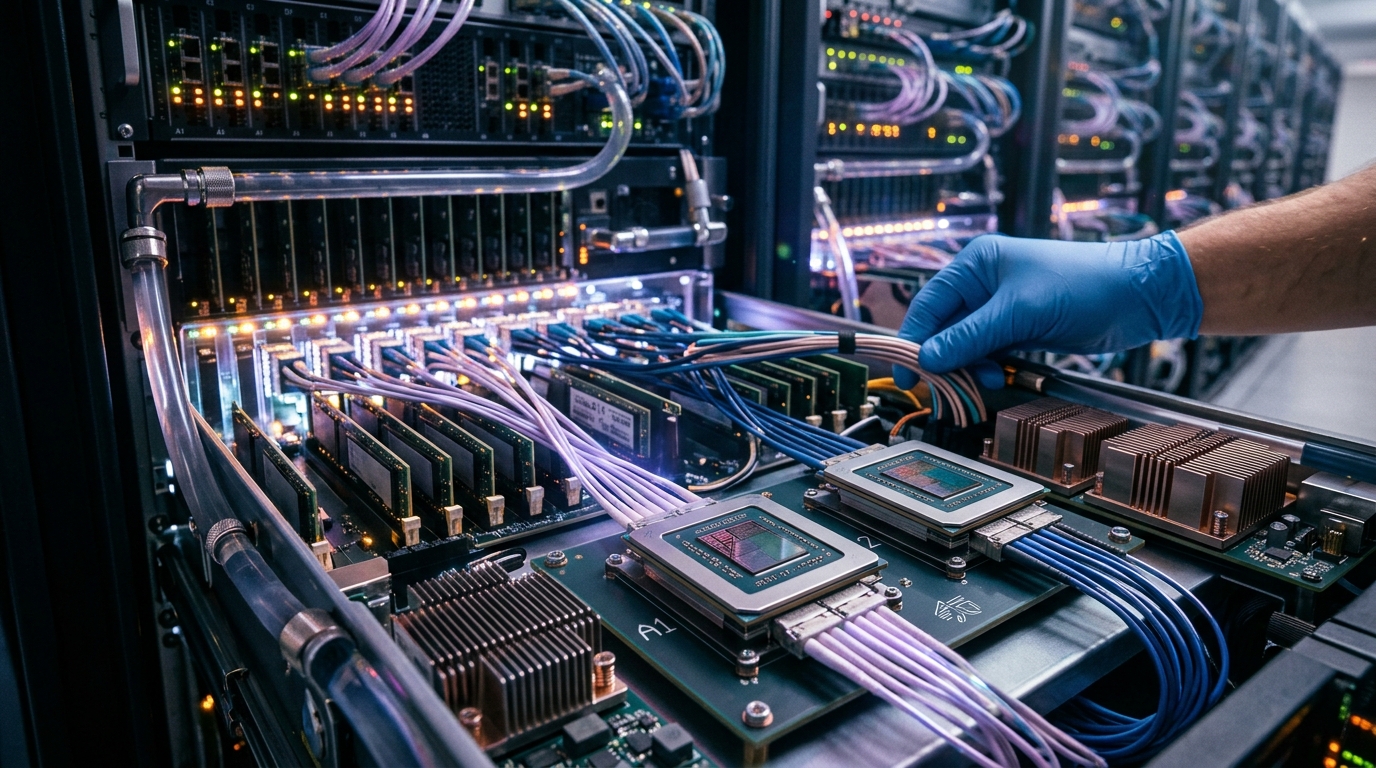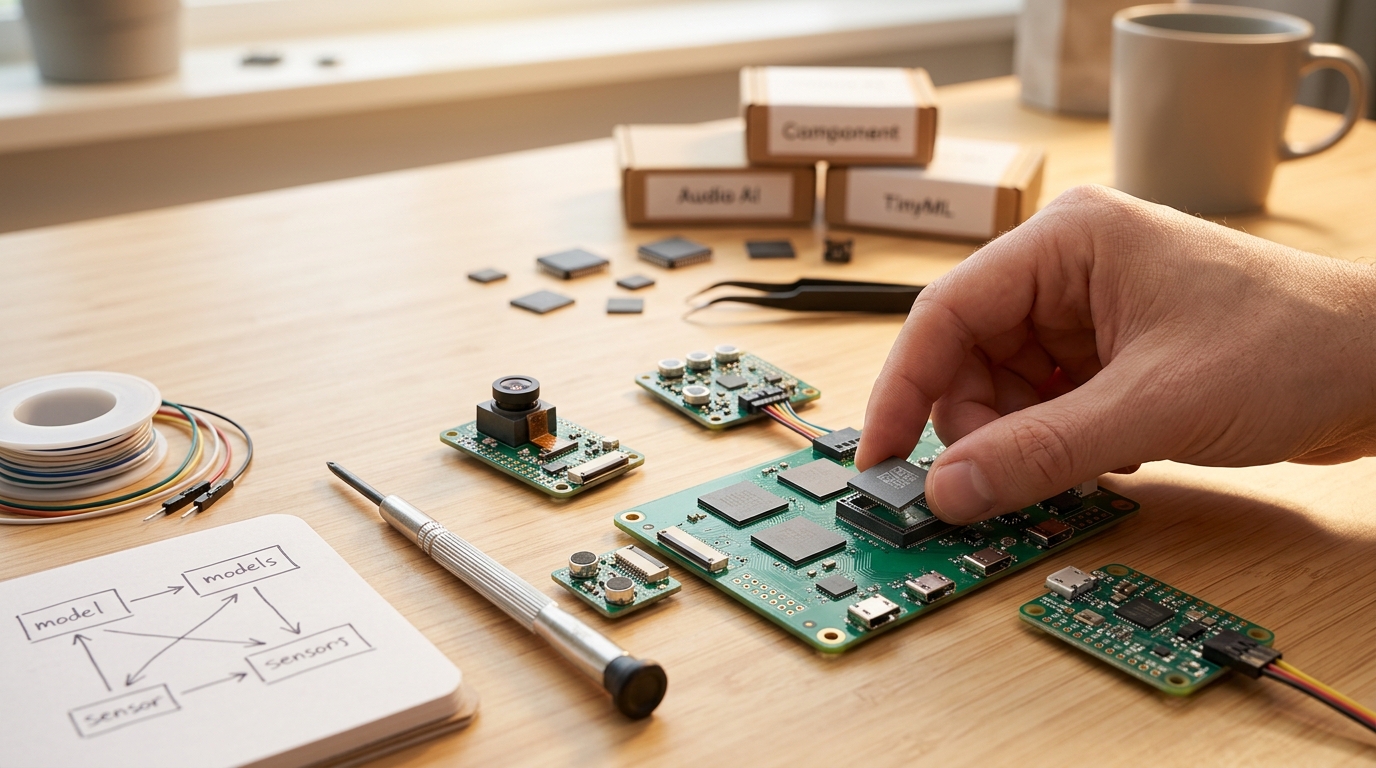
Did you know that by late 2026, global spending on AI is projected to exceed $2 trillion, yet the most significant shift isn't occurring in massive data centers, but on the silicon in your pocket? The era of total cloud dependency is ending. As latency requirements tighten and data sovereignty becomes a non-negotiable legal hurdle, on-device AI development has moved from a niche experiment to the primary architecture for enterprise software. In 2026, the ability to run local AI inference platforms is no longer just about saving on API costs; it is about building resilient, private, and lightning-fast user experiences that function regardless of connectivity.
The Evolution of On-Device AI Development in 2026
On-device AI development has undergone a radical transformation. In the early 2020s, local inference was limited to basic image classification or keyword spotting. Today, in 2026, we are seeing the rise of the on-device LLM framework, allowing 7B and 14B parameter models to run natively on consumer hardware with sub-100ms latency.
This shift is driven by three primary factors: hardware acceleration (NPUs), model compression techniques like 4-bit quantization, and the maturation of Edge AI SDKs 2026. Developers are no longer choosing between "cloud" and "local"; they are building hybrid systems where the edge handles immediate interaction and the cloud handles heavy-duty retraining. This architectural pattern reduces bandwidth costs by up to 90% and ensures that sensitive user data never leaves the device, satisfying stringent GDPR and CCPA requirements.
Selection Methodology: How We Ranked the Top Platforms
To identify the leaders in the on-device AI development space, we utilized a rigorous technical assessment framework. We didn't just look at marketing claims; we analyzed production-readiness based on the following dimensions:
- Technical Depth and Optimization: Does the platform support advanced quantization, pruning, and hardware-specific acceleration (CUDA, Metal, OpenCL)?
- Framework Versatility: Compatibility with PyTorch, TensorFlow Lite, ONNX, and specialized Small Language Model deployment tools.
- Security and Compliance: Built-in support for TEEs (Trusted Execution Environments) and encrypted model weights.
- Developer Experience (DX): The quality of documentation, the presence of an active community, and the robustness of the debugging tools.
- Scalability: The ability to manage a fleet of ten devices as easily as ten thousand.
"In 2026, choosing the right development partner can make or break your digital transformation journey. The stakes have never been higher, with AI spending projected to exceed $2 trillion." — Industry Insight from Reddit's r/SaaS community.
1. NVIDIA Jetson: The Gold Standard for High-Performance Edge AI
NVIDIA Jetson remains the undisputed heavyweight champion for compute-intensive on-device AI development. With the Orin and newer Thor architectures, Jetson provides a server-grade GPU in a form factor the size of a credit card.
Key Features
- Unified Memory Architecture: Allows the GPU and CPU to share a high-speed memory pool, critical for large local AI inference platforms.
- JetPack SDK: A comprehensive suite including TensorRT for deep learning optimization and DeepStream for multi-sensor video analytics.
- Generative AI Support: Native support for running optimized versions of Llama 3.x and Mistral models at the edge.
Pros & Cons
| Pros | Cons |
|---|---|
| Unmatched raw performance for computer vision. | High hardware cost ($199 - $1,500+). |
| Massive community and library support. | Higher power consumption than MCU-based tools. |
| Seamless transition from desktop CUDA code. | Steep learning curve for beginners. |
2. Edge Impulse: The Developer Favorite for Multi-Platform Deployment
Edge Impulse has emerged as the most versatile private AI SDK because it abstracts the complexity of hardware-specific coding. It allows engineers to collect data, train models, and deploy to almost any target—from an Arduino to a powerful Linux gateway.
Key Features
- EON Compiler: Optimizes models to use up to 50% less RAM while maintaining accuracy.
- AutoML for the Edge: Automatically finds the best architecture for your specific latency and memory constraints.
- Digital Twin Integration: Test your models against simulated sensor data before physical deployment.
Pros & Cons
- Pros: Excellent UI/UX; supports almost all major silicon vendors (Arm, Nordic, Silicon Labs, NVIDIA).
- Cons: Advanced enterprise features require a high-tier subscription ($500+/month).
3. Apple MLX & Core ML: The Frontier of Private AI SDKs
For developers targeting the Apple ecosystem, the MLX framework (released by Apple's research team) has changed the game for on-device LLM framework implementations. It is specifically designed to leverage the Unified Memory and Neural Engine in M-series and A-series chips.
Key Features
- MLX Framework: An array framework designed for machine learning on Apple silicon, offering performance that often beats PyTorch on Mac hardware.
- Core ML 8: Deep integration with iOS and macOS, allowing for seamless "Private Cloud Compute" handoffs.
- On-Device Fine-Tuning: The ability to adapt models locally based on user behavior without uploading data.
Pros & Cons
- Pros: Best-in-class privacy; incredible performance-per-watt.
- Cons: Locked into the Apple ecosystem; limited to Apple hardware targets.
4. Google Edge TPU & Coral: Optimized TensorFlow Inference
Google’s Coral platform, powered by the Edge TPU, is a specialized ASIC designed specifically to run TensorFlow Lite models with extremely low power consumption and high throughput.
Key Features
- High-Speed Inference: Capable of executing 4 trillion operations per second (TOPS) using only 2 watts.
- TFLite Integration: The most streamlined path for developers already using Google’s ML ecosystem.
- Prototyping to Production: Offers everything from USB accelerators to SoMs (System on Modules).
Pros & Cons
- Pros: Cost-effective hardware; excellent for high-frame-rate computer vision.
- Cons: Limited to TensorFlow Lite; smaller community than NVIDIA.
5. Qualcomm AI Engine: Powering the Mobile AI Generation
If you are building for Android or Windows-on-Arm, the Qualcomm AI Stack is your primary on-device AI development tool. Their Hexagon NPU is a beast at handling quantized integer math, which is the backbone of modern mobile AI.
Key Features
- Qualcomm AI Stack: A unified software middleware that works across mobile, automotive, and IoT.
- INT4 Support: Leading the industry in 4-bit quantization, allowing massive models to fit in mobile VRAM.
- Snapdragon Heterogeneous Computing: Dynamically shifts workloads between CPU, GPU, and NPU for thermal efficiency.
6. Intel OpenVINO: Precision Vision and Cross-Platform Optimization
Intel’s OpenVINO (Open Visual Inference and Neural Network Optimization) is the go-to toolkit for developers who need to run AI across a variety of Intel hardware—from Core i9 CPUs to Arc GPUs and Movidius VPUs.
Key Features
- Model Optimizer: Converts models from PyTorch, TensorFlow, and ONNX into a hardware-agnostic Intermediate Representation (IR).
- Auto-Device Plugin: Automatically detects the best available hardware on the host system to run the inference.
- Pre-trained Models: Access to the Open Model Zoo for immediate deployment of common CV and NLP tasks.
7. AWS IoT Greengrass: Scaling Cloud Intelligence to the Local Edge
AWS IoT Greengrass is less about the "how" of training and more about the "where" of deployment. It allows you to treat your edge devices as an extension of your cloud infrastructure, making it a leader in local AI inference platforms for industrial use.
Key Features
- Lambda at the Edge: Run serverless functions locally to process data before it hits the model.
- SageMaker Edge Manager: Provides model management, monitoring, and fleet-wide updates.
- Offline Operation: Devices can continue to perform AI inference even when the internet connection is severed.
8. TinyML: Machine Learning for Ultra-Low-Power Microcontrollers
TinyML isn't just one platform; it's a movement supported by tools like TensorFlow Lite Micro and SensiML. It targets the billions of microcontrollers (MCUs) that run on batteries for years.
Key Features
- KB-Sized Models: Models are compressed to fit into 100KB - 500KB of memory.
- Zero-Latency Sensing: Ideal for vibration analysis, acoustic sensing, and low-res vision.
- Extreme Cost Efficiency: Deploy AI on chips that cost less than $2.
9. Microsoft Azure IoT Edge: Enterprise-Grade Distributed AI
Azure IoT Edge excels in environments where security and compliance are the top priorities. It uses a containerized approach to deploy AI modules, making it ideal for the "DevOps to MLOps" pipeline.
Key Features
- Azure Sphere Integration: Provides a hardware-rooted trust for secure AI deployments.
- Module Marketplace: Download pre-built AI modules for vision, SQL, and stream analytics.
- Windows IoT Support: The best platform for industrial PCs running Windows.
10. Arm Ethos: The Efficiency King for IoT Ecosystems
Arm Ethos NPUs are the silicon IP behind many of the world’s most efficient edge devices. Their Edge AI SDKs 2026 provide deep hooks into the Arm Cortex and Ethos architectures.
Key Features
- Scalable NPU Architecture: From the Ethos-U55 (wearables) to the Ethos-N78 (high-end smartphones).
- TFLite Micro Optimization: Arm provides the most optimized kernels for running ML on Cortex-M processors.
- Open-Source Tooling: Deep involvement in the TVM and ONNX ecosystems.
Small Language Model (SLM) Deployment: The New Frontier
In 2026, the industry has realized that you don't always need a 175B parameter model in the cloud to summarize a document or write code. Small Language Model deployment (SLMs) like Phi-3, Llama-3-8B, and Gemma are the new focus of on-device AI development.
Why SLMs are Dominating the Edge:
- Latency: Local inference eliminates the round-trip time to a cloud server.
- Privacy: Personal data used for RAG (Retrieval-Augmented Generation) stays on the device.
- Cost: No per-token billing from LLM providers.
Top On-Device LLM Frameworks:
- Llama.cpp: The versatile C++ implementation that runs on almost anything.
- Ollama: The easiest way to manage and run local LLMs on macOS, Linux, and Windows.
- MLX-Notes: Apple's specific implementation for extreme performance on M4 chips.
python
Example: Simple Local Inference Logic (Pseudocode)
import local_ai_sdk as edge
Load a 4-bit quantized SLM
model = edge.load_model("phi-3-mini-4bit.gguf")
Run inference locally
response = model.generate("Summarize the latest local sensor data.") print(response)
Key Takeaways
- Privacy is the Catalyst: The shift to on-device AI development is primarily fueled by the need for data privacy and regulatory compliance.
- NVIDIA vs. The Rest: While NVIDIA leads in raw power, platforms like Edge Impulse and Qualcomm are winning on versatility and power efficiency.
- Quantization is Essential: You cannot run modern AI on the edge without techniques like INT8 or FP16 quantization.
- Hybrid is the Future: The most successful 2026 implementations use a "Local-First" approach with cloud fallback for complex reasoning.
- SLMs > LLMs for Edge: Small Language Models are providing 90% of the utility of giant models at 1% of the resource cost.
Frequently Asked Questions
What is the best platform for on-device AI development in 2026?
For high-performance tasks like robotics, NVIDIA Jetson is the leader. For cross-platform IoT development, Edge Impulse is the most user-friendly and versatile choice. For mobile-specific apps, Apple Core ML and Qualcomm AI Stack are superior.
Can I run a Large Language Model (LLM) on a smartphone?
Yes, in 2026, many smartphones can run Small Language Models (SLMs) like Llama 3 (8B) or Phi-3 natively. This is achieved through on-device LLM frameworks and 4-bit quantization, which reduces the model's memory footprint significantly.
What are the benefits of local AI inference platforms over cloud AI?
The primary benefits include ultra-low latency, enhanced data privacy, reduced bandwidth costs, and the ability to function without an active internet connection (offline capability).
Do I need to learn a new programming language for Edge AI?
Not necessarily. Most Edge AI SDKs 2026 support Python and C++. However, understanding hardware constraints like memory management and specialized libraries like PyTorch Edge or TensorFlow Lite is crucial.
Is on-device AI more secure than cloud AI?
Generally, yes. By processing data locally, you eliminate the "transit risk" of sending sensitive information over the internet. However, developers must still secure the device's physical storage to prevent model weight theft or data tampering.
Conclusion
The landscape of on-device AI development in 2026 is a vibrant ecosystem of specialized silicon and sophisticated software. Whether you are building a smart medical device, an autonomous drone, or a privacy-first personal assistant, the tools available today allow you to bring incredible intelligence directly to the user's fingertips.
As you evaluate these local AI inference platforms, remember that the "best" platform is the one that aligns with your hardware constraints, your team's expertise, and your users' privacy expectations. The edge is no longer a peripheral concern—it is the center of the AI universe. Start experimenting with these private AI SDKs today to ensure your applications remain competitive in an increasingly local-first world.