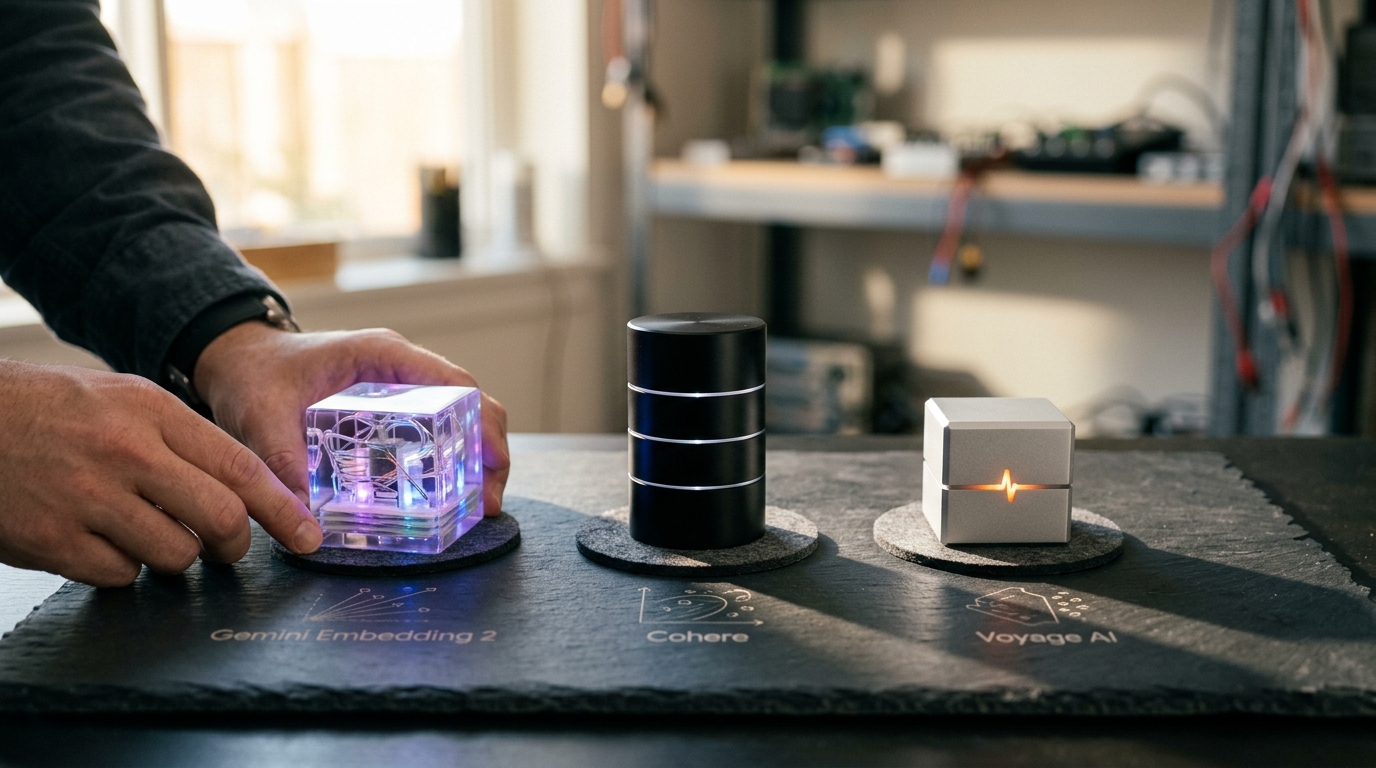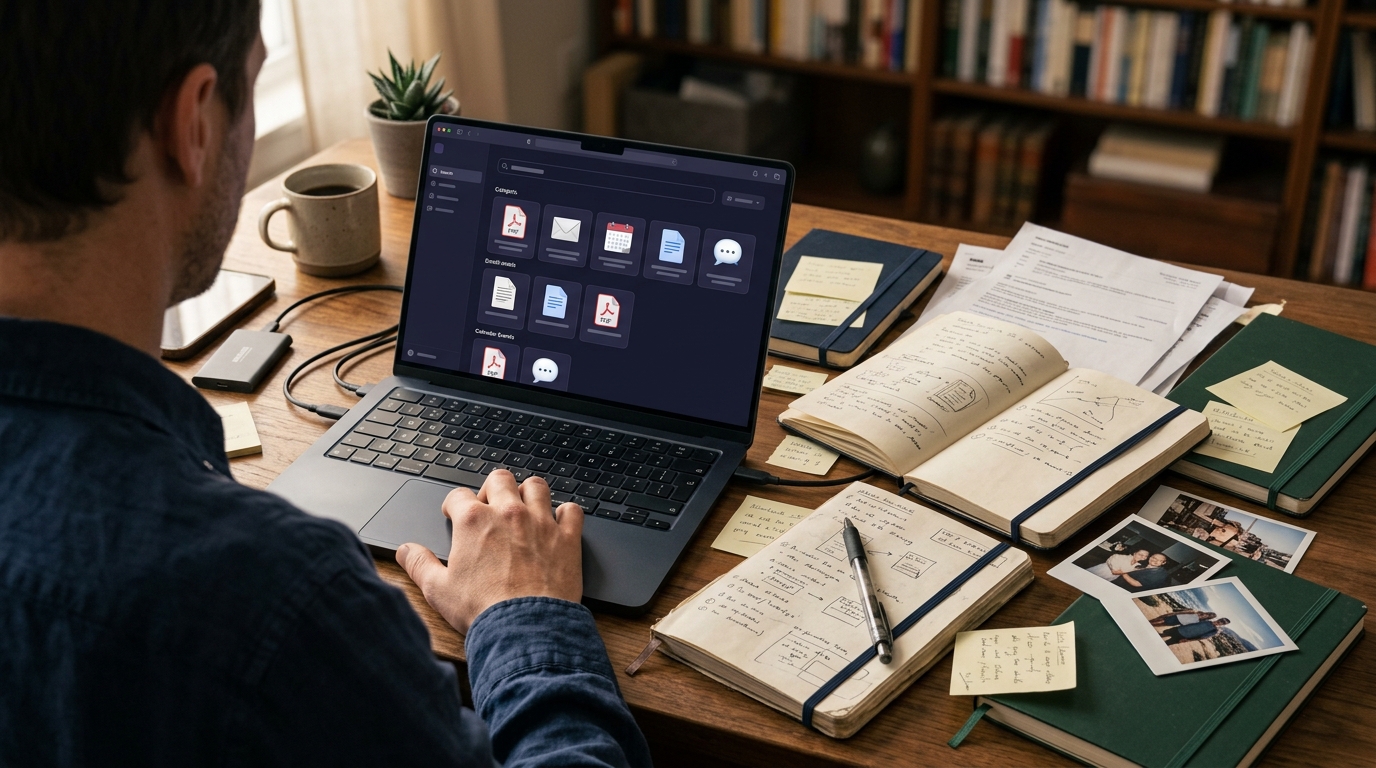
By 2026, the traditional search engine as we knew it has effectively died. We no longer live in the era of the 'blue link'—we live in the era of the 'answer layer.' With Google AI Overviews triggering for over 86% of queries and ChatGPT surpassing 800 million monthly active users, the focus has shifted from searching the public web to searching your own digital existence. Whether you are a developer managing thousands of lines of code or a researcher juggling hundreds of PDFs, finding a personal AI search engine that can navigate your private data with semantic precision is no longer a luxury—it is a survival requirement for the modern knowledge worker.
The Shift to Agentic and Personal Search
The landscape of information retrieval has fragmented into what experts call the 'Agentic Web.' In this new paradigm, we are no longer optimizing for a single search engine. Instead, we are competing across multiple answer layers, each with its own retrieval patterns. As digital strategist Nonofo Joel notes, 'AI search is now a stack of answer engines, search overlays, and retrieval systems.'
For the individual, this means moving toward private semantic search. Traditional keyword matching is being replaced by vector embeddings that understand the intent behind your query. If you search for 'that meeting about the cloud transition,' a personal AI search engine doesn't just look for those words; it understands the context of your calendar, your Slack messages, and your meeting transcripts to find the exact moment you need.
| Feature | Traditional Search | AI-Native Personal Search |
|---|---|---|
| Logic | Keyword matching | Semantic/Vector understanding |
| Output | List of links | Synthesized answers with citations |
| Data Source | Public Web | Public Web + Personal Data (RAG) |
| Privacy | High tracking | Local-first / Encrypted options |
1. Saner AI: The Ultimate Personal Assistant
Saner AI has emerged in 2026 as a top-tier choice for those who find tools like Motion or ClickUp too cluttered. It is specifically designed for AI-native personal knowledge management. Unlike broad search engines, Saner focuses on your daily task management and personal notes, acting as a grounded chat assistant.
Reddit users in the r/ChatGPTPro community have called it a 'biggest find' for its ability to handle PKMS (Personal Knowledge Management System) tasks without the overhead of enterprise tools. It excels at taking fragmented thoughts and turning them into structured daily plans.
Why it wins: It bridges the gap between 'searching' and 'doing.' It doesn't just find your notes; it helps you execute the tasks within them.
2. NotebookLM: Google’s Dark Horse for Personal Data
While Google Gemini gets the headlines, NotebookLM is arguably the most powerful tool for search my data AI. It utilizes Retrieval-Augmented Generation (RAG) to ground its answers exclusively in the documents you upload.
As computer vision expert Blake Senftner highlights on Quora, the integration of GDrive and Gmail into a package centered around NotebookLM allows for 'Deep Research' that can be converted into audio discussions, FAQs, or study guides. For a student or professional, this is the gold standard for searching 100+ PDFs simultaneously to find a single needle of truth.
3. Mem AI: The Self-Organizing Second Brain
Mem AI was one of the first to market with the 'self-organizing' promise, and in 2026, it has perfected the AI second brain for developers and creators. It uses a proprietary 'Mem It' flow that allows you to capture information from anywhere and trust that the AI will link it to related concepts automatically.
"The real advantage now comes from combining tools effectively, not just choosing the 'best' one," says a veteran developer on Reddit. Mem AI embodies this by acting as the glue for your disparate thoughts, making them searchable through natural language queries like "What did I decide about the API architecture last month?"
4. Perplexity AI: Pro Search for Personal Research
Perplexity remains the 'clearest pure-play answer engine.' While it is a public search tool, its 'Pro Search' and 'Collections' features allow users to create private research hubs. In 2026, Perplexity handles over 200 million daily queries, primarily because it provides real-time citations.
For personal use, you can 'ground' Perplexity in specific domains or your own uploaded files, making it a hybrid tool that searches both the 'public truth' and your 'private data.'
5. Claude Projects: Searching Your Expertise
Anthropic’s Claude has become the favorite for knowledge workers who value reasoning over speed. With 'Projects,' users can upload massive codebases or sets of documentation (up to 200k tokens) to create a private semantic search environment.
In 2026, Claude is praised for its 'Constitutional AI' framework, ensuring that when you search your data, the answers are honest and harmless. It is particularly effective for developers who need to search across multiple files to understand complex logic flows.
6. Notion AI: The Integrated Knowledge Wiki
Notion AI has evolved from a simple text generator to a full-scale retrieval system. It now searches across your entire Notion workspace—databases, wikis, and meeting notes—to provide instant answers.
Pro Tip: Use Notion AI to generate 'Operational Insights.' If you are managing a small team, you can ask, 'Which projects are lagging based on our last three sprint reviews?' and it will pull data from across your workspace to give you a summary.
7. Cursor and Claude Code: The AI Second Brain for Developers
For technical professionals, the AI second brain for developers is best represented by Cursor (an AI-native IDE) and Claude Code. These tools don't just search the web; they index your local files using local-first AI search logic.
As noted on Quora, Claude Code is 'capable of far more than just software development.' It understands the 'fractals' of a project—how a change in one obscure CSS file might impact a React component three folders away. This is the pinnacle of semantic search for technical data.
8. Brave Search: Privacy-First Independent Indexing
Brave Search is the strongest independent alternative to the Google/Bing duopoly. In 2026, it serves over 50 million queries a day, with a significant portion triggering 'Answer with AI.'
Because Brave uses its own independent index, it is free from the 'SEO spam' that often plagues Google. For users who want a personal AI search engine experience that doesn't track their history or profile their behavior, Brave is the definitive choice.
9. Searchable: Tracking Your Brand and Personal Visibility
Searchable (and similar tools like Aiseoagent) has become essential for tracking how you or your brand appear in AI-generated answers. As one Reddit user pointed out, 'If your content isn't being cited or referenced [by LLMs], you're invisible.'
Searchable allows you to monitor brand mentions inside ChatGPT, Gemini, and Perplexity answers. This is a new form of 'Personal Search'—searching the world's AI models to see what they think of you.
10. Exa: Neural Search for the Deep Web
Exa (formerly Metaphor) is a neural search engine that doesn't use keywords. It uses the same 'transformer' architecture as LLMs to find links based on meaning. If you are looking for 'the most insightful blog post about RAG architecture,' Exa doesn't look for those keywords; it looks for the vibe and quality of the content.
It is an essential tool for building a high-quality personal knowledge management system because it filters out the noise of traditional SERPs.
Local-First AI Search: Why Privacy and Semantic Search Matter
The biggest trend in 2026 is local-first AI search. Users are increasingly wary of uploading their most sensitive data (financial records, private journals, unreleased IP) to the cloud.
Tools like GPT4All or AnythingLLM allow you to run vector databases locally on your machine. This ensures that your private semantic search stays private. Developers are leading this charge, using local LLMs to index their .env files and private documentation without ever hitting an external API.
Benefits of Local-First Search:
- Zero Latency: No waiting for cloud API responses.
- Absolute Privacy: Data never leaves your hardware.
- Cost: No monthly subscription fees for 'tokens.'
- Offline Access: Search your life even in a dead zone.
How to Build Your Own Personal Knowledge Base with AI Scraping
To have a great search experience, you need great data. The 'old school' scraping stack is dead, replaced by AI-native tools that describe data rather than mapping HTML selectors.
- Firecrawl: Best for turning any website into clean Markdown for your RAG system.
- Apify: The 'GOAT' for complex scraping tasks like pulling your own social media history or Amazon purchase records.
- Gumloop: A node-based workflow builder that can scrape a site, summarize it with an LLM, and push it to your personal AI search engine.
By using these tools, you can 'feed' your second brain with high-quality, structured data, making your personal search results significantly more accurate.
Key Takeaways
- Search is Fragmenting: You need a stack of tools, not just one. Use Perplexity for the web, NotebookLM for your docs, and Saner for your life.
- Citations are the New Rankings: Whether in personal or public search, if an AI doesn't cite a source, it's a hallucination. Always use tools that provide grounding.
- Privacy is a Feature: Local-first AI search is the gold standard for sensitive data in 2026.
- Developers Need Context: Tools like Cursor and Claude Code provide the best AI second brain for developers by indexing local codebases.
- Scraping is the Foundation: Use AI-native scrapers like Firecrawl to keep your personal knowledge base updated.
Frequently Asked Questions
What is the best personal AI search engine for privacy?
Brave Search and local-first tools like AnythingLLM are the best for privacy. Brave doesn't track your queries, while local-first tools keep all your data on your own hard drive, ensuring no third party ever sees your private semantic search history.
Can I search my own PDFs with AI for free?
Yes. NotebookLM by Google is currently free and is one of the most powerful tools for searching your own data. It allows you to upload up to 50 sources per notebook to create a localized 'answer engine' based strictly on your provided documents.
What is an 'AI second brain for developers'?
An AI second brain for developers is a system (like Cursor or Mem) that indexes documentation, code snippets, and project history. It allows developers to use natural language to find specific logic or bugs across thousands of files without manual grepping.
How does semantic search differ from traditional search?
Traditional search uses keyword matching (finding the exact words). Semantic search uses vector embeddings to understand the meaning and context. For example, a semantic search for 'fruit' might return results for 'apples' and 'oranges' even if the word 'fruit' isn't on the page.
Is Google still the best search engine in 2026?
Google still has the most reach, but it is no longer the 'best' for all use cases. For research, Perplexity is often preferred; for personal data, NotebookLM wins; and for privacy, Brave is the leader. Google is now one of many specialized tools in a larger search stack.
Conclusion
As we navigate the digital complexities of 2026, the ability to search your life with an AI-native personal search engine has become the ultimate productivity hack. We are moving away from a world where we remember where we stored information, to a world where we simply ask for it.
Whether you choose the integrated ecosystem of Google Gemini, the privacy of Brave, or the developer-centric power of Cursor, the goal remains the same: reducing the distance between a question and a verified answer. Start building your second brain today—because in the age of AI, your data is only as valuable as your ability to find it.
Ready to optimize your digital workflow? Explore our latest guides on AI-native scraping tools and developer productivity to stay ahead of the curve.