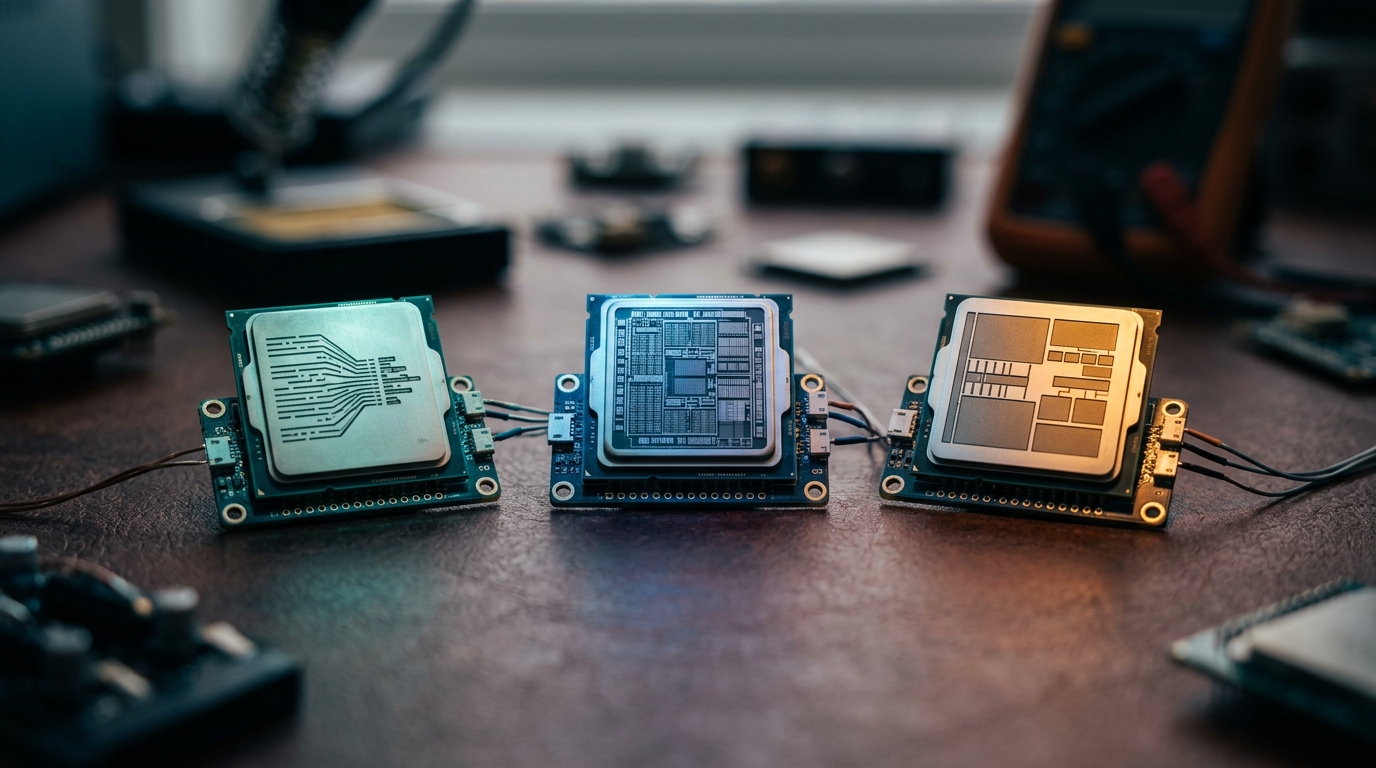
When DeepSeek-R1 launched, it sent shockwaves through Silicon Valley by matching OpenAI’s o1 at a fraction of the inference cost. But here is the hard truth: if you are prompting it like GPT-4, Claude 3.5 Sonnet, or other traditional LLMs, you are leaving up to 80% of its reasoning performance on the table. Welcome to the definitive frontier of DeepSeek-R1 prompt engineering, where the rules of AI interaction have been completely rewritten.
Unlike traditional autoregressive models that predict the next token based on surface-level patterns, DeepSeek-R1 is a native reasoning model. It uses an internal reinforcement learning (RL) loop to "think" before it speaks. In this comprehensive guide, we will break down the mechanics of this revolutionary model and show you exactly how to prompt DeepSeek-R1 for maximum developer productivity, analytical precision, and code generation accuracy.
1. Understanding DeepSeek-R1's Architecture: Why Traditional Prompting Fails
To master DeepSeek-R1 prompt engineering, you must first understand how this model differs from its predecessors. Traditional Large Language Models (LLMs) are trained primarily on supervised fine-tuning (SFT) data to generate a direct answer immediately. To get them to reason, engineers have to use explicit prompting tricks like "think step-by-step."
DeepSeek-R1, however, is built on a foundation of reinforcement learning (RL). During its training process, DeepSeek-R1-Zero (its direct ancestor) was allowed to develop its own reasoning pathways purely through RL incentives, without any initial supervised human data. The final DeepSeek-R1 model combines this raw RL reasoning with a highly curated "cold-start" dataset to make its outputs structured, readable, and highly conversational.
| Feature | Traditional LLMs (e.g., GPT-4o, Claude 3.5) | DeepSeek-R1 (Reasoning Model) |
|---|---|---|
| Core Architecture | Autoregressive Next-Token Prediction | Reinforcement Learning-Driven Reasoning |
| Reasoning Method | Emulated via prompting ("think step-by-step") | Native, self-generated <think> block |
| Inference Cost | Standard | High computational footprint per query, but highly optimized |
| Prompt Sensitivity | High sensitivity to formatting and few-shot examples | Extremely sensitive to over-specification and direct constraints |
| Best Use Case | Creative writing, quick lookups, simple APIs | Complex math, logic puzzles, deep coding, system architecture |
Because DeepSeek-R1 runs an internal chain of thought optimization loop, forcing it to follow a specific step-by-step template actually hurts its performance. It restricts the model's natural cognitive search space. If you attempt to force your own logical scaffolding onto DeepSeek-R1, you bypass its reinforcement-learned error correction pathways, leading to sub-optimal answers.
2. How to Prompt DeepSeek-R1: The Golden Rules
If you want to know how to prompt DeepSeek-R1 effectively, you must learn to step back. The most critical shift in mindset is moving from prescriptive prompting (telling the AI how to think) to objective-oriented prompting (telling the AI what to achieve).
Rule 1: Avoid "Think Step-by-Step"
When prompting traditional models, adding "let's think step-by-step" is an industry standard for triggering reasoning. With DeepSeek-R1, this is redundant and often counterproductive. The model automatically initiates its <think> block for every query. Adding this instruction can cause the model to output repetitive reasoning steps, inflating your token usage and degrading output quality.
Rule 2: Keep Prompts Simple and Direct
DeepSeek-R1 excels at parsing raw, unstructured, and highly complex problem statements. Do not over-engineer your prompts with excessive system context or hand-holding guidelines. State your goal, provide your source data, and let the model's internal RL mechanism decide the optimal analytical path.
Rule 3: Do Not Force Specific Reasoning Frameworks
Avoid instructing the model to use specific logical frameworks (like "Use the MECE framework" or "Apply first-principles thinking") unless absolutely necessary. DeepSeek-R1's internal reasoning is already optimized. Forcing a specific framework can cause a conflict between its reinforcement-learned logic pathways and your explicit instructions, leading to logical loops or cognitive stalling.
❌ BAD PROMPT: "I need you to write a Python script for a custom rate-limiter. First, think step-by-step about the token bucket algorithm. Write down your mathematical assumptions. Then, draft a pseudocode outline. Finally, write the production code with extensive comments."
GOOD PROMPT:
"Write a production-ready Python implementation of a thread-safe token bucket rate-limiter. Ensure it handles concurrent requests efficiently and include unit tests."
In the good prompt, the model is left entirely free to allocate its reasoning tokens to solve the concurrency and algorithmic challenges naturally inside its <think> block, resulting in a cleaner, more robust implementation.
3. Reasoning Model Prompt Techniques & CoT Optimization
To truly unlock the power of reasoning model prompt techniques, we need to look at how we structure our queries for deep cognitive tasks. The goal of chain of thought optimization in DeepSeek-R1 is to allow the model to fully explore its internal reasoning paths before generating the final response.
The "Pre-Fill" Technique for Complex Reasoning
One of the most powerful advanced techniques for prompting DeepSeek-R1 is "pre-filling" the assistant's response. While you should not tell the model how to think, you can guide where it begins its investigation. This is particularly useful for debugging complex software systems or auditing smart contracts.
By pre-filling the response with a specific XML tag or an initial analytical posture, you can focus the model's reasoning on a specific vector without restricting its logical freedom.
xml
User: "Analyze this smart contract for reentrancy vulnerabilities: [Insert Code]"
Assistant:
Few-Shot Prompting: Use with Extreme Caution
In traditional LLM prompting, providing 3 to 5 examples (few-shot prompting) is a reliable way to align output formats. With DeepSeek-R1, however, few-shot prompting can be a double-edged sword.
If your few-shot examples include a specific reasoning style, DeepSeek-R1 may attempt to mimic that style exactly, overriding its superior internal reasoning path. If you must use few-shot prompting to enforce a highly specific output schema, ensure your examples focus purely on the input-output mapping and do not show the reasoning steps themselves.
4. System Prompts for DeepSeek-R1: Designing the Perfect Environment
When deploying DeepSeek-R1 in production environments, creating the right system prompts for DeepSeek-R1 is vital. Traditional system prompts are often packed with behavioral constraints ("You are a helpful, polite, and concise assistant..."). For DeepSeek-R1, these constraints act as cognitive anchors that drag down performance.
An optimal system prompt for DeepSeek-R1 should focus on defining the persona's capabilities, setting structural output rules, and defining the operational boundaries, while leaving the reasoning process completely unconstrained.
The Minimalist Developer System Prompt Template
markdown
System Prompt: Elite Software Architect
Role
You are an elite software architect and principal security engineer. Your goal is to provide highly optimized, production-grade solutions that prioritize security, performance, and maintainability.
Operational Parameters
- Maintain absolute technical accuracy. If a solution has trade-offs, explicitly state them in your final output.
- Do not explain basic concepts unless explicitly asked. Assume the user is an experienced engineer.
- Allow your internal reasoning process to run fully and naturally. Do not attempt to truncate your thinking phase.
- Output your final response using clear Markdown formatting, utilizing code blocks with appropriate syntax highlighting.
This system prompt establishes a professional context and sets clear formatting expectations without interfering with the model's internal <think> block. It ensures that the model's cognitive resources are spent on solving the actual engineering problem rather than managing conversational fluff, significantly boosting developer productivity.
5. Structured Outputs: Mastering XML Tags and JSON Formatting
One of the primary challenges when working with reasoning models in software pipelines is handling structured outputs. Because DeepSeek-R1 outputs its reasoning process inside a <think> block, parsing its response programmatically requires a structured approach.
Parsing the <think> Block
By default, DeepSeek-R1 outputs its response in the following format:
xml
When building applications (such as custom AI writing tools or automated agents) using the DeepSeek API, you must isolate or strip the <think> block before delivering the payload to the end-user. Here is a simple Python pattern to handle this using regular expressions:
python import re
def extract_reasoning_and_response(raw_output: str):
# Regex to match the content inside
# Remove the think block to get the clean final response
final_response = re.sub(r'<think>.*?</think>', '', raw_output, flags=re.DOTALL).strip()

return reasoning, final_response
Example usage
api_response = "
Enforcing JSON Outputs Without Breaking Reasoning
If you need DeepSeek-R1 to return a strict JSON object, you must be careful not to break its reasoning flow. Instructing a model to "output only raw JSON" can sometimes cause it to skip its thinking phase entirely, resulting in poor logical performance.
The optimal approach is to instruct the model to perform its reasoning naturally, but format its final response (outside the <think> block) as a strict JSON object enclosed in markdown code blocks.
markdown User Prompt: "Analyze the sentiment of the following customer feedback. First, use your internal thinking process to weigh the nuances of the feedback. Then, output your final analysis in a strict JSON format matching this schema: { "sentiment": "positive" | "negative" | "neutral", "confidence_score": float (0.0 to 1.0), "key_issues": [string] }
Feedback: 'The software is incredibly fast and the UI is beautiful, but the onboarding documentation is outdated and it took me two hours to set up my first project.'"
Using this technique, DeepSeek-R1 will use its <think> block to analyze the conflicting sentiments (fast UI vs. poor docs) and then output a highly accurate, clean JSON object that your application can easily parse.
6. Hyperparameter Tuning: Temperature, Top-P, and System Configurations
When working with DeepSeek-R1 via APIs or developer platforms, adjusting your hyperparameters is just as important as writing the prompt itself. Traditional LLMs are highly responsive to wild swings in temperature; however, reasoning models require a much more disciplined configuration.
According to DeepSeek's official engineering guidelines, specific tasks require distinct hyperparameter profiles to prevent model degradation or logical loops.
Recommended Hyperparameter Settings
| Task Type | Recommended Temperature | Recommended Top-P | Key Considerations |
|---|---|---|---|
| Mathematics & Coding | 0.0 to 0.2 |
0.95 |
Lower temperature ensures maximum logical consistency and prevents syntax errors. |
| Data Extraction & JSON Parsing | 0.0 |
0.90 |
Eliminates creative variance to maintain strict schema adherence. |
| General Analysis & Strategy | 0.5 to 0.6 |
0.95 |
Allows for broader conceptual synthesis without losing logical coherence. |
| Creative Writing & Brainstorming | 0.7 to 0.8 |
0.98 |
Higher temperature encourages stylistic variance, but logic may drift. |
The Danger of High Temperature with DeepSeek-R1
Setting the temperature above 0.8 on DeepSeek-R1 is highly discouraged. Because the model relies on a delicate reinforcement-learned policy to guide its search through complex reasoning paths, high randomness can cause the model's internal monologue to diverge. This leads to "hallucinated reasoning," where the model spends thousands of tokens exploring completely irrelevant logical dead-ends, occasionally resulting in infinite loops or gibberish outputs.
7. Real-World Use Cases: Code, Math, and Complex Analysis
Let’s explore how to apply these reasoning model prompt techniques to real-world scenarios where DeepSeek-R1 truly outshines traditional LLMs.
Use Case 1: Complex System Architecture & Code Generation
When designing a distributed system, you want the model to analyze trade-offs, edge cases, and failure states before writing a single line of code.
The Prompt:
markdown Design a distributed, horizontally scalable system for processing real-time financial transactions. The system must process at least 10,000 transactions per second (TPS) with sub-100ms latency and guarantee exactly-once processing semantics.
Provide your solution in two parts: 1. A detailed architectural analysis outlining your technology choices (databases, message queues, consensus algorithms) and how you mitigate the risk of double-spending. 2. A clean, production-ready Python implementation of the core transaction processing worker utilizing distributed locking.
Why This Works:
Instead of telling the model how to build the system, we present a highly demanding set of constraints (10,000 TPS, sub-100ms latency, exactly-once processing). DeepSeek-R1 will spend a significant amount of time in its <think> block debating the merits of Kafka vs. RabbitMQ, Redis Redlock vs. PostgreSQL advisory locks, and two-phase commits vs. saga patterns. The resulting architectural document and code will be highly sophisticated, realistic, and production-viable.
Use Case 2: Advanced Mathematical Proofs and Logic
Traditional models struggle with multi-step logical deductions because they try to write the proof linearly. DeepSeek-R1 uses its thinking phase to draft, test, and discard mathematical hypotheses before showing you the final proof.
The Prompt:
markdown Prove that for any prime number p > 3, p^2 - 1 is always divisible by 24. Walk through the modular arithmetic steps clearly.
What Happens Behind the Scenes:
In the <think> block, DeepSeek-R1 will typically test specific prime numbers (e.g., 5, 7, 11) to verify the statement, identify the algebraic factoring (p-1)(p+1), and then systematically prove that one of these terms must be divisible by 3, one by 2, and one by 4. The final output is an elegant, mathematically rigorous proof devoid of the hand-waving logical leaps common in older models.
8. Troubleshooting and Debugging Failing Prompts
Even with the best DeepSeek-R1 prompting guide, you will occasionally run into issues where the model fails to deliver the expected output. Here is how to diagnose and fix the most common failure modes.
Issue 1: The Model Gets Stuck in an Infinite Thinking Loop
Symptom: The model's <think> block keeps generating tokens indefinitely, repeating the same logical statements or failing to transition to the final answer.
- The Cause: This usually happens when your prompt contains highly contradictory constraints or when the temperature is set too high.
- The Fix:
- Lower your temperature to
0.0or0.1. - Review your prompt for conflicting instructions (e.g., asking for a "highly detailed, exhaustive architectural review" but restricting the output to "under 200 words").
- Simplify the prompt by removing unnecessary constraints.
Issue 2: The Final Response Lacks Depth (Short Thinking Phase)
Symptom: The model provides a superficial answer with a very brief thinking phase (under 5 seconds), failing to analyze complex edge cases.
- The Cause: The prompt is too simple, or you used a system prompt that explicitly restricts the model's analytical freedom.
- The Fix:
- Inject complexity into your prompt. Ask the model to evaluate trade-offs, analyze potential attack vectors, or optimize for extreme scale.
- Ensure your system prompt doesn't contain directives like "be as concise as possible" or "skip unnecessary explanations."
Issue 3: Output Formatting Is Corrupted
Symptom: The model outputs its markdown or JSON inside the <think> block instead of separating it, or it fails to close the <think> tag properly.
- The Cause: This is often caused by trying to force the model to adopt a specific, highly rigid output format from the very first token, which interrupts its natural transition from the thinking phase to the generation phase.
- The Fix: Use the XML-enclosed schema prompt structure shown in Section 5. Explicitly state that the structured output should only be applied to the final response after the thinking phase is complete.
9. Key Takeaways
- Let the Model Think: Never use prompts like "think step-by-step." DeepSeek-R1's native reinforcement-learned reasoning loop is highly optimized and runs automatically.
- Objective Over Prescription: Focus your prompts on defining clear objectives, raw data, and constraints, rather than prescribing a specific logical framework or methodology.
- Keep System Prompts Minimal: Avoid packing system prompts with conversational constraints. Focus on defining the role, target audience, and output schema.
- Handle XML and JSON Programmatically: Always parse out the
<think>block using robust regex or XML parsers when building production pipelines to ensure clean user experiences. - Tune Hyperparameters Wisely: Keep temperatures ultra-low (
0.0-0.2) for coding, math, and structured data extraction to prevent reasoning divergence and infinite loops.
10. Frequently Asked Questions
How does DeepSeek-R1 prompt engineering differ from GPT-4 prompting?
While GPT-4 requires explicit logical scaffolding (like "think step-by-step" or few-shot examples) to perform complex reasoning, DeepSeek-R1 performs deep reasoning natively via its reinforcement-learned <think> block. Prompting DeepSeek-R1 requires a more hands-off approach, focusing on clear objectives rather than step-by-step instructions.
Can I use DeepSeek-R1 for creative writing, or is it only for math and coding?
DeepSeek-R1 is highly capable of creative writing and conceptual synthesis. However, because it is optimized for deep reasoning, it may spend a lot of time analyzing narrative structures before writing. For purely creative tasks, setting the temperature to 0.7 or 0.8 helps unlock its stylistic range.
Why does DeepSeek-R1 sometimes output reasoning in a different language?
Because DeepSeek-R1's reasoning phase is trained via reinforcement learning to optimize for logical accuracy rather than language consistency, it may occasionally switch to the language it finds most efficient for solving a specific problem (often English or Chinese) inside the <think> block. This does not affect the final response, which will match the language of your prompt.
How can I integrate DeepSeek-R1 into my development workflow to boost productivity?
Integrating DeepSeek-R1 into developer tools like Cursor, VS Code, or Cline can dramatically increase developer productivity. It excels at writing complex algorithms, debugging legacy codebases, and designing system architectures. Ensure your IDE extension is configured to handle or hide the <think> blocks to keep your workspace clean.
What is the maximum context window of DeepSeek-R1?
DeepSeek-R1 supports an extensive context window of up to 128K tokens, with the capability to output up to 8K tokens (including the internal reasoning tokens). This makes it highly effective for analyzing large code repositories, massive datasets, and long-form technical documentation.
Conclusion
DeepSeek-R1 represents a monumental paradigm shift in artificial intelligence. By moving away from superficial pattern matching and embracing native, reinforcement-learned reasoning, it provides developers, researchers, and engineers with unprecedented analytical power.
To master DeepSeek-R1 prompt engineering, you must learn the art of cognitive restraint. Step back, state your constraints clearly, configure your hyperparameters precisely, and let the model's internal reasoning engine do what it does best. As you integrate these advanced reasoning model prompt techniques into your daily workflows, you will unlock a level of developer productivity and problem-solving capability that was once thought to be years away.
Ready to streamline your development process? Explore our suite of advanced developer tools at CodeBrewTools to supercharge your AI-driven workflows today.