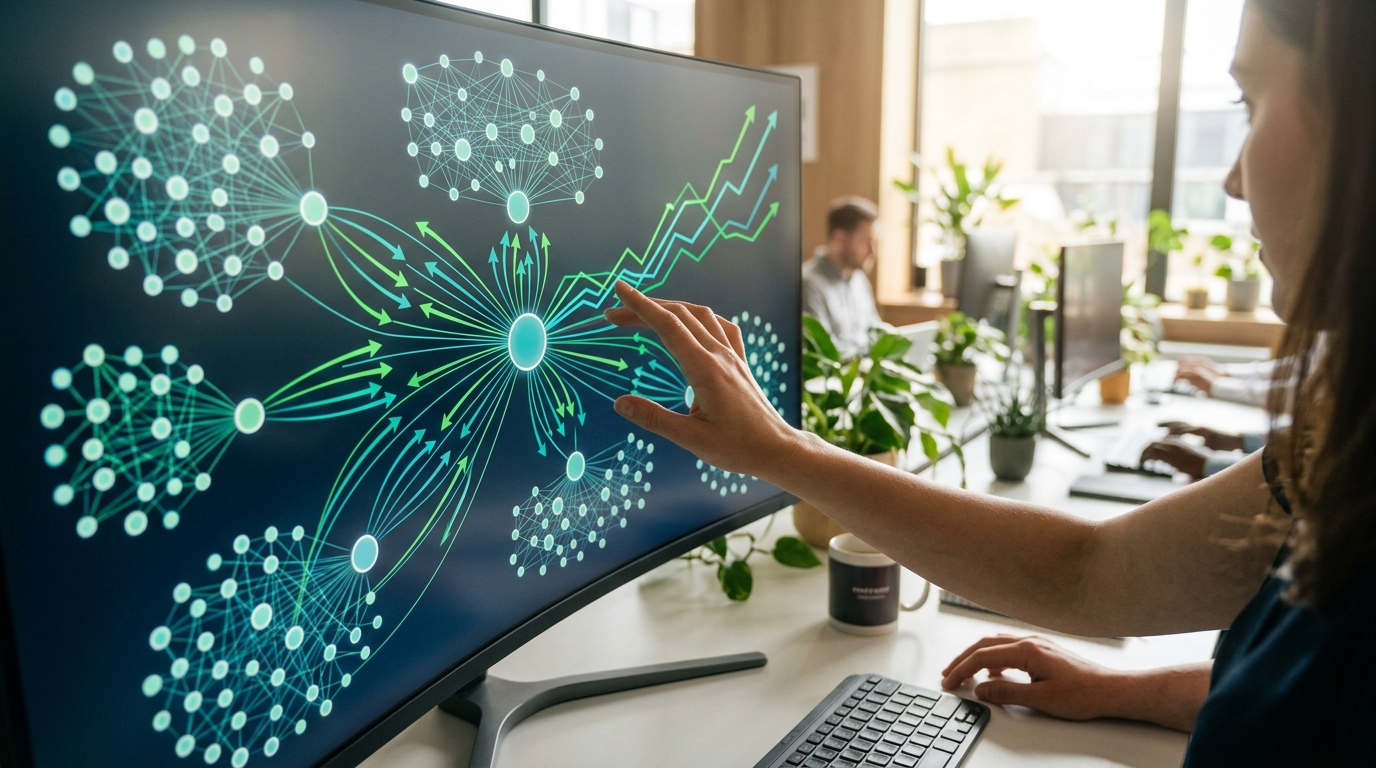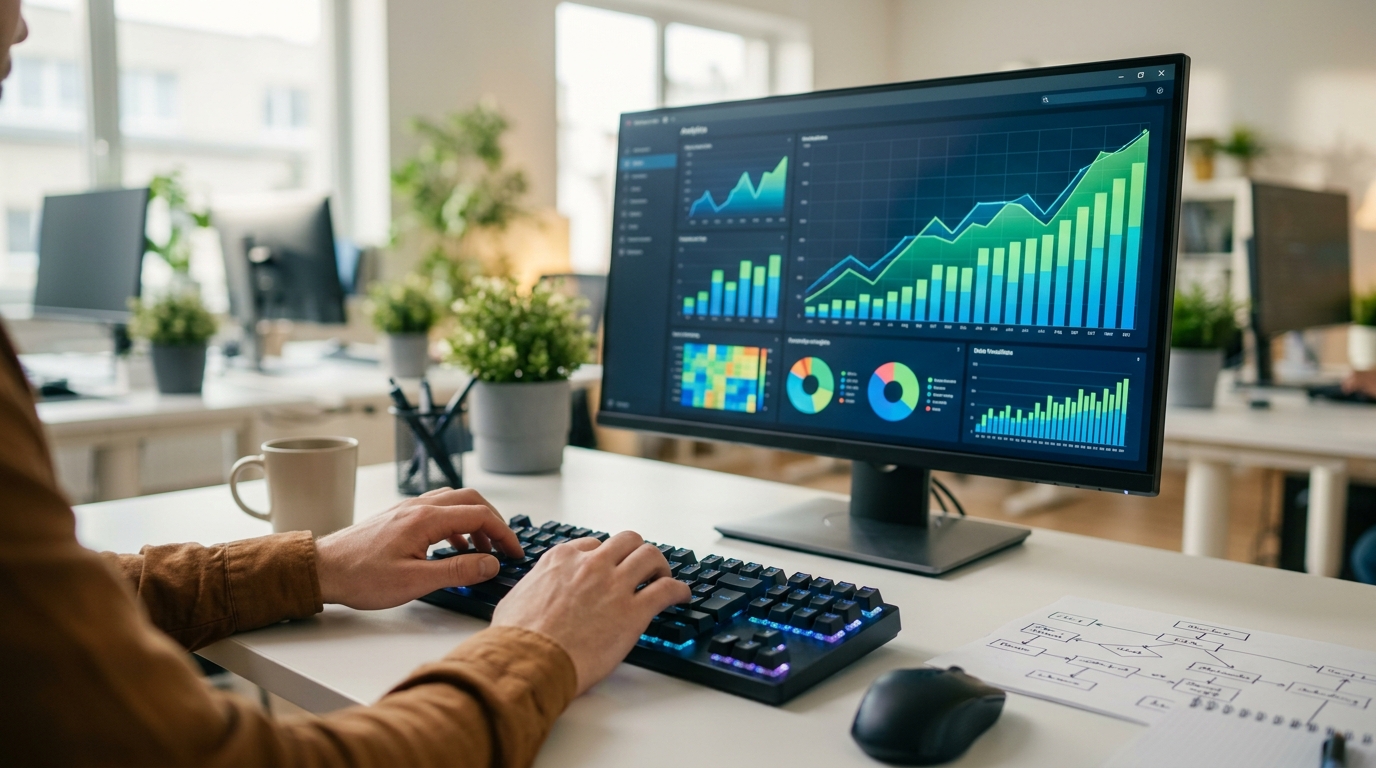
By 2026, the search landscape has fractured. Gartner’s prediction that organic search traffic would drop by 50% is no longer a warning—it is a reality for brands that failed to adapt. While Google struggles with the 'enshittification' of its SERPs, DeepSeek has emerged as the dominant force in Reasoning AI, forcing a radical shift in how we approach DeepSeek SEO. If you are still optimizing for blue links and keyword density, you are invisible to the models that actually matter. Ranking in DeepSeek-V5 requires a move from simple indexing to complex synthesis, where the goal isn't just to be 'found,' but to be 'reasoned with.'
The Shift to Reasoning AI: Why DeepSeek SEO is Different
Traditional search engines are librarians; they point you to a shelf. Reasoning AI models like DeepSeek-V5 are consultants; they read the books for you and summarize the findings. In the context of DeepSeek search optimization, this means the 'click' is no longer the primary unit of value. Instead, the 'citation' and the 'recommendation' are the new gold standards.
DeepSeek’s architecture, particularly its focus on efficient Mixture-of-Experts (MoE) and advanced reasoning capabilities, allows it to parse complex, multi-step queries that leave traditional keyword-based algorithms confused. When a user asks DeepSeek, 'Compare the architectural scalability of Vercel vs. AWS Amplify for a multi-tenant SaaS with high WebSocket traffic,' the model doesn't just look for those keywords. It looks for technical documentation, Reddit debates, and GitHub discussions that provide a logical comparison.
To rank in DeepSeek 2026, your content must survive a 'Reasoning Audit.' This is where Reasoning AI SEO tools become essential. They help you understand how these models categorize your brand and whether they view you as a primary source or a secondary mention.
DeepSeek-V5 Ranking Factors: The Logic of Synthesis
Before diving into the tools, we must understand the underlying DeepSeek-V5 ranking factors. Unlike Google’s 200+ signals, DeepSeek prioritizes a smaller set of high-weight factors centered around AI Answer Engine Optimization (AEO):
- Factual Density: Reasoning models prefer content that provides high information value per kilobyte. Fluff is filtered out during the synthesis phase.
- Entity Relationship Clarity: DeepSeek builds a knowledge graph of your brand. If your site, your LinkedIn, and your Wikipedia entry contradict each other, the model will lower your trust score.
- Citation Hooks: Use 'citation-friendly' formatting. Tables, bulleted lists, and clear 'TL;DR' summaries are more likely to be extracted as snippets.
- Semantic Corroboration: DeepSeek cross-references your claims with independent sources like Reddit, Quora, and industry journals. If nobody else is talking about you, you don't exist to the AI.
- Technical Digestibility: As noted by industry experts, reducing page weight and using clean JSON-LD schema helps AI agents (like DeepSeekBot) crawl and understand your site faster.
| Factor | Traditional SEO Weight | DeepSeek SEO Weight | Action Item |
|---|---|---|---|
| Keyword Density | High | Low | Focus on semantic entities |
| Backlinks | Very High | Medium | Focus on 'Citations' and mentions |
| Page Speed | Medium | High (for crawlers) | Use Agent Experience Optimization (AXP) |
| Content Length | Medium | Low | Focus on factual density |
| Structured Data | Medium | Critical | Use Schema.org for all entities |
1. Airefs: Best for Source-Level Discovery
Airefs has quickly become a favorite for those focused on DeepSeek search optimization because it ignores the 'vibe' and focuses on the 'source.' While other tools give you a vague visibility score, Airefs shows you the exact URLs, Reddit threads, and forum posts that DeepSeek is currently citing for your target prompts.
"Airefs gives us clear visibility into how our brand shows up across LLMs. This is something we simply couldn’t easily track before." — Anthony L, Head of Marketing, LegalVision.
Why it’s essential for DeepSeek SEO:
- Source-Level Discovery: It identifies the specific articles DeepSeek pulls from. If a competitor is being cited, you can see exactly why.
- Reddit & Forum Monitoring: Since reasoning models rely heavily on community consensus, Airefs tracks discussions in real-time, allowing you to join conversations before they become established AI sources.
- AI Crawler Analytics: It tracks visits from bots like DeepSeekBot, showing you exactly which pages the AI is 'studying.'
Pricing: Starts at $24/mo, making it the most accessible entry point for high-level AEO.
2. Profound: The Enterprise AEO Powerhouse
With over $58M in funding and a customer list that includes MongoDB and Indeed, Profound is the gold standard for enterprise-grade AI Answer Engine Optimization. It doesn't just track mentions; it provides 'Answer Engine Insights' across 10+ models, including DeepSeek.
Key Features for Enterprise Teams:
- Prompt Volumes: It provides data on how many users are actually asking specific questions in AI interfaces—a metric traditional keyword tools often miss.
- Shopping Triggers: For B2C brands, Profound tracks visibility in AI shopping assistants, identifying which product attributes trigger a recommendation.
- Scalable Content Agents: It helps generate AI-optimized content with a 'human-in-the-loop' review process to ensure E-E-A-T remains high.
Profound Benchmark: Ramp reportedly boosted its AI visibility 7x using Profound’s insights, becoming a top-5 visible fintech brand globally within weeks.
3. AthenaHQ: Best for Blindspot Detection
AthenaHQ is a YC-backed platform that excels at 'Blindspot Detection.' In the world of DeepSeek SEO, a blindspot is a query where your competitors are being cited, but you are completely absent despite having relevant content.
Strategic Advantages:
- ACE Citation Engine: A specialized tool designed to optimize content specifically for citation by reasoning models.
- Impersonation Detection: AI models can sometimes hallucinate or describe your brand inaccurately. AthenaHQ flags these instances so you can correct the record through technical SEO and PR.
- Deep Research AI Agent: An enterprise-only feature that performs deep-dive analysis into competitor citation strategies.
Pricing: Their Self-Serve plan starts at $295/mo, but they offer significant discounts for annual commitments.
4. Peec AI: Accuracy via UI Scraping
One of the biggest complaints in the SEO community is that AI APIs (which most tools use) don't always return the same results as the web interface. Peec AI solves this by using UI scraping technology that simulates real human interactions with DeepSeek and other LLMs.
Why accuracy matters in 2026:
- Regional Breakdowns: Peec AI shows how your visibility differs across 115+ languages and various geographic regions.
- Sentiment Analysis: It doesn't just count mentions; it analyzes whether the AI is recommending your brand or merely citing it as a neutral example.
- Wix Case Study: Wix reportedly saw a 5x YoY increase in LLM-driven traffic by using Peec AI to pinpoint the exact content types surfaced in reasoning engines.
5. Semrush AI Toolkit: The Integrated Workflow
For most SEOs, Semrush is already the hub of their daily workflow. Their AI Visibility Toolkit allows you to track DeepSeek search optimization alongside your traditional keyword rankings.
Integrated Features:
- AI Visibility Score: A percentage-based metric that benchmarks your brand against up to nine competitors.
- Copilot Assistant: An AI dashboard that surfaces recommendations directly from your Semrush data, highlighting 'low-hanging fruit' for AEO.
- SEO Writing Assistant: A plugin for Google Docs and WordPress that scores your content for readability and semantic richness in real-time.
Verdict: It’s the best choice for teams that want to minimize tool sprawl and keep their SEO and AEO data in one place.
6. Writesonic GEO: Content Production + Visibility
Writesonic has evolved from a simple writing tool into a full-scale Generative Engine Optimization (GEO) platform. Their 'AI Search Volume Explorer' is powered by 120M+ proprietary chatbot conversations, providing a level of data that even Ahrefs struggles to match.
Workflow Benefits:
- AI Visibility Action Center: This module identifies 'citation gaps' and provides outreach templates to help you get mentioned in the sources the AI trusts.
- Source-Backed Articles: Their content engine produces articles with automatic fact-checking and internal linking, specifically designed to satisfy DeepSeek’s reasoning requirements.
- Revenue Impact: BlitzMetrics reportedly landed two $100k clients directly through AI visibility tracked via Writesonic.
7. Otterly AI: Affordable AEO Monitoring
If you are a solo founder or a small team, Otterly AI is the 'Cool Vendor' (as named by Gartner) you need. Starting at just $29/mo, it provides a surprisingly deep feature set that covers six different AI engines.
Key Highlights:
- GEO Audit: It checks 25+ on-page factors to ensure your site is 'AI-ready,' from schema implementation to factual density.
- Share of Voice: A clean visual representation of your market share in AI answers vs. your top three competitors.
- Automated Reporting: Stakeholders receive weekly updates on AI visibility without you having to touch a dashboard.
8. Scrunch AI: The Agent Experience Platform (AXP)
Scrunch AI introduces a concept that will be critical for rank in DeepSeek 2026: the Agent Experience Platform. While other tools focus on tracking, Scrunch actively optimizes what AI agents 'see' when they crawl your site.
The AXP Advantage:
- Content Weight Reduction: In one case, Scrunch reduced a page from 263KB to 4KB for AI agents, making it 98% faster for the LLM to process.
- AI Bot Traffic Feed: Real-time visibility into which bots (DeepSeekBot, GPTBot, etc.) are currently on your site and which pages they are accessing.
- Error Detection: It identifies technical crawl issues that specifically prevent AI models from indexing your content properly.
9. SEOmonitor: Agency-Grade Unified Tracking
For agencies, the per-seat pricing of most Reasoning AI SEO tools is a nightmare. SEOmonitor flips the script with a pay-per-keyword model and unlimited users.
Agency-Specific Features:
- Autonomous Content Writer: A tool that handles topic discovery, drafting, and CMS publishing with a 52% success rate in getting cited in AI Overviews.
- SEO Forecasting: It models the potential impact of AI search on your traffic, helping you set realistic expectations for clients.
- Unified Dashboard: See Google rankings and AI citations side-by-side, allowing you to prove the value of your AEO efforts.
10. Amadora AI: Actionable Strategy Execution
Many tools dump data on you and leave you to figure out the 'now what?' Amadora AI focuses entirely on actionability. It tracks your visibility but prioritizes a step-by-step checklist of what to do next to move the needle.
Why it works:
- Strategy Bridges: It connects the dots between a drop in visibility and the specific content update needed to fix it.
- Maintenance Focus: As one Reddit user noted, "The missing piece in most AI SEO workflows is the maintenance side." Amadora monitors published posts and alerts you when a competitor’s update has pushed you out of an AI citation.
- Clarity Over Noise: Designed for teams that don't have a dedicated GEO specialist and need straightforward instructions.
How to Optimize Content for Reasoning Models
Optimizing for DeepSeek-V5 isn't just about using the right tools; it’s about a fundamental change in content structure. Reasoning models use a 'Chain of Thought' process to evaluate information. To align with this, follow these three architectural principles:
1. The Modular Content Framework
Break your content into modular, self-contained sections. Each H3 should answer a specific sub-question. This makes it easier for DeepSeek to extract a 'module' of information for its response without needing to process the entire page.
2. The Evidence Trail
Reasoning models are skeptical. Don't just make a claim; provide the evidence trail. Link to primary research, include raw data in tables, and cite experts. As the Quora research suggests, "AI is a conservative system... it believes in what is repeated in other independent sources."
3. Technical Interpretability
Ensure your site is technically optimized for AI crawlers. This includes:
- Valid JSON-LD: Go beyond basic 'Article' schema. Use 'About' and 'Mentions' to link your entities to Wikidata or DBpedia.
- Markdown Support: Many AI agents prefer reading Markdown over messy HTML. Providing a Markdown version of your content can improve indexing speed.
- Bot Accessibility: Ensure your robots.txt explicitly allows DeepSeekBot and other reasoning agents.
Monitoring AI Visibility: Beyond Blue Links
In 2026, the 'Rank Tracker' has been replaced by the 'Visibility Dashboard.' You need to track three distinct metrics to understand your true performance in Reasoning AI:
- Citation Rate: How often your URL is listed as a source in the 'Sources' or 'Citations' section of a DeepSeek answer.
- Brand Recommendation Rate: How often the AI proactively suggests your brand when a user asks for a recommendation (e.g., 'What is the best DeepSeek SEO tool?').
- Sentiment Delta: The difference between how the AI describes you vs. your competitors. Is it highlighting your 'ease of use' while calling your competitor 'expensive'?
The Role of E-E-A-T in the DeepSeek Era
Experience, Expertise, Authoritativeness, and Trustworthiness (E-E-A-T) are more critical than ever. Reasoning models are trained to detect 'slop'—generic, low-value AI content that adds nothing new to the conversation.
As one Reddit expert noted: "If your AI-generated post says the same thing as the other 50 AI-generated posts on the same topic, none of them will rank." To build E-E-A-T for DeepSeek: - Show Your Work: Include case studies with real numbers. - Author Entities: Ensure your authors have a consistent digital footprint across LinkedIn, X, and industry publications. - Transparency: Clearly state your methodology and any potential biases in your analysis.
Key Takeaways: DeepSeek SEO 2026
- DeepSeek is a Reasoning Engine: It prioritizes logical flow, factual density, and source corroboration over keyword matching.
- Citations are the New Clicks: Focus on being the 'cited source' that the AI uses to build its answers.
- Reddit is a Ranking Factor: Reasoning models rely heavily on community consensus from platforms like Reddit and Quora.
- Tooling is Essential: Use tools like Airefs for source discovery, Profound for enterprise scale, and Scrunch AI for technical agent optimization.
- E-E-A-T is Non-Negotiable: Unique insights and real-world experience are the only way to avoid being filtered out as 'AI slop.'
Frequently Asked Questions
What is DeepSeek SEO?
DeepSeek SEO is the process of optimizing digital content to appear in the answers and citations generated by DeepSeek’s reasoning AI models. It involves focusing on factual density, entity clarity, and semantic corroboration across the web.
How do I rank in DeepSeek 2026?
To rank in DeepSeek in 2026, you must provide high-value, evidence-backed content that is easily digestible by AI agents. This includes using structured data, maintaining a strong presence on community platforms like Reddit, and ensuring your brand is mentioned across multiple authoritative sources.
What are the best Reasoning AI SEO tools?
Based on 2026 market data, the best tools include Airefs (for source discovery), Profound (for enterprise analytics), AthenaHQ (for blindspot detection), and Peec AI (for accurate UI-based tracking).
Is traditional SEO dead because of DeepSeek?
No, traditional SEO is not dead, but it has evolved. While ranking in Google's blue links still drives traffic, AI Answer Engine Optimization (AEO) is now equally important for capturing users who use AI models for discovery and decision-making.
Does DeepSeek use the same ranking factors as Google?
No. While Google still heavily weights backlinks and user signals like CTR, DeepSeek prioritizes the reasoning quality of content, the clarity of entity relationships, and the consistency of a brand's information across the entire internet.
How does DeepSeek-V5 find my content?
DeepSeek finds content through its proprietary crawler, DeepSeekBot, and by accessing indexed data from other search engines and community platforms. Ensuring your site is technically accessible and your content is cited on high-authority platforms is key to being discovered.
Conclusion
The era of 'set it and forget it' SEO is over. DeepSeek Search and the rise of reasoning AI have introduced a layer of complexity that requires both strategic foresight and specialized tooling. By shifting your focus from keywords to entities, and from clicks to citations, you can position your brand as the definitive authority in your niche.
Whether you choose the affordable monitoring of Otterly AI, the source-level intelligence of Airefs, or the enterprise power of Profound, the time to act is now. The brands that win in 2026 are those that understand that being the answer is more valuable than being a link. Start your DeepSeek search optimization journey today, and ensure that when the AI reasons, it reasons in your favor.