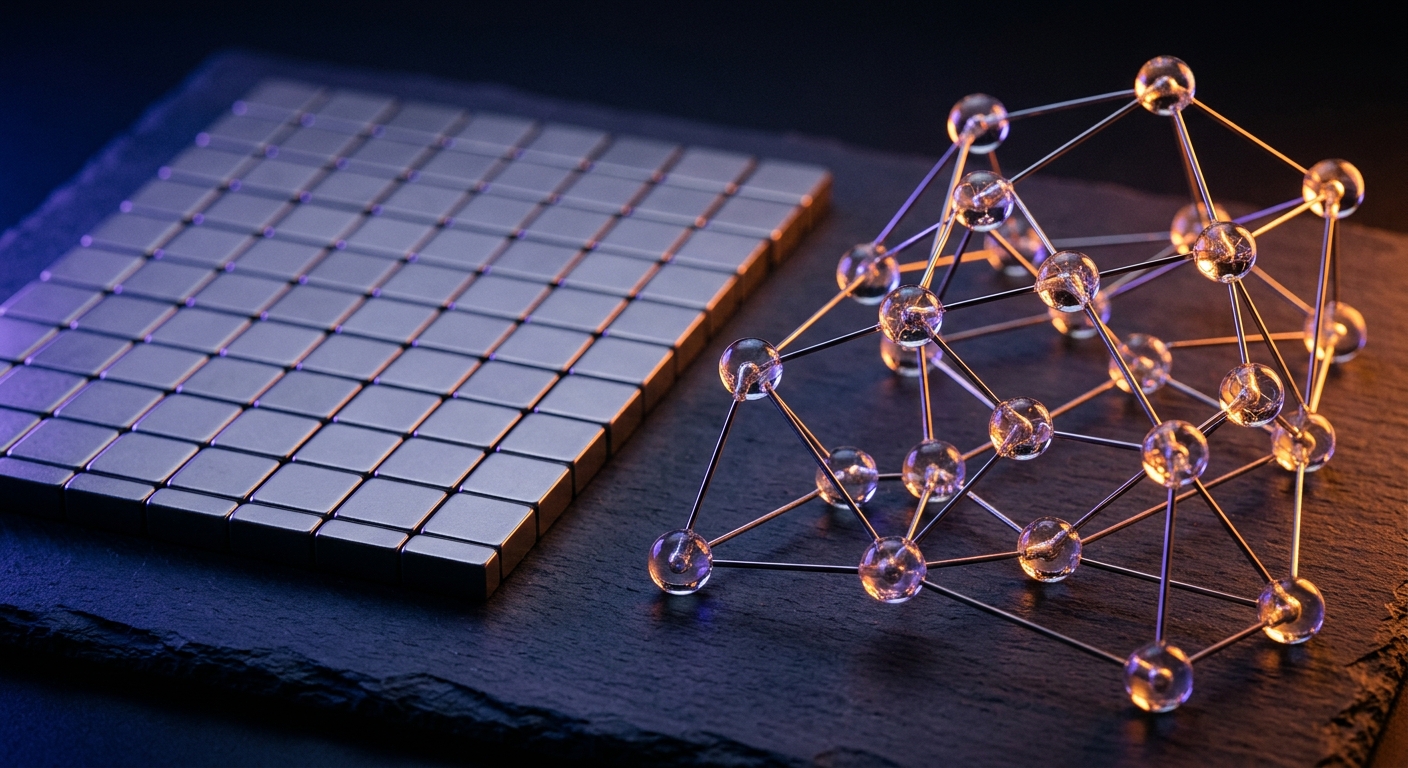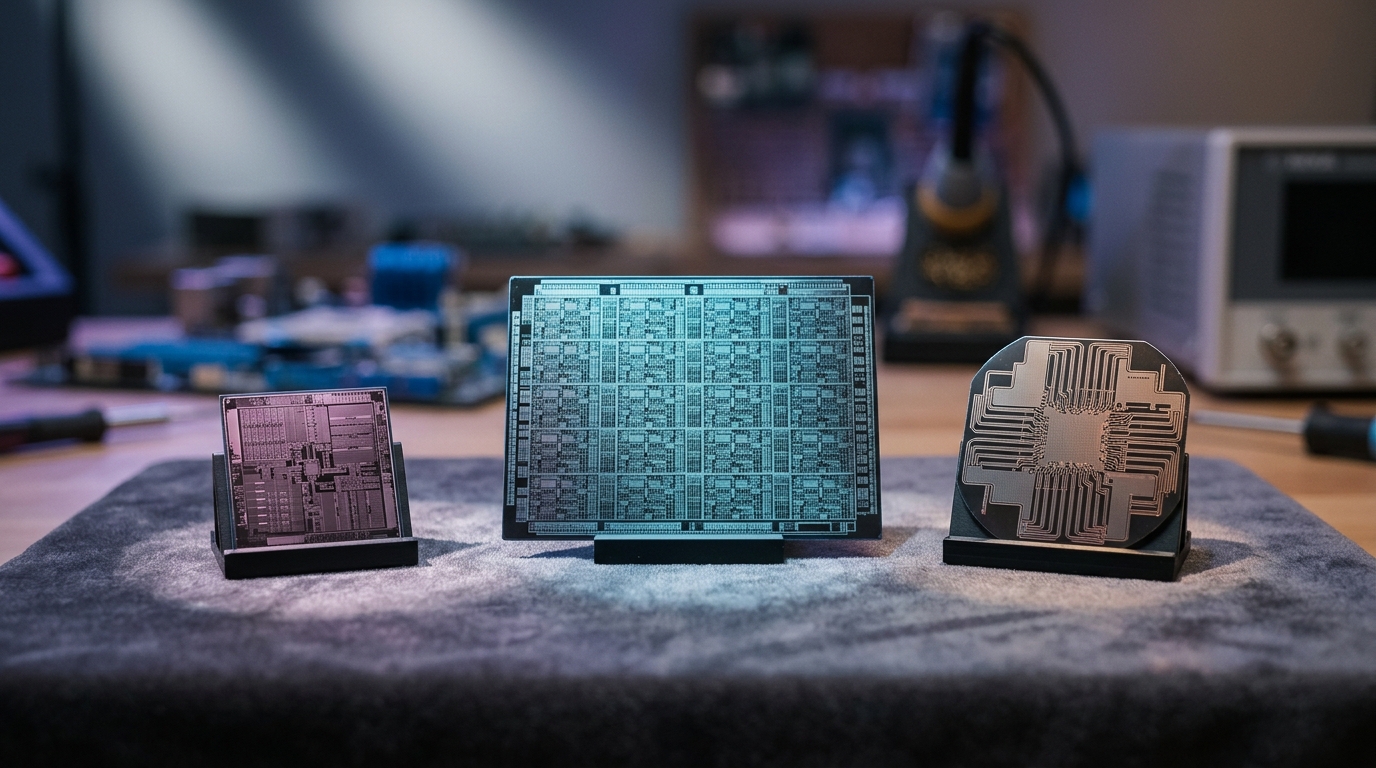
In early 2026, the AI landscape reached a critical inflection point: the primary bottleneck for production-grade applications is no longer model training capability, but inference speed, latency, and operational cost. If your application takes more than 200 milliseconds to start streaming a response, you are already losing users to faster, more responsive alternatives. This paradigm shift has triggered a fierce hardware war, moving us away from general-purpose GPUs toward hyper-specialized application-specific integrated circuits (ASICs). In this deep dive, we compare the top three contenders dominating the high-performance hardware market—Groq vs Cerebras vs SambaNova—to help you determine which platform provides the fastest LLM inference api 2026 for your production workloads.
While Nvidia's Hopper and Blackwell architectures remain the gold standard for training massive models, they are increasingly being challenged on the inference front. Specialized silicon startups have spent years designing architectures optimized purely for the sequential, autoregressive nature of Large Language Model (LLM) generation. This guide will dismantle the marketing hype, analyze raw hardware profiles, compare real-world benchmarks, and break down the total cost of ownership (TCO) for each platform.
The Battle for the Fastest LLM Inference API 2026
For years, enterprise software engineers relied on standard cloud GPU clusters (such as Nvidia A100s and H100s) to run LLM inference. However, GPUs are fundamentally designed for parallel graphics processing. LLM generation, by contrast, is highly sequential: the model outputs one token at a time, feeding that token back into the network to generate the next. This makes LLM inference highly memory-bandwidth bound rather than compute-bound.
Traditional GPU Bottleneck: [Compute Cores] <=====(High Latency Memory Bus)=====> [VRAM (HBM/GDDR)] ^ The Bottleneck
To solve this memory bottleneck, three companies have emerged with entirely unique hardware philosophies:
- Groq pioneered the Language Processing Unit (LPU), utilizing ultra-fast Static Random-Access Memory (SRAM) to eliminate memory latency entirely.
- Cerebras bypassed traditional chip packaging altogether with their Wafer-Scale Engine (WSE-3), building a single giant chip that houses an entire wafer's worth of compute and SRAM on a single piece of silicon.
- SambaNova engineered the Reconfigurable Dataflow Unit (RDU), utilizing a hybrid memory architecture of SRAM and High Bandwidth Memory (HBM3) to balance blazing speeds with massive model capacities.
As developers demand sub-second latency for agentic workflows, multi-agent negotiations, and real-time voice assistants, choosing the right inference provider has become a critical architectural decision. Let's look at how these architectures function under the hood.
Architecture Breakdown: LPU vs CS-3 Inference vs SN40L Reconfigurable Dataflow
Understanding the physical differences between LPU vs CS-3 inference and SambaNova's Reconfigurable Dataflow Unit is essential for predicting how they will scale with your models.
Groq: The Language Processing Unit (LPU)
Groq's LPU architecture is built on a simple, radical premise: eliminate dynamic scheduling and memory latency entirely. Traditional processors use complex hardware schedulers, branch predictors, and cache hierarchies to guess what instructions to execute next. Groq threw all of this out.
Instead, Groq uses a Tensor Streaming Processor (TSP) architecture where scheduling is handled entirely by the compiler. The compiler knows exactly where every byte of data is on the chip at any given nanosecond.
- Memory Type: 100% SRAM (Static RAM).
- Memory Capacity: ~230MB per chip.
- Memory Bandwidth: An astonishing ~80 Terabytes per second (TB/s) per chip.
- Execution Model: Deterministic. Because there is no dynamic scheduling or cache misses, every single execution run takes the exact same number of clock cycles.
Because 230MB is not nearly enough to hold a modern LLM (a quantized Llama 3 8B model requires at least 5-8GB of space), Groq links hundreds of LPUs together using a proprietary, ultra-low-latency optical interconnect. The model is spatially distributed across these chips, with data flowing sequentially from one chip to the next.
Cerebras: CS-3 and the Wafer-Scale Engine (WSE-3)
Cerebras takes the opposite physical approach to scaling. Instead of connecting hundreds of small chips together, Cerebras builds the largest single chip in the world.
+---------------------------------------+ | | | Cerebras WSE-3 | | (Single Giant Wafer) | | - 900,000 AI Cores | | - 44 Gigabytes of SRAM | | - 21 Petabytes/s Bandwidth | | | +---------------------------------------+
The Cerebras Wafer-Scale Engine 3 (WSE-3), which powers the CS-3 system, is a single 8.5 x 8.5-inch block of silicon. It contains 900,000 AI-optimized compute cores and 44GB of on-chip SRAM.
- Memory Type: On-chip SRAM.
- Memory Capacity: 44GB on a single wafer.
- Memory Bandwidth: 21 Petabytes per second (PB/s).
- Execution Model: Data-parallel and model-parallel execution within a single, massive piece of silicon.
By keeping the entire model (or large portions of it) on a single wafer, Cerebras avoids the physical latency of routing data across external circuit boards and optical cables. This allows the CS-3 to achieve unparalleled performance on models that fit within its 44GB memory limit, such as Llama 3 8B.
SambaNova: SN40L Reconfigurable Dataflow Unit (RDU)
SambaNova recognizes that while SRAM is incredibly fast, it is highly limited in capacity. To resolve the "SRAM wall," SambaNova's SN40L chip utilizes a three-tier memory hierarchy combined with a Reconfigurable Dataflow Architecture (RDA).
- Memory Type: Hybrid (On-chip SRAM + High Bandwidth Memory HBM3 + DDR5 DRAM).
- Memory Capacity: Up to 1.5 Terabytes (TB) of addressable memory per node (combining HBM3 and system memory).
- Memory Bandwidth: ~1.2 TB/s to several TB/s depending on the memory layer.
- Execution Model: Reconfigurable Dataflow. The chip contains a grid of compute units (PCUs) and memory units (PMUs). Instead of fetching instructions from memory sequentially, the compiler physically configures the chip's internal connections to match the graph structure of the neural network. Data flows through the chip like water through a custom-designed plumbing system.
This hybrid approach allows SambaNova to host massive models—like the full 405-billion parameter Llama 3 model—on a single node while maintaining high processing speeds.
| Architectural Metric | Groq LPU | Cerebras CS-3 (WSE-3) | SambaNova SN40L RDU |
|---|---|---|---|
| Primary Memory Type | On-Chip SRAM | On-Chip SRAM | Hybrid (SRAM + HBM3 + DDR5) |
| On-Chip Memory Capacity | 230 MB | 44 GB | ~520 MB SRAM + 64GB+ HBM3 |
| Memory Bandwidth | ~80 TB/s | 21,000 TB/s (21 PB/s) | ~1.2 - 2.0 TB/s (HBM) |
| Execution Paradigm | Deterministic Compiler-Scheduled | Wafer-Scale Core Grid | Reconfigurable Dataflow Grid |
| Scaling Method | Multi-chip optical clusters | Single wafer or multi-wafer | Multi-socket nodes with HBM3 |
| Ideal Model Range | 8B to 70B (clustered) | 8B to 70B (on-wafer) | 70B to 405B+ (high-capacity) |
Benchmark Showdown: Tokens Per Second and Latency
When evaluating the fastest LLM inference api 2026, we must look beyond marketing claims and examine standardized metrics: Tokens Per Second (TPS) per user stream, Time to First Token (TTFT), and performance under heavy concurrent loads.
Llama 3.1 8B Benchmarks
The 8-billion parameter model is the workhorse of real-time agentic systems. Because of its small size, it can fit entirely within high-speed memory arrays.
- Cerebras: Leads the pack with an astonishing 1,800 to 2,100 tokens per second for single-user streams. Its wafer-scale SRAM bandwidth allows it to process the model's weights almost instantly.
- SambaNova: Follows closely, delivering 1,000 to 1,200 tokens per second by routing the dataflow graph directly through its reconfigurable pipelines.
- Groq: Delivers a highly stable 800 to 850 tokens per second. While slower than Cerebras, Groq's TTFT remains exceptionally low and predictable.
Llama 3.1 70B Benchmarks
For more complex reasoning tasks, the 70B model is the standard. Here, the architectural differences begin to show their limits.
- SambaNova: Achieves 450 to 460 tokens per second on Llama 3.1 70B. Its hybrid HBM3/SRAM architecture scales exceptionally well to this size.
- Cerebras: Achieves 450 tokens per second by utilizing advanced model partitioning across the CS-3 wafer.
- Groq: Delivers 240 to 250 tokens per second. Because the 70B model must be split across dozens of individual LPU chips, the physical interconnect latency begins to impact the overall generation speed.
Llama 3.1 405B Benchmarks
For frontier-class reasoning, the 405B model is the ultimate test.
- SambaNova: Is the clear leader here, offering a production-ready API that streams Llama 3.1 405B at 110 to 140 tokens per second. This makes complex, multi-step reasoning agents highly viable in real-time contexts.
- Groq: Requires massive, multi-rack configurations of hundreds of LPUs to host the 405B model, making it highly complex and less cost-effective to run at scale.
- Cerebras: Primarily focuses on 8B and 70B models for public API access, as scaling the 405B model requires multi-wafer cluster configurations.
Llama 3.1 70B Inference Speed (Tokens/Sec):
SambaNova: ██████████████████████████████ 460 tps Cerebras: █████████████████████████████ 450 tps Groq LPU: ████████████████ 250 tps ==================================================
Time to First Token (TTFT)
TTFT is critical for user experience. It represents the time it takes for the system to process the system prompt and return the very first character.
- Groq excels in TTFT, often returning the first token in under 20-30 milliseconds due to its deterministic, compilation-level scheduling.
- Cerebras matches this with a TTFT of 30-40 milliseconds.
- SambaNova averages 40-60 milliseconds, as routing through the reconfigurable dataflow grid introduces a tiny fraction of initial setup latency.
Groq vs Cerebras vs SambaNova Pricing Models
Raw speed is meaningless if the API costs make your unit economics unsustainable. The Groq vs Cerebras vs SambaNova pricing landscape is highly competitive, with all three companies pricing their services significantly below traditional GPU cloud providers like AWS, Azure, or RunPod.
Let's compare the standard API pricing per million tokens in early 2026:
| Model & Provider | Input Price (per 1M tokens) | Output Price (per 1M tokens) | Average Latency profile |
|---|---|---|---|
| Llama 3.1 8B | |||
| Groq | $0.05 | $0.08 | Ultra-low (800+ tps) |
| Cerebras | $0.06 | $0.06 | Blazing (1,800+ tps) |
| SambaNova | $0.06 | $0.06 | High-speed (1,000+ tps) |
| Llama 3.1 70B | |||
| Groq | $0.59 | $0.79 | Medium-high (250 tps) |
| Cerebras | $0.60 | $0.60 | Extremely fast (450 tps) |
| SambaNova | $0.52 | $0.52 | Extremely fast (460 tps) |
| Llama 3.1 405B | |||
| SambaNova | $5.00 | $5.00 | Production-ready (110+ tps) |
| Groq | Custom / Enterprise | Custom / Enterprise | Highly Clustered |
| Cerebras | Custom / Enterprise | Custom / Enterprise | Multi-Wafer Clustered |
Analyzing the True Cost of Ownership (TCO)
When choosing an inference provider, consider these three billing factors:
- Concurrency Scaling: Cerebras and SambaNova maintain their high token-per-second rates even under heavy concurrent user loads. Groq's deterministic architecture requires reservation of physical chip pipelines; if you exceed your allocated concurrency limit, your requests may be queued, increasing latency.
- Context Window Pricing: Processing long context windows (e.g., 32k to 128k tokens) requires significant memory. SambaNova's hybrid HBM3 memory allows it to process large context windows more cost-effectively than Groq, which must spin up more physical LPU chips to hold the context memory.
- Dedicated Hosting vs. Pay-As-You-Go: If you are running high-volume enterprise applications (processing billions of tokens daily), renting dedicated physical systems (a dedicated Cerebras CS-3 or a SambaNova SN40L rack) offers a much lower cost per token than public APIs.
Developer Experience, API Compatibility, and Ecosystem Support
To build fast, you need tools that fit seamlessly into your existing stack. Fortunately, all three providers have adopted industry-standard interfaces.
OpenAI Compatibility
All three platforms provide drop-in replacements for the OpenAI Python and Node.js SDKs. You can migrate your existing application by simply changing the base_url and api_key.
Here is a practical example of how to implement SambaNova vs Groq or Cerebras in your code:
python import openai
To switch between providers, simply swap the configuration block below:
--- CONFIGURATION OPTIONS ---
1. Groq LPU
BASE_URL = "https://api.groq.com/openai/v1"
API_KEY = "gsk_your_groq_key_here"
MODEL = "llama3-70b-8192"
2. Cerebras CS-3
BASE_URL = "https://api.cerebras.ai/v1"
API_KEY = "cbr_your_cerebras_key_here"
MODEL = "llama3.1-70b"
3. SambaNova RDU
BASE_URL = "https://api.sambanova.ai/v1" API_KEY = "sn_your_sambanova_key_here" MODEL = "llama3.1-70b"
client = openai.OpenAI( base_url=BASE_URL, api_key=API_KEY, )
response = client.chat.completions.create( model=MODEL, messages=[ {"role": "system", "content": "You are an elite, high-performance developer assistant."}, {"role": "user", "content": "Explain how Reconfigurable Dataflow architectures optimize tensor operations."} ], stream=True )
for chunk in response: content = chunk.choices[0].delta.content if content: print(content, end="", flush=True)
Custom Model Compilation
If you are using standard open-source models (like Llama, Mistral, or Qwen), you can use the providers' public APIs instantly. However, if you have custom, fine-tuned weights, the compilation process varies significantly:
- SambaNova (SambaFlow SDK): Compiles PyTorch graphs directly. The compiler maps the operators onto the physical RDU grid. This is highly flexible and handles custom architectures well.
- Cerebras (Cerebras Software Platform): Features a highly mature compilation pipeline that integrates directly with PyTorch and TensorFlow. Because the entire wafer is a unified fabric, mapping custom models is straightforward.
- Groq (GroqWare Suite): The compiler must plan instruction timing down to the exact clock cycle. For custom or heavily modified model architectures, compiling for Groq's LPU can be a complex and time-consuming engineering task.
Hardware Limits: Memory Capacity vs Speed Tradeoffs
Every chip architecture is bound by the laws of physics. Understanding these hardware limitations prevents architectural failures when scaling your application.
           THE TRADEOFF TRIANGLE

              [Speed (SRAM)]
               /        \
              /          \
             /            \
            /              \
[Determinism (Groq)] -------- [Capacity (SambaNova HBM3)]
The SRAM Capacity Wall (Groq & Cerebras)
SRAM is the fastest memory available, but it is physically large and expensive to manufacture.
- Groq's 230MB limit per chip means that to run a 70B model, you must use a cluster of dozens of LPUs. If one chip in the cluster fails, the entire pipeline can halt. This makes physical system maintenance and interconnect reliability critical points of failure.
- Cerebras's 44GB limit on a single wafer easily hosts an 8B model. However, a 70B model exceeds 44GB when run in FP16 precision. To fit larger models, Cerebras uses advanced quantization (e.g., INT8 or INT4) or clusters multiple CS-3 systems together.
The Memory Bandwidth Bottleneck (SambaNova)
SambaNova's use of HBM3 allows it to easily host massive models (up to 405B and beyond) on a single system. However, HBM3 is inherently slower than SRAM.
While SambaNova uses its Reconfigurable Dataflow architecture to minimize memory access overhead, its peak speed on smaller models (like Llama 3 8B) is lower than Cerebras's pure-SRAM wafer-scale approach. It represents a calculated trade-off: massive model capacity and high context windows in exchange for slightly lower peak speed.
Choosing Your Stack: Use Cases and Recommendations
To help you make the right architectural choice for your engineering team, we have broken down the optimal use cases for each provider.
Choose Groq If:
- You need absolute deterministic latency: If you are building high-frequency trading systems, real-time robotics controllers, or industrial automation pipelines where a latency spike of even 10ms is catastrophic.
- You are running highly targeted 8B models: Where the entire model fits easily across a small, cost-effective cluster of LPUs.
- You require ultra-low TTFT: For highly interactive conversational interfaces where the immediate visual feedback of the first token is paramount.
Choose Cerebras If:
- You want the fastest LLM inference api 2026 for 8B and 70B models: If you are building multi-agent systems, real-time voice translation apps, or agentic search engines that require thousands of tokens generated in milliseconds.
- You want maximum throughput per stream: If your application generates long-form text, code files, or complex data structures where high output speed is the primary bottleneck.
- You want simple scaling without multi-chip networking bottlenecks: For models that fit easily within the 44GB wafer envelope.
Choose SambaNova If:
- You are scaling to ultra-large models (Llama 3 405B): If your application requires state-of-the-art reasoning, complex logic, or advanced coding capabilities that only 400B+ parameter models can provide.
- You need massive context windows: If you are processing long legal documents, entire code repositories, or large financial analyses that require 32k, 64k, or 128k context lengths.
- You want a balanced, cost-efficient enterprise deployment: If you need to run a mix of model sizes (8B, 70B, 405B) under heavy concurrent user loads with highly competitive pricing.
Key Takeaways: TL;DR
- Cerebras is the absolute speed champion for small-to-medium models (Llama 3 8B at 1,800+ tps), leveraging a massive 44GB SRAM wafer-scale design.
- SambaNova is the enterprise workhorse, offering the best blend of speed, cost, and capacity, with production-ready APIs for Llama 3 405B at 110+ tps.
- Groq offers unparalleled, deterministic time-to-first-token (TTFT) and high reliability, but faces scaling challenges with larger models due to its ultra-small (230MB) per-chip SRAM capacity.
- All three providers offer OpenAI-compatible APIs, making integration and multi-provider fallback strategies simple to implement.
- Pricing is highly competitive across all three platforms, representing a fraction of the cost of traditional GPU cloud instances.
Frequently Asked Questions
Is Groq faster than Cerebras?
No, for standard LLM inference workloads, Cerebras is faster than Groq. In standardized benchmarks for Llama 3.1 8B, Cerebras delivers over 1,800 tokens per second, while Groq delivers approximately 800 tokens per second. Cerebras achieves this by keeping the entire model on a single massive wafer, bypassing the multi-chip interconnect latency that Groq faces.
What is LPU vs CS-3 inference?
LPU vs CS-3 inference represents two different approaches to solving memory latency. Groq's LPU (Language Processing Unit) links hundreds of small chips together, each containing 230MB of SRAM, managed by a deterministic compiler. Cerebras's CS-3 uses a single, giant Wafer-Scale Engine containing 44GB of SRAM and 900,000 cores on a single piece of silicon, eliminating the need to route data between separate chips.
Why is SambaNova better for large models like Llama 3 405B?
SambaNova is better suited for massive models because of its hybrid memory architecture. While Groq and Cerebras rely almost entirely on expensive, space-limited SRAM, SambaNova's SN40L chip integrates high-capacity HBM3 and DDR5 memory. This allows it to host massive models and support large context windows on a single node at highly competitive prices.
Are these APIs drop-in replacements for OpenAI?
Yes, all three providers offer fully OpenAI-compatible REST APIs. You can use your existing OpenAI SDKs in Python, Node.js, or Go by simply updating the base_url and pointing to their respective models and API keys.
How does compiler-scheduled execution work on Groq?
Groq's compiler manages all hardware execution paths. It plans exactly when data moves between the compute cores and memory on a nanosecond level. This removes the need for dynamic physical components like branch predictors and cache controllers, resulting in predictable, deterministic latency.
Conclusion
The specialized silicon revolution has permanently transformed the AI landscape. By moving away from general-purpose GPUs and adopting dedicated architectures like Groq's LPU, Cerebras's Wafer-Scale Engine, and SambaNova's Reconfigurable Dataflow Unit, developers can build faster, more responsive, and highly cost-effective AI applications.
For teams building real-time, highly interactive agentic workflows in 2026, the choice comes down to your model size and memory requirements. If you are focused on smaller, ultra-fast models, Cerebras delivers unmatched performance. If you need to scale to massive, frontier-class models like Llama 3 405B with large context windows, SambaNova is the industry standard. If your primary requirement is absolute deterministic latency and ultra-low time-to-first-token, Groq remains an excellent choice.
To optimize your application's performance, sign up for developer keys on each platform and run your own latency tests. If you are looking to build and scale your AI engineering stack, check out our collection of developer productivity tools at CodeBrewTools.