For a Treasury department or an investment firm managing a €1 billion portfolio, the current economic landscape is a minefield of diminishing returns. Traditional optimization models are hitting a wall, struggling to balance complex ESG mandates, rigid IRRBB requirements, and tightening liquidity limits without sacrificing yield. Quantum computing in finance is no longer a science fiction concept or a niche experiment; it has evolved into a 2026 reality of "Computational Economics." By shifting from 20th-century "Mean-Variance" tools to 21st-century quantum-inspired algorithms, institutions are now unlocking between €1.8M and €6.2M in annual efficiency gains—not by increasing risk, but by optimizing the risk they already carry within strict regulatory guardrails.
The 2026 Milestone: From Lab to Ledger
In 2026, the global quantum computing market has hit a critical inflection point, reaching a valuation of approximately $2 billion. We have officially entered the era of "Quantum Utility," where the focus has shifted from increasing qubit counts to achieving verifiable business outcomes. For financial institutions, this means the impact of quantum computing on financial services is now measured in basis points (bps) and liquidated gains rather than academic citations.
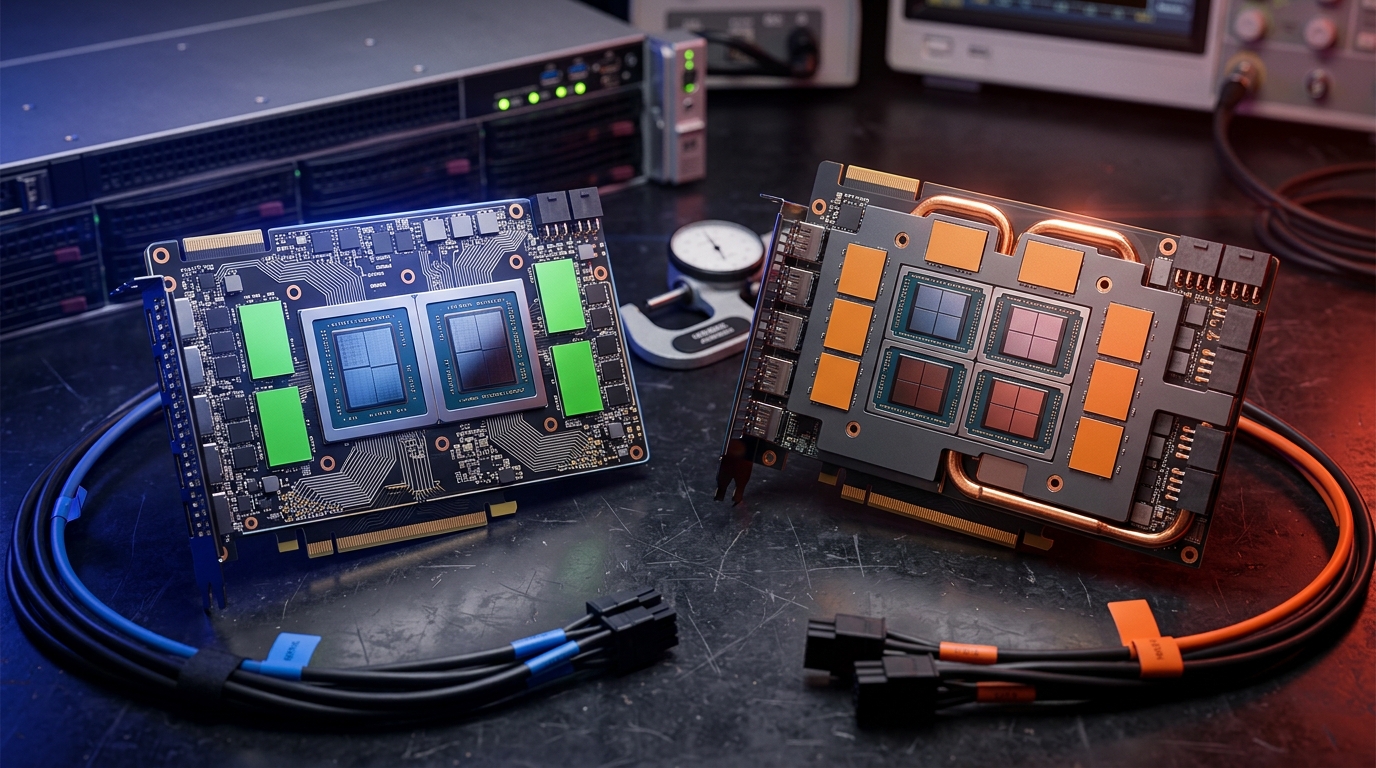
As of February 2026, pure-play quantum companies like IonQ, Rigetti, and D-Wave have transitioned from speculative tech stocks to infrastructure providers. Leading firms are utilizing Hybrid Quantum-Classical Computing—a model where traditional CPUs handle data ingestion while Quantum Processing Units (QPUs) solve high-dimensionality optimization problems. This hybrid approach is the backbone of modern fintech, allowing banks to maintain their legacy stacks while outsourcing the most complex mathematical bottlenecks to quantum accelerators.
Quantum Algorithms for Portfolio Optimization: Unlocking the €6.2M Alpha
Traditional portfolio management relies heavily on the Markowitz Mean-Variance model, which struggles when the number of constraints (ESG scores, liquidity buckets, Basel IV limits) exceeds the capacity of classical solvers. Quantum algorithms for portfolio optimization solve this by mapping the optimization problem into a Hamiltonian form, allowing the system to explore the entire possibility space simultaneously.
For a standard €1 billion "Depot A" portfolio—focused on sovereigns, covered bonds, and high-grade corporates—the monetary added value is staggering. Research from the S+P Governance Hub suggests that quantum-inspired optimization can generate an annual effect of 18 to 62 basis points.
Real-World ROI for a €1 Billion Portfolio
| Area of Optimization | Estimated Annual Effect (bps) | Monetary Value (on €1B) |
|---|---|---|
| Strategic Asset Allocation (SAA) | 5 – 15 bps | €0.5M – €1.5M |
| Tactical Timing | 3 – 10 bps | €0.3M – €1.0M |
| IRRBB / Interest Book | 5 – 15 bps | €0.5M – €1.5M |
| Credit/Spread Steering | 3 – 8 bps | €0.3M – €0.8M |
| Rebalancing Efficiency | 1 – 2 bps | €0.1M – €0.2M |
| TOTAL POTENTIAL | 18 – 62 bps | €1.8M – €6.2M |
"Quantum-inspired algorithms are not about science fiction or autonomous trading bots. They are about Computational Economics. This is how you realistically unlock millions in gains by optimizing the risk you already have within current regulatory guardrails." — Achim Schulz, Lead Analyst at S+P Governance Hub.
Revolutionizing Risk: Monte Carlo Simulations in Quantum Finance
Risk assessment is the heartbeat of investment banking, yet classical Monte Carlo simulations in quantum finance are notoriously slow and computationally expensive. Traditional simulations require thousands of iterations to reach a converged result for Value-at-Risk (VaR) or Credit Valuation Adjustment (CVA).
Quantum computers offer a quadratic speedup for these simulations via Quantum Amplitude Estimation (QAE). In 2026, this allows Tier-1 banks to move from "overnight" risk reporting to "intra-day" or even "near-real-time" risk steering.
Why QAE Matters for 2026 Risk Management:
- Precision Calibration: Finer calibration between duration, curve shape, and hedging instruments during interest rate pivots.
- Stress Scenarios: The ability to run complex, multi-variable stress tests (e.g., simultaneous energy crises and rate hikes) in seconds rather than hours.
- Spread Management: Optimizing correlations for Corporate/Covered Bond sub-portfolios, typically yielding an additional 10 to 25 bps in the credit book.
Investment Banking Applications: Fraud, Timing, and Arbitrage
Beyond the back office, quantum computing applications in investment banking are transforming the front-line trading floor. In high-frequency environments, the advantage isn't just about speed—it's about the quality of the decision in a high-noise environment.
High-Impact Use Cases:
- Fraud Detection: Quantum-enhanced machine learning models can analyze vast, interconnected datasets to identify fraudulent patterns that classical AI misses. By processing features in a higher-dimensional "Hilbert space," banks can reduce false positives while catching sophisticated money laundering schemes.
- Arbitrage Timing: Identifying micro-inefficiencies across global markets requires solving complex combinatorial problems. Quantum annealing is particularly effective at finding the "global minimum" in these fast-moving landscapes.
- Derivative Pricing: Pricing complex options with path-dependent features is a primary target for quantum speedup. In 2026, firms using Rigetti’s chiplet-based architecture or IonQ’s trapped-ion systems are seeing significant reductions in the compute-cost of pricing exotic instruments.
The Great Decoupling: Quantum as a Hedge Against Crypto Volatility
A surprising trend in 2026 is the symbiotic yet adversarial relationship between quantum computing and the cryptocurrency market. Following Treasury Secretary Bessent’s 2026 policy reversal—which integrated digital assets into federal rules—the market saw a massive influx of institutional capital into "Hybrid Innovation Funds."
However, these funds face a structural risk: Quantum decryption. The capability of quantum systems to break the Elliptic Curve Digital Signature Algorithm (ECDSA) poses an existential threat to Bitcoin and other public-key assets.
The Institutional "Pair Trade":
Institutional risk managers are now using quantum stocks (like $IONQ or $RGTI) as a structural hedge against their crypto exposure. When crypto liquidity dries up or security fears rise, these managers rotate into quantum pure-plays. This "Great Decoupling" means that quantum technology is no longer just a tech play; it is a macro-volatility hedge for the digital asset era.
Fintech Quantum Security: Navigating the Post-Quantum Cryptography Shift
As quantum hardware matures, the "harvest now, decrypt later" threat has forced a massive migration toward fintech quantum security solutions. The 2026 regulatory landscape, influenced by the Digital Operational Resilience Act (DORA) and ESMA guidelines, now mandates that financial institutions have a clear roadmap for Post-Quantum Cryptography (PQC).
Security Implementation Strategies:
- Quantum Key Distribution (QKD): Using the principles of quantum mechanics (entanglement) to create unbreakable communication channels. This is currently being piloted for high-value inter-bank transfers.
- Quantum-Resistant Algorithms: Replacing vulnerable RSA and ECC encryption with lattice-based or hash-based cryptography that can withstand Shor’s algorithm.
- Quantum-Enhanced Threat Detection: Using quantum AI to monitor network traffic for anomalies, identifying potential breaches before they can manifest in the ledger.
Building the ROI Strategy: Reinvestment and the 2026 Tax Cliff
Investing in quantum computing requires a "Long-Game" mindset. According to Calcix research, 2026 marks the transition from speculative venture funding to industrial yield generation. However, the "Tax Cliff" remains a significant hurdle for high-growth tech portfolios.
The 2026 ROI Blueprint:
- R&D Reinvestment: In the quantum sector, companies often require bridge rounds to move from 1,000-qubit systems to the 10,000-qubit threshold. Investors must participate in follow-on funding to avoid dilution.
- Tax-Loss Harvesting: High-growth quantum stocks can trigger massive capital gains. A "Core-and-Satellite" strategy is recommended: keep foundational hardware stocks in tax-advantaged accounts while using taxable accounts for R&D-focused firms that qualify for deep-tech tax credits.
- Diversification Across the Stack: Don't just bet on one hardware winner. Spread investments across the "Quantum Stack":
- Hardware: (Cryogenic cooling, lasers, trapped ions).
- Software: (Quantum-ready algorithms, middleware).
- End-Users: (Logistics and pharma companies already seeing ROI).
Regulatory Compliance: MaRisk, DORA, and Human-in-the-Loop Governance
Quantum computing must not move faster than governance allows. In the context of "Depot A" management, quantum methods serve as Decision Support Systems, not autonomous executioners. This distinction is critical for remaining compliant with MaRisk (Minimum Requirements for Risk Management) and ICAAP logic.
Governance Checklist for 2026:
- Model Validation: Quantum-inspired models must be backtested against classical optimizers (like Mean-Variance) to ensure they consistently outperform under identical constraints.
- Explainability: Results must be explainable in ALCO (Asset-Liability Committee) terms: duration, convexity, ESG scores, and liquidity buckets. A "black box" quantum result will not pass an audit.
- Human Approval: All quantum-generated trade recommendations must undergo human review and ALCO approval to mitigate model risk.
Key Takeaways
- Monetary Impact: A €1B portfolio can see €1.8M to €6.2M in annual gains through quantum-inspired optimization.
- Primary Use Cases: Strategic Asset Allocation (SAA), Interest Rate Risk Management (IRRBB), and real-time Monte Carlo simulations.
- The Hedge: Quantum stocks are increasingly used as a hedge against the security risks inherent in cryptocurrency portfolios.
- Security Mandate: 2026 regulations (DORA/MaRisk) require a transition to Post-Quantum Cryptography (PQC).
- Hybrid Approach: The most successful 2026 implementations use a hybrid model, combining classical data processing with quantum accelerators.
- ROI Timeline: Quantum is a 10-year infrastructure play, not a short-term lottery ticket; focus on the "picks and shovels" of the industry.
Frequently Asked Questions
How is quantum computing in finance different from traditional algorithmic trading?
Traditional algorithmic trading uses classical logic (if-then statements) and statistical models on standard CPUs. Quantum computing in finance utilizes quantum bits (qubits) to solve complex combinatorial problems—like finding the perfect asset mix among millions of variables—that would take classical computers years to calculate.
Can quantum computing break current banking encryption?
Theoretically, yes. A sufficiently powerful quantum computer could use Shor’s algorithm to break RSA and ECC encryption. However, in 2026, the industry is already migrating to fintech quantum security solutions and quantum-resistant algorithms to neutralize this threat before it becomes viable.
What are the best quantum algorithms for portfolio optimization?
Currently, the most effective are Quantum Approximate Optimization Algorithms (QAOA) and Variational Quantum Eigensolvers (VQE). These are often used in hybrid setups to solve constrained optimization problems that include ESG, liquidity, and regulatory limits.
Is it too late to invest in quantum computing stocks?
No. While 2025 saw explosive growth, 2026 is considered the "Quantum Utility" phase. This is where companies are beginning to show real revenue and commercial contracts. Analysts suggest looking for companies with deep-tech patents and verifiable partnerships with national labs.
What is the impact of quantum computing on financial services' ESG goals?
Quantum computing allows for the simultaneous balancing of hundreds of ESG constraints without sacrificing yield. It can model complex climate risks and social impact scores much more accurately than classical linear models, making it a vital tool for sustainable finance.
Conclusion
For banks and investment firms, quantum computing in finance is no longer a disruptive upheaval—it is an economically rational efficiency lever. The benefit is not derived from taking higher risks, but from a superior utilization of existing regulatory and market leeway. As we move through 2026, the gap between "Quantum-Ready" institutions and laggards will widen, measured not just in technological prestige, but in millions of euros of annual yield. To remain competitive and "audit-proof" in an increasingly complex EU regulatory landscape, the transition to quantum-inspired decision support is no longer optional—it is a strategic necessity. Start by auditing your current optimization bottlenecks and exploring hybrid pilot programs to ensure your institution remains at the forefront of the computational economics revolution.