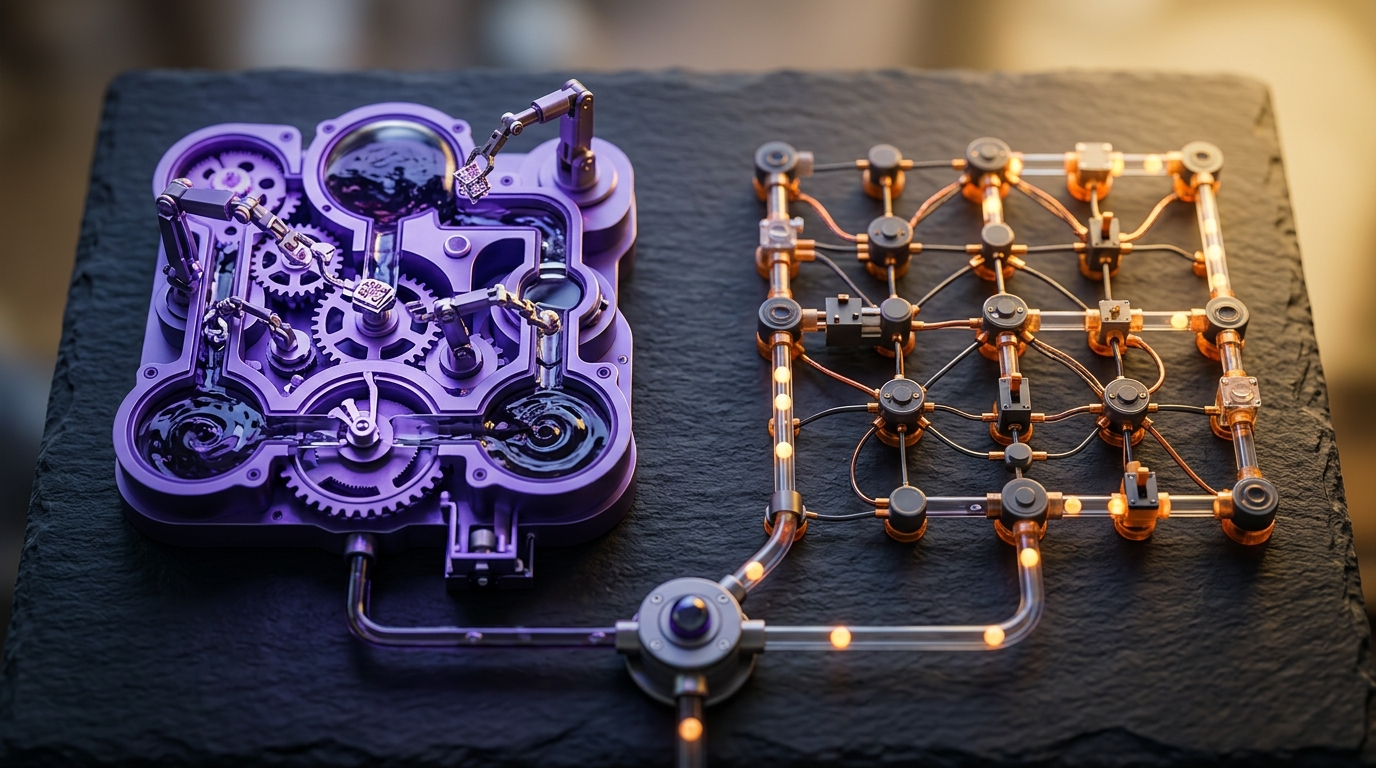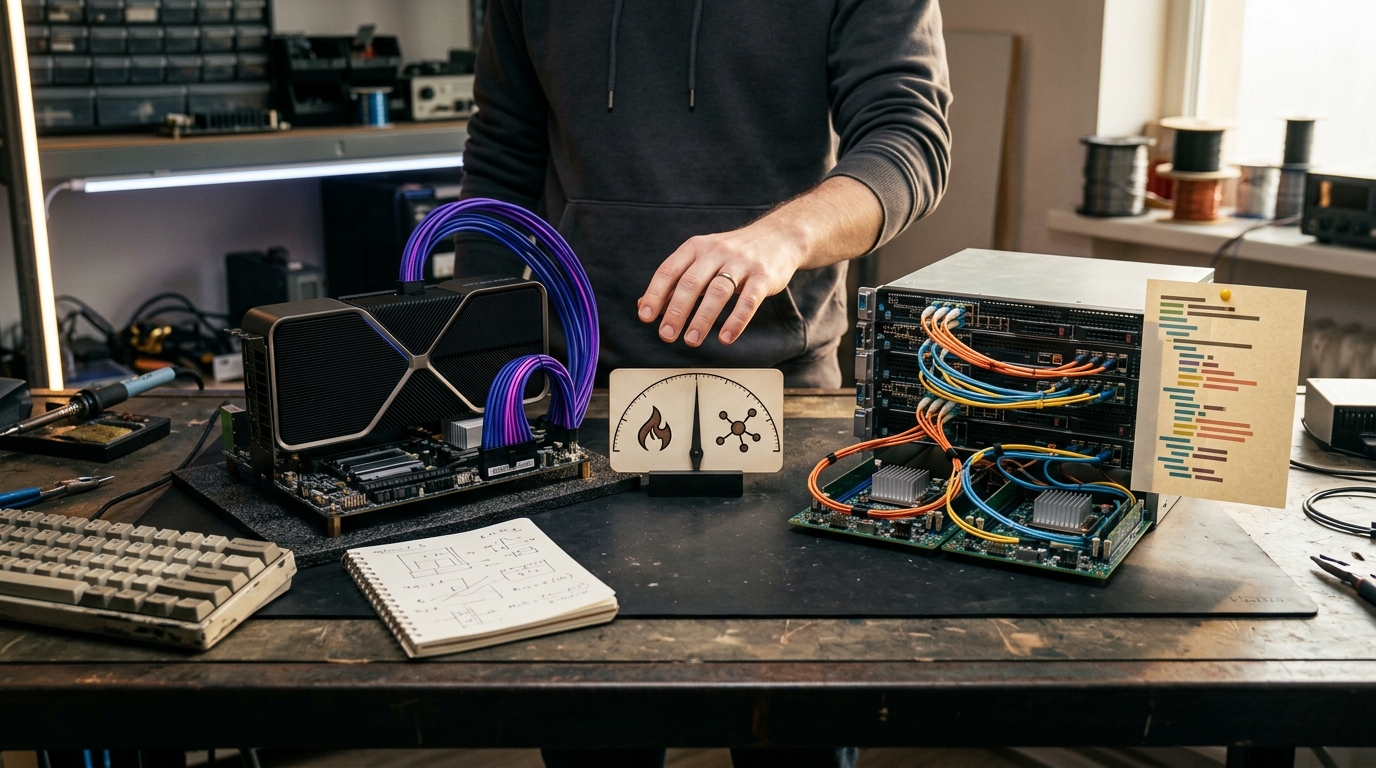
In 2026, the landscape of open-source artificial intelligence is evolving faster than ever. When choosing the best llm fine tuning framework for your engineering stack, the debate inevitably boils down to one critical matchup: unsloth vs axolotl. Whether you are looking to run highly cost-effective single-GPU experiments or scale massive training runs across distributed clusters, selecting the right tool is paramount for developer productivity and cost control. Both frameworks have matured into industry-standard powerhouses, but they serve drastically different operational philosophies, hardware setups, and scaling requirements.
In this comprehensive architectural deep dive, we will dissect the performance, resource footprints, ease of use, and production readiness of both Unsloth and Axolotl. By the end of this guide, you will know exactly which framework to integrate into your MLOps pipeline to fine-tune state-of-the-art models like Llama 4 and DeepSeek-R1.
The State of LLM Fine-Tuning in 2026
Fine-tuning large language models has transitioned from a highly specialized research task to a core engineering requirement for modern enterprises. With the arrival of next-generation architectures like Meta's Llama 4 series and DeepSeek's advanced reasoning models, off-the-shelf LLMs are no longer sufficient for specialized domain tasks. Organizations require models that understand custom APIs, proprietary databases, and highly specific industry jargon.
However, the infrastructure costs associated with training these models can quickly spiral out of control. A single inefficient training run can waste thousands of dollars in cloud GPU compute. This financial reality has driven the engineering community to optimize training pipelines down to the metal.
In 2026, the primary objective of any fine-tuning framework is clear: maximize token throughput while minimizing VRAM footprint. Frameworks must leverage cutting-edge optimizations such as FlashAttention-3, quantization-aware training, and advanced sequence packing. As we evaluate the unsloth vs axolotl paradigm, we are comparing two distinct approaches to solving this fundamental optimization problem.
Unsloth: Speed, Memory Efficiency, and Single-GPU Dominance
Unsloth, developed by Daniel and Michael Han, has taken the AI developer community by storm by offering unprecedented speed and memory efficiency on single-GPU setups. The core philosophy of Unsloth is simple: rewrite the slow, mathematically inefficient parts of PyTorch's autograd engine with custom, highly optimized OpenAI Triton kernels.
+-------------------------------------------------------------+ | Unsloth Architecture | | | | +------------------+ Manual Backprop +--------------+ | | | PyTorch Model | ------------------> | Triton Kerns | | | +------------------+ +--------------+ | | | | | | v v | | Standard Autograd (Slow) Custom Gradients (Fast) | +-------------------------------------------------------------+
By hand-writing the backward pass mathematical equations and implementing them directly in Triton, Unsloth bypasses the massive overhead of PyTorch's dynamic computational graph. This allows the framework to achieve up to 2x to 5x faster training speeds and reduce VRAM consumption by up to 80% without any loss in model accuracy.
Key Highlights of Unsloth in 2026:
- Zero-Loss Accuracy: Unlike traditional approximation techniques, Unsloth's mathematical optimizations are completely lossless. The weights of your fine-tuned model are identical to those trained via standard PyTorch, only computed much faster.
- Native QLoRA & LoRA Support: Unsloth is highly optimized for Parameter-Efficient Fine-Tuning (PEFT). It allows developers to load models in 4-bit or 8-bit quantization and perform ultra-fast QLoRA on consumer hardware like a single RTX 4090 or a budget-friendly cloud instance.
- Seamless Hugging Face Integration: Unsloth integrates natively with the Hugging Face ecosystem, including
transformers,peft, andTRL(Transformer Reinforcement Learning). This makes it incredibly easy to adopt if you are already familiar with the standard Python AI stack. - Unsloth DeepSeek R1 Fine Tuning: In 2026, Unsloth has emerged as the premier framework for unsloth deepseek r1 fine tuning, enabling developers to fine-tune reasoning models on single-node setups with minimal VRAM overhead.
Axolotl: The Multi-GPU, Multi-Node Swiss Army Knife
While Unsloth focuses on hyper-optimizing single-GPU training, Axolotl takes a completely different approach. Axolotl is a highly versatile, configuration-driven orchestration framework designed to streamline LLM training across complex, distributed multi-GPU and multi-node environments.
+-------------------------------------------------------------+ | Axolotl Architecture | | | | YAML Config File ===> Axolotl Orchestrator Engine | | | | | +------------------------+------------------------+ | | | | | | | v v v | | PyTorch FSDP DeepSpeed ZeRO Megatron-LM | | (Multi-GPU) (Multi-Node) (Model Parallel)| +-------------------------------------------------------------+
Axolotl acts as a unified abstraction layer over several underlying technologies, including PyTorch FSDP (Fully Sharded Data Parallel), Microsoft DeepSpeed, Hugging Face Accelerate, and FlashAttention. Instead of writing verbose Python scripts, developers define their entire training run—from dataset preprocessing to model hyper-parameters—inside a single, highly structured YAML configuration file.
Key Highlights of Axolotl in 2026:
- Unmatched Scalability: Axolotl shines in enterprise environments where models need to be sharded across multiple H100, A100, or next-generation B200 GPUs. It handles the complex setup of FSDP and DeepSpeed ZeRO-3 behind the scenes.
- Comprehensive Dataset Support: Axolotl native supports a massive array of dataset formats and tokenization schemes, including Alpaca, ShareGPT, and custom conversational schemas. It also includes advanced sequence packing (multipack) to eliminate padding tokens and maximize compute efficiency.
- Extensive Feature Set: Beyond standard Supervised Fine-Tuning (SFT), Axolotl supports direct preference optimization (DPO), Kahneman-Tversky Optimization (KTO), and reward modeling out of the box.
- Axolotl Fine Tuning Guide: The community-driven axolotl fine tuning guide and documentation make it the go-to platform for reproducible, production-grade training pipelines that can be checked directly into Git repositories.
Unsloth vs Axolotl Performance: Benchmarks and Memory Footprints
To truly understand the unsloth vs axolotl performance trade-offs, we must evaluate them across various hardware configurations and model sizes. The table below outlines how these two frameworks compare across critical operational metrics in 2026.
| Feature / Metric | Unsloth (Single-GPU Target) | Axolotl (Multi-GPU Target) |
|---|---|---|
| Primary Optimization Target | Compute efficiency & Triton kernels | Distributed scaling & Orchestration |
| VRAM Consumption | Extremely Low (Fits 70B on single 80GB GPU) | Moderate to High (Requires sharding) |
| Training Speed (Single-GPU) | 2x - 5x Faster than standard PyTorch | Standard to Fast (Highly dependent on config) |
| Multi-GPU Scaling | Limited (Supports multi-GPU SFT but less optimized) | Excellent (Native FSDP, DeepSpeed, Megatron) |
| Configuration Style | Imperative Python Code | Declarative YAML Configuration |
| Sequence Packing | Supported natively | Highly optimized (Multipack / Flash-Attention) |
| Supported Architectures | Llama 4, Mistral, Gemma, DeepSeek-R1 | Virtually all Hugging Face models |
| Setup Complexity | Very Low (Pip install and run) | Moderate (Requires configuring accelerate/deepspeed) |
Analyzing the Performance Trade-offs
If your primary constraint is hardware availability, Unsloth is the clear winner. For example, performing unsloth deepseek r1 fine tuning on a 1.5B or 8B parameter model can easily be done on a local workstation or a single cheap cloud GPU (like an L4 or RTX 4090) without running out of memory. Unsloth's memory-saving techniques mean you can use larger batch sizes and sequence lengths (up to 32k or even 64k tokens) on consumer hardware.
On the other hand, if you are an enterprise team with access to a cluster of 8x H100s and need to fine-tune a massive 405B Llama 4 model, Axolotl is your best option. Unsloth's specialized Triton kernels are heavily optimized for single-GPU execution paths. When scaling horizontally across multiple nodes, the communication overhead between GPUs (all-reduce operations) becomes the primary bottleneck. Axolotl's deep integration with PyTorch FSDP and DeepSpeed ZeRO-3 is specifically engineered to handle this inter-GPU communication efficiently, making it the best llm fine tuning framework for large-scale distributed runs.
Step-by-Step Guide: How to Fine-Tune Llama 4 and DeepSeek-R1
Let's look at practical implementations of both frameworks. We will explore how to set up a training run for next-generation models using Python for Unsloth and a YAML configuration for Axolotl.
How to Fine-Tune Llama 4 with Unsloth
This script demonstrates how to load a model, configure PEFT (LoRA) parameters, format a dataset, and execute the training loop using Unsloth's optimized API. This approach is ideal for developers seeking a quick, programmatic setup to learn how to fine tune llama 4 efficiently.
python
Import Unsloth's fast language model and training utilities
from unsloth import FastLanguageModel import torch from datasets import load_dataset from trl import SFTTrainer from transformers import TrainingArguments
1. Configuration Parameters
max_seq_length = 4096 # Supports any sequence length natively dtype = None # None auto-detects (Float16/Bfloat16) load_in_4bit = True # Use 4-bit quantization for low VRAM footprint
2. Load the Model and Tokenizer
model, tokenizer = FastLanguageModel.from_pretrained( model_name = "meta-llama/Llama-4-8B-Instruct", max_seq_length = max_seq_length, dtype = dtype, load_in_4bit = load_in_4bit, # token = "your_hf_token" # Add your Hugging Face token here if needed )
3. Apply Unsloth's Optimized PEFT (LoRA) Target Modules
model = FastLanguageModel.get_peft_model( model, r = 16, # LoRA rank target_modules = ["q_proj", "k_proj", "v_proj", "o_proj", "gate_proj", "up_proj", "down_proj"], lora_alpha = 16, lora_dropout = 0, # Optimized to 0 for maximum speed bias = "none", # Optimized to "none" use_gradient_checkpointing = "unsloth", # Ultra-efficient checkpointing random_state = 3407, use_rslora = False, loftq_config = None, )
4. Prepare the Dataset (Alpaca format example)
alpaca_prompt = """Below is an instruction that describes a task. Write a response that appropriately completes the request.
Instruction:
{}
Response:
{}"""
def format_prompts(examples): instructions = examples["instruction"] outputs = examples["output"] texts = [] for instruction, output in zip(instructions, outputs): text = alpaca_prompt.format(instruction, output) texts.append(text) return { "text" : texts, }
dataset = load_dataset("tatsu-lab/alpaca", split = "train") dataset = dataset.map(format_prompts, batched = True)
5. Initialize the SFTTrainer
trainer = SFTTrainer( model = model, tokenizer = tokenizer, train_dataset = dataset, dataset_text_field = "text", max_seq_length = max_seq_length, dataset_num_proc = 2, packing = False, # Can set to True for significantly faster training on long sequences args = TrainingArguments( per_device_train_batch_size = 2, gradient_accumulation_steps = 4, warmup_steps = 5, max_steps = 60, learning_rate = 2e-4, fp16 = not torch.cuda.is_bf16_supported(), bf16 = torch.cuda.is_bf16_supported(), logging_steps = 1, output_dir = "outputs", ), )
6. Execute Training
trainer_stats = trainer.train() print(f"Training finished! Peak VRAM used: {torch.cuda.max_memory_allocated() / 1024**3:.2f} GB")
How to Fine-Tune DeepSeek-R1 with Axolotl
Axolotl relies on a structured YAML file to manage the training run. This declarative approach ensures that your experiments are highly reproducible and easy to track in version control systems. Below is an axolotl fine tuning guide configuration file optimized for fine-tuning DeepSeek-R1 on a multi-GPU cluster using PyTorch FSDP.
yaml
axolotl_deepseek_r1.yaml
1. Model Configuration
base_model: deepseek-ai/DeepSeek-R1-Distill-Llama-8B model_type: LlamaForCausalLM tokenizer_type: LlamaTokenizer
2. Hardware and Performance Optimizations
bf16: auto fp16: tf32: true
Enable Flash Attention for massive speedups
flash_attention: true
Sequence packing (multipack) to eliminate padding overhead
sequence_len: 8192 sample_packing: true pad_to_sequence_len: true
3. Dataset Configuration
datasets: - path: m-a-p/CodeFeedback-Filtered-Instruction type: sharegpt conversation: sharegpt
4. Fine-Tuning Hyperparameters (LoRA)
adapter: lora lora_model_dir: lora_r: 16 lora_alpha: 32 lora_dropout: 0.05 lora_target_modules: - q_proj - k_proj - v_proj - o_proj - gate_proj - up_proj - down_proj
5. Training Arguments
val_set_size: 0.05 output_dir: ./outputs/deepseek-r1-lora
epochs: 3 micro_batch_size: 2 gradient_accumulation_steps: 8 learning_rate: 0.0002 lr_scheduler: cosine
Gradient checkpointing to save VRAM
gradient_checkpointing: true gradient_checkpointing_kwargs: use_reentrant: false
6. Multi-GPU Orchestration (FSDP Settings)
fsdp: - fsdp_transformer_layer_cls_to_wrap: LlamaDecoderLayer - fsdp_backward_prefetch: BACKWARD_PRE - fsdp_forward_prefetch: true - fsdp_offload_params: false fsdp_config: fsdp_limit_all_gathers: true
logging_steps: 10 save_steps: 100 eval_steps: 100
To execute this training pipeline with Axolotl across your GPU cluster, run the following command in your terminal:
bash accelerate launch -m axolotl.cli.train axolotl_deepseek_r1.yaml
Architectural Deep Dive: Triton Kernels vs YAML Configs
To make an informed decision on the best llm fine tuning framework for your engineering team, it helps to understand the underlying architecture of each tool.
Unsloth's Low-Level Magic
Under the hood, PyTorch represents operations as a computational graph. During the backward pass, PyTorch automatically computes gradients for every operation. While convenient, this auto-generation is not optimized for specific neural network architectures. It often creates unnecessary intermediate tensors, leading to high VRAM overhead and frequent memory fragmentation.
Unsloth bypasses this by implementing custom Triton kernels for key mathematical operations, such as: - RoPE (Rotary Position Embedding) - RMS LSN (Root Mean Square Layer Normalization) - SwiGLU Activation Functions - Cross-Entropy Loss
By writing these kernels directly in Triton, Unsloth compiles them into highly optimized machine code that runs directly on the GPU execution units. This allows Unsloth to perform in-place gradient calculations, dramatically reducing the amount of VRAM needed to store intermediate states.
Axolotl's Orchestration Layer
Axolotl does not rewrite PyTorch's mathematical operations. Instead, it focuses on solving the operational complexity of distributed training. Setting up multi-GPU training manually in PyTorch requires configuring complex distributed environments, aligning tokenizers, handling sequence padding, and setting up deepspeed JSON configurations.
Axolotl abstracts all of this complexity away. It ensures that: 1. Data is Tokenized Efficiently: Axolotl tokenizes and caches your dataset before training starts. It groups sequences of similar lengths together (or packs them) to ensure your GPUs are always processing real tokens, not padding. 2. Infrastructure is Uniform: Whether you are training on a single local GPU, a runpod instance, or an enterprise Kubernetes cluster managed by Slurm, Axolotl's declarative configuration ensures the training environment behaves identically. 3. State-of-the-Art Techniques are Accessible: When a new fine-tuning methodology (like ORPO or GRPO) is published, Axolotl integrates it directly into its YAML schema, allowing you to adopt it without writing any boilerplate code.
Choosing the Best LLM Fine Tuning Framework for Your Stack
Selecting the right framework is not about finding the "better" tool; it is about aligning the framework's strengths with your specific operational constraints and business goals. Use the following decision matrix to guide your choice.
                 Are you training on a single GPU?
                                |
               +----------------+----------------+
               |                                 |
              YES                                NO
               |                                 |
     Are you on a budget?               Are you scaling across
     Do you need fast iteration?        multiple nodes or enterprise clusters?
               |                                 |
              YES                               YES
               |                                 |
     +-------------------+             +-------------------+
     |  Choose UNSLOTH   |             |  Choose AXOLOTL   |
     +-------------------+             +-------------------+
Choose Unsloth If:
- You are on a tight budget: You want to get the absolute most out of a single GPU (e.g., training a 70B model on a single H100 or an 8B model on a consumer RTX 4090).
- Developer productivity and speed are paramount: You want to run quick experiments, prototype new datasets, and see results in minutes rather than hours.
- You prefer Python-centric workflows: You want to write clean Python scripts that plug directly into existing Hugging Face, LangChain, or custom inference pipelines.
- You are focused on SFT and DPO: You are targeting standard supervised fine-tuning or direct preference optimization on mainstream open-source models.
Choose Axolotl If:
- You are operating in a multi-GPU/multi-node environment: You have access to a cluster of GPUs and need to shard models across them using FSDP or DeepSpeed.
- You value reproducibility and GitOps: You want to define your entire training pipeline in a single YAML file that can be versioned, peer-reviewed, and automated via CI/CD pipelines.
- You have highly complex dataset requirements: Your training data comes from multiple sources in different formats and requires advanced preprocessing, filtering, or sequence packing.
- You need advanced, cutting-edge training algorithms: You are experimenting with complex RLHF pipelines, custom reward models, or highly specific model architectures that require deep custom configuration.
Note: For teams focused on broader developer productivity, choosing the right framework also influences how easily you can deploy models to downstream applications, such as AI writing tools, internal search engines, or advanced SEO tools.
Key Takeaways
- Hardware dictates your choice: Unsloth is the undisputed champion for single-GPU efficiency, while Axolotl is the industry standard for multi-GPU and distributed cluster scaling.
- Triton Kernels vs. Orchestration: Unsloth achieves its massive speedups by rewriting PyTorch's backend using OpenAI Triton kernels. Axolotl achieves its efficiency by orchestrating advanced distributed training frameworks like FSDP and DeepSpeed.
- YAML vs. Python: Axolotl uses a declarative YAML configuration file, making it highly reproducible and ideal for enterprise MLOps. Unsloth uses standard Python, offering greater flexibility for rapid prototyping.
- No Loss in Quality: Both frameworks produce high-quality, lossless model weights that are fully compatible with standard Hugging Face Transformers and vLLM for high-throughput inference.
- Llama 4 & DeepSeek-R1 Ready: Both frameworks have robust, Day-1 support for next-generation models, ensuring your AI stack remains future-proof in 2026.
Frequently Asked Questions
Is Unsloth faster than Axolotl for multi-GPU training?
No. Unsloth's primary speed and memory optimizations are designed for single-GPU execution paths. While Unsloth does support multi-GPU setups, Axolotl's deep integration with PyTorch FSDP and DeepSpeed ZeRO-3 makes it significantly more efficient and stable when scaling across multiple GPUs and nodes.
Can I use Axolotl for single-GPU fine-tuning?
Yes, absolutely. Axolotl works perfectly on single-GPU setups. However, it will not achieve the extreme memory savings and raw speedups that Unsloth provides on a single GPU, as Axolotl does not utilize Unsloth's custom-written Triton kernels.
How does Unsloth achieve such high memory efficiency?
Unsloth achieves its high memory efficiency by manually rewriting the backward pass mathematical equations of neural network layers in OpenAI's Triton language. This allows it to bypass PyTorch's default autograd overhead, prevent memory fragmentation, and perform in-place gradient updates.
Which framework is better for fine-tuning DeepSeek-R1 or Llama 4?
If you are fine-tuning smaller distilled variants (e.g., Llama 4 8B or DeepSeek-R1 8B/14B) on a single GPU, Unsloth is highly recommended due to its speed and low VRAM footprint. If you are fine-tuning the massive full-scale models across a cluster of GPUs, Axolotl is the superior choice.
Do these frameworks support Windows?
Unsloth has native support for Linux and WSL (Windows Subsystem for Linux), with community workarounds for native Windows. Axolotl is heavily optimized for Linux environments and is typically run inside Docker containers to ensure consistency across distributed cloud environments.
Conclusion
In the battle of unsloth vs axolotl, there is no single winner—only the right tool for your specific engineering constraints.
Unsloth has democratized LLM fine-tuning by allowing individual developers and budget-conscious startups to train powerful models on consumer-grade hardware. Its custom Triton kernels deliver unmatched speed and memory efficiency on single-GPU setups. Conversely, Axolotl remains the robust, enterprise-grade orchestrator that powers large-scale, reproducible, multi-GPU training pipelines across massive clusters.
By carefully assessing your hardware budget, scaling requirements, and team workflow, you can select the best llm fine tuning framework for your stack. Whichever path you choose, mastering these tools will dramatically accelerate your developer productivity and empower you to build highly optimized, domain-specific AI systems that stand out in 2026's competitive landscape.