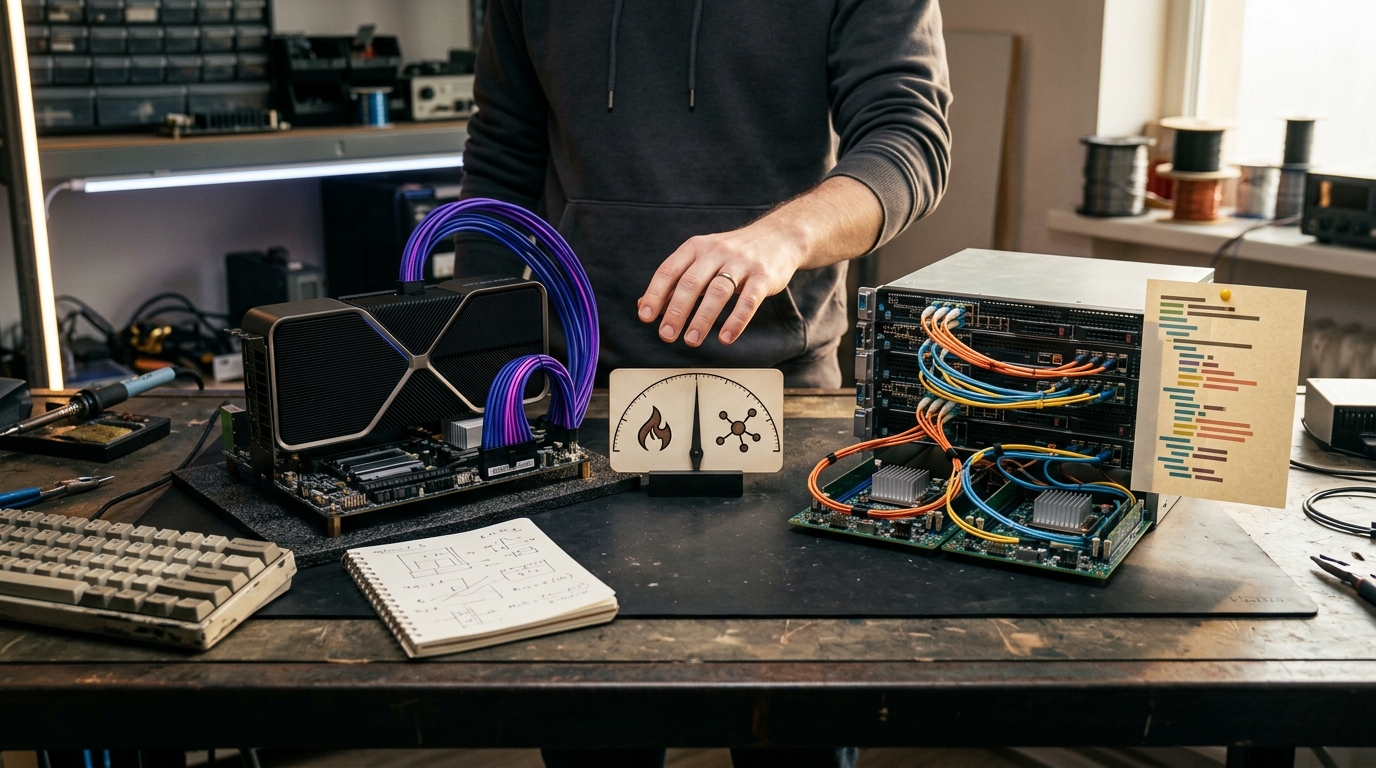
In 2026, the 'bigger is better' era of Large Language Models (LLMs) has officially hit a wall. While trillion-parameter models like Llama 4 and GPT-5 offer staggering reasoning capabilities, their inference costs and latency make them commercially unviable for high-volume applications. The solution? AI model distillation tools. By transferring the 'dark knowledge' of a massive teacher model into a nimble student model, enterprises are now achieving 90% of the performance at 10% of the cost. If you aren't using distillation to optimize your local and cloud-based AI stacks, you are essentially burning money on every API call.
The Distillation Revolution of 2026: Why Efficiency is the New SOTA
Efficiency has become the primary metric for AI success in 2026. We've moved past the novelty of generative AI and into the era of operationalization. As noted in recent industry research, 57% of organizations now have AI agents in production, but 32% cite quality-to-cost ratios as their biggest barrier to scaling. This is where AI model distillation tools enter the chat.
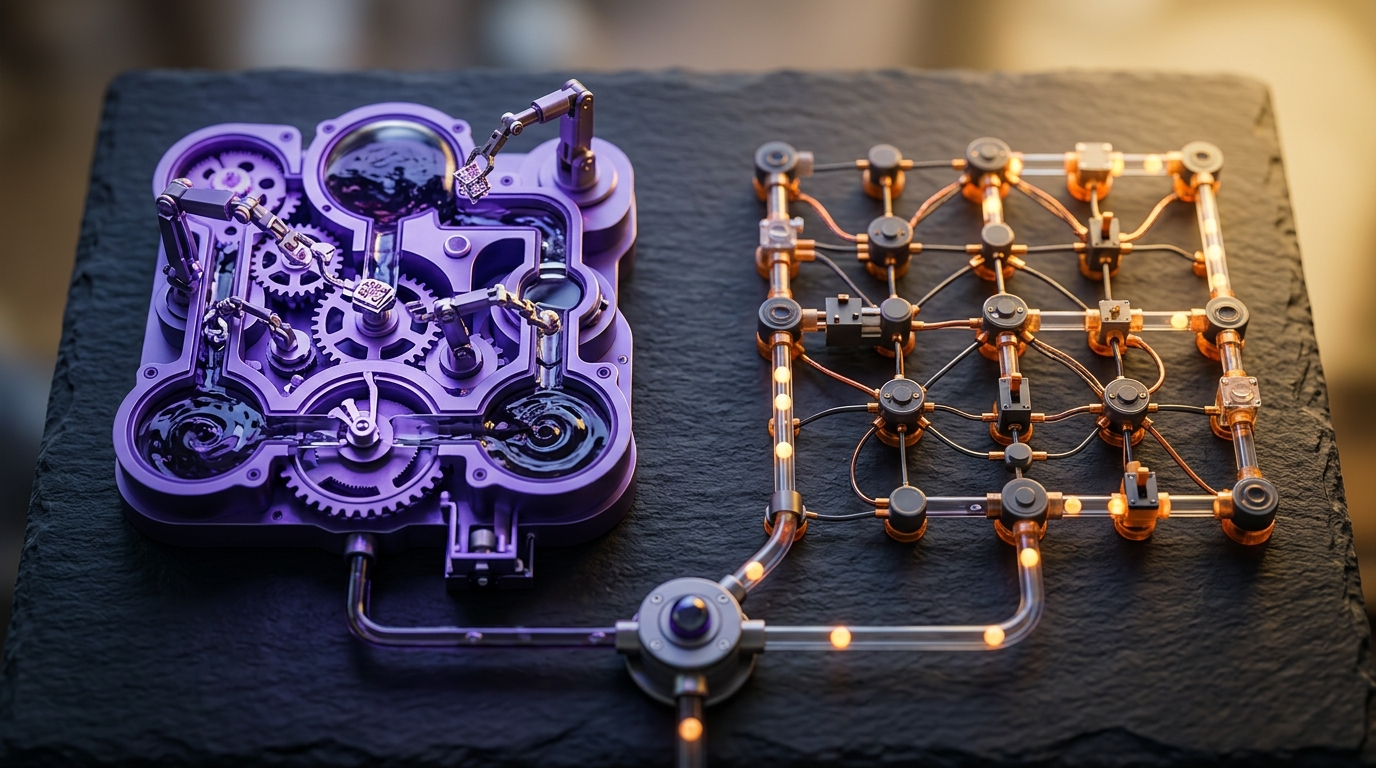
Knowledge distillation is no longer a niche academic exercise; it is a fundamental requirement for deploying best model compression software 2026 standards. By using a 'Teacher' model (like a 405B Llama variant) to guide a 'Student' model (like an 8B or 14B variant), developers can create hyper-specialized models that run on consumer hardware—like the M5 Pro MacBooks—without the 'intelligence drop' typically associated with smaller parameter counts.
"Basically, with next token prediction, we only have one target per history of tokens. With distillation, we use a larger model to precompute the output token probabilities for every single sequence... this enables learning multiple trajectories, which significantly reduces the amount of training needed to reach high accuracy." — Insight from r/LocalLLaMA expert discussions.
How Knowledge Distillation Works: The Teacher-Student Paradigm
To understand LLM knowledge distillation, you must look beyond simple 'fine-tuning.' Traditional fine-tuning adjusts weights based on hard targets (the next word in a sentence). Distillation, however, focuses on 'soft targets'—the probability distribution across the entire vocabulary.
The KL Divergence Mechanism
Most modern distillation tools utilize Kullback-Leibler (KL) Divergence. The student model doesn't just learn that the next word is 'Apple'; it learns that 'Apple' had a 70% probability, 'Fruit' had a 20% probability, and 'Microsoft' had a 0.001% probability. This 'dark knowledge' provides the student model with a nuanced understanding of semantic relationships that a standard 1B or 8B model would never acquire through raw pre-training alone.
Types of Distillation in 2026
- Logit-based Distillation: The student mimics the output probabilities (logits) of the teacher.
- Feature-based Distillation: The student mimics the internal intermediate layers and attention maps of the teacher.
- API-based Distillation: Using high-end models (GPT-4o/Claude 3.7) to generate high-quality synthetic datasets that a smaller model then trains on (often called 'Distillation via Dataset').
Top 10 AI Model Distillation Tools for 2026
Selecting the right teacher-student AI training platforms depends on your technical stack, budget, and whether you are targeting local or cloud deployment. Here are the top 10 tools leading the market in 2026.
1. Unsloth
Best For: Speed and memory efficiency on consumer GPUs. Unsloth has become the gold standard for the open-source community. It allows for 2x faster training and uses 70% less memory compared to standard Hugging Face implementations. In 2026, Unsloth supports 'Dynamic Distillation,' allowing users to distill 70B models into 8B variants on a single A100 or even a high-end RTX 5090.
2. Arcee.ai
Best For: Domain-specific Small Language Models (SLMs). Arcee specializes in 'Domain Adaptation through Distillation.' Their platform is designed for enterprise users who need to distill a general-purpose giant into a legally-compliant, medically-accurate, or code-proficient small model. Their 'Arcee-Merge' technology is particularly effective at combining distilled knowledge from multiple teachers.
3. NVIDIA TensorRT-LLM (Minitron Toolkit)
Best For: Maxing out performance on NVIDIA hardware. NVIDIA’s Minitron series proved that a 4B model could outperform an 8B model if distilled correctly. Their toolkit provides a seamless pipeline for pruning and distilling models specifically for TensorRT-LLM deployment, making it the go-to for edge computing and data center inference optimization.
4. Google Gemma Distillation Stack
Best For: Developers utilizing the Gemma 2 ecosystem. Google's release of Gemma 2B and 9B showcased the power of distillation. Their proprietary distillation stack is now available via Vertex AI, allowing users to use Gemini 1.5 Pro as a teacher to train hyper-efficient Gemma students for mobile and browser-based AI.
5. Hugging Face Optimum
Best For: Cross-platform compatibility and ease of use. Optimum is the extension of the Transformers library that handles model optimization. It includes built-in support for knowledge distillation, quantization (GGUF/EXL2), and pruning. It’s the best starting point for engineers who want a 'one-stop-shop' for model compression.
6. Snorkel AI
Best For: Programmatic labeling and high-quality synthetic data generation. Distillation is only as good as the data the teacher provides. Snorkel AI uses a data-centric approach to ensure that the 'teacher's' outputs are clean, diverse, and representative before the student ever begins training. This reduces the 'hallucination inheritance' problem common in poor distillation runs.
7. Microsoft DeepSpeed-Compression
Best For: Large-scale distributed distillation. DeepSpeed remains the king of multi-GPU training. Their compression suite offers 'Model Compression Research' (MCR) features that automate the distillation process across hundreds of GPUs, making it ideal for the world's largest tech firms distilling 'frontier' models.
8. Deci AI (Acquired by NVIDIA)
Best For: Automated Neural Architecture Search (NAS). Deci AI's platform doesn't just distill knowledge; it helps design the optimal 'student' architecture for your specific hardware. By using NAS, it finds the most efficient path for information flow, ensuring that the distilled model runs at peak TFLOPS.
9. Together AI (Custom Distillation API)
Best For: Serverless distillation and rapid prototyping. Together AI provides a managed service where you can upload your dataset, select a teacher (like Llama 3.1 405B), and receive a distilled student model without managing a single server. This is the fastest way to reduce LLM inference costs for startups.
10. Maxim AI
Best For: Evaluating the 'Intelligence Gap' post-distillation. While not a distillation engine itself, Maxim AI is the essential 2026 tool for evaluating distilled agents. It allows you to run side-by-side simulations to ensure the student model hasn't lost critical reasoning capabilities or tool-calling accuracy during the compression process.
| Tool | Primary Use Case | Hardware Focus | Difficulty |
|---|---|---|---|
| Unsloth | Local/Hobbyist Training | NVIDIA Consumer GPUs | Moderate |
| Arcee.ai | Enterprise SLMs | Cloud/Hybrid | Easy (Managed) |
| NVIDIA TRT | Edge AI / Data Centers | NVIDIA Enterprise GPUs | Hard |
| Together AI | API-based Distillation | Serverless | Very Easy |
| DeepSpeed | Massive Clusters | Multi-Node A100/H100 | Very Hard |
AI Model Distillation vs. Fine-Tuning: Key Differences
A common misconception in 2026 is that distillation and fine-tuning are the same. They are complementary but fundamentally different in their approach to LLM knowledge distillation.
Fine-Tuning: The Specialist
Fine-tuning is like sending a smart student to a weekend workshop on 'Medical Coding.' The student already knows English (pre-training) but needs specific vocabulary and formatting rules. Fine-tuning changes a small percentage of the model's weights to fit a specific style or dataset.
Distillation: The Brain Transplant
Distillation is like taking the wisdom of an 80-year-old professor (Teacher) and distilling it into a 20-year-old's brain (Student). The student isn't just learning a task; they are learning the reasoning patterns and probability distributions of the teacher.
Why Distillation is winning in 2026: - Reduced Data Requirements: Distillation often requires significantly less data than fine-tuning to reach the same level of accuracy because the teacher provides a 'richer' signal (logits vs. hard labels). - Better Generalization: Distilled models tend to retain more 'general' intelligence than heavily fine-tuned models, which often suffer from 'catastrophic forgetting.'
Hardware Realities: Running Distilled Models on Local Hardware
The most heated debates on r/LocalLLaMA in 2026 revolve around hardware. As one user noted, "I just got my new M5 Pro with 64GB of RAM... and most local models I tried were pretty useless."
This frustration stems from using 'ancient' or non-distilled models. To run a truly capable local AI stack, you must understand the relationship between parameter count, quantization, and distillation.
The 64GB RAM Ceiling
If you have 64GB of Unified Memory (Mac) or VRAM (NVIDIA), you are in the 'sweet spot' for distilled models. In 2026, the optimal local configurations are: - Qwen 3.5 35B (Distilled): Fits in 32GB-40GB with 4-bit quantization. It offers GPT-4 level coding skills. - Llama 4 14B (Distilled): The 'Goldilocks' model for agents. It is small enough to be fast but smart enough for complex tool-calling. - Nemotron-3-Nano (Distilled): A 4B model that punches like a 12B, perfect for background tasks like email categorization.
Pro Tip: Avoid the 'Ancient Model' Trap
Many developers fail because they use models like Llama 3.1 8B for tasks that require 2026-level reasoning. Always look for models tagged with 'Distilled' or 'Instruct-Distill' on Hugging Face. These have been trained using the teacher-student paradigm to maximize their small parameter count.
Reducing LLM Inference Costs: The ROI of Model Compression
For businesses, reduce LLM inference costs is the #1 driver for adopting distillation. Let's look at the math of a typical customer support deployment in 2026.
Scenario: 1,000,000 requests per month, average 1,000 tokens per request.
-
Frontier Model (GPT-4o / Claude 3.7):
- Cost: ~$15.00 per 1M tokens (blended input/output).
- Total Monthly Cost: $15,000.
- Latency: 2-5 seconds.
-
Distilled 8B Model (Self-Hosted on 1x A100):
- Server Cost: ~$2,000/month (Reserved instance).
- Total Monthly Cost: $2,000.
- Latency: <500ms.
- Savings: 86% ($156,000 per year).
Beyond direct costs, distilled models reduce 'Token Bloat.' Since the model is hyper-specialized for your task, you can often use shorter system prompts, further reducing the input token count and increasing throughput.
Step-by-Step Guide: Distilling Your First Custom Model
Ready to build your own? Here is the high-level workflow using AI model distillation tools like Unsloth and Hugging Face.
Step 1: Select Your Teacher and Student
- Teacher: Choose a model at least 10x larger than your student. (e.g., Teacher: Llama-4-405B; Student: Llama-4-8B).
- Dataset: Use a high-quality dataset (10k+ rows) relevant to your niche.
Step 2: Generate Teacher Logits
Use the teacher model to process your dataset. Instead of just saving the answer, save the 'logits' (the probability scores for the top 50-100 tokens). This is the 'knowledge' you will transfer.
Step 3: Configure the Loss Function
In your training script, set up a composite loss function: - Student Loss: Standard cross-entropy between student prediction and ground truth. - Distillation Loss: KL Divergence between student logits and teacher logits. - Alpha Parameter: This balances the two. A common starting point is 0.5.
Step 4: Training with Unsloth
python from unsloth import FastLanguageModel import torch
Load 8B Student Model
model, tokenizer = FastLanguageModel.from_pretrained( model_name = "unsloth/llama-4-8b-bnb-4bit", max_seq_length = 2048, load_in_4bit = True, )
Define Distillation Loop
(Simplified for brevity - involves passing teacher_logits to the Trainer)
Use the SFTTrainer with a custom data_collator that includes teacher outputs.
Step 5: Evaluate with Maxim AI
Once training is complete, run your student model through a battery of tests. Does it still follow instructions? Does its 'Attention Object' count match the teacher's? (In Reddit terms: can it handle 5-digit addition consistently?)
Key Takeaways
- Distillation is Mandatory: In 2026, running raw frontier models for every task is a recipe for bankruptcy. Distillation is the key to ROI.
- Teacher Quality Matters: The student can never be smarter than the teacher. Use the best possible model (Llama 405B, GPT-4o) to generate your distillation data.
- SLMs are the Future: Small Language Models (1B-14B) are becoming the 'workers' of the AI economy, while large models act as 'architects.'
- Local Hardware is Capable: With 64GB of RAM and distilled models, you can run a private, high-performance AI lab from a laptop.
- Tooling has Matured: Platforms like Unsloth and Arcee.ai have lowered the barrier to entry, making distillation accessible to mid-sized engineering teams.
Frequently Asked Questions
What are the best AI model distillation tools for beginners?
For those just starting, Together AI and Arcee.ai offer the most user-friendly, managed experiences. If you have some coding knowledge, Unsloth provides the best balance of performance and ease of use for local training.
Can I distill a model if I don't have a massive GPU cluster?
Yes! Using 'API-based distillation,' you can use a cloud provider to generate the teacher's data and then train a small 1B or 3B student model on a single consumer GPU (like an RTX 4090 or even a Mac M5).
How much does it cost to distill an LLM in 2026?
For a standard 8B model using a managed service, you can expect to spend between $500 and $2,500 depending on the dataset size. If you do it locally using open-source tools, your only cost is the electricity and the initial hardware investment.
Is model distillation better than quantization?
They serve different purposes. Quantization (like GGUF) shrinks a model by reducing the precision of its weights (e.g., from 16-bit to 4-bit). Distillation shrinks a model by reducing the number of parameters. For maximum efficiency, you should distill first, then quantize.
Does distillation work for coding models?
Absolutely. In fact, coding is one of the best use cases for distillation. Models like Qwen 2.5 Coder and StarCoder 2 rely heavily on distillation from larger models to maintain logic and syntax accuracy at small scales.
Conclusion
The AI landscape of 2026 has shifted from a race for 'more parameters' to a race for 'more intelligence per watt.' AI model distillation tools are the primary engines of this shift. By adopting the teacher-student paradigm, you can break free from the prohibitive costs of frontier APIs and build a private, fast, and hyper-efficient AI stack that actually scales.
Whether you are a developer looking to optimize a local coding agent on your M5 Mac or a CTO aiming to slash enterprise inference costs by 90%, the tools listed above—from Unsloth to Arcee.ai—provide the roadmap to success. Don't just build bigger; build smarter. Start your distillation journey today and turn your AI aspirations into a high-performance reality.
Looking to further optimize your developer workflow? Explore our latest guides on AI writing tools and developer productivity hacks for 2026.