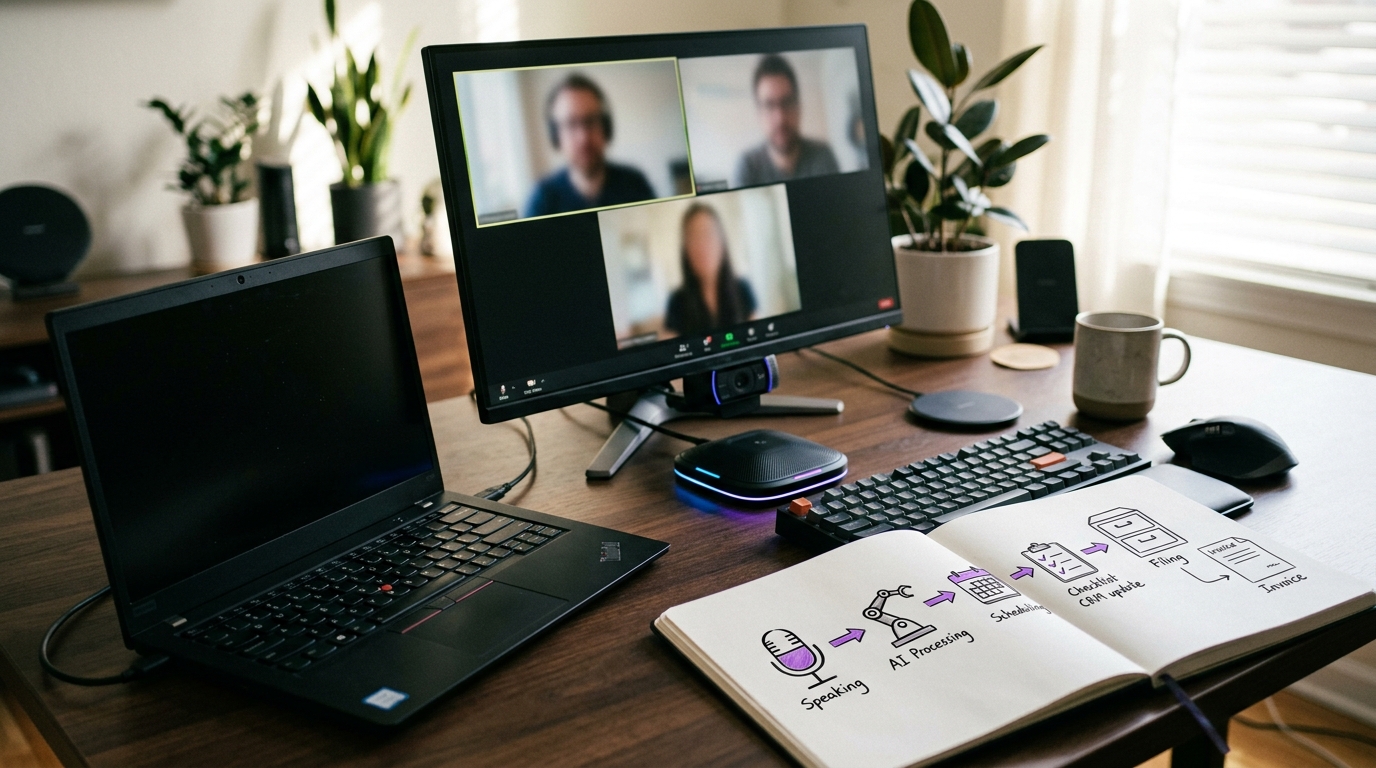
By the end of 2026, global programmatic ad spend is projected to shatter the $700 billion mark, but the real story isn't the volume—it's the method. We have officially exited the era of manual bid adjustments and entered the age of agentic ad buying. Today, AI-native demand side platforms (DSPs) are no longer just software wrappers for ad exchanges; they are autonomous entities where software agents negotiate with other agents to secure high-intent inventory in milliseconds. If you are still manually tweaking CPMs, you aren't just behind—you're obsolete.
The Paradigm Shift: What is Agentic Ad Buying?
Agentic ad buying represents a fundamental shift from "automation" to "autonomy." In traditional programmatic advertising, a human sets the rules, and the machine follows them. In an AI-native marketing DSP, the advertiser provides a high-level goal—such as "maximize ROAS for a supplement brand targeting cold traffic"—and the AI agent determines the creative strategy, selects the bid logic, and negotiates with publisher-side agents.
This is the rise of agent-to-agent advertising tools. We are seeing a future where your brand's AI agent talks to a publisher's AI agent to settle on a price based on real-time user intent, historical conversion data, and creative fit. This reduces friction, eliminates human bias, and allows for micro-segmentation at a scale previously thought impossible.
1. The Trade Desk (Kokai): The Enterprise Standard
The Trade Desk has long been the gold standard for independent programmatic buying, but its 2026 iteration, Kokai, has fully embraced the agentic model. At its core is Koa, an AI agent that analyzes over 15 million queries per second to assist media buyers in making data-driven decisions.
- Key Features: Kokai introduces "Adaptive Trading Modes," allowing users to toggle between manual control and full AI autonomy. It is deeply integrated with Unified ID 2.0 (UID2), making it a leader in the cookieless future.
- Ideal Use Case: Large agencies managing multi-channel campaigns across Connected TV (CTV), audio, and display.
- The AI Edge: Koa doesn't just bid; it scores every impression based on its likelihood to drive a specific business outcome, effectively acting as a co-pilot for the trader.
2. Autoreach: The Performance Marketer’s Secret Weapon
Emerging as a favorite in community discussions (specifically on Reddit's r/AskMarketing), Autoreach is built for velocity. Unlike enterprise tools that require a massive "seat" fee, Autoreach is a performance-first AI-native marketing DSP that integrates the entire creative-to-conversion workflow.
- The Performance Edge: Based on real-world testing with $900k in ad spend, Autoreach outperformed competitors by offering a "strategy layer." Before generating ads, AI agents help draft scripts and hooks based on TikTok and Meta ad spy data.
- Key Feature: The "Ad Clone" feature allows marketers to pull a competitor's winning creative and regenerate it with their own product in minutes.
- Pricing: The $129 Growth plan is the sweet spot for e-commerce brands needing high-volume UGC testing without the corporate stiffness of older tools.
"Support DMed the founder directly, he built a feature I requested overnight... very different experience from every other tool." — Reddit User Review
3. Google Display & Video 360 (DV360): The Ecosystem Titan
If you are deep in the Google Marketing Platform (GMP), DV360 is unavoidable. In 2026, Google has integrated Gemini-powered agents directly into the workflow to assist with everything from audience discovery to creative asset generation.
- Key Features: Native integration with Google Analytics 4 (GA4) and Campaign Manager 360. It offers exclusive access to YouTube ad formats and premium CTV inventory through Programmatic Guaranteed deals.
- The AI Edge: DV360 uses Google’s vast first-party data to predict user behavior across the entire web, making its automated bidding algorithms some of the most sophisticated in the industry.
- Constraint: It remains an enterprise-level tool, usually requiring a certified reseller or a direct contract with significant minimum spends.
4. Amazon DSP: The Retail Intent King
For e-commerce and CPG brands, Amazon DSP is the ultimate agentic ad buying platform. Its primary strength isn't just reach; it's the ability to target users based on actual purchase history on Amazon.com.
- Key Features: Access to exclusive inventory on IMDb TV, Twitch, and Fire TV. Its integration with Amazon Marketing Cloud (AMC) allows for deep, custom attribution.
- The AI Edge: Amazon’s machine learning models can identify "lost buy box" scenarios or high-intent shoppers who viewed a competitor's product but didn't buy. AI agents can then automatically trigger retargeting ads across the open web.
- Pricing: Managed services typically start at $50,000, but self-service options are becoming more accessible for mid-market brands.
5. StackAdapt: The Native & Contextual Specialist
StackAdapt has gained massive traction by focusing on ease of use and contextual intelligence. It is widely considered the best AI-Native Marketing DSP for those who prioritize native advertising and non-intrusive ad experiences.
- Key Features: A self-serve model with no minimum spend, making it highly accessible. It covers CTV, audio, and even in-game advertising.
- The AI Edge: Its "Page Context AI" doesn't rely on cookies. Instead, it uses natural language processing (NLP) to understand the content of a page and place ads where they are most relevant to the user’s current mindset.
- UX: Often cited as having the most intuitive interface in the programmatic space, reducing the learning curve for new media buyers.
6. Quantcast: The Ara Predictive Engine
Quantcast has pivoted from simple measurement to a powerful autonomous DSP. Its Ara™ engine is a marvel of programmatic AI advertising in 2026, processing live data from the open internet to find audiences in real-time.
- Key Features: The "Audience Graph" uses AI to map the entire internet, providing a future-proof solution for cookieless targeting.
- The AI Edge: Ara can autonomously optimize campaigns by analyzing trillions of data points every second. It doesn't just follow rules; it predicts which users are about to enter a buying cycle.
- Accessibility: Quantcast offers trial and no-minimum offers, making it a great entry point for performance marketers who want to test predictive modeling.
7. Criteo (Commerce Max): Bridging Retail & Programmatic
Criteo has successfully transitioned from a retargeting firm to a massive commerce media platform. Commerce Max allows advertisers to buy ads across a network of hundreds of retailers using the same interface.
- Key Features: Bridges the gap between onsite retail media (ads on Walmart.com, etc.) and offsite programmatic ads.
- The AI Edge: Criteo’s "Commerce Audiences" are built from real-time shopper signals. Their AI agents can determine the exact moment a user is moving from "browsing" to "buying" and adjust bids accordingly.
- Measurement: Offers closed-loop measurement, tying ad impressions directly to retail sales, both online and offline.
8. AdStellar: The AI Creative Integration Hub
AdStellar is a newer entrant that focuses on the "Creative DSP" niche. It recognizes that in 2026, the creative is the most important lever for performance.
- Key Features: An "AI Creative Hub" that generates image ads, video ads, and UGC creatives within the DSP. It includes an "Ad Clone" feature and a URL-to-Ad maker.
- The AI Edge: It uses AI to score creative variations before they are even launched. Its agents look at historical performance data across its entire network to predict which hooks will stop the scroll on Meta and TikTok.
- Workflow: Built specifically for performance marketers who need to launch hundreds of ad variations in minutes.
9. RTB House: Deep Learning at the Impression Level
RTB House is unique because its entire bidding engine is built on Deep Learning (a subfield of AI that mimics the human brain). This allows for granular decision-making that standard machine learning models can't match.
- Key Features: Focuses heavily on the retail and e-commerce sectors. Its "IntentGPT" contextual targeting solution is a leader in ID-light environments.
- The AI Edge: Most DSPs use simplified models to calculate bids. RTB House uses deep learning to analyze the nuance of every single impression, leading to higher efficiency in prospecting and retargeting.
- Creative: They offer dynamic, shoppable video formats that are generated on-the-fly based on what the user is most likely to click.
10. Basis Technologies: The Unified Operations Leader
Basis (formerly Centro) is the top choice for teams that need to unify programmatic, search, social, and direct buys in one place. It is the "command center" for high-growth agencies.
- Key Features: A unified reporting hub that consolidates data from every channel. It includes robust workflow automation to eliminate manual data entry.
- The AI Edge: Basis uses AI to automate the financial reconciliation and reporting process, which is often the biggest bottleneck for agencies. Its DSP Enterprise API allows developers to build custom agentic buying tools on top of the Basis infrastructure.
- Transparency: Known for its commitment to media transparency and preventing hidden "tech taxes" in the supply chain.
Real-World Benchmarks: The $900k AI vs. Human Creative Test
In a landmark study shared by performance marketers in early 2026, a side-by-side test was conducted with $900,000 in ad spend to compare AI-generated creatives against traditional human-produced studio content. The results were startling and serve as a blueprint for using AI-native demand side platforms.
| Tool Type | Creative Style | Result | Verdict |
|---|---|---|---|
| HeyGen | Corporate Talking Head | Low CTR, "stiff" movement | Best for training, not for ads. |
| Arcades | High-End Cinematic | Great quality, high cost | Best for brand films, poor velocity. |
| Autoreach | UGC / Performance | Highest ROAS, fast iteration | The winner for direct response. |
| Creatify | Bulk UGC | High volume, low quality | Good for hook testing, not for clients. |
The Takeaway from the Data
The test proved that velocity beats polish. The AI-native tools that allowed marketers to spin up 30 variations of a "hook" in minutes outperformed the studio-shot ads because the AI agents could find the winning combination of script and visual faster than a human editor could finish the first draft. Autoreach emerged as the winner because it included a "strategy layer" where AI agents helped with the script-writing process before generation began.
The Technical Stack: LLMs Powering 2026 DSPs
To understand why these platforms are "AI-native," we have to look under the hood. Most of these tools are no longer running on simple regression models; they are powered by a stack of Large Language Models (LLMs) and Generative Video Models.
The LLM Hierarchy in Marketing
- Claude 3.5/4.0: Widely considered the best for "deep thinking" and creative writing. Many DSPs use Claude's API to generate ad scripts that feel human and empathetic.
- GPT-4o/Codex: The workhorse for data analysis and technical automation. Used by platforms like Basis and The Trade Desk to analyze log-level data and write custom bidding scripts.
- Gemini 1.5 Pro: Used for massive context windows. In a DSP, this means an agent can "read" your entire brand history, previous 1,000 ad creatives, and customer reviews to ensure brand voice consistency.
- Sora 2 / VEO 3.1: The engines behind video generation tools like Arcades and Autoreach. These models have finally solved the "uncanny valley" lip-sync and movement issues that plagued 2024-era AI ads.
Comparison Table: Enterprise vs. Mid-Market AI DSPs
| DSP Name | Primary Strength | Access Level | Pricing Structure |
|---|---|---|---|
| The Trade Desk | CTV & Open Web | Enterprise | % of Media Spend |
| Autoreach | Performance UGC | Mid-Market / Pro | Monthly Subscription + Credits |
| DV360 | Google Ecosystem | Enterprise | % of Media Spend |
| StackAdapt | Native & Ease of Use | Self-Serve | No Minimums |
| Quantcast | Predictive Modeling | Self-Serve | % of Media Spend |
Key Takeaways
- Autonomy is the Goal: Move away from DSPs that require manual bidding. Look for agentic ad buying platforms that optimize toward business outcomes (ROAS/CPA) rather than just clicks.
- Creative is the Variable: The best DSPs in 2026 have built-in creative generation. If your DSP doesn't help you generate and test ad variations, you are paying for half a tool.
- First-Party Data is Non-Negotiable: With the death of third-party cookies, platforms like Amazon and Criteo that have direct retail data are significantly more valuable.
- Context is King: AI-native DSPs like StackAdapt and Quantcast use NLP to understand page context, providing a powerful alternative to behavioral tracking.
- Support and Velocity Matter: For mid-market brands, the responsiveness of the platform (like the founder-led support at Autoreach) can be more valuable than the feature-heavy complexity of an enterprise titan like DV360.
Frequently Asked Questions
What is an AI-Native Demand Side Platform?
An AI-native DSP is an advertising platform built from the ground up with artificial intelligence as its core engine. Unlike traditional DSPs that added AI features later, these platforms use autonomous agents to manage creative generation, bidding, and optimization without constant human intervention.
How does agentic ad buying differ from standard programmatic?
Standard programmatic uses "if-then" rules set by humans. Agentic ad buying uses AI agents that have the "agency" to make decisions based on high-level goals. These agents can negotiate prices, swap out creative assets, and shift budgets between channels in real-time to meet a target ROAS.
Are AI-generated ads better than human-made ads in 2026?
In terms of performance marketing (UGC and direct response), AI-generated ads often outperform human ads because they allow for much higher testing volumes. However, for high-end cinematic brand storytelling, human-led creative still holds a slight edge in emotional resonance.
Which AI DSP is best for small businesses?
StackAdapt and Quantcast are excellent for small to mid-sized businesses due to their self-serve models and lack of massive minimum spend requirements. For e-commerce specifically, Autoreach offers the best value-to-performance ratio.
What is agent-to-agent advertising?
Agent-to-agent advertising is a future-state programmatic model where the buyer's AI agent (on the DSP) and the seller's AI agent (on the SSP) negotiate the terms of an ad placement directly. This removes the need for manual RFPs and complex floor-price settings.
Conclusion
The landscape of AI-native demand side platforms is moving faster than any other sector in MarTech. By 2026, the distinction between "creative agency" and "media buying platform" has blurred into a single, agentic workflow. Whether you are an enterprise agency leveraging the power of The Trade Desk’s Kokai or a scrappy e-commerce brand using Autoreach to dominate Meta and TikTok, the message is clear: the future belongs to those who let the agents do the heavy lifting.
Stop managing your ads. Start managing your agents. The ROI you’ve been chasing is no longer hidden in a spreadsheet; it’s being negotiated in the cloud, one agentic bid at a time.