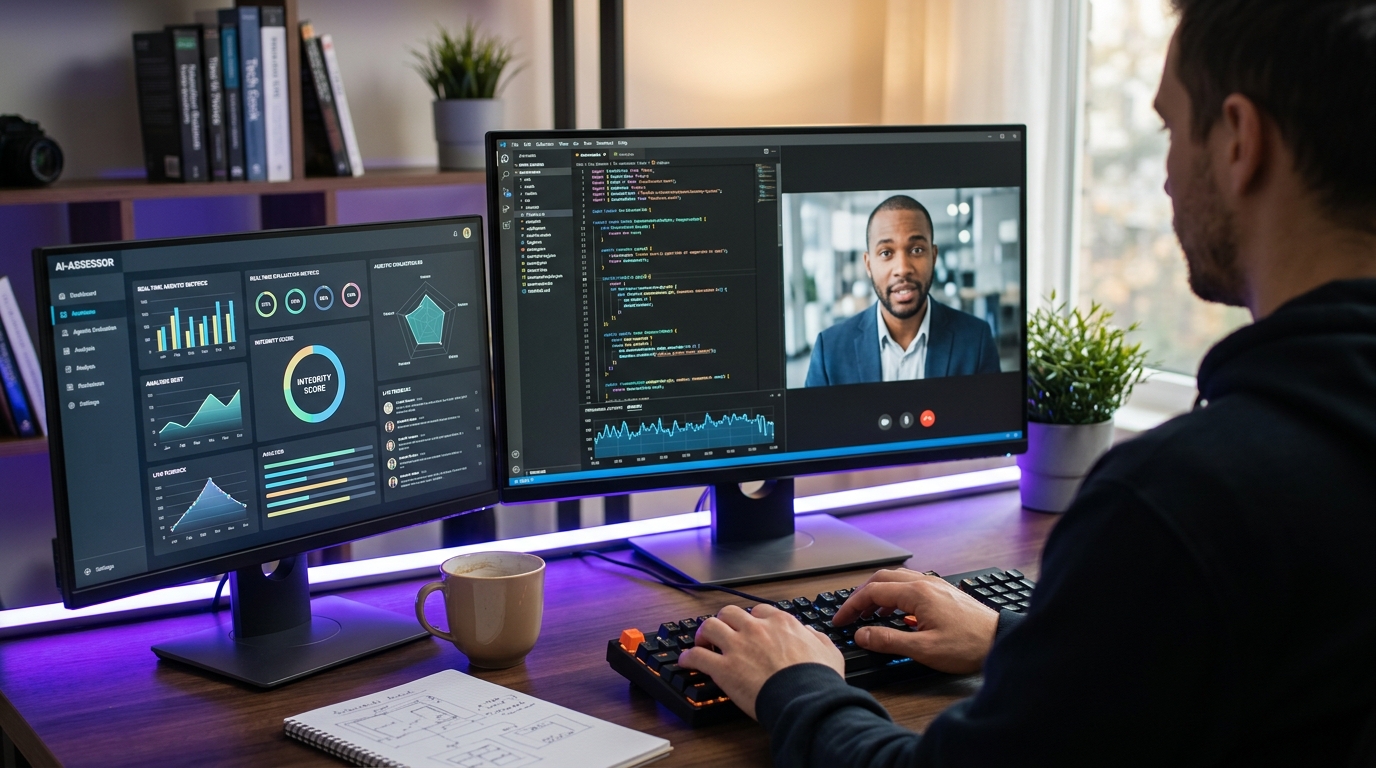
In 2026, the 'database' is dead. If you are still filtering through static lists of creators based on follower counts and generic hashtags, you are essentially using a rotary phone in the age of neural links. The industry has shifted toward agentic influencer marketing, where AI doesn't just suggest names but autonomously negotiates deals, predicts multi-touch pipeline impact, and maintains persistent brand memory. With the influencer market projected to surpass $22 billion this year, the gap between those using legacy tools and those leveraging AI-Native Influencer Marketing Platforms 2026 has become an unbridgeable chasm. This isn't just about automation; it's about shifting the human role from 'operator' to 'architect.'
- The Shift to Agentic Influencer Marketing in 2026
- Methodology: How We Evaluated the Top 10 Platforms
- 1. Favikon: The B2B LinkedIn Powerhouse
- 2. Influencer Hero: The All-in-One Scaling Machine
- 3. CreatorIQ: The Enterprise Intelligence Layer
- 4. Modash: High-Volume Discovery for DTC
- 5. HypeAuditor: The Gold Standard for Fraud Detection
- 6. Lessie: The Agentic Discovery Disruptor
- 7. Stormy AI: Autonomous Outreach and Negotiation
- 8. IQFluence: Deep Semantic Search and Vetting
- 9. Upfluence: Converting Customers into Advocates
- 10. Aspire: Performance and TikTok Shop Integration
- Solving the Brand Consistency Problem with AI Memory
- ROI Tracking: Moving from Impressions to Pipeline Attribution
- Key Takeaways
- Frequently Asked Questions
- Conclusion
The Shift to Agentic Influencer Marketing in 2026
In 2026, the term 'AI-Native' refers to platforms built from the ground up on Large Language Models (LLMs) and agentic frameworks, rather than legacy databases with an 'AI wrapper' slapped on top. As noted in recent industry discussions on Reddit and Quora, the real bottleneck has moved from finding creators to managing the complexity of thousands of simultaneous relationships.
We are now seeing the rise of agentic influencer marketing, where AI agents handle the 'boring' work: outreach, follow-ups, and even basic contract negotiations. This allows marketing managers to focus on high-level strategy and brand logic. The meta has shifted toward 'Discussion-First' marketing, where being surfaced in AI-generated answers (AEO) is as important as ranking on a traditional SERP. Influencers are the primary data source for these AI models, making creator alignment a core SEO strategy.
Methodology: How We Evaluated the Top 10 Platforms
To rank the best AI-Native Influencer Marketing Platforms 2026, we analyzed 36 tools across four critical pillars that reflect the 2026 marketing landscape:
- AI Discovery & Semantic Search: Can the tool find creators based on 'vibes,' brand logic, and niche authority rather than just keywords?
- Autonomous Creator Outreach 2026: Does the platform provide agents that can personalize outreach and manage DMs/emails without manual intervention?
- B2B & Multi-Platform Coverage: With LinkedIn and YouTube being high-intent drivers, we prioritized tools that cover professional networks and video-first platforms.
- Influencer ROI Tracking AI Tools: We looked for deep integration with CRMs (HubSpot, Salesforce) and e-commerce stacks (Shopify, Amazon) to measure actual pipeline, not just vanity metrics.
| Feature | Legacy Platforms | AI-Native Platforms (2026) |
|---|---|---|
| Search Logic | Keyword & Filter based | Semantic & Agentic Discovery |
| Outreach | Manual Templates | Autonomous AI Agents |
| Tracking | Likes/Comments | Pipeline & CRM Attribution |
| Brand Voice | Manual Briefs | Persistent AI Brand Memory |
1. Favikon: The B2B LinkedIn Powerhouse
Favikon has emerged as the undisputed leader for B2B and SaaS influencer programs. While most tools treat LinkedIn as an afterthought, Favikon uses proprietary AI authority scores to rank 10 million+ creators across 600 niches.
Why it’s #1 for B2B
Favikon doesn't just look at follower counts; it analyzes 'niche influence.' A supply chain expert with 5,000 followers might rank higher than a generalist with 500,000 because the AI understands who actually moves the needle in that specific industry. It integrates natively with GA4, making it a favorite for teams that need to prove B2B pipeline impact.
- Best for: B2B discovery, LinkedIn authority scoring, and SaaS thought leadership.
- The AI Edge: Uses neural networks to calculate an 'Influence Score' that filters out noise and highlights true industry authorities.
- Pricing: Starts at $69/month.
2. Influencer Hero: The All-in-One Scaling Machine
One of the biggest complaints on Reddit's r/influencermarketing is the 'success tax'—platforms that charge more as you add more creators. Influencer Hero disrupts this by offering an unlimited CRM.
Scaling Without the Success Tax
Influencer Hero is built for the gifting and seeding model. It automates the entire lifecycle: from discovery to automated product shipping via Shopify. Its AI-powered outreach creates personalized first lines based on a creator's recent content, significantly increasing response rates.
- Best for: Shopify brands, high-volume gifting/seeding, and affiliate management.
- The AI Edge: Integrated AI personalization for outreach and automated UGC (User Generated Content) capture, including expiring Instagram Stories.
- Pricing: Starts at $649/month (includes unlimited CRM).
3. CreatorIQ: The Enterprise Intelligence Layer
For global brands like Disney or Logitech, CreatorIQ provides the enterprise-grade infrastructure needed to manage thousands of creators across multiple regions.
Enterprise-Level Attribution
CreatorIQ’s AI analyzes over one billion accounts, using visual recognition to identify brand logos and context in images and videos. Its bidirectional integration with Salesforce and Google Analytics 4 allows enterprise teams to see exactly how a creator post in March contributes to a closed deal in July.
- Best for: Enterprise B2B/B2C, global agencies, and Salesforce-heavy stacks.
- The AI Edge: Predictive performance scoring and deep visual AI for brand safety and content analysis.
- Pricing: Custom Enterprise.
4. Modash: High-Volume Discovery for DTC
Modash is the favorite for DTC brands that need to find creators at scale across Instagram, TikTok, and YouTube. It boasts a database of 350 million+ profiles with a focus on transparency and no-contract flexibility.
Clean Data, No Fluff
Modash’s AI excels at 'Lookalike Search.' If you know a creator who works well for your brand, the AI can find 1,000 others with nearly identical audience demographics and content styles. While it lacks a robust CRM compared to Influencer Hero, its discovery speed is unmatched.
- Best for: DTC e-commerce, app companies, and high-volume discovery.
- The AI Edge: Advanced fake follower detection and visual lookalike modeling.
- Pricing: Starts at $199/month (annual).
5. HypeAuditor: The Gold Standard for Fraud Detection
In an era where AI-generated bots can mimic human engagement, HypeAuditor remains the essential vetting layer. It provides 35+ metrics per profile, focusing on 'Audience Quality Scores.'
Vetting Before Spending
Before signing a six-figure contract, HypeAuditor’s AI scrubs the creator's audience to detect engagement pods and bot clusters. It achieves a reported 94% accuracy in fake follower detection, making it an essential tool for Influencer ROI tracking AI tools.
- Best for: Fraud detection, audience vetting, and agency-grade reporting.
- The AI Edge: Deep neural network analysis of follower growth patterns to identify inorganic spikes.
- Pricing: Starts at $299/month.
6. Lessie: The Agentic Discovery Disruptor
Launched as a new-age competitor in 2025, Lessie is an AI people-search agent. Unlike static databases, Lessie acts as a crawler that spans LinkedIn, X, GitHub, and 100+ other sources in real-time.
The Search Agent Approach
You don't use filters with Lessie; you use natural language. You might prompt: "Find me 20 DevOps engineers on LinkedIn who have a YouTube channel and talk about Kubernetes security." Lessie’s AI agent then scrapes, verifies contact data, and prepares an outreach list.
- Best for: Lean B2B teams, technical niches, and founder-led outreach.
- The AI Edge: Agentic crawling that bypasses the limitations of static influencer databases.
- Pricing: Starts at $34/month.
7. Stormy AI: Autonomous Outreach and Negotiation
Stormy AI represents the 'agentic' future of the industry. It focuses on YouTube and TikTok, but its real power lies in its autonomous negotiation agents.
Hands-Free Deal Making
Stormy AI connects to your Gmail, extracts pricing from creator responses, and uses AI to counter-offer within your preset budget guardrails. It’s the closest the industry has come to "full strategy on autopilot," though it still works best as a co-pilot for high-volume nano-influencer campaigns.
- Best for: SaaS founders and lean teams running high-volume outreach.
- The AI Edge: Autonomous negotiation agents and performance attribution via PostHog/AppsFlyer.
- Pricing: Free tier available; paid plans custom.
8. IQFluence: Deep Semantic Search and Vetting
IQFluence is a powerhouse for SMBs and agencies that need precision. With 375 million+ profiles, it uses semantic search to find creators based on the actual themes of their content, not just keywords in their bio.
Beyond the Bio
If a creator talks about 'sustainable fashion' but never uses the keyword, legacy tools miss them. IQFluence’s AI understands the context of their posts, reels, and videos. It also provides 'Viral Post Analytics,' showing which content formats are currently trending for a specific creator.
- Best for: Agencies and SMBs needing deep, data-driven discovery.
- The AI Edge: Semantic vector search and real-time viral content analysis.
- Pricing: Starts at $236/month (annual).
9. Upfluence: Converting Customers into Advocates
Upfluence’s standout feature in 2026 is 'Live Capture.' It integrates with your Shopify or WooCommerce store to identify which of your existing customers are actually influencers.
Turning Data into Advocacy
This is the ultimate 'organic' play. Instead of cold outreach, Upfluence uses AI to find people who already buy your product and have an audience. It then helps you automate the outreach to turn them into brand ambassadors.
- Best for: E-commerce brands with large customer bases.
- The AI Edge: Integration of first-party customer data with third-party social metrics for advocate identification.
- Pricing: Custom (approx. $478/month).
10. Aspire: Performance and TikTok Shop Integration
Aspire (formerly AspireIQ) has pivoted heavily toward the 'Social Commerce' meta. It is one of the best platforms for managing TikTok Shop affiliates and hybrid compensation models (flat fee + commission).
The Commerce-First Stack
Aspire’s AI helps brands manage the complex logistics of TikTok Shop, from creator invites to automated commission payouts. It’s a performance-heavy tool that treats influencers as a sales channel rather than just a brand awareness play.
- Best for: TikTok Shop sellers and performance-driven DTC brands.
- The AI Edge: AI-driven performance forecasting and social commerce workflow automation.
- Pricing: Custom Enterprise.
Solving the Brand Consistency Problem with AI Memory
One of the biggest issues discussed by marketing managers on Reddit is that AI-generated content often 'drifts' from the brand voice. In 2026, the best AI influencer management software solves this using Persistent Brand Memory.
Instead of starting every campaign brief from scratch, these platforms store your top-performing 50 posts, your brand’s 'never-use' list, and your emotional hooks in a structured data format. When the AI generates a brief for a creator, it runs a 'drift check' to ensure the messaging aligns with your historical brand logic. As one Reddit user noted: "AI resets on every prompt; you need a system that treats brand representation as a data problem, not a prompting problem."
How to Build Your 2026 Stack
- Discovery: Use Favikon (B2B) or Modash (B2C).
- Vetting: Use HypeAuditor.
- Outreach: Use Lessie or Stormy AI for autonomous agents.
- Management: Use Influencer Hero for unlimited CRM scaling.
- Attribution: Use CreatorIQ for Salesforce/GA4 deep dives.
ROI Tracking: Moving from Impressions to Pipeline Attribution
In 2026, 'Estimated Media Value' is a dead metric. CFOs want to see pipeline. Influencer ROI tracking AI tools now integrate directly with multi-touch attribution models.
Platforms like CreatorIQ and Influencer Hero allow you to see the entire journey: a customer sees a TikTok from Creator A, clicks an affiliate link from Creator B two weeks later, and finally converts via a Google Search. AI models then assign fractional credit to each creator, allowing you to identify which content formats (not just which creators) are driving the highest ROI. This data-driven approach allows for agentic influencer marketing strategies where budgets are shifted in real-time to the highest-performing assets.
Key Takeaways
- Agentic is the Standard: In 2026, the best tools use AI agents for autonomous discovery and outreach, not just static filters.
- LinkedIn for B2B: Favikon is the dominant player for professional networks, filling a gap left by legacy DTC-focused tools.
- Unlimited CRM is Essential: To scale without 'success taxes,' platforms like Influencer Hero are becoming the preferred choice for high-growth brands.
- AEO is the New SEO: Influencer content is a primary data source for AI search engines (Perplexity, SearchGPT). Your creator strategy is now your AI visibility strategy.
- Brand Memory Matters: Tools that offer persistent brand data storage outperform those that rely on generic prompting.
Frequently Asked Questions
What are the best AI tools for influencer discovery in 2026?
For B2B, Favikon and Lessie are the top choices due to their LinkedIn depth. For B2C and DTC, Modash and IQFluence offer the largest databases and the most precise semantic search capabilities.
How does autonomous creator outreach work?
Platforms like Stormy AI and Lessie use AI agents to find creators, draft personalized messages based on their recent content, and handle the initial back-and-forth negotiation, only involving a human when a deal is ready to be signed.
Can AI track influencer ROI for B2B SaaS?
Yes. Tools like CreatorIQ and Favikon integrate with CRMs like Salesforce and HubSpot. They use UTM tracking and multi-touch attribution to connect a creator's social post to a specific lead or closed-won deal in your sales pipeline.
What is agentic influencer marketing?
It is a strategy where AI agents act as autonomous team members. They perform tasks like scouring the web for new creators, managing DMs, and analyzing campaign data to make real-time budget recommendations without constant human prompting.
Why is LinkedIn important for influencer marketing in 2026?
LinkedIn has become the hub for 'operator-creators' who influence high-ticket B2B buying decisions. 79% of B2B buyers engage with creator content monthly, making professional network coverage a non-negotiable feature for SaaS marketing stacks.
Conclusion
The landscape of AI-Native Influencer Marketing Platforms 2026 is no longer about finding more creators—it's about finding the right ones and managing them with zero friction. Whether you are a lean startup using Lessie to automate your first LinkedIn campaign or a global enterprise using CreatorIQ to track multi-million dollar pipeline attribution, the goal remains the same: leverage AI to handle the execution so you can master the strategy.
As the 'Discussion-First' meta continues to dominate, your ability to integrate these tools into a cohesive workflow will be the difference between brand obsolescence and market leadership. Start by defining your bottleneck—discovery, outreach, or ROI—and pick the tool that treats that problem as a data challenge, not a manual chore.