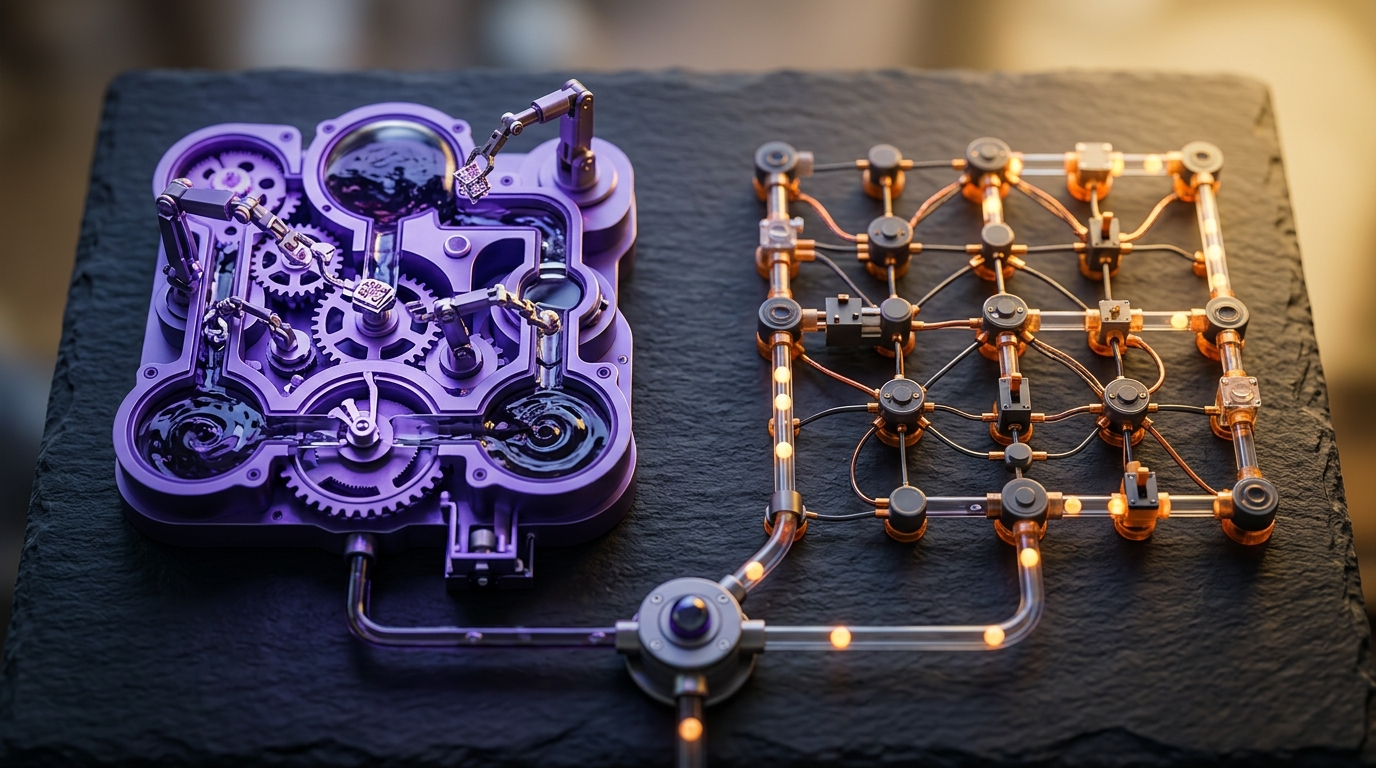
By 2026, the distinction between a 'tool' and a 'teammate' has effectively vanished. According to recent Google Cloud reports, 88% of early adopters in agentic AI are already seeing positive ROI, driven by a shift from reactive chatbots to proactive, empathetic agents. The secret sauce isn't just a larger context window; it’s the integration of a high-performance AI emotion recognition SDK. For developers and CTOs, the challenge is no longer just processing text, but understanding the how behind the what—the frustration in a user's voice, the micro-expression of confusion on a video call, and the physiological signals of stress.
We are moving into the era of affective computing, where a multimodal emotion detection API is as foundational as a database. Whether you are building an automotive-grade driver monitoring system or a concierge-level customer support bot, selecting the right SDK is a high-stakes architectural decision. In this guide, we break down the best affective computing platforms 2026 has to offer, focusing on real-time performance, developer experience, and scientific validity.
The Shift to Affective Computing in 2026
In 2026, the 'digital assembly line' is the new standard for business operations. As discussed in recent industry reports, we are moving beyond simple copilots toward autonomous agents that coordinate across apps. However, autonomy without empathy is a recipe for user erosion.
"The real promise of AI agents isn’t automation for its own sake—it’s freeing humans from repetitive work so they can focus on creativity, strategy, empathy, and judgment."
To achieve this, developers are turning to empathetic AI developer tools. These tools allow agents to recognize mood or stress in voice patterns and adapt their responses dynamically. This isn't just about 'reading' emotions; it's about real-time vocal sentiment analysis that allows a bot to know when to apologize and when to jump straight to a solution.
Criteria for Selecting an Emotion AI SDK
Before diving into the top picks, you must evaluate your project against these four technical pillars: 1. Modality Support: Does the SDK handle facial expressions, vocal prosody, text sentiment, or all three (multimodal)? 2. Latency: For real-time applications like voice assistants, you need sub-second inference. Edge SDKs are often superior here. 3. Scientific Validity: Is the model based on the Facial Action Coding System (FACS) or peer-reviewed affective dimensions (like Hume's 28-dimension model)? 4. Deployment Model: Do you need a cloud-based REST API or a native C++/C# SDK that runs on-device (crucial for automotive and privacy-sensitive apps)?
| Feature | Research-Grade | CX/Media Analytics | Embeddable API | Wellbeing/Coaching |
|---|---|---|---|---|
| Primary User | Academic Scientists | Marketers/UX | Software Engineers | Clinicians/Coaches |
| Data Depth | Raw Biosensor Streams | Aggregated Engagement | Real-time Inference | Guided Intervention |
| Key Metric | FACS Action Units | Attention/Valence | Emotion Probabilities | Stress Regulation |
1. Hume AI: The Multimodal Powerhouse
Best for: Developers building the next generation of conversational AI companions and high-EQ voice agents.
Hume AI has established itself as the leader in nuanced emotion detection. Unlike older models that focus on a handful of basic emotions (happy, sad, angry), Hume’s multimodal emotion detection API tracks over 28 distinct emotional dimensions. This allows for a level of granular understanding—detecting hesitation, irony, or relief—that was previously impossible.
- Key Feature: The Empathic Voice Interface (EVI), which provides a low-latency streaming API for real-time vocal sentiment analysis.
- Developer Experience: Excellent documentation and SDKs for Python and JavaScript. It returns fine-grained probability distributions rather than binary labels.
- Pricing: Starts with a generous free tier for developers, moving to $3/month pay-as-you-go models.
2. Affectiva (Smart Eye): The Edge Specialist
Best for: Automotive, robotics, and embedded devices where privacy and latency are non-negotiable.
Acquired by Smart Eye, Affectiva is the industry standard for best facial expression recognition API in high-stakes environments. Their SDK is designed to run locally on automotive-grade silicon, ensuring that driver monitoring or passenger experience features work even without an internet connection.
- Key Feature: Massive dataset training (10M+ faces) ensures accuracy across diverse demographics, skin tones, and lighting conditions.
- Use Case: Driver distraction monitoring, cabin occupancy sensing, and high-end consumer robotics.
- Deployment: Native SDKs for Android, iOS, Windows, Linux, and specialized automotive platforms.
3. Noldus FaceReader: The Scientific Gold Standard
Best for: Academic researchers and UX labs requiring peer-reviewed validation.
If your project requires a best facial expression recognition API that can withstand the scrutiny of a PhD dissertation or a clinical trial, FaceReader is the answer. It is built strictly on the Facial Action Coding System (FACS), providing raw Action Unit (AU) data that is essential for scientific rigor.
- Pros: Validated against thousands of manually coded images; offers offline batch processing of high-resolution video.
- Cons: Less suited for real-time "agentic" workflows; higher cost and steeper learning curve.
4. iMotions: The Ultimate Sensor Fusion Layer
Best for: Complex R&D projects that combine EEG, eye-tracking, GSR, and facial expressions.
iMotions is not just an SDK; it is a software orchestration layer. It allows you to ingest data from disparate hardware vendors (like Emotiv for EEG or Tobii for eye-tracking) and synchronize them on a single millisecond-accurate timeline. For building truly empathetic AI developer tools in a lab setting, iMotions is the backbone.
- Architecture: Hardware-agnostic. It aligns signals automatically, preventing the "data silo" problem.
- Output: Unified export files ready for R, Python, or SPSS analysis.
5. Fireflies.ai: Conversational Intelligence for Teams
Best for: SaaS platforms and internal tools that need to analyze meeting sentiment at scale.
While Hume AI provides the raw API, Fireflies.ai provides the workflow. In 2026, Fireflies is the go-to for teams looking to add a layer of "memory" and emotion tracking to their internal communications. It doesn't just transcribe; it scores the emotional tone of every meeting.
- Integration: Connects with Zoom, Google Meet, and Microsoft Teams via native bots.
- Value Prop: Saves customer-facing teams up to 5 hours per week by automatically tagging sentiment shifts and action items.
6. Gong: Revenue Intelligence & Sentiment
Best for: Sales-driven organizations looking to correlate emotional cues with deal closing rates.
Gong uses sophisticated real-time vocal sentiment analysis to identify "risk" in sales calls. If a prospect's tone shifts from enthusiastic to hesitant when pricing is mentioned, Gong flags it. It is the enterprise version of a humanoid robot's emotional memory, applied to the B2B sales cycle.
- Impact: Coaching features can accelerate new hire ramp time by up to 30% by identifying the emotional patterns of top performers.
7. Realeyes: Media & Attention Analytics
Best for: Advertisers and content creators who need to measure "attention" before a launch.
Realeyes uses webcam-based emotion tracking to provide engagement scores for video content. It answers the question: "At which second did the audience lose interest?" For marketers, this best facial expression recognition API usage is about optimizing creative spend.
- Scale: Leverages massive opt-in panels to provide statistically significant data in hours rather than weeks.
8. Clarifai: Generalist Computer Vision with Emotion Modules
Best for: Engineering teams who want a single API for object detection, moderation, and emotion recognition.
Clarifai is a broad AI platform that includes specialized emotion modules. It is ideal if your project requires multiple computer vision tasks. Instead of managing three different vendors, you can use Clarifai to detect who is in a room, what they are holding, and how they feel.
- Flexibility: Supports custom model training on top of their pre-built emotion classifiers.
9. Entropik: Automated Consumer Insights
Best for: UX researchers who need multimodal feedback (Face + Voice + Eye Tracking) in a single dashboard.
Entropik bridges the gap between raw API and full-service research platform. Their "Decode" product is particularly useful for iterative design sprints, allowing UX teams to see exactly how a user feels during a specific interaction with a prototype.
10. Wysa: Clinical-Grade Empathy SDK
Best for: Healthcare providers and wellness apps requiring high-safety guardrails.
Wysa isn't just a chatbot; it offers a specialized SDK for developers in the health space. It uses text-based sentiment analysis to route users through evidence-based CBT exercises. Crucially, it includes crisis-escalation protocols—something most general-purpose emotion APIs lack.
Technical Implementation: Building the Empathetic Workflow
Selecting an AI emotion recognition SDK is only step one. The real challenge is the "Digital Assembly Line"—the orchestration of multiple agents.
Sample Multimodal Data Flow
- Input: A user speaks to your agent via a web interface.
- Capture: The SDK captures the audio stream and a frame-by-frame video feed.
- Inference:
- Vocal SDK (e.g., Hume): Detects "High Stress" and "Urgency."
- Facial SDK (e.g., Affectiva): Detects "Confusion."
- Context Layer: The agent checks the CRM (e.g., via Gong memory) and sees this is a high-value client who had a failed payment yesterday.
- Response Generation: Instead of a generic "How can I help?", the agent responds: "I see there was an issue with your payment, and I can hear this is frustrating. Let's fix this immediately."
Code Snippet: Basic Hume AI Integration (Conceptual)
python import hume from hume import HumeClient
client = HumeClient(api_key="YOUR_API_KEY")
Analyze a local video file for multimodal emotion
result = client.expression_measurement.batch.start_inference_job_from_local_file( file_path="user_feedback.mp4", models={ "face": {}, "prosody": {} } )
Process 28-dimension emotional response
for frame in result.predictions: emotions = frame['face']['predictions'][0]['emotions'] top_emotion = max(emotions, key=lambda x: x['score']) print(f"Detected Emotion: {top_emotion['name']} with score {top_emotion['score']}")
Key Takeaways
- Context is King: There is no single "best" SDK. Affectiva wins on the edge, Hume AI wins on conversational nuance, and FaceReader wins on scientific accuracy.
- Multimodal is the Future: Relying on text alone is no longer sufficient. The most successful agents in 2026 use multimodal emotion detection API strategies to combine face, voice, and context.
- ROI is Driven by Trust: Emotionally aware agents reduce customer churn. As the Reddit discussions suggest, users are more likely to trust a bot that "understands" their frustration.
- Privacy First: With the rise of biometric data regulations (GDPR, BIPA), ensuring your SDK has robust consent and data deletion protocols is a baseline requirement.
- Workflows > Models: Competitive advantage in 2026 comes from how you orchestrate these emotional signals into your existing business logic.
Frequently Asked Questions
What is the best AI emotion recognition SDK for real-time apps?
For real-time applications requiring high emotional nuance, Hume AI is currently the top choice due to its low-latency streaming API and 28-dimension emotional model. For automotive or offline robotics, Affectiva is the preferred choice for its edge-processing capabilities.
How accurate is real-time vocal sentiment analysis in 2026?
Modern SDKs achieve over 90% accuracy in controlled environments. However, accuracy can drop by 20-30% in noisy environments or with heavy regional accents. Most enterprise systems use a "human-in-the-loop" escalation strategy when confidence scores fall below a certain threshold.
Are there free AI emotion recognition APIs?
Yes, platforms like Hume AI and Clarifai offer free tiers for developers. However, these are usually limited by the number of requests or the depth of the data. For high-volume production environments, expect to pay on a per-inference or per-user basis.
Can AI emotion recognition detect lies or hidden stress?
While some affective computing platforms 2026 can detect physiological indicators of stress or "vocal strain," they are not lie detectors. Ethical guidelines and privacy laws generally prohibit the use of these tools for high-stakes deception detection without explicit legal frameworks.
How do I integrate emotion AI into my existing CRM?
Most developers use automation layers like Make.com or Zapier to route emotion scores from an SDK (like Fireflies or Hume) into CRM fields in Salesforce or HubSpot. This allows sales teams to see the "emotional history" of a lead alongside their transaction history.
Conclusion
Building an empathetic agent is no longer a futuristic dream—it is a 2026 business necessity. By integrating the right AI emotion recognition SDK, you transform your technology from a cold interface into a responsive, high-EQ teammate. Whether you prioritize the scientific depth of FaceReader, the edge-ready robustness of Affectiva, or the conversational brilliance of Hume AI, the goal remains the same: to create technology that finally understands not just what we say, but how we feel.
Ready to start building? Explore the developer documentation for these tools today and begin your journey into the world of affective computing. The future of AI isn't just smart—it's empathetic.