By 2026, the industry has realized a sobering truth: Large Language Models (LLMs) can talk about the world, but they cannot understand it. While ChatGPT and Claude dominate the cognitive layer, the trillion-dollar frontier has shifted toward AI World Models—systems that don't just predict the next token, but simulate the physics, spatial relationships, and causalities of our reality. As Dr. Yann LeCun famously argued, we are moving from 'generative' to 'predictive' architectures that can actually navigate a physical environment.
If you are an engineer or enterprise leader, the choice of your Best World Model Frameworks 2026 will determine whether your AI stays trapped in a chat box or steps into the physical world. This guide explores the elite frameworks defining the 'Spatial Intelligence' era.
The Shift from Generative LLMs to World Models
In early 2024, AI was mostly about 'Vibe Coding' and prompt engineering. By 2026, the focus has pivoted to Autonomous World Modeling. The limitation of generative AI (like GPT-4o or Claude 3.5) is the 'hallucination of physics.' If you ask an LLM to simulate a ball rolling off a table, it predicts the words describing the fall, but it doesn't compute the gravity.
AI World Models use a different approach. They build internal representations of the environment (latent spaces) where they can 'run' mental simulations. This is what industry experts call Spatial Intelligence. Whether you are building an autonomous drone, a warehouse robot, or a complex digital twin for a supply chain, you are no longer just using an LLM; you are deploying a world model.
"The real breakthrough of 2026 isn't a smarter chatbot. It's the ability for an agent to look at a room and understand that if it pulls the rug, the vase on the table will fall." — Senior AI Researcher, r/ChatGPTPro Discussion.
1. Meta’s V-JEPA: The Non-Generative King
Meta’s Joint-Embedding Predictive Architecture (JEPA) has become the gold standard for non-generative world modeling. Unlike Sora, which tries to fill in every pixel (a computationally expensive and often inaccurate task), V-JEPA predicts the latent state of the world.
Why it Matters for 2026
V-JEPA is highly efficient. It doesn't waste energy generating a 'pretty' video; it focuses on the Physical AI development tools required for understanding movement and causality. For enterprise applications where you don't need a video output but do need a robot to understand 'if I move X, Y happens,' JEPA is the clear winner.
- Pros: 10x more computationally efficient than generative models; superior at downstream tasks like action recognition.
- Cons: No visual 'output' for humans to see; requires deep expertise in latent space embeddings.
2. NVIDIA Isaac & Omniverse: The Physical AI Standard
NVIDIA has transformed from a chipmaker into the primary provider of Physical AI development tools. The Isaac platform, powered by Omniverse, allows developers to train AI in a 'Gym' that obeys the laws of physics perfectly.
The SDK of Reality
Isaac Lab is essentially a Spatial Intelligence SDK that provides a bridge between the digital and physical. In 2026, if you are building a robot, you aren't training it in the real world (which is slow and dangerous); you are training it in Isaac at 1,000x real-time speed.
- Key Feature: Reinforcement Learning (RL) at scale with 'PhysX' integration.
- Enterprise Use: Digital twins for manufacturing and logistics.
3. OpenAI’s Sora & World Simulators
While Sora launched as a video generation tool, by 2026, OpenAI has repositioned it as a World Simulator. By training on massive amounts of video data, Sora has 'learned' an implicit model of physics.
Generative vs. Predictive
OpenAI’s approach is 'Generative World Modeling.' It builds a world by imagining it. While this leads to stunning visuals, it is often criticized for 'physics glitches.' However, for training other AIs, Sora provides a rich, diverse synthetic environment that is hard to replicate.
python
Conceptualizing a Sora-based simulation call in 2026
import openai_world_sim as ows
sim = ows.Simulation(env="industrial_warehouse", physics="high_fidelity") sim.add_object("robotic_arm_v4", coordinates=(10, 20, 0)) sim.run(duration="60s", goal="optimize_pathing")
4. Wayve’s GAIA-1: Autonomous World Modeling
Wayve has pioneered Autonomous World Modeling specifically for the automotive sector. GAIA-1 (Generative AI for Autonomy) is a 9-billion parameter model that predicts the future state of a driving environment.
Real-World Application
GAIA-1 allows autonomous vehicles to 'dream' about potential accidents and learn how to avoid them without ever being in danger. This is a critical component of the Best World Model Frameworks 2026 for any company involved in mobility.
- Unique Edge: Fine-tuned for real-world driving semantics (traffic lights, pedestrian behavior, weather impacts).
5. Google’s JAX & Haiku: High-Performance Research
As noted in Reddit discussions, JAX has become the researcher's favorite. While PyTorch is for the masses, JAX is for those pushing the boundaries of AI World Models.
Why JAX Wins in 2026
JAX allows for 'Just-In-Time' (JIT) compilation, making it incredibly fast for the complex matrix math required in world modeling. When combined with Haiku (a simple neural network library for JAX), it provides the most flexible environment for custom architecture development.
- Benchmark: JAX typically outperforms PyTorch by 15-20% in large-scale TPU training sessions for world models.
6. Spatial Intelligence SDK (World Labs)
Founded by Dr. Fei-Fei Li, World Labs has released the Spatial Intelligence SDK, which focuses on '3D-native' AI. Unlike LLMs that see the world as a flat sequence of pixels or tokens, this SDK treats the world as a 3D coordinate system.
The 2026 Use Case
This is the go-to tool for Augmented Reality (AR) developers. If you are building an app for the Apple Vision Pro or Meta Quest 4, this SDK allows your AI to 'anchor' itself to the physical geometry of a room with millimeter precision.
7. PyTorch 3.0: The Research Backbone
PyTorch remains the most popular framework due to its massive ecosystem. In 2026, PyTorch 3.0 has introduced 'Native Latent Modules' specifically designed for AI World Models.
Community Dominance
As seen on r/AI_Agents, most developers still start with PyTorch because of the sheer volume of pre-trained weights available on Hugging Face. If you want to implement a paper from CVPR 2026, it will almost certainly be written in PyTorch.
- Pros: Best documentation, largest community, seamless integration with Python.
- Cons: Slightly slower than JAX for specialized TPU workloads.
8. TensorFlow / TFX: The Production Workhorse
Despite the 'research' hype around PyTorch, TensorFlow (TFX) remains the king of Enterprise AI. For high-reliability, mission-critical world models—such as those used in medical robotics or aerospace—the strict typing and deployment pipelines of TFX are unmatched.
- Key Tool: TensorFlow Lite for Edge AI, allowing world models to run on low-power chips inside industrial sensors.
9. LangGraph: Agentic World State Orchestration
World models provide the 'understanding,' but agents provide the 'action.' LangGraph (from the LangChain team) has evolved into the primary orchestration layer for Autonomous World Modeling.
Managing State
In 2026, LangGraph is used to manage the 'state' of the world model. It tracks what the AI knows about the environment as it moves through it, acting as the 'memory' for the world model's 'eyes.'
10. WorldModels.github.io (Legacy & Evolution)
The original concept proposed by David Ha and Jürgen Schmidhuber has evolved into a standardized open-source project. This framework is the best starting point for developers who want to understand the 'Controller-Model-VAE' architecture that underpins all modern world models.
JEPA vs Sora for Enterprise: A Strategic Comparison
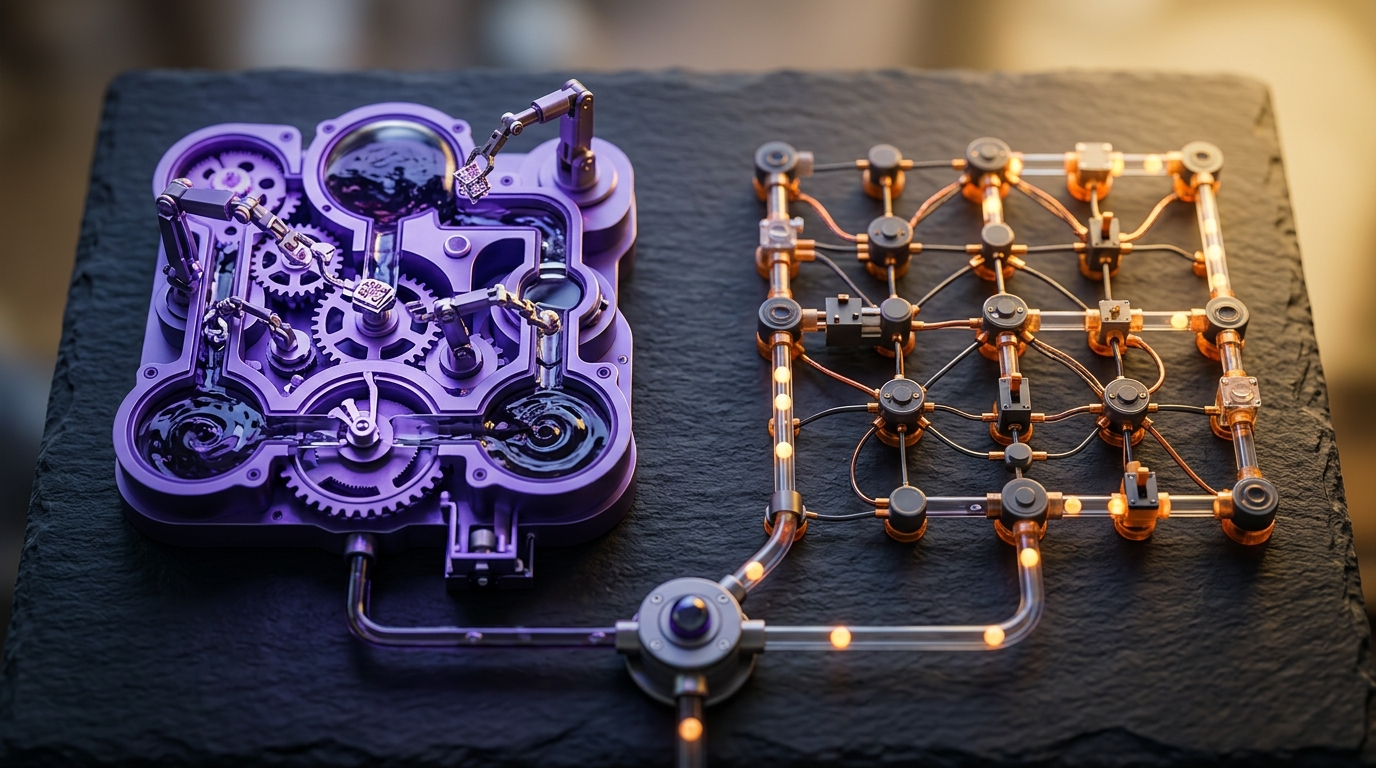
Deciding between a JEPA-style (Predictive) and a Sora-style (Generative) architecture is the most critical decision for AI architects in 2026.
| Feature | Meta V-JEPA (Predictive) | OpenAI Sora (Generative) |
|---|---|---|
| Primary Goal | Understanding Latent Physics | Visual Simulation / Synthesis |
| Computational Cost | Low to Moderate | Extremely High |
| Real-World Fidelity | High (focused on causality) | Variable (focused on aesthetics) |
| Best Use Case | Robotics, Industrial Automation | Synthetic Data, Creative Media |
| Hardware Req. | Standard GPU Clusters | Massive H100/B200 Pods |
Verdict: For Enterprise AI, V-JEPA is the more scalable and ROI-positive choice for functional tasks. Sora remains the king of high-fidelity simulation and creative output.
Physical AI Development Tools: Bridging Bits and Atoms
To build a world model, you need more than just a neural network library. You need a stack that handles the 'messiness' of the physical world. In 2026, the 'Physical AI Stack' looks like this:
- Simulation Layer: NVIDIA Omniverse / Isaac Lab (Creating the 'Gym').
- Modeling Layer: PyTorch or JAX (The brain of the model).
- Data Layer: Hugging Face 'LeRobot' (Open-source datasets for physical actions).
- Deployment Layer: ONNX Runtime (Running the model on the edge).
The Rise of "Vibe Coding" in Robotics
Reddit users in 2026 have noted that 'Vibe Coding' (natural language-driven code generation) has reached the physical world. Tools like Workbeaver and Manus.im allow users to describe a physical task—"Navigate to the breakroom and check if the coffee pot is on"—and the agent uses an underlying world model to plan the path and recognize the object.
Key Takeaways
- World Models > LLMs: In 2026, LLMs are just the 'voice'; World Models are the 'eyes' and 'hands' of AI.
- JEPA is the Efficiency King: Meta’s non-generative approach is the most practical for industrial robotics.
- NVIDIA is the Infrastructure: You cannot build a world model in 2026 without the NVIDIA Isaac/Omniverse ecosystem.
- Spatial Intelligence is a New Category: SDKs from companies like World Labs are making 3D-aware AI accessible to AR/VR developers.
- JAX for Research, PyTorch for Dev: Use JAX if you are inventing new architectures; use PyTorch if you are building products.
Frequently Asked Questions
What is the difference between an LLM and an AI World Model?
An LLM predicts the next word in a sequence based on statistical patterns in text. An AI World Model predicts the next state of a physical environment based on the laws of physics, spatial geometry, and causal relationships. LLMs are 'disembodied,' while World Models are 'embodied.'
Why is JEPA considered better than Sora for robotics?
JEPA (Joint-Embedding Predictive Architecture) does not try to generate pixels. It predicts the 'meaning' of a scene. This makes it much faster and less prone to the 'hallucinations' (like objects disappearing) that often plague generative models like Sora.
What are the best Physical AI development tools for startups?
Startups in 2026 typically use PyTorch Lightning for model training, Hugging Face LeRobot for datasets, and NVIDIA Isaac Gym for simulation. This stack provides the best balance of power and ease of use.
Do I need a supercomputer to run these frameworks?
Training a world model from scratch requires significant compute (H100 clusters). However, fine-tuning or using pre-trained models via a Spatial Intelligence SDK can be done on high-end consumer GPUs or even cloud-based APIs like those from OpenAI or Google.
Is LangChain still relevant for World Models?
Yes, but specifically through LangGraph. While original LangChain was for text-based chains, LangGraph handles the complex, cyclical state-management required for an agent to interact with a world model and learn from its mistakes.
Conclusion
The transition from Generative LLMs to AI World Models represents the most significant leap in artificial intelligence since the transformer paper. In 2026, the ability to simulate reality is the ultimate competitive advantage. Whether you choose the efficiency of Meta’s V-JEPA, the simulation power of OpenAI’s Sora, or the industrial strength of NVIDIA Isaac, the goal is the same: building AI that doesn't just talk, but acts.
For developers and founders, the message is clear: Stop optimizing prompts and start building worlds. The next billion-dollar company won't be a 'wrapper' around an LLM—it will be a 'driver' of a world model.