By 2026, Gartner predicts that over 80% of enterprises will have deployed generative AI in production. Yet, a silent crisis is brewing in boardrooms: models that are brilliant at reasoning but suffer from 'corporate dementia.' They don't remember last week's sales call, they hallucinate outdated compliance rules, and they cost a fortune to keep updated. When deciding on an LLM Fine-Tuning vs RAG strategy, most leaders realize too late that it isn’t a binary choice—it’s an architectural battle for the soul of their data. If you want to move past 'toy' demos and build a system that actually learns, you need to understand the shifting landscape of memory infrastructure.
The Stateless Ceiling: Why Bigger Models Aren't Enough
In early 2025, many enterprises hit what engineers call the "stateless ceiling." You deploy a sales assistant, it performs brilliantly on day one, but six months later, it’s still asking the same basic questions about your product roadmap. It doesn't accumulate experience.
As one tech lead noted in a recent industry post, "Our AI is smart, but it doesn't really learn. Every conversation starts fresh. It doesn't retain patterns that led to successful deals or internal product knowledge from earlier calls." This is the core problem facing enterprise AI in 2026. Raw model capability (scaling parameters) has plateaued in terms of business ROI; the real growth is now in memory infrastructure.
The Memory Genesis Competition 2026, an $80,000 challenge focused on long-term memory for agents, signals this shift. Enterprises are moving away from simply asking "Which model is best?" to asking "How does our agent accumulate experience?" If your strategy relies solely on longer context windows, you'll find they get expensive fast and still feel reactive rather than cumulative.
LLM Fine-Tuning vs RAG: The Technical Breakdown
To build a durable strategy, you must distinguish between learning a behavior and accessing a fact.
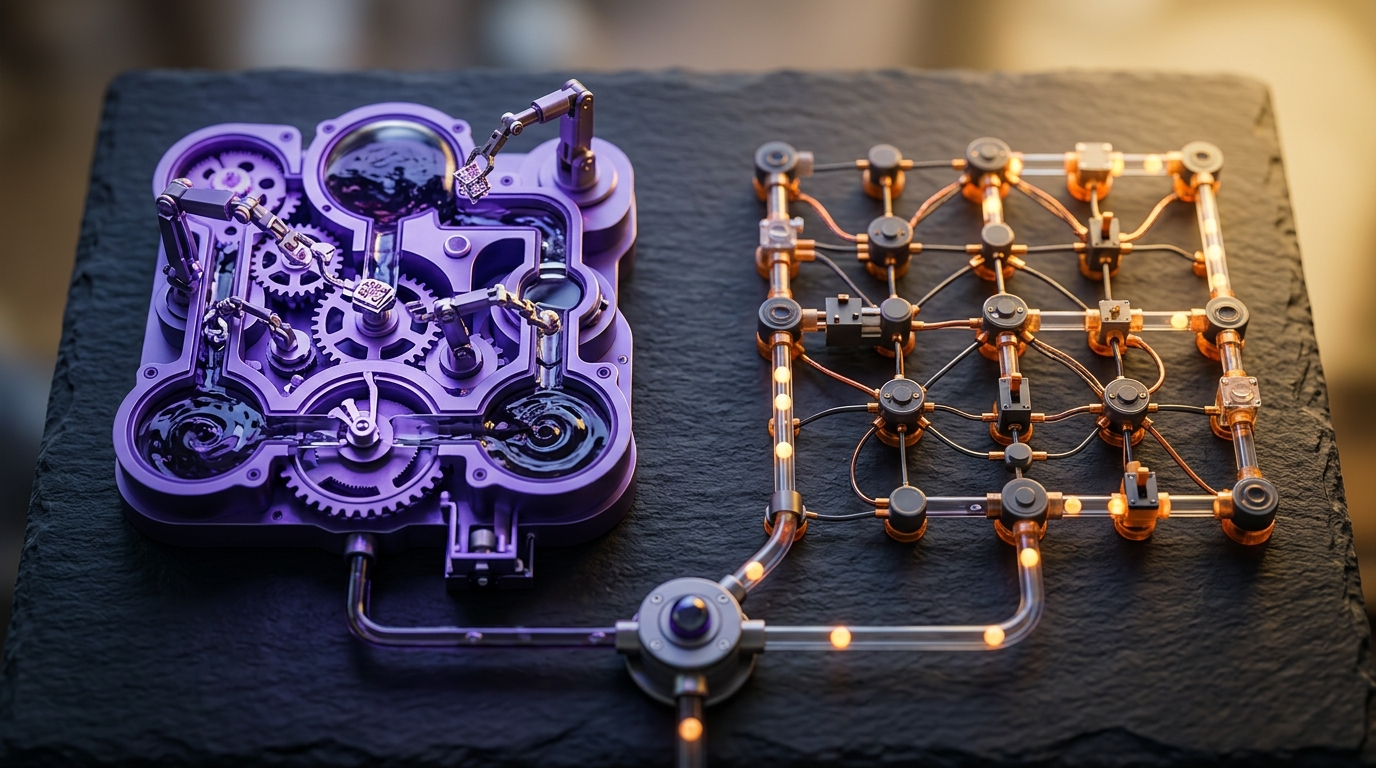
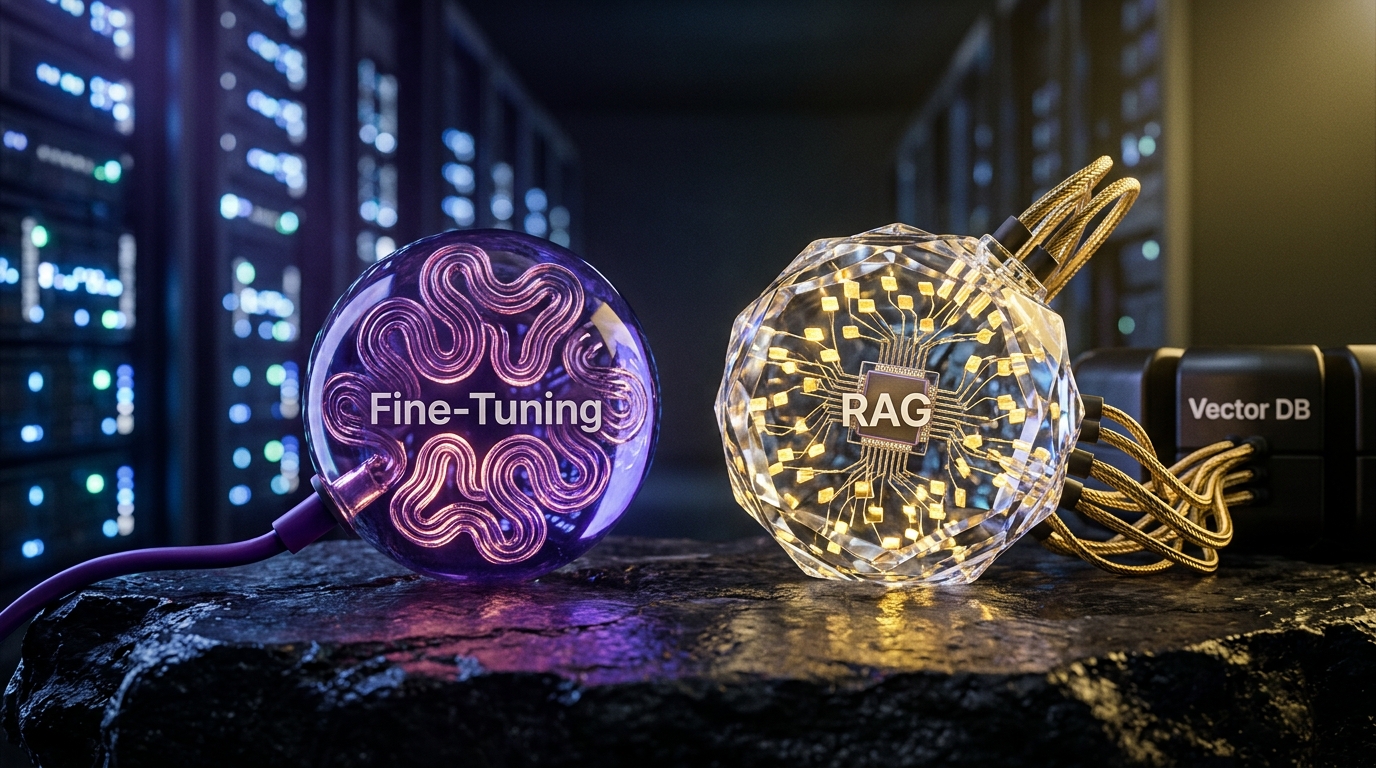
LLM Fine-Tuning is the process of taking a pre-trained model (like Llama 3 or GPT-4) and further training it on a smaller, specific dataset. Think of it as putting aftermarket performance parts on a car. You are changing the internal weights of the model to bias its "intuition" toward your specific domain, terminology, or style.
Retrieval-Augmented Generation (RAG), conversely, does not change the model. Instead, it provides the model with a "library" of documents to look at before it answers. When a user asks a question, the system searches a vector database, retrieves the relevant snippets, and stuffs them into the prompt context.
| Feature | LLM Fine-Tuning | Retrieval Augmented Generation (RAG) |
|---|---|---|
| Primary Purpose | Internalizing style, format, and behavior. | Providing up-to-date, factual knowledge. |
| Knowledge Update | Requires a new training run (Slow). | Update the database (Instant). |
| Hallucination Risk | High (Model 'guesses' based on weights). | Low (Model is grounded in citations). |
| Cost | High (GPU compute + data prep). | Moderate (Vector DB + inference tokens). |
| Transparency | Black box (Hard to know why it said X). | High (Provides citations/links to sources). |
| Best For | Niche jargon, specific formatting, SOPs. | Product manuals, news, dynamic data. |
When to Choose LLM Fine-Tuning: Pattern and Behavior
Fine-tuning is often misunderstood as a way to "teach" a model new facts. In reality, fine-tuning is best for domain adaptation—teaching the model how to think and speak in your specific corporate dialect.
"Fine-tuning is like putting aftermarket performance parts on your car. You can race stock or tune it to fit the track." — Industry Expert, r/LocalLLaMA
Use Cases for Fine-Tuning in 2026:
- Specialized Terminology: If your industry uses acronyms that mean something different in the real world (e.g., "Chair" meaning "Chair of the Board" in a specific governance context), fine-tuning pre-biases the model’s probability distribution.
- Formatting and Style: If you need an AI to generate code in a proprietary language or follow a very specific 50-step legal drafting process, fine-tuning is superior to long system prompts.
- Reducing Latency and Token Costs: By fine-tuning a model to understand your "constitution" or "doctrine," you don't have to waste 2,000 tokens in every prompt explaining your company values. The model has an "intuition" for them already.
- Low-Resource Languages: If your enterprise operates in a language poorly represented in base models, fine-tuning is essential to bring performance up to parity with English.
However, fine-tuning is "brittle." If you fine-tune a model on your 2025 product list and release a new version in 2026, the model will still hallucinate the old specs unless you retrain it.
The Retrieval Augmented Generation Benefits: Real-Time Grounding
For 90% of enterprise use cases, RAG vs fine-tuning for enterprise discussions end with RAG as the winner for knowledge management. Why? Because business data is volatile.
Key Retrieval Augmented Generation Benefits:
- Truth and Citations: RAG allows the model to say, "According to page 42 of the Q3 Compliance PDF..." This is non-negotiable for legal, medical, and financial sectors where hallucinations are liabilities.
- Dynamic Data Handling: If you have APIs providing daily market updates or stock prices, RAG can fetch that data at runtime. A fine-tuned model is a snapshot in time; RAG is a live window.
- Access Control: You can implement document-level security in a vector database. A user only sees answers based on files they are authorized to view. With fine-tuning, once the data is in the weights, it's accessible to anyone using the model.
GraphRAG has emerged in 2026 as a more robust evolution. While standard RAG uses semantic similarity, GraphRAG builds a structured representation of entities and relationships. This solves the "brittleness" of basic retrieval where key context might be missing because it wasn't "semantically similar" to the query but was architecturally related.
The Cost of Fine-Tuning LLM: Infrastructure vs. Value
Let's talk numbers. Decisions at the enterprise level are rarely about "coolness" and always about the cost of fine-tuning LLM infrastructure.
A typical localized LLM deployment in 2026 involves staggering overhead: - GPU Infrastructure: $150,000 – $300,000 for high-end H100/B200 clusters. - Engineering Talent: $150,000+ per ML engineer to manage the pipeline. - Energy and Maintenance: $2,000 – $4,000 monthly.
In contrast, a deterministic approach or a managed RAG pipeline can be 27x cheaper for structured data. As one CIO pointed out, "If someone asks 'What was Q3 revenue?', your database doesn't need probabilistic interpretation. It needs a SQL query. The answer is deterministic; the query should be too."
The ROI Trap: Many teams spend $1M+ fine-tuning a model to act as a 'smart search engine' when a $50k RAG system would have provided higher accuracy with better citations. Use fine-tuning to solve reasoning gaps, not knowledge gaps.
Parameter-Efficient Fine-Tuning (PEFT) and the LoRA Revolution
If you must fine-tune, the 2026 standard is Parameter-Efficient Fine-Tuning (PEFT), specifically using LoRA (Low-Rank Adaptation) or QLoRA.
In the past, fine-tuning required updating all billions of parameters in a model—an impossible task for most companies. PEFT allows you to freeze the main model weights and only train a tiny "adapter" layer (less than 1% of the total parameters).
Why PEFT is the 2026 Enterprise Standard:
- Reduced Hardware Requirements: You can fine-tune a Llama-3 70B model on consumer-grade hardware or a single A100 instead of a massive cluster.
- Modular AI: You can swap adapters in and out. One adapter for the legal team, one for the dev team, all sitting on the same base model.
- Unsloth and Optimization: Tools like Unsloth have made fine-tuning 2x faster and 70% more memory-efficient, allowing developers to fine-tune models locally or on free platforms like Google Colab.
Vector Database vs Fine-Tuning: Solving the Knowledge Retrieval Problem
The debate of vector database vs fine-tuning often comes down to how you handle "long-tail" information.
If your enterprise has 20,000+ documents, fine-tuning is a nightmare. The model will struggle to generalize over that much new knowledge without "catastrophic forgetting" (where it becomes dumber at general tasks). A vector database (like Pinecone, Milvus, or Weaviate) acts as an external hard drive.
The Hybrid Play: The most successful 2026 architectures use a fine-tuned embedding model (to improve how the system finds data) combined with a RAG pipeline (to retrieve the data).
Embedding Fine-Tuning:
Instead of fine-tuning the LLM to know the answer, you fine-tune the embedding model to understand your domain. This ensures that when a user asks about "CPU spikes," the system knows to look for documents about "compute latency" and "resource contention," even if the words don't match exactly.
The 2026 Frontier: Memory Infrastructure and Agentic Learning
As we look toward 2027, the role of the AI Engineer is shifting from "prompting" to "state management." The next bottleneck isn't bigger models—it's consolidation infrastructure.
Emerging Concepts:
- Agentic RAG: Agents that don't just retrieve once, but "research." They search, read, reason, and search again until they find the root cause. Databricks’ KARL is a prime example, using custom reinforcement learning to explore enterprise knowledge step-by-step.
- Consolidation Layers: Instead of a stateless chat, these systems sit above the LLM and consolidate interactions into "higher-level learnings." They track what worked and what didn't, updating the agent's context without retraining the base model.
- Constitutional AI: Using fine-tuning to bake safety and organizational conventions directly into the model, ensuring it never violates security boundaries, regardless of the prompt.
Key Takeaways
- RAG is for Knowledge: Use it for anything that changes frequently or requires factual grounding and citations.
- Fine-Tuning is for Behavior: Use it to teach the model a specific tone, a niche programming language, or complex formatting rules.
- Hybrid is King: The best enterprise strategy for 2026 is to fine-tune a small model for task intuition and use RAG for dynamic knowledge.
- Cost Control: Avoid using LLMs for deterministic problems (like simple SQL queries). A 27x cost difference exists between probabilistic AI and deterministic code.
- Infrastructure over Models: The competitive edge in 2026 isn't who has the biggest model, but who has the best memory and governance infrastructure.
- PEFT/LoRA: This is the only way to fine-tune at scale without burning through six-figure GPU budgets.
Frequently Asked Questions
Is RAG better than fine-tuning for reducing hallucinations?
Yes, RAG is significantly better for reducing hallucinations. Because RAG grounds the model's response in retrieved documents and provides citations, it prevents the model from "guessing" based on outdated or incomplete training weights. Fine-tuning can actually increase hallucinations if the model is underfitted or overfitted on a specific dataset.
How much does it cost to fine-tune an LLM in 2026?
While proprietary models like OpenAI's GPT-4o can be fine-tuned for as little as $50-$100 for small datasets, a full-scale enterprise deployment involving private GPU clusters (H100s) can cost between $150,000 and $300,000 in upfront infrastructure. However, using PEFT and tools like Unsloth can reduce these costs by 70-90% for open-source models like Llama 3.
Can I use RAG for real-time data like stock prices?
Absolutely. RAG is the preferred method for real-time data. By connecting your LLM to live APIs or a frequently updated vector database, the model can retrieve the latest market events or pricing at the moment the user asks the question. Fine-tuning is static and cannot handle real-time updates without constant, expensive retraining.
When should I use a hybrid LLM Fine-Tuning vs RAG approach?
A hybrid approach is best when you have a specialized domain (like medical or legal) that requires both a specific "way of speaking" (Fine-Tuning) and access to a massive, ever-changing library of regulations or case law (RAG). You fine-tune the model to understand the jargon and then use RAG to fetch the specific facts.
What is the 'Stateless Ceiling' in enterprise AI?
The stateless ceiling refers to the point where an AI assistant stops providing incremental value because it doesn't 'learn' from past interactions. Since most LLMs are stateless (they forget everything after the session ends), enterprises are now building 'memory layers' to consolidate interactions into long-term knowledge without needing to retrain the base model.
Conclusion
Choosing between LLM Fine-Tuning vs RAG is no longer a matter of "which is better," but "which part of the problem are we solving?" For the knowledge-hungry, fast-moving enterprise of 2026, Retrieval-Augmented Generation provides the necessary grounding and cost-efficiency to handle thousands of documents safely. Meanwhile, Parameter-Efficient Fine-Tuning offers the surgical precision needed to align an AI’s behavior with corporate standards.
The winners of the next AI decade won't be the companies chasing the highest parameter counts. They will be the ones who build the most robust memory infrastructure—systems that don't just respond, but remember, learn, and evolve with the business.
Ready to build your enterprise AI strategy? Start by auditing your data: is it static and stylistic, or dynamic and factual? The answer will define your architecture for 2026 and beyond.